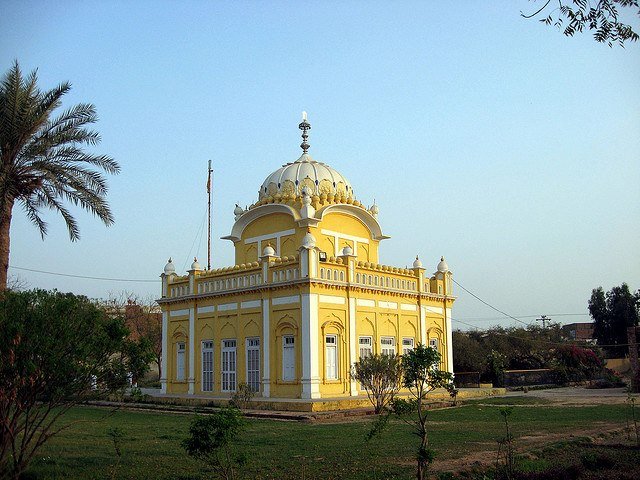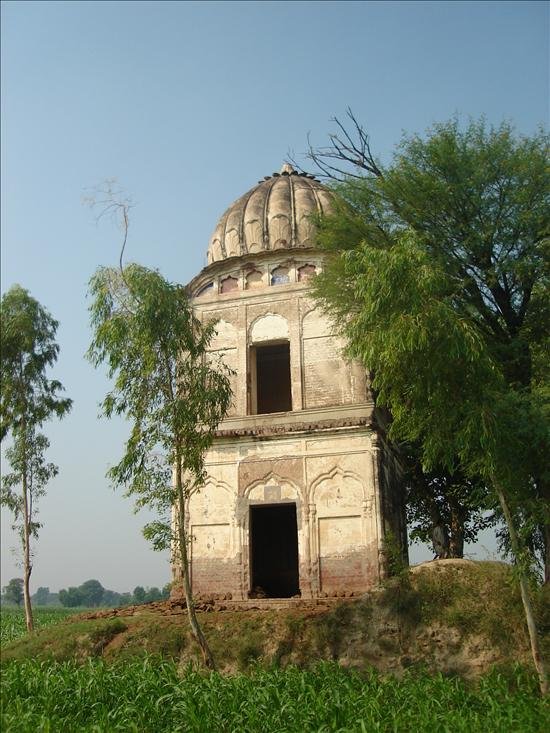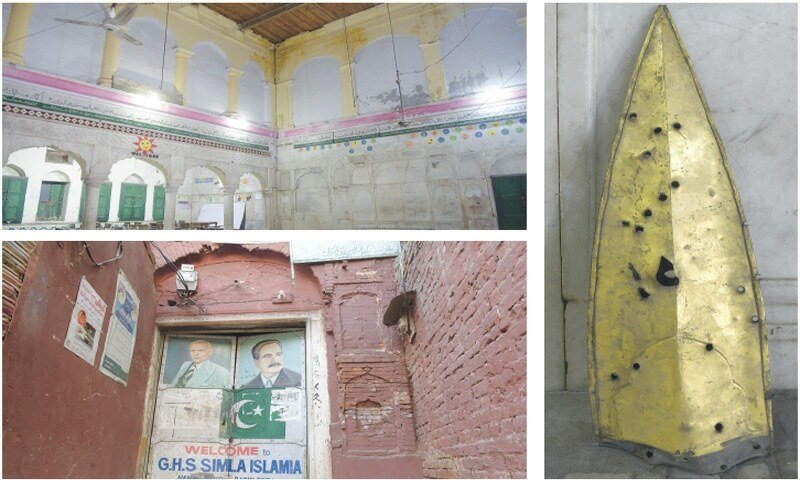
In the beating heart of Rawalpindi’s old city, down in the Narankari Bazaar near the Namak Mandi, stands a building that changed Sikhism. The Gurdwara Nirankari is the birthplace of the Nirankari movement — the reformist current founded by Baba Dayal Singh (1783–1855), who preached the formless divine (“Dhan Nirankar”) and a return to simple, idol-free worship. It is also the site of the first Sikh marriage conducted according to Sikh rites rather than Hindu custom. Today the white-marble building serves as a government school, its samadh and its Gurmukhi inscriptions quietly kept amid classrooms — and hundreds of Nirankari pilgrims still come every year from Amritsar to pay their respects. If you want to touch the intellectual and spiritual history of Sikhism, not just its architecture, this Gurdwara Nirankari travel guide will show you why Rawalpindi’s old bazaar deserves your visit, when to go, and how to find it.
Quick Facts
- Location: Narankari Bazaar, near Namak Mandi and Raja Bazaar, old city Rawalpindi, Punjab, Pakistan
- Famous For: Birthplace of the Nirankari movement of Baba Dayal Singh; site of the first Sikh-rites marriage; now the Government Shimla Islamia High School
- Nearest City: Rawalpindi itself; Islamabad roughly 25–30 km northeast
- Accessibility: Excellent road and rail access; nearest airport Islamabad International; Rawalpindi is on the main railway line
- Known Landmarks: Samadh of Baba Dayal Singh (left of the darbar), marble Manji Sahib, Raja Bazaar, Namak Mandi, Gurdwara Bhai Mani Singh
- Best For: Sikh heritage pilgrims, religious-history lovers, old-city explorers, photographers of heritage architecture
- Visit Tip: The building is a working school — visit outside school hours or with permission, and be respectful of classes in session
Why Visit Gurdwara Nirankari, Rawalpindi
Most heritage travel is about seeing beautiful old things. The Gurdwara Nirankari offers something rarer: the chance to stand where an idea was born. In the early 19th century, in this bazaar, Baba Dayal Singh began preaching a radical simplification of Sikh practice — no idols, no empty ritual, just the formless One: “Dhan Nirankar,” blessed is the Formless. His followers came to be called Nirankaris, and the movement he founded here in Rawalpindi would grow into a global Sikh current. The bazaar itself was named for his cry — Narankari Bazaar — and the gurdwara he built became its spiritual anchor. To visit is to walk into the workshop where a reform movement was forged.
The building rewards the visit on purely architectural terms too. Constructed in the era of Maharaja Ranjit Singh — the 1830s saw a spacious gurdwara rise here on six kanals of land — it was once described as the biggest place of worship in northern India. White marble cladding, Mughal-style marble work, carved metal balconies, iron arches of a kind found in no ordinary haveli of the era: the craftsmanship speaks of a community that poured its wealth and its reverence into stone. Even now, functioning as the Government Shimla Islamia High School, the building keeps its sacred bones — the samadh of Baba Dayal Singh to the left of the darbar, the marble Manji Sahib where the Guru Granth Sahib’s palanquin was kept, the Gurmukhi inscriptions still legible on the walls.
There is also the human story, which is quietly extraordinary. The school administration has cared for the building for decades; the principal’s room was once the chamber where the Granth Sahib was kept, and visitors report the staff’s pride in their custodianship. Nirankari pilgrims arrive from Amritsar every year to stand where their movement began. And in late 2024, the district administration announced it was working to restore the city’s heritage sites and facilitate Sikh visitors’ access — the gurdwara’s next chapter may be its most hopeful yet. Come now, and you witness a heritage site in tender, imperfect, living condition — which is often when such places are most moving.
Finally, the setting is irresistible. The Narankari Bazaar is one of the oldest bazaars in Rawalpindi and the wider Potohar region — a dense, fragrant, gloriously chaotic old-city market where the 19th century never quite left. A visit to the gurdwara folds naturally into a day of old-city exploration: Raja Bazaar’s lanes, the Namak Mandi, the food streets, the Sikh-era havelis. If your Pakistan travels have kept you to Islamabad’s boulevards, this is your invitation to the older, deeper city next door.
History of Gurdwara Nirankari, Rawalpindi
The history of the Gurdwara Nirankari begins with Baba Dayal Singh, born in 1783 (15th Visakh, Samvat 1840). His mother, Bibi Ladki, was the daughter of the treasurer of the Tenth Guru, Guru Gobind Singh; his father Ram Sihai was a resident of Peshawar. After his mother’s death, the young Dayal Singh went to live with his maternal uncle Mulakkha Singh. He married Mula Devi of Bhera, with whom he had three sons — Darbara Singh, Bhara Singh, and Ratta Singh. But it was his spiritual life that would make history: Dayal Singh took to reciting the word “Nirankar” — the Formless One — and preaching against idol worship and the ritual accretions he believed were adulterating Sikhism. His companions took up the same cry, and his followers came to be called Nirankaris.
Local tradition holds that the Sikh leader Bhai Vasakha Singh, a revenue officer of Guru Gobind Singh, first came to this area between 1770 and 1780, and that his son Baba Dayal Singh then established his religious practice here. The gurdwara rose in what became Narankari Bazaar — named, as the historian Iqbal Qaiser records, for Dayal Singh’s constant recitation of “Dhan Nirankar.” In the 1830s, as Maharaja Ranjit Singh’s empire expanded toward Afghanistan and Kashmir, a spacious gurdwara was constructed here on six kanals of land. It became, in time, the biggest worship place in northern India — and the institutional home of a reform movement.
The gurdwara’s place in Sikh social history is secured by a wedding. Before the mid-19th century, Sikhs solemnised marriages according to Hindu customs; at this gurdwara, the marriage of Bhai Bhola Singh and Bibi Nihal Kaur was conducted according to Sikh rites — the first Anand-style Sikh marriage, a landmark in the community’s religious self-definition. The shrine also preserved a remarkable manuscript: a volume of the Granth Sahib written in Samvat 1842, noted for carrying one extra verse. The samadh of Baba Dayal Singh, who died on 18th Magh, Samvat 1911 (1855), stands to the left of the darbar, with a small foyer before it and the marble Manji Sahib adjoining — the chamber where the palanquin of the Guru Granth Sahib was kept by night.
After 1947, the Nirankari community largely migrated to India — many settling around Chandigarh and Amritsar, where they built a new gurdwara — and the Rawalpindi shrine passed into new hands. In 1957–58, the government converted the building into a school on court orders, and it has functioned as the Government Shimla Islamia High School ever since, educating some 200 boys. Encroachments shrank the original six kanals to about one and a half; earthquakes — including the devastating 2005 quake — destroyed the third storey. Yet the structure survived, the school administration maintained it with evident care, and Sikh visitors never stopped coming. In December 2024, Dawn reported the district administration’s commitment to restoring the city’s heritage sites and easing Sikh pilgrims’ access — a sign that the birthplace of the Nirankari movement may yet receive the recognition its history demands.
Top Things to Do in Gurdwara Nirankari, Rawalpindi
Pay Respects at the Samadh of Baba Dayal Singh
The samadh stands to the left of the darbar hall — the resting place of the movement’s founder. Before it lies a small foyer; adjacent is the Manji Sahib, built in marble, where the palanquin of the Guru Granth Sahib was kept. This cluster — samadh, foyer, Manji Sahib, darbar hall — is the sacred core of the complex. Approach it with the quiet it deserves. Remember that this is a working school: time your visit outside class hours, ask the staff’s permission, and keep your presence unobtrusive.
Read the Walls: Gurmukhi Inscriptions and Marble Work
The building’s surfaces are a palimpsest of its history. White marble plaques carry inscriptions in Gurmukhi from the Granth Sahib — above some of which the school administration has written Quranic verses, a layering of sacred texts that tells its own story about this building’s journey. The marble pillars and flooring reflect Mughal-style craftsmanship; the carved metal balconies and iron arches around the hall are, as one account notes, unique — “not present in any residential structures” of the era. Look closely: this is a building that rewards slow looking.
Walk the Narankari Bazaar
The bazaar that took its name from Baba Dayal Singh’s cry is one of the oldest in Rawalpindi and the Potohar region. Its narrow, encroached lanes are dilapidated in places and utterly alive in all of them — spice merchants, cloth sellers, metalworkers, and food stalls pressed shoulder to shoulder. Walking here, you understand why the gurdwara’s founders chose this spot: this was the commercial and communal heart of Sikh Rawalpindi, and in many ways it still is the heart of the old city.
Explore Raja Bazaar and the Namak Mandi
The gurdwara sits between two of old Rawalpindi’s great marketplaces. The Namak Mandi (Salt Market) opens off one side; Raja Bazaar — the old city’s main artery — is a short walk away, with Fawara Chowk as its landmark. Give these lanes a full morning: the Sikh-era havelis with their carved wooden balconies, the sarafa (jewelers’) lanes, the food streets. This is the Rawalpindi that predates the capital next door by more than a century.
Visit Rawalpindi’s Other Sikh Heritage
The Nirankari gurdwara is not Rawalpindi’s only Sikh site. The Gurdwara Bhai Mani Singh and Gurdwara Damhial complete the city’s Sikh-heritage circuit — three shrines, three different stories, one old city. Together they make a full and deeply rewarding day for anyone tracing Sikh Rawalpindi.
Famous Places In and Around Gurdwara Nirankari, Rawalpindi
- Raja Bazaar — old Rawalpindi’s great market street, minutes away
- Namak Mandi — the historic salt market adjoining the Narankari Bazaar
- Gurdwara Bhai Mani Singh, Rawalpindi — another of the city’s historic Sikh shrines
- Gurdwara Damhial, Rawalpindi — completing the Rawalpindi Sikh circuit
- Liaquat Bagh — the historic park and political landmark of Rawalpindi
- Ayub National Park — green escape on the city’s edge
- Islamabad — the capital’s Faisal Mosque, Margalla Hills, and museums, 25–30 km away
How to Reach Gurdwara Nirankari, Rawalpindi
Rawalpindi is among the best-connected cities in Pakistan, and the gurdwara sits in its old center. From Islamabad, it is roughly 25–30 km southwest — 45 minutes to an hour by car via the Islamabad Expressway or Murree Road, or a short ride on the metro bus toward the old city. From Lahore, take the M-2 motorway to the Islamabad/Rawalpindi interchange — about 375 km, roughly 4.5 to 5 hours. From Peshawar, the M-1 brings you in about two hours. From Karachi, fly to Islamabad International Airport (about 30–40 minutes’ drive from the old city) or take the long but storied rail journey north.
Rawalpindi’s railway station is a major junction on the main Karachi–Peshawar line, with trains from every major city. Within the old city, navigate to Raja Bazaar and Fawara Chowk; the Narankari Bazaar and Namak Mandi lie in the dense lanes nearby. Ask any shopkeeper for the “Nirankari Gurdwara” or the “Shimla School” (Government Shimla Islamia High School) — the building’s school identity is how most locals know it today.
The old city’s lanes are narrow, congested, and gloriously chaotic — do not attempt to drive into the bazaar quarter. Park on the periphery (near Fawara Chowk or Liaquat Bagh) and continue on foot or by rickshaw. A walking visit is not just practical but essential: the lanes themselves are the attraction. Wear comfortable shoes, carry water, and allow half a day for the gurdwara plus the surrounding bazaars.
Public transport within the twin cities is excellent: the metro bus connects Islamabad to Rawalpindi’s Saddar, from where rickshaws and Suzuki pickups run into the old city. Ride-hailing cars operate throughout, though drivers may hesitate at the bazaar’s edge — arrange a pickup point on a main road.
Route Details
- Islamabad to old Rawalpindi: Islamabad Expressway or Murree Road southwest into Rawalpindi; follow signs for Raja Bazaar / Fawara Chowk. 25–30 km, 45–60 minutes.
- Parking: Leave the car near Fawara Chowk or Liaquat Bagh; the bazaar lanes are pedestrian and rickshaw territory.
- Finding the gurdwara: On foot or by rickshaw into the Narankari Bazaar / Namak Mandi quarter. Ask for the “Nirankari Gurdwara” or “Government Shimla Islamia High School” — the gurdwara building is the school.
- On arrival: The building is a working school. Visit outside school hours where possible, seek the staff’s permission, cover your head, and keep noise to a minimum. The samadh is to the left of the darbar hall.
Where to Stay in Gurdwara Nirankari, Rawalpindi
Rawalpindi offers accommodation at every tier, and you are spoiled for choice. Luxury travelers head for the Pearl Continental Rawalpindi or cross into Islamabad for the Serena and the capital’s five-star strip — all within 30–45 minutes of the old city. Mid-range business hotels cluster around Saddar, Murree Road, and the Mall — clean, air-conditioned, with restaurants, and very reasonably priced by international standards.
Budget travelers will find no shortage of simple hotels and guesthouses around Saddar, Raja Bazaar’s periphery, and the railway station area — basic but functional, and perfectly placed for an old-city heritage day. For a heritage-focused trip, staying in Saddar or near Liaquat Bagh puts you within easy rickshaw range of the Narankari Bazaar while keeping you close to the metro bus for Islamabad excursions.
Many visitors combine the gurdwara with Islamabad sightseeing — the Faisal Mosque, Daman-e-Koh, the Lok Virsa museum — and split their stay between the two cities. Two full days cover the old-city heritage circuit (the three gurdwaras, Raja Bazaar, Namak Mandi) plus the capital’s highlights comfortably.
Where to Eat: Local Foods of Gurdwara Nirankari, Rawalpindi
The old city around the Narankari Bazaar is a superb place to eat. Start with paye — the slow-cooked trotter curry that Rawalpindi does as well as anywhere — or nihari at the old bazaar shops. Chicken karahi, seekh kebabs, and tikka sizzle at every other corner; daal fry with tandoori naan is the honest budget classic. Breakfast in the bazaar means halwa puri and chai at the old halwai shops — arrive before 9 a.m. for the full experience.
Raja Bazaar’s food streets are famous for a reason: chana chaat, dahi bhallay, samosas, jalebi hot from the kadhai, and kulfi falooda for dessert. Wash it down with doodh soda or fresh sugarcane juice. Meals in the old city are very budget-friendly — you can eat gloriously all day for little. As the area is conservative and traditional, alcohol is neither served nor appropriate anywhere near the shrine quarter.
For a sit-down meal, Saddar and Murree Road offer everything from desi barbecue houses to continental restaurants. But the honest advice is this: eat in the bazaar. The food around the Narankari Bazaar is the living culture that grew up around the gurdwara — tasting it is part of understanding the place.
Weather in Gurdwara Nirankari, Rawalpindi
Rawalpindi’s climate is the Potohar plateau’s classic four-season cycle, with one dramatic twist: the monsoon hits hard here. Winters are cold and often foggy, spring is glorious, summers are hot, and July–August bring some of the heaviest urban rainfall in Pakistan. The old city’s lanes are best walked in the mild months — and the monsoon, for all its drama, can flood the bazaar quarter’s low lanes, so check conditions in peak monsoon.
| Season | Temperature Range | Conditions |
|---|---|---|
| Winter (Dec–Feb) | 3–18°C | Cold, foggy mornings; crisp sunny afternoons; best for old-city walking |
| Spring (Mar–Apr) | 18–30°C | The loveliest season; mild days, blooming parks, perfect bazaar weather |
| Summer (May–Jun) | 30–40°C | Hot and dry; walk the bazaars early morning or evening |
| Autumn (Jul–Nov) | 20–35°C | Heavy monsoon Jul–Aug (lanes can flood), then clear and pleasant from September |
Language and Culture of Gurdwara Nirankari, Rawalpindi
Punjabi (in the Potohari dialect) and Urdu share the streets of old Rawalpindi, with Hindko and Pashto widely heard in the bazaars. Urdu works everywhere; a little Punjabi — “Sat Sri Akal” at the shrine, “Shukriya” in the shops — is warmly received. The old city’s culture is traditional Punjabi-Potohari: commerce by day, family and faith by evening, and a deep pride in the city’s layered history.
At the gurdwara-cum-school, etiquette needs extra care because you are entering a place of learning as well as a place of memory. Cover your head, dress modestly, keep your voice down, and always ask the staff before entering any room or taking photographs. School hours are for students — plan your visit for early morning, late afternoon, or weekends, and accept graciously if a classroom area is off-limits. The staff’s custodianship of this building is a trust; honor it.
In the bazaars, haggling is expected but should stay friendly — start at around two-thirds of the quoted price and meet in the middle with a smile. The old city is conservative; modest dress is appreciated, and women travelers will be most comfortable in shalwar kameez with a dupatta. Photography of shopkeepers and craftsmen: always ask first.
Shopping in Gurdwara Nirankari, Rawalpindi
The Narankari Bazaar, Namak Mandi, and Raja Bazaar form one of Punjab’s great traditional shopping districts — and unlike a mall, every lane has a specialty. Cloth markets sell lawn, khaddar, and wedding fabrics; the sarafa bazaar deals in gold and silver; spice merchants in the Namak Mandi sell everything by fragrant, colorful weight; and the steel and brass lanes offer household ware at local prices. Peshawari chappals, khussas, and shawls make excellent souvenirs.
Food shopping is a joy: dry fruits, spices, desi ghee, mithai (try the fresh jalebi and barfi), and in winter, peanuts and gur. For modern retail, Rawalpindi’s malls (on Murree Road and in Bahria Town) and Islamabad’s markets are a short ride away — but the honest recommendation is to do your souvenir hunting in the old bazaars, where the goods carry the city’s character with them.
Travel Tips for Gurdwara Nirankari, Rawalpindi
Packing Essentials
A headscarf for the shrine, comfortable walking shoes for the bazaar lanes (you will walk kilometres without noticing), and a daypack with water cover the essentials. In winter, pack warm layers — Rawalpindi’s cold is damp and seeps in; in summer, sun protection and a hat. A power bank keeps your phone alive through a long photography day, and small-denomination cash smooths every bazaar transaction.
Safety Tips
Rawalpindi’s old city is busy, crowded, and generally safe for visitors, with the usual big-city caveats: keep valuables secure in crowded lanes, beware of pickpockets in Raja Bazaar’s crush, and travel the bazaar quarter in daylight. The lanes can be confusing — save your parking spot on offline maps. During the monsoon, avoid the lowest bazaar lanes in heavy rain; flash flooding is a real, if occasional, hazard.
Money & Connectivity
The old bazaars run on cash, though larger shops accept cards; ATMs are plentiful around Saddar, Fawara Chowk, and Murree Road — withdraw before diving into the lanes. Mobile coverage is excellent throughout the twin cities on all networks (Jazz, Telenor, Zong, Ufone) with strong 4G. Free Wi-Fi is common in Saddar’s cafes if you need to get online between shrines.
Best Time to Visit Gurdwara Nirankari, Rawalpindi
Winter (December to February) — The Classic Season
Cool, crisp, and clear — winter is made for old-city walking. The bazaar lanes are at their most atmospheric, the light is beautiful, and the chai tastes better in the cold. Mornings can be foggy, so start your bazaar walk mid-morning. This is the best all-round season for the gurdwara visit.
Spring (March to April) — The Prettiest Season
Mild days, flowers in the parks, and comfortable temperatures for long walks. Spring is arguably the most pleasant time to explore Rawalpindi’s heritage quarter — combine the gurdwara with Liaquat Bagh’s gardens and an evening in Saddar.
Summer (May to June) — Early Mornings Only
Hot and dry, with temperatures reaching 40°C. The old city’s lanes offer shade but little breeze. Visit the gurdwara at opening time, retreat to air-conditioning through midday, and return to the bazaars in the evening when the food streets come alive.
Autumn (September to November) — The Sweet Spot
Once the monsoon retreats (usually by early September), Rawalpindi turns clear and pleasant again. October and November offer excellent walking weather with fewer crowds than spring — a connoisseur’s choice for the heritage circuit.
Final Thoughts
The Gurdwara Nirankari is a building that contains multitudes: a reform movement’s birthplace, a marriage revolution’s stage, a manuscript’s home, a school’s classrooms, a bazaar’s namesake. Baba Dayal Singh’s cry — “Dhan Nirankar” — still echoes in the market’s name, in the samadh by the darbar, in the pilgrims who come from Amritsar to stand where it all began. That a place of such consequence now hums with schoolchildren’s lessons is not a diminishment; it is a continuation. The building still teaches.
Come in winter or spring, walk the Narankari Bazaar’s lanes, stand quietly by the samadh, and let old Rawalpindi tell you its story — of reform and reverence, of marble and memory. Then follow the trail to the city’s other Sikh shrines and complete the circuit. For more journeys into Pakistan’s sacred and storied places, explore the Explore Pakistan collection.
FAQs
Where is Gurdwara Nirankari located?
In the Narankari Bazaar near the Namak Mandi, in old Rawalpindi’s Raja Bazaar quarter. The building now functions as the Government Shimla Islamia High School — ask locals for the “Nirankari Gurdwara” or the “Shimla School.”
Why is the Gurdwara Nirankari historically important?
It is the birthplace of the Nirankari movement founded by Baba Dayal Singh (1783–1855), who preached the formless divine and opposed idol worship. It was also the site of the first Sikh marriage conducted according to Sikh rites.
Can visitors enter the gurdwara?
The building is a working government school, so visits require the staff’s permission and should be timed outside class hours. Be respectful, cover your head, keep noise down, and ask before photographing anything.
What is the best time to visit?
December to February for cool, clear old-city walking weather, or March–April for spring’s mild days. Avoid the July–August monsoon peak, when bazaar lanes can flood.
How do I reach the old city from Islamabad?
Drive 25–30 km southwest via the Islamabad Expressway or Murree Road (45–60 minutes), or take the metro bus to Saddar and a rickshaw into the Raja Bazaar quarter. Park near Fawara Chowk and walk the bazaar lanes.
Is it suitable for families?
Yes — the shrine visit is short and calm, and the surrounding bazaars are a lively family outing. Keep children close in the crowded lanes and visit in the cooler months.
What other Sikh sites are nearby?
Rawalpindi also holds the Gurdwara Bhai Mani Singh and Gurdwara Damhial — the three together make a full Sikh-heritage day in the old city.
What should I buy in the Narankari Bazaar?
Spices by weight from the Namak Mandi, lawn and khaddar fabrics, Peshawari chappals and khussas, dry fruits, desi ghee, and fresh mithai — all at local bazaar prices.