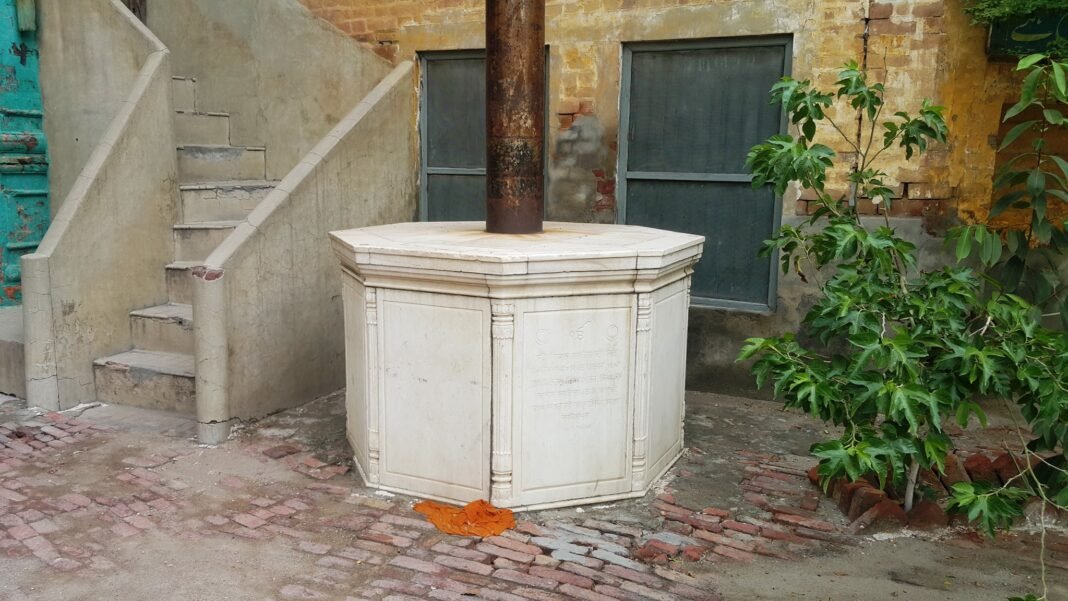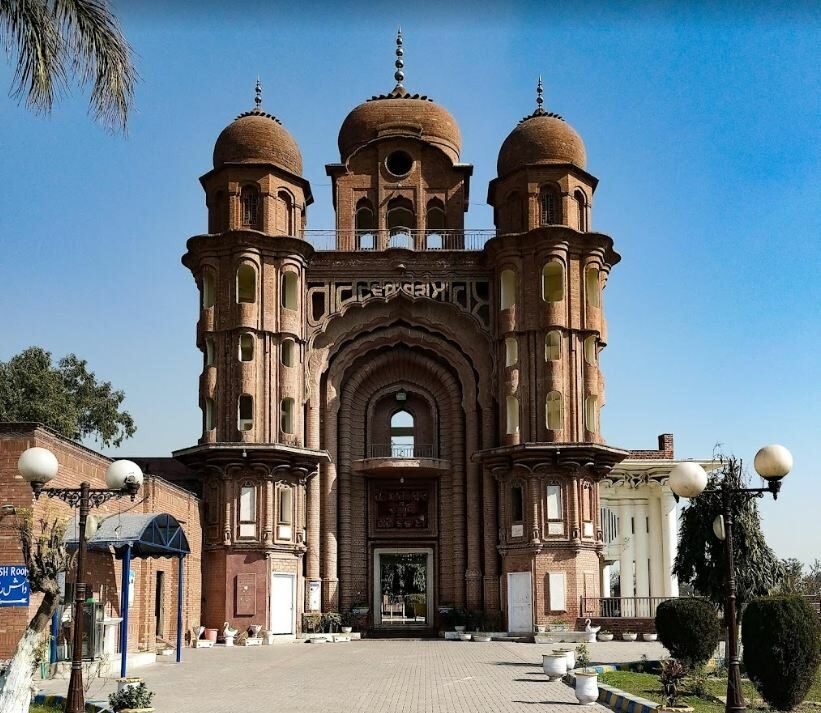
Kanganpur, a historic town in Punjab’s Kasur district, holds two old Sikh shrines within its streets — and one of them is among the sturdiest survivors of its kind. Gurdwara Principal Bara Singh Wadhawa, also called Gurdwara Principal Sardar Bara Singh Wadhawa, stands in the Moti Masjid Mohalla of the new town: a domed building described by heritage surveyors as very beautiful and very strong, with rooms for priests arrayed in front of its sacred darbar. After Partition, refugee families from Ferozepur found shelter in those rooms and in the gurdwara itself — and many never left. If you are exploring the Sikh heritage of Kasur district, this is a stop that rewards the curious: a handsome building, a living neighbourhood, and a story of displacement and continuity written into its walls.
This gurdwara principal bara singh wadhawa kanganpur travel guide covers the shrine’s real history, how to reach Kanganpur, what else to see in the area, weather, food, stays, and the best time to visit.
Quick Facts
- Location: Moti Masjid Mohalla (locality) of new Kanganpur city, Kasur district, Punjab.
- Altitude: Around 190 metres above sea level — the flat plains of central Punjab.
- Famous For: Its strong domed building; also known as Gurdwara Principal Sardar Bara Singh Wadhawa; the priests’ rooms facing the darbar; post-Partition settlement of refugee families from Ferozepur district.
- Nearest City: Chunian (about 26–29 km); Kasur city roughly 50 km to the northeast.
- Accessibility: Inside Kanganpur town — reachable by road from Chunian, Kasur or Lahore; Kanganpur has its own railway station.
- Known Landmarks: The domed gurdwara building; nearby Gurdwara Malji Sahib in the same town; Kanganpur railway station.
- Best For: Sikh-heritage travellers, architecture admirers, and visitors exploring Kasur district’s historic towns.
Why Visit Gurdwara Principal Bara Singh Wadhawa, Kanganpur
Here is the honest pitch: this is not a famous shrine, and that is precisely its charm. The great gurdwaras of Pakistan — Kartarpur, Nankana Sahib, Panja Sahib — draw thousands; the shrine in Kanganpur’s Moti Masjid Mohalla draws almost no one. What you get instead is intimacy: a genuinely handsome domed building, described in the official heritage survey as both beautiful and strong, standing in a lived-in mohalla where the Partition is not history-book material but family memory. The refugee families from Ferozepur who settled in the priests’ rooms are part of the building’s story now, and the gurdwara belongs to the neighbourhood in a way no museum-piece monument can.
Architecture lovers will appreciate the structure itself. The domed darbar hall rises solidly over the mohalla rooftops, and the arrangement — priests’ quarters set in front of the sacred hall — is a classic layout of the Punjab gurdwara. Unlike many village shrines that have crumbled, this one was built to last, and it shows. Photographers get strong geometric compositions: dome, arches, and the texture of old brickwork.
Kanganpur also gives you two shrines for one trip. The town’s other historic gurdwara, Gurdwara Malji Sahib, carries one of the most beloved Guru Nanak stories of the region — the tale of the Guru and Bhai Mardana, the villagers who pelted stones, and Nanak’s blessing “Wasde raho” (stay united and settled here). Visiting both shrines in a single afternoon gives you a fuller picture of the town’s Sikh past than either could alone. Our companion guide covers Gurdwara Malji Sahib, Kanganpur in detail.
Finally, Kanganpur sits in a district worth exploring. Kasur is the city of Bulleh Shah, the great Punjabi Sufi poet; Chunian is an old tehsil town; the countryside between them is classic Punjab — wheat, sugarcane, and mango orchards. A day trip here from Lahore is easy, unhurried, and full of small discoveries.
History of Gurdwara Principal Bara Singh Wadhawa, Kanganpur
Kanganpur is an old settlement of Kasur district, and local tradition links its name to ancient legends of the region — the kind of deep, half-remembered history that clings to Punjab’s historic towns. What the documented record tells us clearly is the story of its gurdwara. The shrine stands in the Moti Masjid Mohalla of the new Kanganpur city: a domed building, solid and well-proportioned, known locally as Gurdwara Principal Sardar Bara Singh Wadhawa. The name honours its association with Principal Bara Singh Wadhawa, under whose name the shrine is remembered by the heritage surveys of Punjab’s Sikh sites.
The building follows the classic form: a domed darbar hall — the sacred congregation space — with rooms for priests (granthis and sevadars) arranged in front of it. The heritage survey notes the building’s strength and beauty, and its dome remains a landmark of the mohalla. Like the Sikh shrines across Pakistani Punjab, it was built and maintained by the local Sikh sangat in the decades before Partition, serving as the religious and community centre for the town’s Sikh families.
Partition in 1947 transformed the gurdwara’s fate. As Sikh families migrated east to India, refugee families arriving from Ferozepur district — just across the new border — needed shelter, and they were settled in the priests’ rooms and in the gurdwara building itself. This was the pattern across the province: shrines left without their congregations became homes for the displaced. The families stayed, raised children, and became part of Kanganpur’s fabric. Today the building is thus two things at once: a heritage shrine of documented architectural merit, and a lived-in home for families whose own Partition story is now three generations deep.
The shrine’s story belongs to the wider Sikh heritage of Kasur district. The town’s other gurdwara, Malji Sahib, preserves the beloved tradition of Guru Nanak’s visit with Bhai Mardana — the “Wasde raho” blessing that Punjabis still quote. Together, the two shrines make Kanganpur one of the notable stops for anyone tracing Sikh heritage through central Punjab, a district better known for Bulleh Shah’s Sufi legacy but rich in layered religious history.
Top Things to Do in Gurdwara Principal Bara Singh Wadhawa, Kanganpur
See the Domed Darbar Hall
The centrepiece is the domed building itself. Walk around it slowly and take in its proportions — the dome, the masonry, the way it anchors the mohalla. Remember that families live in parts of the complex, so be respectful: admire from the street and the open areas, greet residents courteously, and ask before entering any doorway or photographing people.
Visit Gurdwara Malji Sahib
No trip to Kanganpur is complete without the town’s other shrine. Gurdwara Malji Sahib is associated with Guru Nanak and Bhai Mardana and the famous “Wasde raho” blessing. It has stood closed since Partition and is in poor condition, but its story is one of the best-loved in the region’s Sikh tradition. See our Gurdwara Malji Sahib, Kanganpur travel guide for the full story.
Walk the Old Mohallas
Kanganpur’s older neighbourhoods repay a slow walk: narrow lanes, old brick houses, small mosques and shrines, and the easy rhythm of a Punjab qasbah town. The Moti Masjid Mohalla around the gurdwara is a good place to start.
Stop at Kanganpur Railway Station
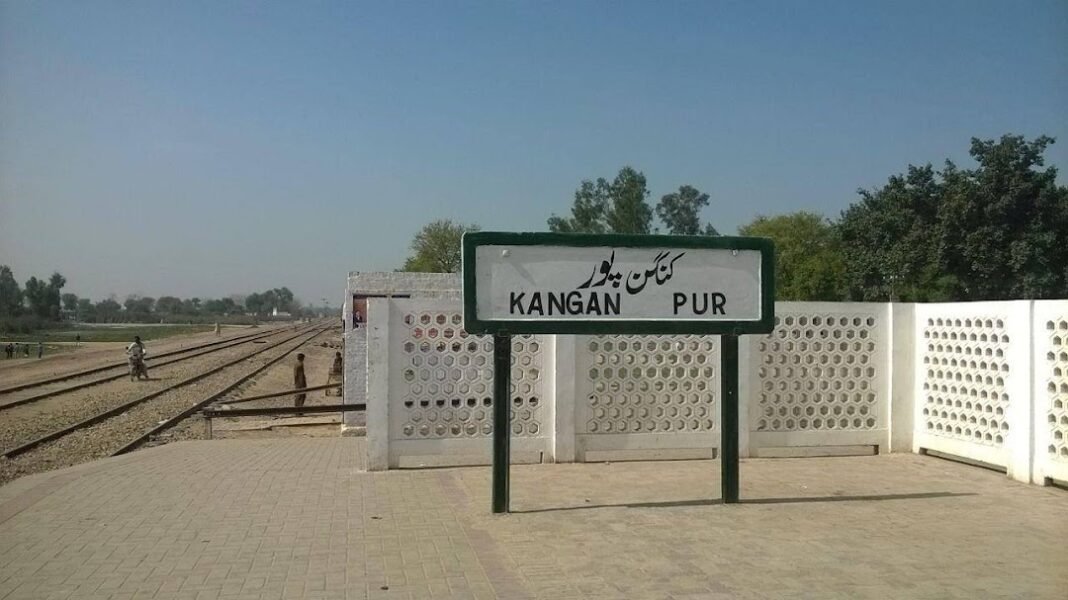
The town’s railway station is a modest heritage landmark in its own right and a reminder of the rail network that once connected these market towns to Lahore and Kasur. Train enthusiasts and photographers will enjoy it.
Explore Chunian and Kasur
Chunian, the tehsil headquarter about 26–29 km away, is a historic town on the old Beas riverbed, while Kasur city — about 50 km northeast — is the shrine city of the Sufi poet Bulleh Shah, whose dargah draws devotees from across Punjab. Either makes a fine extension to your Kanganpur day.
Famous Places In and Around Gurdwara Principal Bara Singh Wadhawa, Kanganpur
Gurdwara Malji Sahib, Kanganpur: The town’s other historic Sikh shrine, tied to Guru Nanak’s “Wasde raho” blessing — the essential pairing.
Kanganpur Railway Station: The town’s rail link, a small landmark for railway heritage fans.
Chunian: Historic tehsil town about 26–29 km away, on the former Beas riverbed.
Kasur: The district city, home to Bulleh Shah’s dargah and famous for its fish, falooda and Sufi heritage.
Pattoki: The nursery town of Punjab, about 35–40 km northwest — worth a stop for plant lovers.
How to Reach Gurdwara Principal Bara Singh Wadhawa, Kanganpur
Kanganpur lies in Kasur district, south of Lahore, and is reachable by road from Chunian, Kasur or Lahore. The gurdwara is in the Moti Masjid Mohalla of the new town — ask any local and they will point you to it.
Route Details
From Lahore (around 100–110 km, roughly 2.5–3 hours): Drive south toward Kasur and Chunian; the Lahore–Chunian road via Kanganpur covers about 145 km in total. From Chunian, Kanganpur is about 26–29 km south. Alternatively, approach via Kasur city (about 50 km northeast of Kanganpur).
From Chunian (around 26–29 km, roughly 40–50 minutes): Head south on the Kanganpur road. The town is well signposted.
From Kasur (around 50 km, roughly 1–1.5 hours): Drive southwest toward Kanganpur via the district roads.
From Islamabad (around 350 km, roughly 5.5–6 hours): Motorway to Lahore, then south to Kasur district. A long day — consider breaking the journey in Lahore.
From Karachi: Fly to Lahore, then drive south to Kanganpur.
By train: Kanganpur has its own railway station on the branch network — check current schedules, as branch-line services vary. The station is a short rickshaw ride from the Moti Masjid Mohalla.
Road conditions: The main roads to Chunian and Kasur are paved and in reasonable condition; the final town streets are typical qasbah roads. Winter fog (December–January) can slow morning driving; monsoon rains (July–September) can leave low stretches muddy.
Transport options: Private car or hired taxi from Lahore or Kasur is easiest. Buses and vans connect Lahore, Kasur and Chunian; from Chunian, local vans and rickshaws run to Kanganpur.
Where to Stay in Gurdwara Principal Bara Singh Wadhawa, Kanganpur
Kanganpur is a small town with only basic lodging, so most visitors base themselves elsewhere. Chunian has simple budget hotels and guesthouses adequate for an overnight stop. Kasur city offers a better range of mid-range hotels and is the natural base for exploring the district — including Bulleh Shah’s dargah. The most comfortable option is Lahore, two and a half to three hours away, with the full spectrum from budget guesthouses to luxury hotels; Kanganpur works perfectly as a day trip from the city. If you are doing a multi-day Kasur district heritage tour, one night in Kasur and day trips to Kanganpur and Chunian is a sensible plan.
Where to Eat: Local Foods of Gurdwara Principal Bara Singh Wadhawa, Kanganpur
The Kasur belt serves the hearty food of central Punjab. In Kanganpur town you will find dhabas with dal, sabzi, tandoori roti, and grilled items; in winter, sarson da saag with makki di roti is the dish of the season, and lassi is available year-round. Kasur city is the food highlight of the district — it is famous across Punjab for its fried fish, its rabri-like sweets, and above all its falooda, which food lovers travel for. A dhaba meal in this area is very budget-friendly, typically a few hundred rupees per person. In the mohalla around the gurdwara, accept offered chai graciously — it is part of the visit. Carry drinking water, and plan your main meal in Chunian or Kasur where choices are wider.
Weather in Gurdwara Principal Bara Singh Wadhawa, Kanganpur
Kanganpur sits on the central Punjab plains, with the classic four-season pattern: mild winters, a glorious spring, a hot summer, and a humid monsoon. November to March is the comfortable window for heritage travel.
| Season | Temperature Range | Conditions |
|---|---|---|
| Winter (Dec–Jan) | 4°C to 20°C | Cool and often foggy in the mornings; pleasant afternoons. |
| Spring (Feb–Mar) | 12°C to 28°C | Mild and green — the best season for exploring. |
| Summer (Apr–Jun) | 28°C to 43°C | Very hot and dry, especially May–June. Travel early or late. |
| Monsoon (Jul–Sep) | 28°C to 38°C | Hot and humid with heavy showers. |
| Autumn (Oct–Nov) | 15°C to 30°C | Dry and pleasant; a fine shoulder season. |
Language and Culture of Gurdwara Principal Bara Singh Wadhawa, Kanganpur
Punjabi is the mother tongue of Kanganpur, with Urdu widely understood. The town has the warm, unhurried culture of a Punjab qasbah — guests are honoured, elders are greeted with respect, and conversation flows easily over chai. Because families live in parts of the gurdwara complex, extra sensitivity matters: greet residents, ask permission before entering courtyards or photographing people, and keep noise down. Standard gurdwara etiquette applies at the shrine areas — cover your head, remove shoes, no tobacco or alcohol nearby. Dress modestly, as everywhere in the district.
Shopping in Gurdwara Principal Bara Singh Wadhawa, Kanganpur
Kanganpur’s bazaars serve daily needs — groceries, cloth, and household goods at small-town prices. For more interesting shopping, head to Kasur city: its markets are famous for leather footwear (Kasuri khussas), sweets, and the fish and food streets. Chunian’s bazaar is good for everyday Punjabi goods and fresh produce. If you are passing Pattoki, the nursery town, you can buy plants and saplings at excellent prices. There are no shopping malls in this belt — the traditional bazaars are the authentic experience.
Travel Tips for Gurdwara Principal Bara Singh Wadhawa, Kanganpur
Packing Essentials
A head covering for the shrine, easy-off shoes, water, and sun protection in summer; a warm layer for winter mornings. The mohalla lanes are best walked, so wear comfortable footwear. Carry a power bank and download offline maps — small-town data can be patchy. If you plan to photograph the dome, late afternoon gives the best light.
Safety Tips
Kanganpur is a peaceful town and visitors are welcomed. Travel in daylight, keep valuables discreet, and be extra considerate around the gurdwara since it is partly residential — do not wander into private rooms or courtyards uninvited. In winter fog, drive slowly with headlights on.
Money & Connectivity
Carry cash — small-town shops and rickshaws run on it, and the nearest reliable ATMs are in Chunian or Kasur. Jazz, Telenor, Zong and Ufone all cover the town, with 4G in the main areas. Fuel up in Chunian or Kasur before exploring the rural roads.
Best Time to Visit Gurdwara Principal Bara Singh Wadhawa, Kanganpur
Winter (November to February) — The Best Season
Cool air, clear skies and green fields make winter ideal for Kanganpur. Walk the mohallas, see both gurdwaras, and finish with Kasur’s food streets — all at their most pleasant. Watch for morning fog in December and January.
Spring (March) — Beautiful and Mild
March is lovely across Kasur district: mild weather, blooming fields, and perfect conditions for a combined Kanganpur–Chunian–Kasur heritage day.
Summer (April to June) — Hot, Travel Early
May and June are fierce on the plains. Start at dawn, rest at midday, and resume in the late afternoon if you must travel in summer.
Monsoon (July to September) — Lush but Humid
The rains green the countryside beautifully, but humidity is heavy and town streets can get muddy. Check conditions before setting out.
Final Thoughts
Gurdwara Principal Bara Singh Wadhawa will not be the most famous shrine you ever visit — and that is exactly why it matters. In a heritage landscape dominated by a few grand names, places like this keep the full story alive: the handsome domed darbar, the priests’ rooms turned Partition refuge, the Ferozepur families who made it home, the mohalla that grew around it. It is Sikh heritage as lived experience, not as monument.
Pair it with Malji Sahib across town, add Chunian or Kasur’s Bulleh Shah dargah, and you have one of the most rewarding day trips in central Punjab — quiet, authentic, and full of small discoveries. Go in winter, go respectfully, and go curious. For more heritage journeys across the country, explore our Explore Pakistan collection, including our guide to Gurdwara Malji Sahib, Kanganpur.
FAQs
Where is Gurdwara Principal Bara Singh Wadhawa, Kanganpur located?
In the Moti Masjid Mohalla of new Kanganpur city, Kasur district, Punjab — about 26–29 km south of Chunian and roughly 50 km southwest of Kasur city.
What is the best time to visit?
November to March, with winter (November–February) offering the most comfortable weather.
How do I reach Kanganpur?
Drive from Lahore (around 100–110 km, 2.5–3 hours) via Chunian, or from Kasur (around 50 km). Kanganpur also has a railway station. Local vans and rickshaws connect Chunian and Kanganpur.
Can I go inside the gurdwara?
Parts of the complex house resident families, so be respectful: view the domed building from the open areas, greet residents, and ask permission before entering any doorway.
Is it safe to visit?
Yes — a peaceful town where visitors are welcomed. Travel in daylight and be considerate in the residential parts of the complex.
Is it suitable for families?
Yes, as a day trip from Lahore, Kasur or Chunian. Bring water and snacks; facilities in the town are basic.
Where can I stay nearby?
Chunian has budget hotels; Kasur has mid-range options; Lahore (2.5–3 hours) is the most comfortable base.
What else should I see in Kanganpur?
The town’s other historic shrine, Gurdwara Malji Sahib — tied to Guru Nanak’s “Wasde raho” blessing — plus the railway station, and, further afield, Chunian town and Bulleh Shah’s dargah in Kasur.