There is a fort in southern Punjab that Alexander the Great may have visited, that Sikh governors rebuilt, that British troops fought beneath, and that most Pakistanis have never heard of. Harand Fort sprawls across fifty acres at the foot of the Sulaiman Range, its sixteen bastions and thin red-brick walls holding two thousand years of frontier history — Hindu, Macedonian, Muslim, Sikh, and British layers stacked like sediment. If you are the kind of traveler who prefers discovery over crowds, who would rather explore a mysterious ruin than queue for a famous one, this Harand Fort travel guide is for you.
Here is everything you need to plan the trip: why this forgotten fortress deserves your visit, the legends and the real history (from Raja Harnakish to Diwan Sawan Mal), what to see at the site, how to reach Harand Fort from Lahore, Islamabad, and Karachi, where to stay, what to eat in Rajanpur, and the best time to go. Southern Punjab’s heritage is criminally underexplored — Harand Fort is where you start changing that.
Quick Facts
- Location: Near the town of Harand, Rajanpur District, Punjab — at the foothills of the Sulaiman Range, close to the Punjab–Balochistan border, in Tehsil Rojhan
- Altitude: around 100 meters above sea level — low frontier plains at the mountains’ edge
- Famous For: A sprawling 50-acre ruined fortress with 16 bastions and distinctive thin red baked-brick walls; legends of Alexander the Great and Princess Naushaba; rebuilt 1831–1836 by the Sikh governor Diwan Sawan Mal
- Nearest City: Rajanpur (about 85 km); Jampur (about 60 km east)
- Accessibility: Moderate — paved highways to Rajanpur/Jampur, then rural roads toward Dajal and Harand; a car or hired vehicle is essential
- Known Landmarks: The fort’s gate and bastions, the old fort mound (the original site opposite the historic Chachar Pass), and the town of Harand itself
- Best For: History enthusiasts, off-the-beaten-path explorers, photographers of ruins, and travelers interested in the frontier history of Punjab and Balochistan
Why Visit Harand Fort
Pakistan has famous forts — Lahore Fort, Rohtas, Derawar — and they are magnificent. But they are also well-trodden, well-documented, and well-crowded. Harand Fort is the opposite: a genuine frontier fortress that history books mention and tourists ignore, standing half-ruined at the edge of the Sulaiman mountains where Punjab meets Balochistan. Visiting feels less like sightseeing and more like exploration. You will likely have the entire fifty acres to yourself, walking walls that have seen Hindu rajas, Sikh governors, and British cantonments, with only the wind and the mountains for company.
The fort’s story is irresistible. Local tradition says the first fortification was built by a Hindu ruler, Raja Harnakish (also called Harnacus), who named it after his son Hari Nand — a name that contracted over centuries into “Harand.” Then comes the legend that has clung to this place for eight hundred years: that Alexander the Great, marching home through these lands, met and married a local princess named Naushaba (or Noshaba) here — a tale the Persian poet Nizami immortalized in his Sikandarnama. Historians treat the story with caution, but standing at the fort with the Sulaiman Range behind you, it is easy to understand why the legend refuses to die.
The documented history is just as compelling. The fort guarded the frontier against the Baloch tribes of the Pachad and secured the Indus ferries; conquerors from Muhammad bin Qasim to Ahmad Shah Abdali passed through its orbit. In 1831–1836, Diwan Sawan Mal, the powerful Sikh governor of Multan, dismantled the old mud-brick fort and rebuilt the present baked-brick stronghold to subdue the local Gorchani Baloch tribe. In 1867, British troops fought Marri and Bugti irregulars beneath its walls. Layer upon layer of South Asian history, in one neglected, atmospheric ruin — and in December 2024, the provincial archaeology department called it “the last outpost of the twentieth satrapy of the Achaemenid Empire,” hinting at roots deeper than anyone has yet excavated.
There is also a cause worth supporting with your visit. Harand Fort is protected under the Punjab Special Premises (Preservation) Ordinance of 1985, Rs 90 million was allocated for its restoration in the 2018–19 development program, and a district museum at Rajanpur has been announced to curate finds from the fort — but progress has been slow, and Urdu-press commentators regularly invoke the fort as a symbol of the region’s neglected heritage. Every visitor who makes the journey is a small vote for this place mattering. Come for the legends and the red-brick bastions; come also because forgotten heritage needs friends. For more hidden corners of the country, browse our Explore Pakistan collection.
History of Harand Fort
Harand’s history is usually told in layers, because that is how the fort itself was built — each era reusing, rebuilding, and renaming what came before.
The legendary foundation. Local tradition attributes the earliest fortification to the Hindu ruler Raja Harnakish (rendered Harnacus in some accounts), who is said to have named the stronghold after his son Hari Nand; over time the name contracted to “Harand.” Another version names the builders as Raja Harnacus and his son Lok Bhagat, constructing on the pattern of the great ancient cities. Surface archaeology suggests the site was occupied at least as far back as the fifteenth to sixteenth century, and the town of Harand is described in regional histories as the oldest settlement in the area.
Alexander and Naushaba. The Persian epic Sikandarnama of Nizami places Alexander the Great at this site and recounts his legendary meeting with the princess Naushaba — beautiful, intelligent, and a skilled administrator of her father’s realm — whom he is said to have married after she saw through his disguise as a messenger. Modern historians treat the anecdote with caution; there is no firm historical validation. But the story’s persistence for centuries, retold in folklore and scholarship alike, has made it inseparable from the fort’s identity.
The Muslim centuries. With the coming of Islam to the region in the early eighth century, the fort passed through the hands of successive Muslim rulers — accounts name conquerors from Muhammad bin Qasim to Ahmad Shah Abdali in connection with the stronghold. It guarded the frontier and the Indus crossings through the medieval period, a military asset too valuable to abandon.
The Sikh rebuilding, 1831–1836. The fort you see today is essentially the work of Diwan Sawan Mal, the Sikh governor of Multan, who seized the area after defeating the local Gorchani Baloch tribe and, between 1831 and 1836, dismantled the earlier mud-brick enceinte and rebuilt the present fort in baked brick — the distinctive thin red bricks, sixteen bastions, and massive walls spread over fifty acres. His purpose was strategic: to curb the Baloch tribes of the Pachad and to secure the Indus ferries.
The British era. In 1867, British troops fought Marri–Bugti irregulars beneath the fort’s walls; after annexation the fort served briefly as a colonial cantonment and later housed Border Military Police posts — a role parts of the site still echo today, with border police presence helping deter looting.
Protection and the present. The Government of Punjab placed Harand Fort on its protected list under the Punjab Special Premises (Preservation) Ordinance in 1985. In the 2018–19 Annual Development Programme, Rs 90 million was allocated for initial conservation and archaeological excavation. A 2023–24 regional heritage survey again flagged the monument’s value and urged urgent structural consolidation, and in December 2024 the provincial Department of Archaeology — calling Harand “the last outpost of the twentieth satrapy of the Achaemenid Empire” — announced a district museum at Rajanpur to curate finds from the fort and neighboring mounds. The fort awaits the restoration its history deserves; visit now and you will see it raw, atmospheric, and entirely uncrowded.
Top Things to Do in Harand Fort
Walk the Walls and Bastions
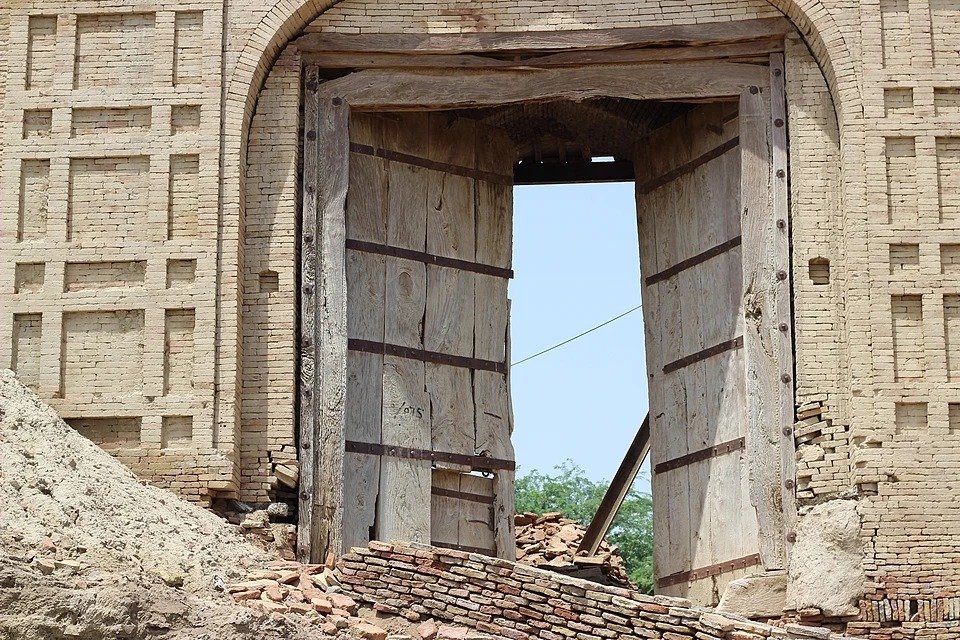
The essential experience: walk the perimeter of the fifty-acre enceinte and count the sixteen bastions that support the walls. The masonry itself is worth studying — the thin red baked bricks laid by Sawan Mal’s builders in the 1830s, distinct from the mud-brick of earlier phases. The scale is what surprises first-time visitors: this was not a small outpost but a major frontier fortress, and walking it gives you a physical sense of the Sikh empire’s military architecture. Watch your footing; the structure is ruined in places and there are no guardrails.
Enter Through the Historic Gate
The fort’s gate — photographed by every visitor who makes the journey — is the most intact and evocative part of the complex. Stand in the gateway and imagine the traffic of two centuries: Sikh garrisons, British cantonment troops, Border Military Police patrols, and before them all, the caravans and armies of the frontier. It is the best spot for photographs, especially in the warm light of late afternoon when the red bricks glow.
Find the Old Fort Site
Ask locally about the original fort site, opposite the historic Chachar Pass in the Sulaiman Range, where the first fortification stood before Sawan Mal dismantled it and rebuilt on the present location in 1831. Fading traces — debris and scattered bricks — still mark the old site. Visiting both locations tells the full story: why the fort moved, what the Sikh engineers kept, and what they abandoned.
Look Toward the Sulaiman Range
Harand Fort’s setting is half its magic. The fort sits at the very foot of the Sulaiman Range, the mountain wall that has defined Punjab’s western frontier for millennia. From the walls, the view west is all mountains — the same view that made this spot strategically vital for every ruler from the Hindu rajas to the British. Sunset over the Sulaimans from the fort walls is unforgettable.
Explore the Town of Harand
The small historic town beside the fort repays a wander. Described in regional histories as the area’s oldest settlement, Harand is a working Saraiki-Baloch frontier town — quiet streets, date palms, and a pace of life far from the cities. It is also the place to find a guide: ask at the town’s shops or tea stalls, and someone will know the fort’s stories, the way to the old site, and the current condition of the access tracks.
Famous Places In and Around Harand Fort
Harand Fort (the 1831–36 Sikh fortress) — the main site, with its gate, bastions, and red-brick walls. The old fort mound — the original site opposite Chachar Pass. Chachar Pass — the historic pass in the Sulaiman Range the fort was built to guard. Dajal — the nearby town on the fort’s access route. Rajanpur city — the district capital, about 85 km away, with the announced district museum site. The Indus River ferries — the historic crossings the fort was built to secure, reachable toward the river east of the fort.
How to Reach Harand Fort
Harand Fort is in the far southwest of Punjab, and getting there is a genuine road trip — which is part of the appeal. The nearest cities are Rajanpur (about 85 km) and Jampur (about 60 km east of the fort); the fort lies near Dajal, toward the Sulaiman foothills.
From Lahore (about 445 km to Rajanpur, 7–8 hours): Take the motorway network south — M-3/M-4 toward Multan, then the M-5 Sukkur–Multan motorway corridor — exiting toward Dera Ghazi Khan and Rajanpur, or travel the N-5 to Multan and continue southwest. From Rajanpur city, head west toward Jampur and Dajal, then follow local roads to Harand. Add roughly 1.5–2 hours from Rajanpur to the fort. The highways are excellent; the final rural stretch is paved but narrow.
From Islamabad (about 650 km, 10–11 hours): M-2 to Lahore, then the southern motorway corridor as above. This is a full day’s drive — leave at dawn, or break the journey in Multan (a destination in its own right). There is no practical air option: the nearest airports with regular service are Multan and Rahim Yar Khan, each still hours from the fort by road.
From Karachi (about 790 km to Rajanpur, 12–15 hours): The N-55 Indus Highway north via Hyderabad, Sukkur, and Larkana, or the motorway network via M-9/M-5. Like the Islamabad trip, most travelers break this journey — Sukkur or Multan make natural overnight stops. From Rajanpur, continue west as above.
By train: Rajanpur has a railway station on the main line with services from Lahore and Karachi (typically 10–12 hours from Lahore). From Rajanpur station, hire a private car or Suzuki van for the onward journey — public transport to Harand itself is minimal, so a hired vehicle is effectively essential.
Route Details
The practical route: reach Rajanpur by highway or rail → take the road west toward Jampur → continue toward Dajal → follow local signage and directions to Harand town and the fort. The fort is a known landmark locally — asking “Harand Qila” will get you pointed the right way from Dajal onward. Fuel up in Rajanpur or Jampur; carry water and snacks, as roadside facilities thin out toward the foothills. A car with decent ground clearance is ideal for the final rural roads. Travel in daylight, especially on your first visit.
Where to Stay in Harand Fort
There is no accommodation at the fort — it is a protected ruin in a rural area — so base yourself in Rajanpur city, about 85 km away. Rajanpur has the district’s best options: government rest houses (bookable through the relevant departments), mid-range hotels, and simple guesthouses, all budget-friendly by big-city standards. Jampur, closer to the fort at about 60 km, has more basic lodgings for travelers who want to minimize the morning drive. For a comfortable trip, the winning formula is: overnight in Rajanpur, leave at sunrise, explore the fort through the cool morning, and return by afternoon — or combine the fort with a wider southern-Punjab circuit (Multan, Uch Sharif, Derawar) and sleep in a different city each night. Book rest houses well ahead; hotel rooms in Rajanpur are limited and fill up during wedding season and local events.
Where to Eat: Local Foods of Harand Fort
You will eat in Rajanpur, Jampur, or Dajal — not at the fort — and the food is pure southern Punjab. The region’s signature is sajji: whole chicken or lamb roasted slowly over coals, a Baloch-origin dish perfected across the Sulaiman frontier. Dal with desi ghee and tandoori roti, chicken karahi, and saag in winter are the dhaba staples, and the area’s lassi is as thick as anywhere in Punjab. In mango season (June–July), southern Punjab’s orchards produce some of Pakistan’s finest chaunsa and anwar ratol — buy them from roadside sellers near Multan and Rajanpur. For sweets, sohan halwa from Multan (an easy add-on if you route through the city) is the region’s famous gift-box delicacy. Meals at local dhabas are very budget-friendly — a full meal for two costs only a few hundred rupees. Carry water and snacks for the fort itself; the nearest proper eateries are back in Dajal and Jampur.
Weather in Harand Fort
Harand sits in the hot, arid frontier zone where Punjab meets the Sulaiman Range: scorching summers, mild winters, and very little rain. The fort is entirely outdoors with no shade, so winter is by far the best season — and summer visits should be attempted only in the early morning, if at all.
| Season | Temperature Range | Conditions |
|---|---|---|
| Winter (Dec–Feb) | 8–20°C | Mild, sunny, ideal. Crisp mornings; a light jacket suffices. The best season. |
| Spring (Mar–Apr) | 20–35°C | Warming up fast; March is pleasant, April already hot at midday. |
| Summer (May–Aug) | 35–48°C | Brutally hot and dry. Avoid midday entirely; visit at sunrise or not at all. |
| Autumn (Sep–Nov) | 25–38°C | Cooling; October–November becomes comfortable again. |
Rain is scarce and usually comes with the monsoon (July–September) or western disturbances in winter — either can make the rural access roads muddy, so check conditions locally before setting out.
Language and Culture of Harand Fort
The fort stands in Saraiki-speaking country, with Balochi widely spoken among the Baloch tribes (Gorchani, Marri, Bugti, and others) of the frontier, and Urdu understood in the towns. This is the cultural meeting point of Punjab and Balochistan: Saraiki hospitality blended with Baloch tribal tradition, in a landscape of date palms, wheat fields, and the looming Sulaiman mountains. The region is deeply traditional — dress modestly (this matters more here than in the big cities), greet elders respectfully, and accept tea when offered; refusing hospitality can offend.
At the fort, remember you are visiting a protected monument in a sensitive border district: stay on the site, do not wander into nearby security installations (Border Military Police posts are in the area), and check in with locals on arrival — the town of Harand will know the current situation. Ask before photographing people, especially women. If you are traveling during Muharram or Ramadan, be aware of local observances and plan food and timing accordingly. A local guide from Harand town is worth far more than any map.
Shopping in Harand Fort
There are no souvenir shops at the fort — buy what you need in the towns. Rajanpur’s bazaars offer the crafts of the Saraiki belt: khussa shoes, embroidered fabrics and shawls, clay pottery, and date products from the region’s palms. Multan, if your route passes through it, is the great shopping stop of southern Punjab: famous blue pottery, camel-skin crafts, and sohan halwa. Winter brings excellent dry fruits to the region’s markets. There are no shopping malls anywhere near the fort; Rajanpur has small city markets and plazas for daily needs. The most meaningful “souvenir” from Harand is photographic — the gate at golden hour, the bastions against the Sulaimans.
Travel Tips for Harand Fort
Packing Essentials
Pack for a remote, shadeless ruin in a hot climate: wide-brimmed hat, sunglasses, strong sunscreen, and at least two liters of water per person — there is nothing to drink at the site. Sturdy closed shoes with good soles; the ground is uneven with loose brick and rubble. A light jacket for winter mornings, a fully charged phone with offline maps (download the area in advance), a power bank, and a basic first-aid kit. Binoculars are a bonus for the Sulaiman views. Carry all food for the site visit from Rajanpur or Jampur.
Safety Tips
Harand is in a settled district and the fort is routinely visited by domestic heritage travelers, but it is a remote border area — take sensible precautions. Travel in daylight, go with a companion or a local guide from Harand town, and let your hotel know your plans. Do not climb unstable wall sections or enter collapsed structures; the ruin is unmaintained in places. Keep to the fort and town; do not wander toward security posts or into the hills without local advice. The main natural risks are heat and dehydration — start early, carry water, and retreat to shade (your car) at midday. Road-wise, the highways are fine; drive the rural final stretch carefully, watching for livestock and slow tractor traffic.
Money & Connectivity
Cash is king: withdraw in Lahore, Multan, or Rajanpur — there are ATMs in Rajanpur city but nothing near the fort, and all rural transactions are cash. Mobile coverage from the major networks (Jazz, Telenor, Zong, Ufone) is generally available in the towns and along the highways, patchier near the foothills; download offline maps before leaving Rajanpur. There is no entry-ticket system at the fort currently — a local guide’s fee and your driver are the costs. Keep small notes for tea, tips, and village purchases.
Best Time to Visit Harand Fort
Winter (November to February) — The Best Season
Mild days of 15–20°C, clear skies, and the Sulaiman Range sharp on the horizon — winter is when Harand Fort is at its best. The red bricks photograph beautifully in the low winter light, walking the fifty acres is a pleasure, and the rural roads are at their most reliable. December and January can bring morning fog on the Punjab highways, so time long drives for after it lifts. This is the season for the full southern-Punjab heritage circuit.
Spring (March to April) — Good, Then Hot
March is still pleasant, with green fields around the fort. By April, midday temperatures push past 35°C and the comfortable window narrows to early morning. If spring is your only option, plan a sunrise visit and be back in Rajanpur by noon.
Summer (May to August) — Avoid
With temperatures approaching 48°C and zero shade on the site, summer at Harand Fort is not just unpleasant but genuinely risky. If you must pass through in summer, limit yourself to a brief dawn photo stop at the gate. The monsoon can also turn rural access roads to mud.
Autumn (September to November) — The Return
October breaks the heat, and November is genuinely lovely — clear, mild, and quiet. For travelers who cannot make winter, late autumn is the next-best window, with the added bonus of empty roads and an even emptier fort.
Final Thoughts
Harand Fort will never be Lahore Fort, and that is precisely its charm. It is a place where history has not been curated for you — where you read the layers yourself in red brick and mountain shadow, where the legend of Alexander and Naushaba hangs in the air whether or not it is true, and where you may well be the only visitor all day. In an age of overtourism, that solitude is a luxury.
Go in winter. Walk the bastions slowly, photograph the gate at golden hour, stand on the walls and look west to the Sulaimans, and spare a thought for the Hindu rajas, Sikh governors, and British officers who stood on the same ground watching the same mountains. Then tell people about it — forgotten forts survive on the attention of travelers. For more of Pakistan’s overlooked heritage, our Malam Jabba guide heads north to the mountains, and our Explore Pakistan collection gathers the whole series.
FAQs
Where is Harand Fort located?
Near the town of Harand in Rajanpur District, southern Punjab — at the foothills of the Sulaiman Range, close to the Punjab–Balochistan border, about 85 km from Rajanpur city and 60 km west of Jampur.
What is the best time to visit Harand Fort?
November to February, when days are mild (15–20°C) and clear. Avoid May to August, when temperatures can approach 48°C and the shadeless site is dangerous at midday. October–November is a good shoulder season.
How do I reach Harand Fort from Lahore?
Drive about 445 km (7–8 hours) via the southern motorway corridor to Rajanpur, then west through Jampur and Dajal to Harand town and the fort (about 1.5–2 hours more). Alternatively, take the train to Rajanpur and hire a car onward — public transport to the fort itself is minimal.
Is Harand Fort safe to visit?
Yes, with normal precautions for a remote area: travel in daylight, go with a companion or hire a local guide in Harand town, stay on the site, carry water, and let your hotel know your plans. The main risks are heat and the ruined structure itself — do not climb unstable walls.
What is the legend of Alexander at Harand Fort?
Local legend, retold in Nizami’s Persian epic the Sikandarnama, says Alexander the Great met and married a local princess named Naushaba at this site. Historians consider it unverified, but the tale has been attached to the fort for centuries.
Who built Harand Fort?
Tradition credits a Hindu ruler, Raja Harnakish, with the original fortification (named for his son Hari Nand). The present baked-brick fort with its 16 bastions was rebuilt in 1831–1836 by Diwan Sawan Mal, the Sikh governor of Multan, to control the local Baloch tribes and secure the Indus ferries.
Where can I stay near Harand Fort?
In Rajanpur city (about 85 km) — rest houses, mid-range hotels, and guesthouses — or more basically in Jampur (about 60 km). There is no accommodation at the fort itself; visit as a day trip from Rajanpur.
What food is available near Harand Fort?
Eat in Rajanpur, Jampur, or Dajal: southern-Punjabi staples including sajji, chicken karahi, dal with desi ghee, saag in winter, thick lassi, and mangoes in season. Carry water and snacks for the fort — there are no eateries at the site.