Quick Facts
- Location: Makran coastal region, Balochistan — spread across Lasbela, Awaran, and Gwadar districts, about 190–200 km west of Karachi
- Altitude: Sea level on the Arabian Sea coast rising into arid mountain ranges inland
- Famous For: Pakistan’s largest national park (about 6,100 sq km); the Princess of Hope and Sphinx rock formations; Chandragup mud volcanoes; Kund Malir beach; the Hinglaj Mata shrine
- Nearest City: Karachi (gateway); Uthal on the approach road
- Accessibility: The Makran Coastal Highway (N-10) runs about 109 km straight through the park; 3–5 hours from Karachi by road
- Known Landmarks: Princess of Hope, Sphinx of Balochistan, Chandragup mud volcanoes, Hingol River estuary, Kund Malir and Sapat beaches
- Best For: Road-trippers, campers, wildlife watchers, photographers, stargazers, and beach lovers
Why Visit Hingol National Park
Close your eyes and imagine a place where the desert meets the sea — where wind-carved cliffs glow copper at sunset, mud volcanoes bubble like the planet breathing. Also, a river full of crocodiles cuts through canyons to reach beaches that look Photoshopped. In fact, now open your eyes: that place is real, it is called Hingol. In addition, it is only a few hours from Karachi. Pakistan’s largest national park is not just a protected area on a map. It is the country’s most cinematic landscape, a 6,100-square-kilometre dreamscape that makes first-time visitors gasp out loud at the roadside.
What sets Hingol apart is its impossible variety. In a single day you can stand before the Princess of Hope — the regal, wind-sculpted figure that Hollywood’s Angelina Jolie named on a visit — climb an active mud volcano, watch migratory birds wheel over the Hingol estuary, swim at a golden beach, and sleep under more stars than you thought existed. Also, the park packs desert, mountains, riverine forest, mud volcanoes, and marine coastline into one boundary. Nowhere else in Pakistan gives you this many worlds in one trip.
The Wild Heart: Ibex, Crocodiles and Eagles
And then there is the wild heart of it. Hingol is a genuine sanctuary: wild Sindh ibex pick their way along the ridges, chinkara gazelles flash across the plains, Balochistan urial graze the high ground. The Hingol River — the longest river in Balochistan, flowing year-round through hyper-arid land — shelters marsh crocodiles and some two hundred bird species, from imperial eagles to the elusive Hume’s owl. The estuary where the river meets the Arabian Sea is a vital wintering ground on the Indus Flyway, drawing migrants all the way from Siberia. This is not a zoo; sightings take patience and luck, which makes them unforgettable when they come.
Who is Hingol perfect for? Also, the Karachi weekend warrior who has done the northern areas and wants something utterly different. In fact, photographers chasing alien landscapes. In addition, campers who want to wake up to sea wind and fall asleep to silence. Families ready for a beach day with a side of geology. Spiritual travelers combining the park with the Hinglaj Mata pilgrimage at its heart. If your idea of a perfect trip mixes adventure, nature, and a little bit of the surreal, Hingol is calling. And the cool months from October to March are the time to answer.
History of Hingol National Park
The land that is now Hingol National Park has been a crossroads of nature and humanity for far longer than any park boundary. Also, the Makran coast was part of the ancient maritime world: Alexander the Great’s admiral Nearchus sailed these waters in 325 BCE. The coast has carried Arab, Persian, and Baloch seafarers ever since. Inland, the Hingol River valley sheltered some of the region’s oldest human stories — rock shelters, ancient routes. The sacred geography of the Hinglaj shrine. This has drawn pilgrims for centuries along what was once a brutal 150-kilometre foot journey through waterless desert.
The modern park was born in 1988. Also, the Government of Balochistan declared some 6,100 square kilometres — about 619,000 hectares — a national park, making it the largest in Pakistan. In fact, the land is distributed across three districts: roughly 56 percent in Awaran, 30 percent in Gwadar, and 14 percent in Lasbela. Named for the Hingol River that runs through its heart to the Arabian Sea, the park was established to protect an extraordinary convergence of ecosystems: arid subtropical forest in the north, barren mountain ranges, riverine corridors of tamarisk and acacia, mud-volcano fields. A marine zone of beaches, mangroves, dolphins, and sea turtles.
From Obscurity to Protection
For years, Hingol remained one of Pakistan’s least-visited parks simply because getting there was hard. The turning point was the completion of the Makran Coastal Highway in 2004. This threaded about 109 kilometres of smooth road directly through the park. Suddenly the Princess of Hope, the Sphinx, the mud volcanoes. The beaches were within a day’s drive of Karachi — and Hingol’s rock formations began appearing in photographs around the world, even featuring in NASA’s Earth Observatory as one of the planet’s striking arid landscapes.
Tourism is still light-touch — there are no gates, ticket booths, or lodges inside the park — which keeps the wilderness feeling genuinely wild. Conservationists continue to watch the area closely: the Hingol River’s fragile estuary ecosystem, with its crocodiles and migratory birds, depends on the river flowing freely to the sea, and proposals such as dam projects on the Hingol have drawn concern from environmental researchers.
Top Things to Do in Hingol National Park
Meet the Princess of Hope
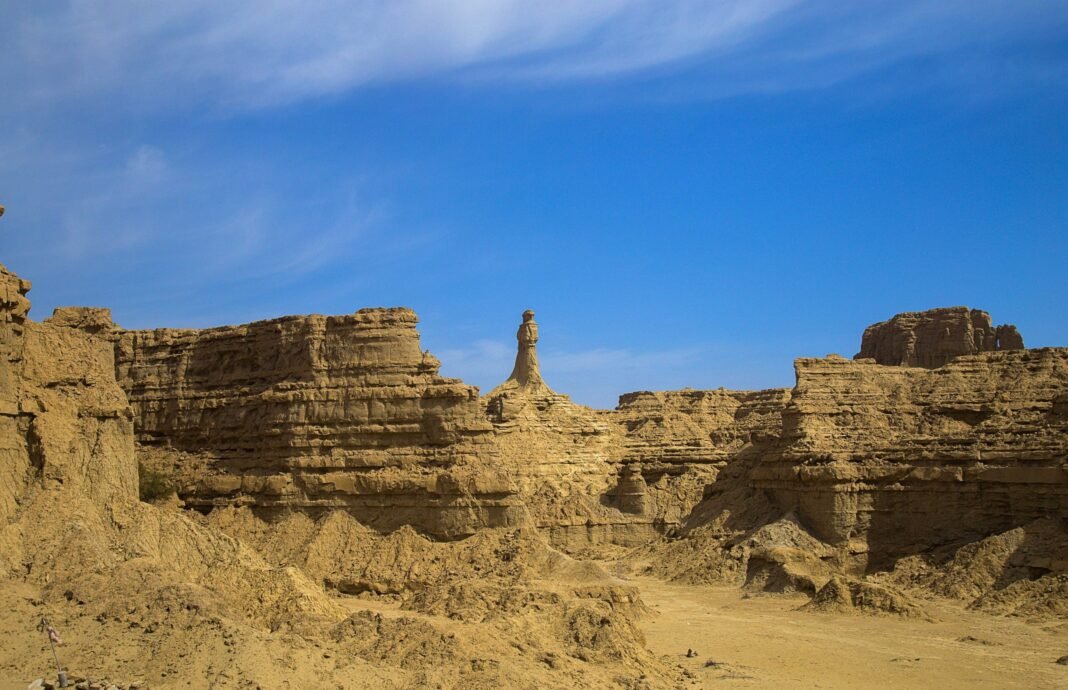
The park’s most famous resident is not alive at all. Also, it is a mimetolith, a rock formation sculpted by centuries of wind and rain into the unmistakable shape of a robed, crowned woman gazing at the horizon. Named by Angelina Jolie during her UNHCR visit to Pakistan, the Princess of Hope stands along the coastal highway and stops every convoy in its tracks. Go at golden hour. The low sun sets the whole formation glowing, and walk the short trail around its base for the full 360-degree effect. Allow at least an hour; photographers will want two.
Find the Sphinx of Balochistan
Not far from the Princess, another wind-carved giant keeps watch over the highway: a natural formation uncannily resembling the Great Sphinx of Giza, complete with headdress-like ridges. Park at the viewpoint, and let your imagination do the rest. The pairing of the Princess and the Sphinx within a few kilometres of each other is pure Hingol magic — geology imitating art.
Climb the Chandragup Mud Volcanoes
Hingol’s eastern reaches hold a field of mud volcanoes. Chandragup is the king of them — one of the largest and most active mud volcanoes in the region. Instead of lava, these strange cones vent methane and grey mud that bubbles, gurgles, and occasionally erupts in slow, cold fountains. The climb is steep and the mud slippery, but standing at the crater rim, watching the earth breathe, is one of Pakistan’s great natural spectacles. Hindu pilgrims have climbed it for generations as part of the Hinglaj pilgrimage, tossing coconuts into the crater as offerings.
Swim and Camp at Kund Malir Beach
Ask Karachiites to name Pakistan’s most beautiful beach and many will say Kund Malir — a sweeping arc of golden sand where desert mountains plunge straight into the Arabian Sea. Also, the water is clear, the sunsets are operatic, and at night the sky is ink-black and star-choked. In fact, swim in daylight (never alone, and respect the surf), walk the shoreline at dusk, and camp on the sand with a bonfire. Tour operators run organized overnight camps with meals; independent campers should bring everything and leave nothing.
Explore the Hingol River Estuary
Where the Hingol River meets the sea, it spreads into an estuary of mudflats, mangroves, and shallow channels — a haven for waterfowl, waders. Also, the park’s famous marsh (mugger) crocodiles. In fact, bring binoculars: winter brings waves of migratory birds down the Indus Flyway from Siberia. The patient observer can spot everything from flamingos to fishing eagles. Keep a respectful distance from the water’s edge — the crocodiles are wild and this is their home.
Go Wildlife Watching at Dawn
Hingol’s mammals are shy, but dawn is your best chance. Scan the ridgelines for the curved horns of Sindh ibex, watch the open plains for chinkara gazelles, and look to the high ground for Balochistan urial. Birders should budget a full morning at the estuary and riverine thickets: around 200 species have been recorded here, including imperial eagles, the rare Hume’s (Omani) owl. Pallas’s fish eagle. A local guide dramatically improves your odds — and your understanding.
Drive, Photograph, and Stargaze the Night Desert
Some of Hingol’s best moments need no itinerary: pulling over where the highway crests a ridge and the whole badlands layout glitters below. Also, photographing the “Mars on Earth” terrain in the blue hour. Lying on a camp mat at midnight while the Milky Way burns overhead. The park’s darkness — far from any city glow — makes it one of Pakistan’s premier stargazing spots. A tripod and a little patience will reward you with shots your friends won’t believe were taken in Pakistan.
Famous Places In and Around Hingol National Park
- Princess of Hope — the iconic wind-sculpted “princess” gazing over the desert; the park’s signature photo stop.
- Sphinx of Balochistan — the natural sphinx-like formation near the highway viewpoints.
- Chandragup Mud Volcano — the great active mud volcano; climb, offerings, and crater views.
- Kund Malir Beach — golden-sand beach with desert mountains meeting the sea; swimming and camping.
- Sapat Beach & Buji Koh — wilder, more remote beaches further west for the truly adventurous.
- Hinglaj Mata Temple — the sacred Shakti Peetha cave shrine in the Hingol gorge, at the park’s spiritual heart.
- Hingol River Estuary — mangroves, migratory birds, and marsh crocodiles where the river meets the sea.
How to Reach Hingol National Park
Hingol is a road-trip park: there is no railway station or airstrip inside it. Also, the Makran Coastal Highway is your lifeline. The good news is that the highway runs right through the park, so “reaching” Hingol really means choosing how far along the N-10 you want to go.
From Karachi: the park boundary is roughly 190–200 km west of the city — about 3 to 4 hours to the first viewpoints (Princess of Hope, Sphinx) and 4 to 5 hours to Kund Malir, depending on stops. Take the RCD Highway (N-25) to Zero Point near Uthal, then join the Makran Coastal Highway (N-10) west. From Islamabad: fly to Karachi (about 2 hours) and drive. The overland distance is roughly 1,400 km. From Lahore: fly to Karachi (under 2 hours), then drive. The road distance is roughly 1,200 km.
Nearest airport: Jinnah International Airport, Karachi. Road conditions: the N-10 is paved and generally in good shape. Also, it is a remote desert highway — fill up in Karachi or Uthal, carry drinking water, and check your spare. In fact, side tracks to the mud volcanoes, the Hinglaj gorge, and the beaches are unpaved and rough. A high-clearance vehicle or 4×4 is strongly recommended for anything beyond the highway viewpoints. Transport options: a private car or hired 4×4 with driver from Karachi is the standard choice and gives full freedom.
Dozens of Karachi tour operators run organized day trips and overnight camping tours to Hingol–Kund Malir, which is the easiest option for first-timers — transport, guide, meals, and camp setup included. Public transport will not get you into the park’s interior.
Route Details
Step 1: Leave Karachi at dawn (5–6 a.m.) via the RCD Highway (N-25) toward Uthal. Step 2: At Zero Point, turn west onto the Makran Coastal Highway (N-10) toward Gwadar. Next, after roughly 190 km, you enter Hingol National Park — stop at the Princess of Hope and Sphinx viewpoints. Then, continue west for the Chandragup mud volcano turnoff and the Hinglaj gorge road, or push on to Kund Malir beach (about another hour). Finally, for the return, retrace the N-10 to Karachi — do not attempt the interior tracks after dark.
Where to Stay in Hingol National Park
There are no hotels or lodges inside the park. And that is the adventure. Karachi is the base for day-trippers, with the full range from luxury to budget. Uthal, on the approach road, has simple guesthouses for those who want an early start.
But the classic Hingol stay is camping: organized tour operators run beach camps at Kund Malir with tents, mattresses, bonfires, barbecue dinners, and breakfast — book through a reputable Karachi operator, especially on winter weekends when the popular camps fill up. Mid-range comfort seekers can also look at the small resorts and huts that have sprung up along the coastal highway near Kund Malir in recent years. Standards are basic but improving. Independent campers: go in a group, carry all water and food, camp well above the high-tide line, and pack out every scrap of litter.
Where to Eat: Local Foods of Hingol National Park
The park has no restaurants, so food is a bring-it-or-plan-it affair. Karachi is your provisioning city — load up on water (more than you think), fruit, and snacks. The highway dhabas near Uthal and along the N-10 serve honest road food: daal, mixed sabzi, fresh tandoori roti, and chicken karahi at the busier stops. This is Balochistan, so watch for the province’s signatures: sajji, lamb slow-roasted over coals with nothing but salt, and kaak, the dense stone-baked bread that keeps for days — the original travel food of the Makran.
Fresh seafood appears at the coastal settlements if you know where to ask, simply grilled and superb. Organized camping tours include barbecue dinners and breakfasts. Budget for a modest per-person daily food cost on self-drive trips; the tour packages bundle it in.
Weather in Hingol National Park
Hingol is hyper-arid coastal desert: rain is rare, sun is constant, and the temperature swing between seasons is extreme. The sea moderates the coast slightly, but inland — around the mud volcanoes and the gorge — summer heat is brutal. Also, the park’s entire visitor season is built around the cool months, and for good reason.
| Season | Temperature Range | Conditions |
|---|---|---|
| Winter (Dec–Feb) | 10–25°C | Mild days, cool nights, crystal-clear air. Peak season for camping, wildlife, and photography. |
| Spring (Mar–Apr) | 20–35°C | Warming fast; April hosts the Hinglaj Yatra. Good for the shrine, hot for midday hiking. |
| Summer (May–Sep) | 30–45°C+ | Extreme desert heat, especially inland. Not recommended for park visits. |
| Autumn (Oct–Nov) | 18–32°C | Heat breaking, skies clearing. A superb shoulder season with thin crowds. |
Language and Culture of Hingol National Park
The park lies in Baloch country: Balochi and Brahui are the local languages, with Sindhi and Urdu understood along the highway. Also, the coastal communities are fishing and herding people with a deep, practical knowledge of this harsh land. The guides who can read ibex tracks and find water are worth their weight in gold. Baloch hospitality is legendary but formal: greet elders first, accept offered tea, dress modestly, and ask before photographing people. The Hinglaj shrine at the park’s heart is sacred to Hindus and respected by local Muslims as Bibi Nani — visitors of all faiths are expected to honor that shared reverence.
This is also a fragile ecosystem: stay on tracks, never light fires outside designated camp spots, and carry out all litter, including food waste.
Shopping in Hingol National Park
There is no shopping inside the park — come for wilderness, not retail. On the road, Uthal’s small bazaars sell Balochi embroidery, traditional caps, and dry fruits. During the April Hinglaj Yatra, temporary stalls near the shrine sell devotional items, bangles, and local snacks. For real souvenir hunting, do it in Karachi before you leave: Empress Market for handicrafts and spices, Burns Road for food gifts. There are no shopping malls within a hundred kilometres of the park — plan accordingly and enjoy the digital detox.
Local Events and Festivals
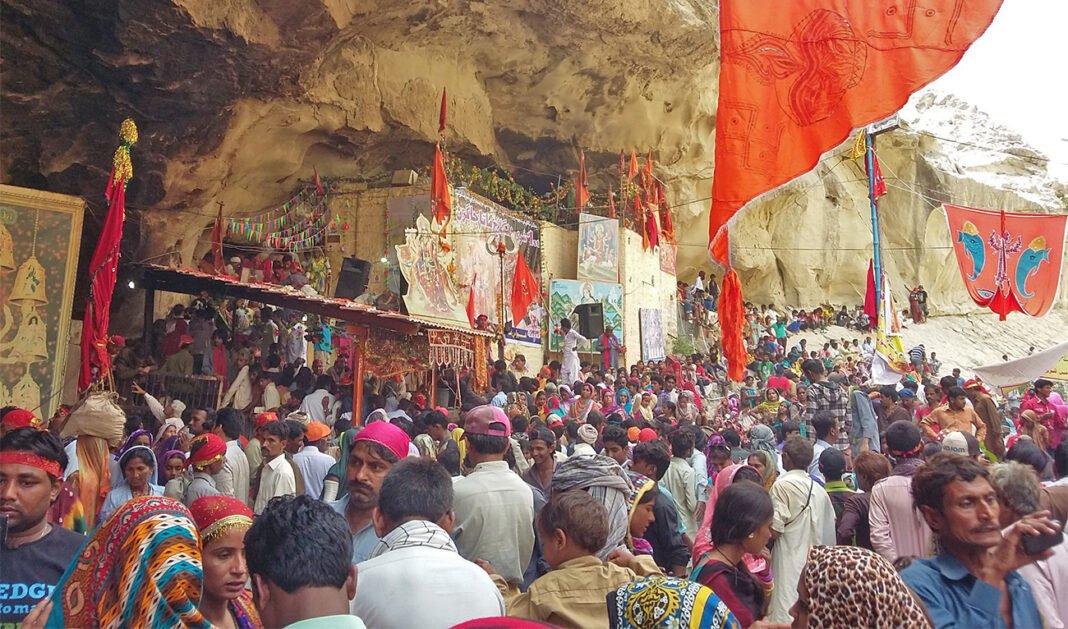
Hinglaj Yatra (April, four days): held around Chaitra Navaratri at the Hinglaj Mata shrine inside the park, this is the largest Hindu pilgrimage in Pakistan — hundreds of thousands of devotees, the barefoot desert march, ritual bathing in the Hingol River, and coconut offerings at the Chandragup mud volcano. The park is at its most alive. Its busiest, during these four days. Navaratri observances at the shrine draw smaller devout crowds twice a year. Also, outside these, the park’s “events” are natural ones: the winter arrival of migratory birds on the Indus Flyway (November–February) is the wildlife calendar’s headline act.
Travel Tips for Hingol National Park
Packing Essentials
Sun armor: hat, sunglasses, sunscreen. Water: at least 4–5 litres per person per day. Also, sturdy shoes with grip for the volcano and gorge rocks. Meanwhile, warm layers for winter desert nights (temperatures can drop sharply after sunset). Binoculars for wildlife, a power bank, a basic first-aid kit, and rubbish bags. There are no bins in the wilderness.
Safety Tips
Travel in daylight in a reliable, high-clearance vehicle; the desert between settlements is empty and help is far. Also, swim only in daylight, never alone, and respect the sea’s moods at Kund Malir. Keep well back from estuary waters (wild crocodiles) and from cliff edges. Check current travel advisories for Balochistan before departure, stick to the highway corridor and established tracks, and travel with a group or reputable operator for overnights.
Money & Connectivity
Carry all cash from Karachi — there are no ATMs in or near the park. Also, mobile coverage is patchy to nonexistent across much of the park. In fact, download offline maps and share your itinerary with someone at home. Fuel up fully at Karachi or Uthal; there are no fuel stations inside the park.
Best Time to Visit Hingol National Park
Winter (December–February) — The Golden Season
The park at its best: mild days, starry cold nights, migratory birds crowding the estuary, and perfect camping weather. This is when Karachi’s tour operators run their full schedules. Also, book camps on weekends in advance.
Spring (March–April) — The Yatra Season
April brings the great Hinglaj Yatra — an unforgettable cultural spectacle at the park’s heart. Days are hot but manageable; combine the pilgrimage energy with the park’s landscapes.
Autumn (October–November) — The Insider’s Pick
Cooling air, empty viewpoints, and the desert all to yourself. Also, arguably the finest time for photographers and solitude seekers.
Summer (May–September) — Skip It
Ferocious heat, dust, and little shade make summer visits punishing and, for the interior, genuinely risky. Also, wait for October.
Final Thoughts
Hingol National Park is Pakistan’s great plot twist. The destination that proves this country’s beauty is not only in its northern mountains. Also, in a single park boundary it holds a princess carved by wind, a sphinx built by no one, volcanoes that erupt cold mud, a river of crocodiles, beaches of gold. A goddess in a cave. It is wild, humbling, and utterly unlike anywhere else you have been. And it is sitting there, a few hours from Karachi, waiting for the cool season.
Go with a full tank, an open schedule, and respect for the desert. Camp under the stars at Kund Malir, climb Chandragup at dawn, and stand quietly in the Hinglaj gorge. Then keep driving west to Gwadar for the full Makran coast story, or dive deeper into the shrine’s world with our Hinglaj Mata Temple guide. For more southern adventures, browse the Explore Pakistan collection — and when the mountains call again, Hunza Valley is waiting.
FAQs
Where is Hingol National Park located?
On the Makran coast of Balochistan, spread across Lasbela, Awaran. Also, Gwadar districts — about 190–200 km west of Karachi, with the Makran Coastal Highway running through it.
What is the best time to visit Hingol National Park?
October to March, with December–February the peak for camping and wildlife. Also, Avoid May–September’s extreme heat; April is Yatra season at the Hinglaj shrine.
How do I reach Hingol National Park from Karachi?
Drive the Makran Coastal Highway (N-10) west via Uthal — 3–5 hours to the main sights. Also, a high-clearance vehicle is recommended; many visitors join organized tours from Karachi.
Is Hingol National Park safe to visit?
The highway corridor is an established tourist route. Also, travel in daylight, use a reliable vehicle or tour operator, check current Balochistan advisories, carry water and fuel, and stick to known tracks.
Is it suitable for families?
Yes. The highway viewpoints and Kund Malir beach suit families well, especially with an organized tour handling logistics. Also, the volcano climb and gorge tracks are better for older children and fit adults.
Where can I stay in Hingol National Park?
There are no hotels inside the park. Also, options: day-trip from Karachi, simple guesthouses at Uthal, or — the classic choice — organized beach/desert camping tours at Kund Malir.
What food is available?
Nothing inside the park; stock up in Karachi. Also, Highway dhabas serve daal, karahi, and roti; try Balochistan’s sajji and kaak. In fact, tour packages include meals.
Can I really see wildlife in Hingol?
Yes, with patience: Sindh ibex, chinkara gazelles. Also, Balochistan urial at dawn, some 200 bird species at the estuary in winter, and marsh crocodiles in the Hingol River. In fact, a local guide greatly improves your chances.