Imagine standing at the foot of a rust-red cliff while a seven-metre Buddha, carved into the rock over thirteen centuries ago, looks out serenely over the valley below. That is the moment Jahanabad Buddha gives you, and it is unlike anything else in Pakistan. This is not a museum piece behind glass. It is a living monument cut straight into the mountainside, a survivor of dynamite and devotion alike, and one of the most moving heritage sites in all of South Asia.
Swat is often called the Switzerland of Pakistan for its green valleys and snow-capped peaks. Also, its real treasure is time itself. Few visitors realise that this valley was once the beating heart of Buddhist civilisation in the Gandhara region, a place so sacred that Chinese pilgrims crossed deserts and mountains to study here. The Jahanabad Buddha is the single most powerful reminder of that past. This Jahanabad Buddha, Swat travel guide will help you plan a visit that does it justice.
Quick Facts
- Location: Jahanabad village, near Manglawar, Swat Valley, Khyber Pakhtunkhwa, Pakistan
- Altitude: The valley floor sits at around 1,000 metres above sea level; the 7-metre carving is cut high into the cliff face
- Famous For: The largest seated Buddhist rock carving in South Asia, carved in the 7th or 8th century CE
- Nearest City: Mingora (Saidu Sharif), roughly a 30 to 40 minute drive away
- Accessibility: Paved road from Mingora via Manglawar, followed by a short walk up to the base of the cliff
- Known Landmarks: The Buddha carving itself, plus nearby Shingardar Stupa, Amluk Dara Stupa and the Swat Museum
- Best For: History lovers, culture travellers, photographers, and families looking for a meaningful day trip
Why Visit Jahanabad Buddha, Swat
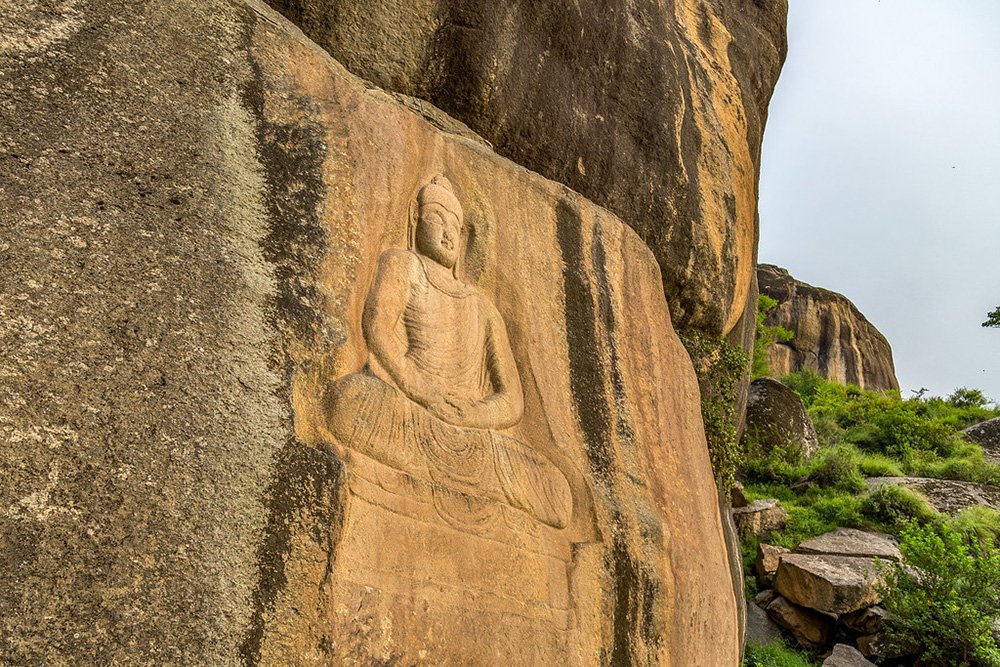
There are beautiful places in Pakistan, and then there are places that change the way you see the country. Jahanabad Buddha belongs to the second group. Standing before it, you are looking at a masterpiece of the Gandhara artistic tradition: a seated Buddha in deep meditation, with snail-shell curls, a prominent topknot and long earlobes, his robes carved in the flowing Greco-Buddhist style that made Swat famous across the ancient world. The head was carved deliberately large, a 1,400-year-old optical trick. That viewed from the valley floor the proportions look perfectly balanced. The ancient sculptors engineered perspective into stone centuries before Renaissance painters figured it out.
But the carving’s story is what truly sets it apart. Also, In September 2007, militants climbed the cliff, drilled holes into the Buddha’s face and shoulders, and detonated explosives. In fact, the nose, eyes and upper face were destroyed in an echo of the Bamiyan destruction of 2001. For years the Buddha stared blindly over the valley, a wounded symbol of everything the region had endured. Then, over four painstaking years, the Italian Archaeological Mission in Swat rebuilt the face using laser scanning, 3D surveying technology and archival photographs taken by the British explorer Aurel Stein in 1926.
Completed in October 2016, the restoration deliberately left some blast scars visible. The monument now carries both its glory and its wounds. Visiting is an act of quiet solidarity with a valley that refused to let its history be erased.
Sunrise on the Red Cliff
This is also a perfect traveller’s destination in the practical sense. Unlike remote stupas that demand long hikes, Jahanabad Buddha is an easy excursion from Mingora, fitting neatly into a wider Swat itinerary. You can stand before a seventh-century marvel in the morning and be picnicking by a river in the afternoon. It suits families with children who can grasp the story, photographers chasing golden-hour light on red rock, and anyone who wants their travels to mean something deeper than a selfie.
Finally, the setting sells itself. Also, the Buddha is carved into a reddish cliff that glows at sunrise and sunset, framed by Swat’s orchards and terraced fields. Combine the visit with the Swat Museum, the stupas of the Barikot and Manglawar area. The valley’s famous fruit orchards. You have a day that blends awe, learning and natural beauty in a way few single sites in Pakistan can match. If you are browsing Explore Pakistan ideas, this one deserves a permanent place on your shortlist.
History of Jahanabad Buddha, Swat
To understand the Jahanabad Buddha, you have to understand Swat itself, known to the ancient world as Uddiyana, the “garden” kingdom. Buddhism took root here in the 3rd century BCE, when the Mauryan emperor Ashoka sent missionaries across the region. It flowered spectacularly under the Kushan Empire, particularly during the reign of Kanishka in the 2nd century CE. Swat became one of the great centres of the Gandhara civilisation, where Greek artistic techniques, inherited from Alexander the Great’s campaigns, fused with Buddhist spirituality to create a style found nowhere else on earth.
The valley’s golden age of pilgrimage came in the 7th century CE. Also, the Chinese traveller Xuanzang passed through Uddiyana and recorded a landscape thick with monasteries and stupas, home to thousands of monks. In fact, it was in this era, the 7th or 8th century CE, that the Jahanabad Buddha was carved directly into the cliff, a colossal act of devotion overlooking the ancient capital region near Manglawar. The sculpture depicts the Buddha in dhyana mudra, the gesture of meditation, legs crossed and hands resting in the lap.
Locally the figure is known as Budghat, and for over a millennium it watched over farmers, traders and pilgrims moving through the valley.
The Blast and the Restoration
The carving entered the modern historical record in 1926. The Hungarian-British archaeologist Aurel Stein photographed and described it during his survey of Swat’s Buddhist remains. Stein’s photographs would prove priceless nearly a century later. Buddhism had long since faded from the valley by then. The Buddha remained, serene and watchful, as Swat passed through princely rule, accession to Pakistan in 1969. The upheavals of the 21st century.
The darkest chapter came in September 2007. Also, militants dynamited the face in an attack that echoed the Taliban’s destruction of the Bamiyan Buddhas in 2001. In fact, the explosion destroyed the nose, eyes and entire upper face. Charges placed in the shoulders mercifully failed to detonate, leaving the torso intact.
For the valley’s historians, the loss was personal: Swati scholar Parvesh Shaheen said it felt “like they killed my father.” The Italian Archaeological Mission, which has worked in Swat for decades, then undertook a four-year restoration using 3D technology and Stein’s 1926 photographs, mapping every missing section and rebuilding the face from fragments recovered at the cliff base. The restored Buddha, unveiled in October 2016, stands today as one of the world’s most remarkable stories of cultural recovery. A powerful symbol of tolerance in a valley that has reclaimed its peace.
Top Things to Do in Jahanabad Buddha, Swat
Stand Before the Great Carving
This is the heart of the visit, so give it the time it deserves. Also, walk up to the base of the cliff and spend a slow half hour simply looking. Notice the snail-shell curls, the folded robes, the calm of the dhyana mudra. Read the visible scars of 2007 the way you would read the lines on an elder’s face: they are part of the story now. Early morning and late afternoon are the best times. The low sun sets the reddish rock glowing and the carving’s features stand out in relief.
Bring a camera with a decent zoom, since the figure sits high on the cliff face.
Visit the Swat Museum in Saidu Sharif
No trip to Jahanabad is complete without the Swat Museum in nearby Saidu Sharif, one of Pakistan’s finest regional museums. Also, its galleries hold Gandhara sculptures, stucco heads, coins and artefacts excavated from across the valley, giving you the full context of the civilisation that carved the Buddha. The museum’s collection makes the cliff carving feel like the final chapter of a story you have just read in full. Allow at least an hour, and note that photography rules may apply inside the galleries.
Explore Shingardar Stupa
A short drive from the Jahanabad area, the Shingardar Stupa near Barikot is one of the most impressive surviving stupas in Swat, a great domed monument that has stood for nearly two thousand years. Its massive base and dome give you a sense of the scale of Buddhist architecture in the valley. Also, the setting among fields and hills is quietly beautiful. In fact, pairing the stupa with the cliff carving in a single day gives you both faces of Gandhara art: monumental architecture and intimate rock sculpture.
Walk the Orchards and Village Lanes of Manglawar
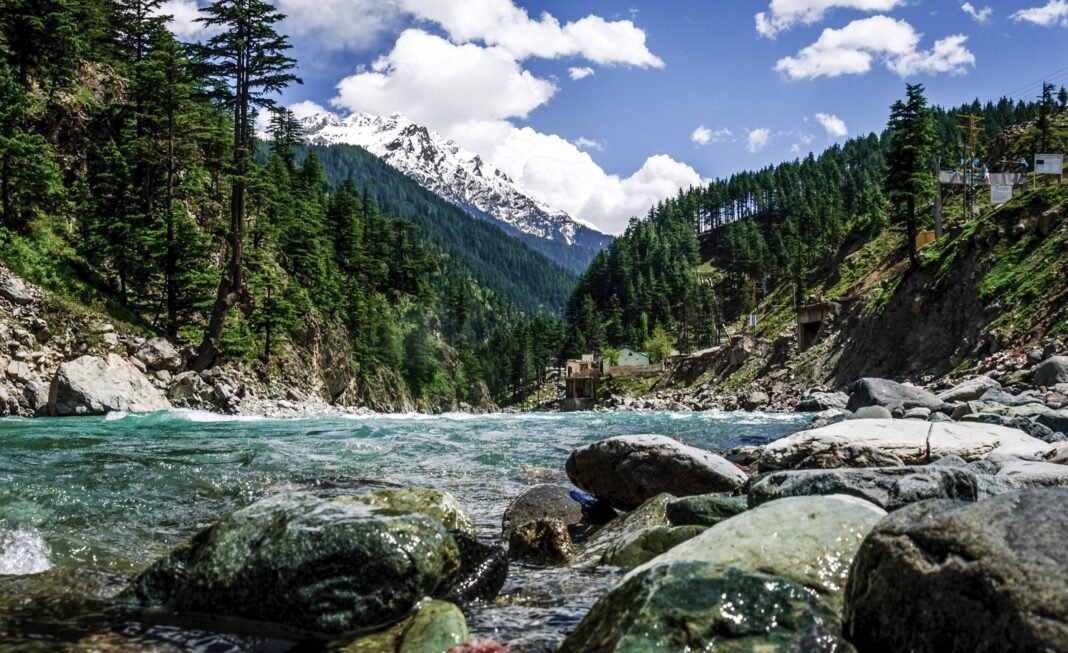
The countryside around Jahanabad and Manglawar is classic Swat: terraced fields, fruit orchards heavy with apricots, peaches and persimmons in season, and irrigation channels shaded by poplars. A gentle walk through the village lanes, with the snow-dusted Hindu Kush foothills on the horizon, is the perfect way to wind down after the history-heavy morning. Also, local shopkeepers are used to visitors and happy to chat. In fact, the roadside fruit in season is some of the best in the country.
Photograph the Cliff at Golden Hour
Photographers should plan their visit around light. Also, the carving faces in a direction that catches warm evening light beautifully. In fact, the reddish stone of the cliff turns almost copper at sunset. In addition, a tripod and a telephoto lens will let you capture the serene detail of the restored face. Even phone cameras do well here in good light. The contrast of ancient stone against Swat’s green valley makes for effortlessly striking compositions.
Combine with a Malam Jabba or Bahrain Day Trip
If you have a second day, Jahanabad makes an ideal cultural stop on the way to Swat’s mountain resorts. Also, head up to Malam Jabba for alpine scenery and the ski resort, or follow the Swat River north to Bahrain, famous for its riverside bazaars and trout. The contrast between ancient heritage and living mountain culture is exactly what makes Swat such a rewarding destination.
Famous Places In and Around Jahanabad Buddha, Swat
- Swat Museum, Saidu Sharif: The valley’s premier collection of Gandhara art and artefacts.
- Shingardar Stupa: A monumental ancient stupa near Barikot, one of Swat’s finest.
- Amluk Dara Stupa: Another remarkably preserved stupa in the valley’s archaeological belt.
- Butkara Stupa: Excavated ruins near Mingora showing layers of Buddhist building over centuries.
- Malam Jabba: Swat’s famous ski resort and alpine valley, ideal for a second day.
- Bahrain: Riverside town known for handicrafts, trout and mountain views.
- Mingora Bazaar: The valley’s main market for shawls, embroidery and dry fruits.
How to Reach Jahanabad Buddha, Swat
Getting to the Jahanabad Buddha is straightforward, which is part of its charm. Also, the site sits a short drive from Mingora, the main city of Swat, and every route into the valley is well travelled. In fact, here is how travellers from Pakistan’s major cities typically make the journey, and everything you need to know about how to reach Jahanabad Buddha, Swat.
From Islamabad: The distance is around 240 kilometres and the drive usually takes 4.5 to 5.5 hours. Take the M1 Motorway toward Peshawar, then join the Swat Motorway (M16). Also, this has transformed the journey in recent years. Exit near Chakdara and follow the N95 into Mingora. From Mingora, Jahanabad village near Manglawar is a 30 to 40 minute drive on a paved road. Local drivers all know the Buddha site.
From Lahore: Expect around 540 kilometres and 7 to 8.5 hours on the road. The fastest route is the M2 to Islamabad, then the M1 and Swat Motorway as above. Also, many travellers break the journey with a night in Islamabad or push straight through with an early start. Comfortable coaster and van services run from Lahore to Mingora, and private tour operators offer Swat packages that can include Jahanabad.
From Karachi: This is a two-stage trip. Fly from Karachi to Islamabad (about two hours), then drive to Swat as above. The total journey is realistically a full day. Alternatively, take the train or a luxury bus to Rawalpindi/Islamabad and continue by road. There is no commercial airport in Swat, so Islamabad International Airport is the nearest air link.
Year-Round Roads and Local Transport
Road conditions: The motorways and the Mingora road are in good condition year-round. Also, winter can bring occasional snow on the higher passes toward Kalam and Malam Jabba. The Mingora-Manglawar road to Jahanabad stays open. Monsoon rains (July to August) can cause brief landslides on mountain stretches, so check conditions before setting out in peak monsoon.
Transport options: Self-drive cars and rented vehicles are the most flexible choice. Also, public transport is plentiful: wagons and coasters connect Mingora with Manglawar and surrounding villages, and from Manglawar a short taxi or rickshaw ride reaches Jahanabad. In fact, many visitors simply hire a car with a driver in Mingora for the day, which makes combining the Buddha, the Swat Museum and a stupa or two effortless.
Route Details
Islamabad → M1 Motorway → Swat Motorway (M16) → Chakdara interchange → N95 to Mingora → Manglawar road → Jahanabad village → short walk to the cliff base. Also, From Lahore, add the M2 Lahore-Islamabad leg at the start. From Karachi, fly to Islamabad first, then follow the Islamabad route. Once in Jahanabad village, ask any local for the “Buddha” or “Budghat”. The cliff is visible from the road and the final approach is a short uphill walk.
Where to Stay in Jahanabad Buddha, Swat
Most visitors base themselves in Mingora and Saidu Sharif, the twin cities at the heart of Swat. Also, this offer the widest range of accommodation. Mid-range hotels and guesthouses cluster around the main roads and bazaar areas, offering comfortable rooms with hot water and heating in winter, typically at prices that are very reasonable by big-city standards. Several well-established hotels cater specifically to tourists, with in-house restaurants serving Pakistani and continental food.
For a step up in comfort, the upper-tier hotels in the Saidu Sharif area offer larger rooms, lawns and mountain views. It are popular with families and organised tour groups. Budget travellers will find no shortage of simple guesthouses and economy hotels in Mingora’s bazaar area, clean and functional, ideal if you plan to spend your days out exploring. During the peak summer season (June to August), it is wise to book ahead, as Swat’s hotels fill up quickly.
If you want to stay closer to nature, consider lodging further up the valley in Madyan, Bahrain or Kalam and visiting Jahanabad as a day trip on your way in or out. The drive back down to Mingora adds an hour or more each way.. Still, these towns offer riverside hotels and wooden guesthouses with spectacular settings, Camping is possible in the upper valley at designated spots, but most travellers to Jahanabad itself will find a hotel base far more practical.
Where to Eat: Local Foods of Jahanabad Buddha, Swat
Swati cuisine is hearty Pashtun food, and eating your way through it is one of the trip’s great pleasures. Also, the undisputed star is chapli kebab, the spiced minced-meat patty fried crisp at roadside stalls across the valley. In fact, Mingora’s chapli kebab shops are local institutions. Chicken karahi cooked in desi ghee, kabuli pulao fragrant with carrots and raisins. It slow-cooked daal with fresh tandoori roti are staples at every dhaba.
Swat is also famous for its trout, farmed in the cold mountain streams of the upper valley and served fried or grilled in Bahrain, Madyan and Kalam. Closer to Jahanabad, look for seasonal fruit: Swat’s apricots, peaches, plums and persimmons are celebrated across Pakistan, and roadside vendors near Manglawar sell them fresh in summer and autumn. A filling dhaba meal typically costs only a few hundred rupees per person. A proper trout dinner at a riverside restaurant is still very affordable compared to city prices.
For visitors, the practical approach is to eat breakfast at your hotel, carry water and snacks for the Buddha site itself (there are small shops in Jahanabad village for tea and basics), and return to Mingora for a proper lunch or dinner. The bazaar area has everything from traditional dhabas to family restaurants, and most hotels serve dinner if you prefer to stay in.
Weather in Jahanabad Buddha, Swat
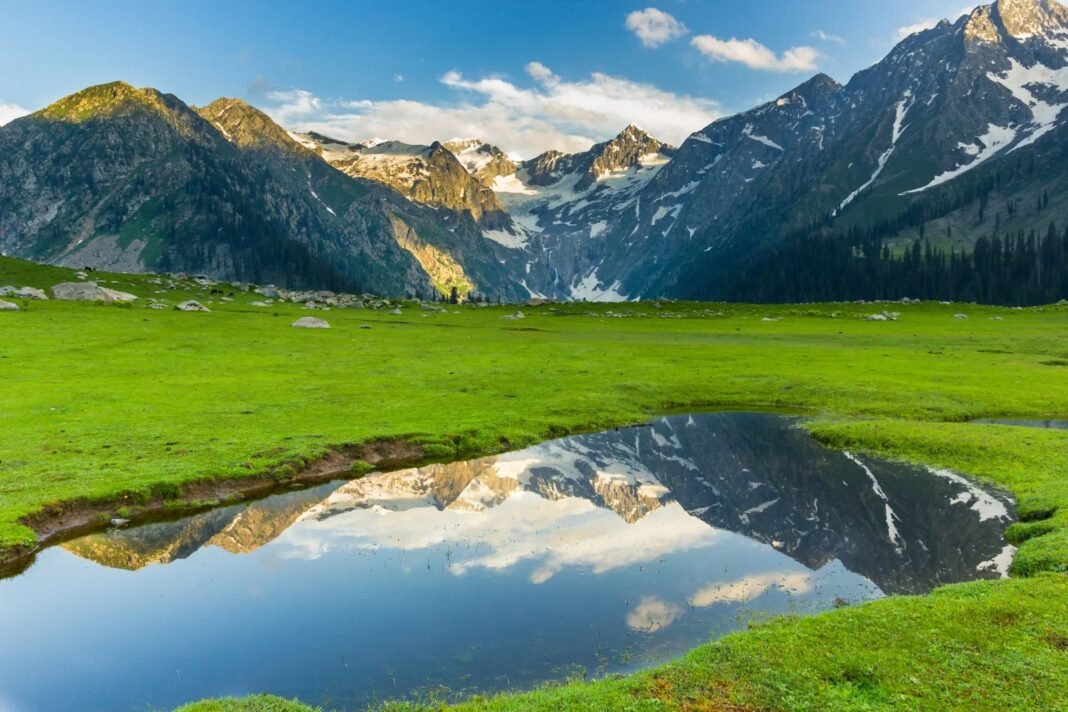
Swat’s climate is one of its great selling points: four genuine seasons, each with its own character. The valley around Jahanabad sits at about 1,000 metres, so summers are warm but rarely brutal, and winters are cold enough for frost and occasional snow on the surrounding peaks. Also, spring brings blossom to the orchards, and autumn paints the poplars gold. Here is what to expect across the year:
| Season | Temperature Range | Conditions |
|---|---|---|
| Winter (Dec-Feb) | 2 to 14°C | Cold, crisp days; frost at night; occasional snow on nearby peaks; quietest season |
| Spring (Mar-May) | 12 to 30°C | Orchard blossom, green fields, light rain possible; one of the best times to visit |
| Summer (Jun-Aug) | 25 to 38°C | Warm days, monsoon showers possible in July-August; peak tourist season |
| Autumn (Sep-Nov) | 10 to 28°C | Clear skies, golden poplars, harvest season; excellent for sightseeing and photography |
Language and Culture of Jahanabad Buddha, Swat
The people of Swat are predominantly Yusufzai Pashtuns. Also, Urdu is widely understood and English is spoken in hotels and tourist businesses.. Still, Pashto is the language of daily life, Swati culture is famous for its hospitality: guests are honoured, tea is offered freely, and strangers will go out of their way to help a lost traveller. The traditional code of Pashtunwali emphasises honour, hospitality and protection of guests, and visitors consistently remark on how warmly they are received.
Culturally, Swat blends its ancient Buddhist past with a deeply rooted Islamic present, and locals take quiet pride in both. When visiting the Buddha site, dress modestly as a matter of respect, speak softly, and avoid climbing on the carving or defacing the rock. Ask before photographing people, particularly women. In villages, greetings matter: a simple “Assalam-o-Alaikum” opens doors. Friday afternoons are prayer time, so some shops may close briefly.
Shopping in Jahanabad Buddha, Swat
The main shopping for Jahanabad visitors happens in Mingora Bazaar, one of the liveliest markets in northern Pakistan. Swat is renowned for its woollen shawls, hand-embroidered fabrics and traditional caps, all made locally and sold at very fair prices. Dry fruits, especially walnuts, almonds and dried apricots from the valley’s orchards, make excellent gifts, as does Swati honey, prized for its purity.
Handicraft shops near the Swat Museum and in the bazaar sell carved wooden items, traditional jewellery and Gandhara-inspired souvenirs. Bargaining is expected and good-natured. Also, start at around two-thirds of the asking price and meet in the middle. There are no large shopping malls in the Jahanabad area itself. That is part of the charm: this is bazaar shopping, personal and full of character.
Travel Tips for Jahanabad Buddha, Swat
Packing Essentials
Bring comfortable walking shoes with good grip for the short climb to the cliff base, a hat and sunscreen (the site is exposed). Also, a water bottle. In fact, a zoom lens or binoculars will greatly improve your experience of the carving’s details. Also, in addition, in winter, pack a warm jacket, as mornings are frosty. In summer, light clothes plus a shawl for the cooler evenings. Modest dress is appreciated at heritage and religious sites.
Safety Tips
Swat is peaceful and welcoming to tourists today, with a visible tourism infrastructure and regular police presence on main routes. That said, standard travel sense applies: travel during daylight on unfamiliar rural roads, keep valuables secure, and check current travel advisories before your trip. Also, hiring a local driver who knows the area is the easiest way to travel safely and stress-free.
Money & Connectivity
ATMs are plentiful in Mingora and Saidu Sharif, so withdraw cash there before heading to smaller villages like Jahanabad, where card payments are rare. Carry small notes for dhabas, fruit vendors and rickshaws. Coverage can fade in remote side valleys.. Still, mobile signals from Jazz, Telenor and Zong are generally good in Mingora and along the main roads, Most hotels offer Wi-Fi, of variable speed.
Best Time to Visit Jahanabad Buddha, Swat
Spring (March to May): The Sweet Spot
Spring is arguably the finest season for Jahanabad. Temperatures are mild, the orchards are in blossom, the valley is impossibly green, and the light is perfect for photography. Crowds are thinner than in summer, hotel prices are friendlier, and every viewpoint looks like a postcard. If you can choose one season, choose this one.
Summer (June to August): Peak Season
Summer brings warm days and the biggest crowds, as families escape the plains’ heat for Swat’s cooler air. The site is fully accessible and the long days give you plenty of sightseeing time, but expect busy roads and booked-out hotels on weekends. Also, monsoon showers can arrive in July and August, usually brief afternoon bursts.
Autumn (September to November): The Photographer’s Season
Autumn rivals spring for beauty: clear blue skies, golden poplars, harvest in the orchards and crisp air. Also, the Buddha carving looks magnificent against the autumn valley, and the smaller crowds make for a more contemplative visit. October is a particularly lovely month.
Winter (December to February): Quiet and Crisp
Winter is cold but atmospheric, with frost on the fields and snow visible on the high peaks. The site is still accessible on most days, and you may have it almost to yourself. Pack warmly, confirm your hotel has heating, and enjoy Swat at its most peaceful.
Final Thoughts
The Jahanabad Buddha is more than a stop on a sightseeing itinerary. It is a place that asks something of you. It asks you to look up at thirteen centuries of devotion, to reckon with the violence of 2007, and to feel the quiet triumph of a valley that rebuilt what was broken. Few heritage sites in Pakistan carry such emotional weight, and fewer still are so easy to visit. An hour at the cliff base, followed by the Swat Museum and a stroll through Manglawar’s orchards, makes for one of the most rewarding days you can spend in the north.
So when you plan your Swat journey, do not let the Buddha be an afterthought squeezed between ski slopes and river picnics. Also, give it a morning of its own. Stand where pilgrims stood a thousand years ago, watch the light move across the restored face, and carry home a story worth telling. For more northern inspiration, browse our Explore Pakistan collection and start choosing your next destination.
FAQs
Where is the Jahanabad Buddha located?
The carving is in Jahanabad village near Manglawar in Swat Valley, Khyber Pakhtunkhwa, about 30 to 40 minutes by road from Mingora.
What is the best time to visit Jahanabad Buddha?
Spring (March to May) and autumn (September to November) offer the best weather, clearest skies and most beautiful valley scenery.
How do I reach Jahanabad Buddha from Islamabad?
Drive about 240 km via the M1 and Swat Motorway to Mingora (4.5 to 5.5 hours), then continue to Jahanabad near Manglawar, a further 30 to 40 minutes.
Is Jahanabad Buddha safe for tourists?
Yes. Also, Swat is peaceful and well set up for tourism today, with regular visitors year-round. In fact, use standard travel sense and a local driver for the easiest trip.
Is the site suitable for families with children?
Absolutely. Also, the approach is a short walk, not a trek. In fact, the story of the Buddha’s destruction and restoration fascinates children and adults alike.
Where should I stay when visiting?
Base yourself in Mingora or Saidu Sharif. This have the widest choice of hotels and guesthouses for every budget.
What local food should I try?
Chapli kebab, chicken karahi, kabuli pulao and, further up the valley, fresh Swati trout. Do not miss the seasonal orchard fruit.
What makes the Jahanabad Buddha historically unique?
It is the largest seated Buddhist rock carving in South Asia, a 7th-8th century Gandhara masterpiece that was dynamited in 2007 and painstakingly restored by Italian archaeologists using 1926 photographs, completed in 2016.