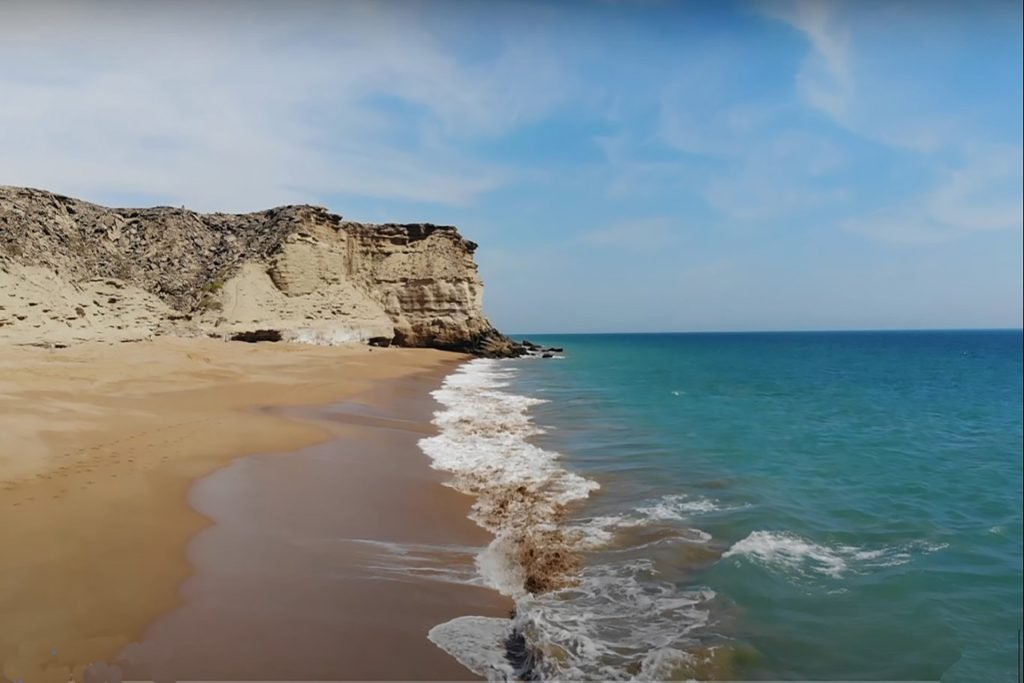
At the far southwestern tip of Pakistan, where the Makran coast runs out and Iran begins, the road ends at a place most Pakistanis have never heard of — and that is precisely its magic. Jiwani is a small fishing town on the Gulf of Oman, and its shoreline of mangrove creeks, tidal mudflats and empty sandy beaches is a Ramsar-listed wetland of international importance: a winter refuge for tens of thousands of migratory birds, one of Pakistan’s most significant sea-turtle nesting grounds, and a landscape of golden sunsets over water shared with another country. There are no resorts here, no crowds, no noise — just the Arabian Sea, the birds, the fishermen, and the feeling of standing at the edge of the map. If your idea of travel is wild places rather than famous ones, Jiwani will steal your heart. This Jiwani Coastal Wetland travel guide will show you why this remote corner deserves the journey, when to go, and how to reach it.
## Quick Facts
– **Location:** around Jiwani town, Gwadar District, Balochistan — Pakistan’s far southwestern tip, near the Iranian border, on the Gulf of Oman
– **Altitude:** sea level — a coastal wetland of tidal flats, mangrove creeks and beaches
– **Famous For:** Ramsar Wetland of International Importance (designated 10 May 2001, site no. 1066, 4,600 hectares); wintering migratory waterbirds (112 recorded species); green turtle and endangered olive ridley nesting beaches; Avicennia marina mangroves; Gwatar Bay shared with Iran
– **Nearest City:** Gwadar (roughly 70-80 km to the east); Karachi is a long coastal drive away
– **Accessibility:** remote — reached via the Makran Coastal Highway (N-10); a private vehicle is strongly recommended; the last stretch is quiet and lightly trafficked
– **Known Landmarks:** the mangrove creeks and mudflats, the four turtle beaches on the eastern coastline, Gwatar Bay, the WWII-era British airfield remains and hilltop bungalow
– **Best For:** birdwatchers, nature photographers, eco-travelers, solitude seekers, and adventurous road-trippers doing the Makran coast
## Why Visit Jiwani Coastal Wetland
The first reason is the birds. Every winter, the Jiwani wetlands host thousands of migratory waterbirds riding the great Central Asian flyway — waders, gulls, terns, herons, egrets and flamingos descending on the mudflats and mangrove creeks to feed and rest. Researchers have recorded 112 bird species here, of which 79 are migratory. For Pakistan’s birdwatching community, Jiwani in winter is hallowed ground: the sheer density of life on the tidal flats at dawn, with flamingos glowing pink in the early light and flocks wheeling over the mangroves, is something you do not forget. Even if you have never picked up binoculars before, this is the place that will convert you.
The second reason is the turtles. Jiwani’s sandy beaches are among the most important marine turtle nesting sites in Pakistan, used by green turtles and the endangered olive ridley. Four turtle beaches cluster along the eastern side of the coastline, and WWF-Pakistan has run turtle conservation work here since 1999. To walk a moonlit beach knowing that ancient mariners are hauling themselves ashore to nest — as they have done for millions of years — is one of wildlife travel’s great privileges. It is also fragile: this is a place to observe with reverence and a local guide, not a party beach.
Third, Jiwani offers the rarest commodity in modern travel: genuine remoteness. This is the end of the road in Pakistan — beyond Jiwani lies only the Iranian border. The beaches are empty, the sunsets over Gwatar Bay are uninterrupted, and the night skies are dark enough for the Milky Way. The town itself is a working fishing port, not a tourist fabrication: you will watch wooden boats launch through the surf, see the day’s catch sorted on the sand, and drink tea with fishermen whose families have worked these waters for generations. It is authentic in a way that curated destinations cannot be.
Finally, there is the layer of hidden history. Jiwani carries curious traces of the Second World War — the remains of a British-era airfield and a hilltop bungalow from the wartime years, when this remote coast had strategic eyes on the Arabian Sea. Exploring these forgotten ruins, with the wetland spread out below, adds an unexpected dimension to a nature trip. Jiwani is not just a pretty coastline; it is a place where ecology, livelihood and history tangle together — and where your visit supports the argument that wild places are worth more alive than exploited.
## History of Jiwani Coastal Wetland
Jiwani’s human story is the story of the Makran coast itself — one of the oldest maritime landscapes on earth. The Makran has been sailed and fished for millennia; Alexander the Great’s admiral Nearchus coasted these shores in 325 BCE, and the ports of the region traded with Mesopotamia, the Indus cities and East Africa across the centuries. Jiwani town grew as a fishing settlement at a natural anchorage near the mouth of the Dasht River, whose fresh water feeds the mangroves and the surrounding land. For most of its history it was exactly what it appears today: a small, self-reliant community living off the sea, far from capitals and their concerns.
The 20th century brought the wider world to this quiet shore. During the Second World War, the British built an airfield at Jiwani and a bungalow on the hilltop above the town — relics of the era when the Arabian Sea was a theater of war and every coastline was watched. The ruins survive today, slowly weathering, visited by almost no one: a forgotten footnote of global history at the edge of Pakistan.
The modern conservation story began when scientists recognized what the fishermen had always known — that these wetlands are extraordinary. On 10 May 2001, the Jiwani Coastal Wetland was designated Pakistan’s Ramsar site no. 1066, covering 4,600 hectares of mangroves, mudflats, tidal creeks and beaches. The Ramsar Convention — the international treaty for wetlands of global importance — lists sites that are critical for migratory waterbirds, and Jiwani qualified emphatically: its position on the Central Asian flyway makes it a vital wintering and staging ground. Two years earlier, in 1999, WWF-Pakistan had already begun work here, launching a Mangrove Conservation Project and a Turtle Conservation Project to protect the wetlands from overuse, pollution and habitat loss.
The threats are real and ongoing. Fishing is the lifeblood of Jiwani’s people, but pressure on fish stocks, cutting of mangrove wood for domestic fuel, and the specter of offshore drilling and unregulated development all weigh on this fragile ecosystem. Pakistan’s wetlands as a whole are under severe stress from water scarcity, pollution and encroachment — WWF-Pakistan’s World Wetlands Day warnings name the same pressures here. The Balochistan Conservation Strategy emphasizes protecting these coastal wetlands for sustainable development. Visiting responsibly — with local guides, without littering, without disturbing nesting sites — is a small but real contribution to keeping Jiwani wild.
## Top Things to Do in Jiwani Coastal Wetland
### Birdwatching on the Tidal Flats (Winter)
This is the headline activity, and winter is the season. From roughly November to February, the mudflats and mangrove creeks fill with migratory waterbirds: sandpipers and plovers probing the mud, gulls and terns wheeling overhead, grey herons standing statue-still in the creeks, egrets flashing white against the green mangroves, and flamingos — the great prize — feeding in the shallows. Bring binoculars (essential) and a field guide to the birds of Pakistan; a spotting scope on a tripod will transform the experience. Dawn and late afternoon are peak activity times, and the low winter light makes for superb photography. Go with a local guide who knows the creek channels and the tides — the flats are treacherous underfoot in places.
### Explore the Mangrove Creeks by Boat
The Avicennia marina mangroves — one of only three mangrove species found in Pakistan — line the tidal creeks in dense green walls, their pencil-like breathing roots poking from the mud. Hire a local fisherman’s boat to slip quietly through the creeks at high tide: you will see crabs scuttling, mudskippers flicking across the banks, and birds exploding from the canopy as you round each bend. The mangroves are the wetland’s nursery — they shelter the young fish and crustaceans that feed both the birds and Jiwani’s fishing economy — so treat them gently: no breaking branches, no litter, no loud engines in the narrowest channels.
### Visit the Turtle Beaches
The four turtle-nesting beaches on the eastern side of the coastline are among Pakistan’s most important. Green turtles and the endangered olive ridley come ashore to nest, and with a knowledgeable local guide you may witness tracks, nesting or hatchlings — an experience of profound, quiet wonder. This must be done responsibly: visit only with guides associated with conservation awareness, keep lights low and voices lower, never touch a nesting turtle or hatchling, and keep well back. Ask locally about the current season’s activity before planning a night visit; the turtles keep their own calendar.
### Watch the Sunset Over Gwatar Bay
Gwatar Bay — the great sheltered bay Jiwani shares with Iran — catches some of the finest sunsets on the Makran coast. Find a high point on the beach or the headland in the late afternoon and watch the sun dissolve into the Gulf of Oman, turning the tidal flats to copper and gold. On the clearest evenings you are looking across an international boundary at the Iranian shore, a reminder of how small and connected this coastline really is. Bring a camera, bring patience, and bring nothing you need to leave behind.
### Explore the WWII Airfield and Hilltop Bungalow
History buffs should not miss Jiwani’s wartime relics: the remains of the British-era Second World War airfield and the hilltop bungalow above the town. The cracked runways and weathered buildings are slowly being reclaimed by the arid landscape, and the hilltop gives a commanding view over the wetlands, the town and the bay. It is an evocative, melancholy spot — empire’s infrastructure rusting quietly at the edge of the desert — and you will almost certainly have it to yourself. Go in the cool of the morning, carry water, and watch your step among the ruins.
### Experience the Fishing Harbor
Jiwani town’s working harbor is the cultural heart of the visit. Walk the beach at dawn as the wooden boats return with the night’s catch; watch the sorting, the bargaining and the mending of nets; drink sweet tea at a harbor café and talk to the fishermen. Fishing is the major source of income here, and the community’s relationship with the sea is the living context for everything the wetland protects. Buy fresh fish for your dinner — grilled simply, it is the best meal on the coast. Always ask before photographing people, and accept tea when offered: Baloch hospitality is generous and genuine.
### Famous Places In and Around Jiwani Coastal Wetland
– **Gwatar Bay** — the great bay shared with Iran; sunsets, birdlife and the feeling of the edge of the map
– **The four turtle beaches** — on the eastern coastline; visit only with a responsible local guide
– **Dasht River delta** — the freshwater lifeline of the mangroves; rich birding where river meets sea
– **WWII airfield and hilltop bungalow** — forgotten wartime relics with panoramic wetland views
– **Gwadar** — the rising port city 70-80 km east, with its hammerhead peninsula and marine drive; see our Gwadar travel guide
– **Astola Island** — Pakistan’s largest offshore island, a marine protected area; our Astola Island travel guide covers it
– **Kund Malir, Ormara and Pasni** — the Makran Coastal Highway’s other great stops on the way to or from Jiwani
## How to Reach Jiwani Coastal Wetland
Jiwani is genuinely remote — the journey is part of the adventure. All routes run through Gwadar.
**From Karachi:** the classic Makran road trip. Take the Makran Coastal Highway (N-10) west from Karachi — roughly 650 km of spectacular coastal driving to Gwadar, passing Hub, Kund Malir’s otherworldly beaches and rock formations, Ormara and Pasni. From Gwadar, continue west toward the Iranian border for roughly 70-80 km to Jiwani. The full Karachi-Jiwani drive is a very long day (10-12+ hours); most travelers overnight in Ormara or Gwadar and arrive fresh the next morning.
**From Islamabad:** fly to Karachi (about 2 hours), then drive the coastal highway or take a connecting domestic flight to Gwadar. This is at minimum a three-day trip: fly/drive in, explore Jiwani, return. It is worth every hour.
**From Lahore:** fly to Karachi and follow the Karachi route, or fly Lahore-Karachi-Gwadar and drive the last stretch from Gwadar to Jiwani.
**Nearest airport:** Gwadar International Airport, roughly 70-80 km east of Jiwani, with domestic connections (primarily via Karachi). Jinnah International Airport in Karachi is the main international gateway for the coastal route.
**Road conditions:** the N-10 Makran Coastal Highway is a paved, well-engineered road and one of Pakistan’s great drives — but it is remote, with long fuel-less stretches. Fill up in Karachi/Hub, Ormara and Gwadar. The Gwadar-Jiwani road is quieter and narrower; drive it in daylight. Avoid night driving on the entire coastal highway.
**Transport options:** a private car or 4×4 with a driver is by far the best way — it gives you the freedom to stop at Kund Malir, Ormara and the viewpoints along the way. Public coaches run between Karachi and Gwadar; from Gwadar, arrange local transport to Jiwani in advance through your Gwadar hotel or a tour operator. For a birdwatching-focused trip, consider going with an organized eco-tour or a knowledgeable local guide from the start.
### Route Details
1. From Karachi, take the RCD Highway west to Hub, then join the Makran Coastal Highway (N-10) heading west.
2. Follow the N-10 through Kund Malir, Ormara and Pasni to Gwadar (fuel and rest stops at each town).
3. From Gwadar, continue west on the coastal road toward the Iranian border — roughly 70-80 km to Jiwani town.
4. In Jiwani, head for the shoreline: the mangrove creeks lie along the tidal channels, and the turtle beaches stretch along the eastern coastline.
5. Arrange a local fisherman-guide through your hotel or in the town before heading into the creeks or to the turtle beaches — do not attempt the mudflats alone.
## Where to Stay in Jiwani Coastal Wetland
Jiwani is a small fishing town, not a tourist resort — set your expectations accordingly, and you will be charmed rather than disappointed.
**Jiwani town guesthouses:** the town has simple local hotels and guesthouses catering to traders, officials and the occasional traveler. They are basic — clean rooms, fans or air-conditioning, attached baths — and inexpensive. Book through a local contact if possible; walk-in availability is usually fine outside any busy spell.
**Gwadar** (70-80 km east) is the practical base for comfort: the port city has a growing range of mid-range hotels, some with sea views, plus restaurants and better supplies. Many Jiwani visitors sleep in Gwadar and drive out for the day — an easy run on the coastal road.
**Camping:** the beaches around Jiwani are superb for wild camping — flat sand, dark skies, the sound of the surf. This is for experienced, self-sufficient campers only: bring all water, food and equipment, camp well above the high-tide line, take every scrap of litter with you, and camp discreetly and respectfully. Never camp on or near the turtle-nesting beaches during nesting activity.
**What not to expect:** no resorts, no beach huts for rent, no room service. Jiwani rewards travelers who are comfortable with simplicity — and the simplicity is the point.
## Where to Eat: Local Foods of Jiwani
The food here comes from the sea, cooked simply by people who know fish better than anyone.
**Fresh fish** is the undisputed star: the day’s catch grilled over coals, fried crisp with masala, or simmered into a **fish curry** with local spices. Eat it at the harbor cafés and small restaurants in Jiwani town, where it goes from boat to plate in hours. **Prawns** appear when the season is right — ask what is fresh rather than ordering off a fixed idea.
**Sajji** — Balochistan’s famous slow-roasted meat — is worth seeking out in the region, along with **kaak**, the hard stone-baked bread that is the Makran’s traditional staple. **Dates** from Balochistan’s groves and **fresh lime drinks** round out the coastal table.
**Where to eat:** Jiwani’s small restaurants and harbor tea shops serve honest, inexpensive food — a full fish dinner costs very little by city standards. For more variety, eat in Gwadar, which has proper restaurants catering to visitors and port workers. Carry drinking water, snacks and fruit for your wetland excursions — there are no food stalls at the creeks or beaches, and the nearest shop may be kilometers away.
## Weather in Jiwani Coastal Wetland
Jiwani has an arid coastal climate: hot summers, mild winters, and very little rain. The sea moderates the extremes, but the sun is fierce and the air is dry.
| Season | Temperature Range | Conditions |
|—|—|—|
| Winter (Nov-Feb) | 12°C to 25°C | The perfect season — mild days, cool nights, peak bird migration; ideal for everything |
| Spring (Mar-Apr) | 20°C to 33°C | Warming up; pleasant mornings, hot afternoons; still good for the wetlands |
| Summer (May-Aug) | 28°C to 40°C | Hot, dry and draining; birdlife minimal; visit only if you must, and early |
| Autumn (Sep-Oct) | 24°C to 36°C | Cooling gradually; the first migrants begin to arrive by late October |
Winter is everything at Jiwani: the birds are here, the temperatures are kind, and the light is golden. November to February is the window to plan around. Summer is genuinely harsh for outdoor wetland exploration — and with the migrants gone, much of the magic goes with them. The region gets very low rainfall year-round, so rain is rarely a trip-spoiler; heat is the variable that matters.
## Language and Culture of Jiwani Coastal Wetland
**Language:** Balochi is the mother tongue of Jiwani, spoken in the town, on the boats and in the homes. Urdu is widely understood and works for all practical purposes; English is limited to educated officials and hotel staff in Gwadar. Learning a few Balochi greetings will earn you warm smiles.
**Culture:** Jiwani is a Baloch fishing community — conservative, hospitable and deeply connected to the sea. Life follows the rhythms of the tides and the fishing seasons, not the tourist calendar. Guests are treated with the traditional Baloch honor code of hospitality: if you are invited for tea or a meal, accept — refusing can cause genuine disappointment. The community’s stake in the wetland is direct and economic: the mangroves nurse the fish they catch, which is why conservation here is not an abstract ideal but a livelihood issue.
**Etiquette:** dress modestly and conservatively — this is rural Balochistan, and covered clothing for both men and women is the respectful default. Ask permission before photographing people, especially women. Do not disturb fishing operations, nets or boats. On the turtle beaches and in the mangroves, your footprint should be invisible: no litter, no noise, no souvenir-taking. You are a guest in both a community and an ecosystem.
## Shopping in Jiwani Coastal Wetland
Jiwani is not a shopping destination — and that is fine. What it offers is authentic and unpretentious.
**Dried fish and prawns** are the classic purchase: the town’s fishermen sun-dry part of the catch, and it travels well as a gift for seafood-loving friends back home. Buy from the harbor area where you can see the quality. **Local handicrafts** appear in small quantities — simple Baloch embroidery and woven goods — sold informally rather than in shops.
**Gwadar’s markets** (on the way in or out) offer more: everyday goods, Iranian-border-trade items, dates, and the famous **Gwadar fish market** experience. For serious souvenir hunting, do it in Karachi before you leave or in Gwadar — Jiwani’s shops stock daily necessities, not keepsakes.
There are no shopping malls in Jiwani, and none are needed. The town’s “retail therapy” is a dawn walk on an empty beach — free, and better than anything in a mall.
## Travel Tips for Jiwani Coastal Wetland
### Packing Essentials
Binoculars are the single most important item — without them, the birdlife stays a distant rumor. A field guide to birds of Pakistan (or an offline birding app) multiplies the joy. Sun protection is critical: wide-brimmed hat, high-SPF sunscreen, sunglasses, and light long-sleeved clothing. Carry far more water than seems reasonable — at least 3 liters per person for a full wetland day — plus snacks and fruit. Sturdy sandals or wading shoes for the creeks; a headlamp with a red-light mode for any turtle-beach night visit (white light disturbs turtles). A warm layer for winter nights, which can surprise you after hot days.
### Safety Tips
Jiwani’s remoteness is its charm and its risk. Travel in daylight on the coastal highway; never drive the N-10 at night. Go into the wetlands with a local guide — the tidal flats have soft spots and the creeks shift with the tides. Check current travel advisories for Balochistan before your trip and register your plans with your hotel. Carry a basic first-aid kit, a charged power bank, and offline maps — mobile coverage can be patchy away from the town. On turtle beaches at night, stay with your guide, keep lights minimal, and maintain distance from any wildlife.
### Money & Connectivity
**Cash only, and bring plenty.** There are no ATMs in Jiwani town that a visitor should rely on, no card machines at the harbor or with the boatmen. Withdraw in Karachi or Gwadar before heading west, and budget for guides, boats, food and fuel. **Mobile signals** are available in Jiwani town on the major networks but can be weak or absent out on the wetlands and beaches — download offline maps, save your hotel’s number, and tell someone your plans before heading into the creeks. Gwadar has full connectivity and banking; treat it as your last resupply point.
## Best Time to Visit Jiwani Coastal Wetland
### Winter (November to February) — The Season
This is why you come. The migratory birds arrive in force, temperatures sit in the delightful 12-25°C range, the sea is calm, and the light is photographer’s gold. December and January are the peak: maximum bird diversity, cool nights perfect for camping, and the turtle beaches at their most evocative. Book Gwadar accommodation ahead if traveling in this window, and plan at least two full days for the wetlands — one for the creeks and flats, one for the beaches and town.
### Spring (March to April) — The Shoulder
The migrants begin departing, but resident birds remain, temperatures are still workable, and you will have the place almost entirely to yourself. March mornings on the flats are lovely. By late April the heat builds and the wetland quiets — come early in the season, not late.
### Summer (May to August) — Skip It
Hot (up to 40°C), dry, and largely birdless — the wetland’s magic is on pause. The beaches are still beautiful and the town still functions, but this is not the Jiwani worth a 700-km drive. If you must travel the coast in summer, do it for the road trip (Kund Malir, Ormara) rather than for the wetland.
### Autumn (September to October) — The Return
September is still hot, but by late October the first migrants trickle back and temperatures ease into the high 20s. It is a gambler’s window — go too early and you sweat through an empty wetland; time it right and you catch the season’s opening act with zero crowds.
## Final Thoughts
Jiwani is not for everyone — and that is its promise. It is for the traveler who would rather watch flamingos at dawn than stand in line for a ticket; who finds a working fishing harbor more interesting than a food court; who understands that the far edge of the map is often where a country is most itself. The Ramsar-listed wetlands, the turtle beaches, the mangrove creeks, the WWII ruins, the sunsets over Gwatar Bay — they add up to one of Pakistan’s great wild places, hiding in plain sight at the end of the coastal highway.
Go in winter. Bring binoculars. Hire a local guide, eat the day’s catch, leave no trace — and come home with stories nobody else at the dinner table will have. For the rest of the coast, our Gwadar and Astola Island guides continue the journey, and the full Explore Pakistan collection is waiting for whatever calls you next.
## FAQs
**Where is Jiwani Coastal Wetland located?**
Around Jiwani town in Gwadar District, Balochistan — at Pakistan’s far southwestern tip near the Iranian border, on the Gulf of Oman, roughly 70-80 km west of Gwadar.
**Why is Jiwani a Ramsar site?**
Designated on 10 May 2001 (site no. 1066, 4,600 hectares), it is a Wetland of International Importance as a critical wintering ground for migratory waterbirds on the Central Asian flyway, with 112 recorded bird species, plus vital mangroves and sea-turtle nesting beaches.
**What is the best time to visit Jiwani Coastal Wetland?**
November to February — mild weather (12-25°C) and peak migratory bird season. Avoid May-August, when it is hot and the migrants are gone.
**How do I reach Jiwani from Karachi?**
Drive the Makran Coastal Highway (N-10) west to Gwadar (roughly 650 km), then continue about 70-80 km west toward the Iranian border. It is a 10-12+ hour drive — most travelers overnight in Ormara or Gwadar. A private vehicle is strongly recommended.
**Can I see turtles at Jiwani?**
Jiwani’s four eastern beaches are among Pakistan’s most important nesting sites for green turtles and the endangered olive ridley. Visit only with a responsible local guide, keep lights and noise minimal, and never touch turtles or hatchlings.
**Is Jiwani safe for tourists?**
Daylight travel on the coastal highway with a local guide is the standard approach used by Pakistan’s eco-travelers. Check current advisories before going, travel in daylight, go with reputable local guides, and register plans with your hotel.
**Where should I stay near Jiwani?**
Jiwani town has simple, inexpensive guesthouses; Gwadar (70-80 km east) has comfortable mid-range hotels and is the practical base. Experienced campers can wild-camp on non-nesting beaches with full self-sufficiency.
**What should I pack for Jiwani?**
Binoculars and a bird guide are essential, plus sun protection, 3+ liters of water per person, snacks, wading shoes, a headlamp with red-light mode for night beach visits, and warm layers for winter nights. Bring all cash — there are no reliable ATMs in Jiwani.