Quick Facts
- Location: Ghanche District, Gilgit-Baltistan – beside the Shyok River, about 39 km east of Skardu
- Altitude: High mountain valley; the valley floor sits at roughly the same elevation as the Skardu basin
- Famous For: An untouched Balti mountain valley, the “Door to Heaven” suspension bridge over the Shyok, apricot orchards and traditional village life
- Nearest City: Skardu, around 39 km to the west
- Accessibility: Road from Skardu east along the Shyok River, roughly 1.5 hours by jeep or car; best in the May-October season
- Known Landmarks: The Keris Valley suspension bridge (“Door to Heaven”), the Indus-Shingo river confluence area
- Best For: Off-beat travellers, photographers, culture seekers, nature lovers escaping the crowds
Why Visit Keris Valley
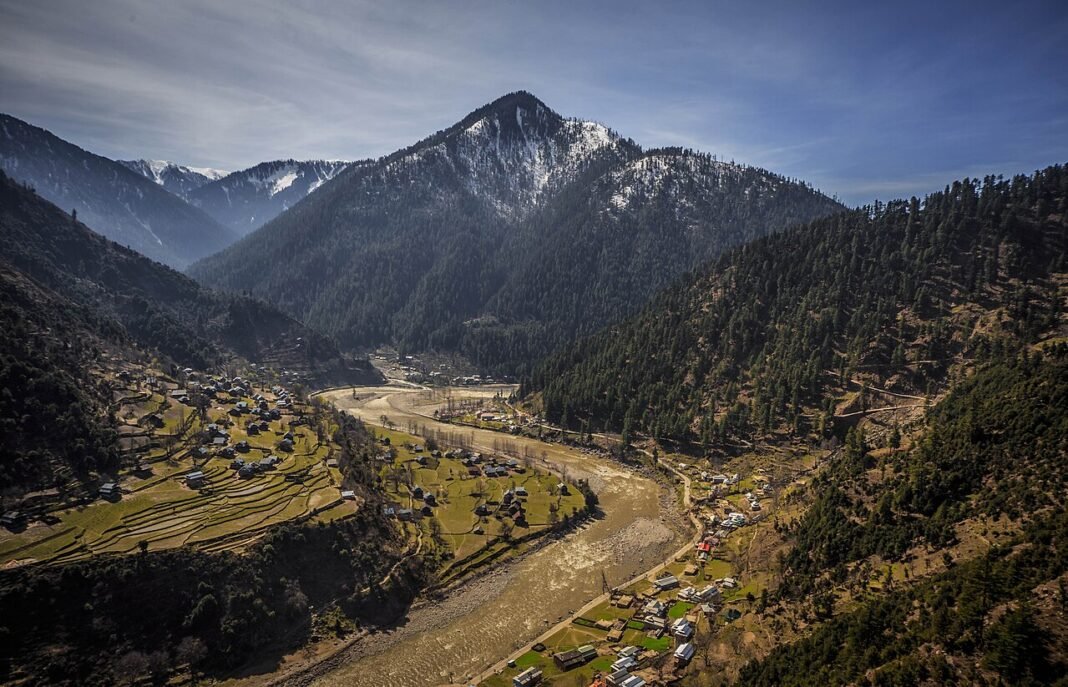
Everyone goes to Skardu. Almost no one goes to Keris – and that is exactly why you should. Just 39 kilometres east of Skardu city, past the point where most tour itineraries turn back, the road follows the Shyok River into a valley that feels like Baltistan before the world discovered it. Keris (also spelled Kiris) is a union council of scattered Balti villages set among apricot orchards and green fields, with the Karakoram rising on every side and the river running a brilliant blue-green through the middle. There are no tour buses here. There are barely any tourists at all.
The ‘Door to Heaven’ Bridge
What Keris offers is authenticity at full strength. The Balti people of this valley still live close to the old rhythms – farming terraced fields, drying apricots on rooftops in summer, gathering around the hearth in winter – and visitors are received not as customers but as guests. The valley’s fame, such as it is, comes from a single breathtaking structure: a slender pedestrian suspension bridge across the Shyok that social media has christened the “Door to Heaven.” Stand in its middle with the river roaring beneath and the mountains closing in. You will understand the name.
This Keris Valley travel guide is written for the traveller who has seen Skardu’s greatest hits and wants what comes next – or for the first-timer wise enough to skip the crowds entirely. Also, Keris is the gateway to Ghanche District, the jumping-off point for Khaplu’s palaces and the high valleys beyond. In fact, it deserves to be a destination in its own right. Come for a day trip from Skardu and you will get extraordinary photographs. Stay a night in a village guesthouse and you will get something rarer – a glimpse of Balti mountain life as it has been lived for centuries.
Perfect for the photographer hunting untouristed landscapes, the cultural traveller who wants real village encounters. Also, the road-tripper plotting the Skardu-Khaplu route. In fact, Keris is Baltistan’s quiet secret, and secrets this good do not stay secret forever.
History of Keris Valley
Keris belongs to one of the oldest cultural landscapes in the Karakoram: Baltistan, the “Little Tibet.” For centuries this region lay within the orbit of Tibetan civilisation – the Tibetan Empire of the 7th to 9th centuries extended its influence across these valleys. Also, the Balti language spoken in Keris today is of Tibetan origin, traditionally written in a Tibetan-derived script. In fact, the valley’s Balti name, keris lung ma, carries that deep Himalayan heritage in every syllable.
Over the following centuries Baltistan was ruled by a patchwork of small mountain states – the rajas of Skardu, Shigar and Khaplu – and the region gradually embraced Islam through Sufi missionaries, developing the distinctive Balti Muslim culture that visitors encounter today. Keris sat on the natural corridor along the Shyok River toward the east, a farming valley feeding the travel and trade between Skardu and the upper Shyok country.
The valley’s modern chapter is quieter than most. While Skardu grew into Gilgit-Baltistan’s tourism capital, Keris remained what it had always been: a cluster of agricultural villages living by the river’s rhythm. Its recent fame arrived via smartphone – photographs of the valley’s suspension bridge over the Shyok, shared thousands of times as the “Door to Heaven,” put Keris on the map for a new generation of Pakistani travellers. Yet the valley has absorbed this attention gracefully. There are still no big hotels, no commercial strips – just the bridge, the river, the orchards. The Balti villagers who have always been here.
Travellers who come now are catching Keris at its best: known enough to reach, unknown enough to remain itself.
Top Things to Do in Keris Valley
Walk the “Door to Heaven” Suspension Bridge
The experience that put Keris on the map. Also, this slender pedestrian suspension bridge spans the Shyok River, and crossing it is equal parts thrill and meditation – the river churning far below, the valley walls rising on both sides, bright skies above. It drew its nickname from the photographs: standing at its centre genuinely feels like standing at a doorway between worlds. Go early in the morning for the softest light and the fewest people, hold the cables, and take your time. It is fine for careful walkers but not for anyone with severe vertigo.
Wander the Balti Villages
Keris is a valley of villages rather than a single town, and walking between them is the deepest pleasure here. Also, follow the irrigation channels past apricot and mulberry orchards, watch farmers working terraced fields much as their ancestors did, and accept the inevitable invitations for tea. The traditional Balti houses – stone and timber, flat-roofed, often with carved wooden balconies – are architectural gems in their own right. Walk slowly, greet everyone, and let the valley set the pace.
Photograph the Shyok River Valley
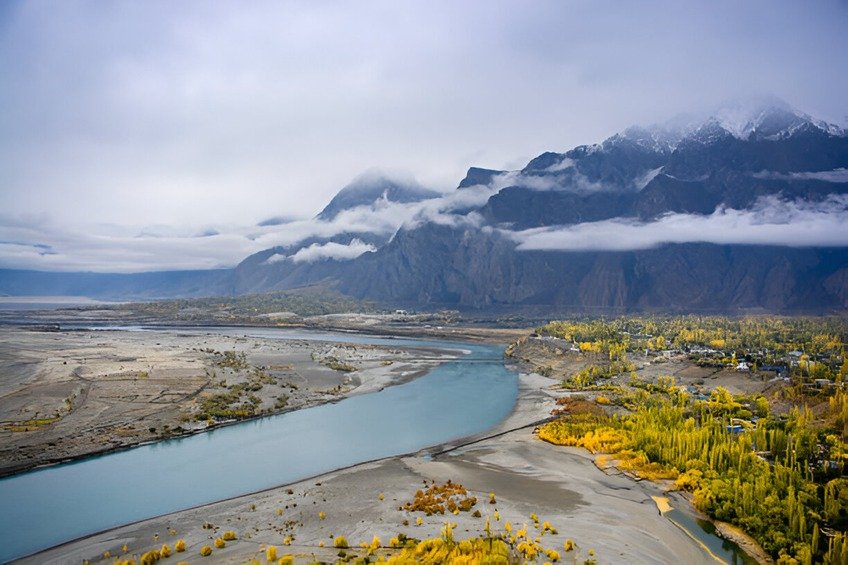
The Shyok is one of the great rivers of the Karakoram, and at Keris it is at its most photogenic – braided channels of startling blue-green against grey scree slopes and snow-dusted peaks. The golden hours are magical: dawn lights the eastern ridges while mist hangs over the water, and sunset sets the whole valley glowing. Autumn (October) adds blazing yellow poplars and apricot foliage to the palette. Bring a polarising filter if you have one – the river colours will reward it.
Visit the River Confluences
Keris sits near remarkable waters: the valley lies beside the Shyok, close to where the region’s great rivers meet – the Indus and the Shingo. Also, this flows down through Kharmang from the Kargil side. In fact, ask a local driver to show you the confluence viewpoints along the road. Watching two great Himalayan rivers merge, each carrying a different colour of glacial melt, is one of the quiet wonders of Baltistan.
Use Keris as Your Gateway to Ghanche
Keris is the gateway of Ghanche District – the road east continues toward some of Baltistan’s finest destinations. Also, from here you can push on to Khaplu with its restored 19th-century palace heritage hotel and ancient Chaqchan Mosque, to Machulo and its dramatic valley views, to Thalay Valley and the Haldi Cones. Meanwhile, Keris makes the perfect first stop on a Ghanche circuit: arrive from Skardu, cross the Door to Heaven, sleep in the valley, and continue east in the morning.
Famous Places In and Around Keris Valley
- Keris suspension bridge (“Door to Heaven”) – the valley’s iconic pedestrian bridge over the Shyok.
- Shyok River viewpoints – braided blue-green channels beneath Karakoram peaks.
- Khaplu – historic town east of Keris with Khaplu Palace and Chaqchan Mosque.
- Machulo Valley – dramatic neighbouring valley with big mountain views.
- Thalay Valley and Haldi Cones – striking rock formations and alpine scenery further into Ghanche.
- Saling – riverside village on the Ghanche route with its own suspension bridge.
How to Reach Keris Valley
Keris is an easy add-on to any Skardu trip – close enough for a day excursion, rewarding enough to deserve a night. Also, the road runs east from Skardu along the Shyok River toward Khaplu and Ghanche.
Route Details
From Skardu (39 km, about 1.5 hours): Take the Skardu-Khaplu road east out of the city, following the Shyok River. The road is paved in most stretches but narrows in places, with spectacular river gorge scenery the whole way. Local jeeps, private cars and tour vans all make the run. Public wagons heading toward Khaplu and Ghanche can drop you at Keris. This is the only practical approach – every route to Keris begins in Skardu.
From Islamabad to Skardu: Two options. By air: the 1-hour flight from Islamabad to Skardu airport is the fast, spectacular choice – book early in summer as seats sell out, and keep a buffer day since mountain weather can delay flights. By road: the classic overland route runs Islamabad to Gilgit via the Karakoram Highway (about 10-12 hours), then Gilgit to Skardu (about 7 hours) on the Gilgit-Skardu road. It is a long but magnificent two-day drive; most travellers overnight in Gilgit or Chilas.
From Lahore: Take the motorway to Islamabad (about 5 hours), then fly or drive to Skardu as above. From Karachi: Fly to Islamabad and connect to the Skardu flight, or fly Karachi-Skardu via Islamabad.
The Skardu-Keris road is generally open from May to October. In winter, snow and freezing temperatures can make the journey difficult – check locally before setting out, and carry warm clothing regardless of season. There are no fuel stations between Skardu and Khaplu, so fill up in Skardu.
Where to Stay in Keris Valley
Keris is still wonderfully undeveloped, which means accommodation is simple, authentic and inexpensive – plan accordingly.
Village guesthouses: The heart of the Keris stay. Also, family-run guesthouses in the valley’s villages offer clean, simple rooms, home-cooked Balti meals and hospitality that no hotel can match. In fact, this is the experience to choose – you will eat what the family eats, sleep under a sky full of stars, and leave with new friends. Arrange through a Skardu tour operator or ask locally on arrival. In peak season (July-August) a quick phone booking ahead is wise.
Mid-range options: A handful of small hotels and rest houses have appeared along the Skardu-Khaplu road near the valley, offering attached baths and slightly more conventional comfort. Standards are modest – think clean and functional rather than luxurious.
Camping: The valley’s meadows and riverside flats are superb for camping, with the Karakoram as your tent wall. Also, bring a four-season sleeping bag – nights are cold even in August – camp only on flat ground well above the river, and carry out everything you carry in.
Luxury: There is none in Keris, honestly. Travellers wanting full comfort should base in Skardu city – which has proper hotels including high-end resorts – and visit Keris as a day trip. But you will miss the valley’s magical early mornings, which is half the point.
Where to Eat: Local Foods of Keris Valley
Balti mountain food is hearty, honest and built for cold climates – and in Keris you eat it at the source. Also, meals centre on fresh local bread baked in clay ovens, daal and seasonal vegetables from the terraced fields, and trout from the cold rivers, fried simply with local spices. In fact, in apricot season (June-July) the valley overflows with fresh apricots, mulberries and apples. The rest of the year brings dried apricots, walnuts and almonds – the famous dried fruits of Baltistan, sold everywhere and worth stocking up on.
Guesthouse kitchens serve traditional home cooking: hearty soups and stews, buckwheat and wheat breads, and endless salty butter tea (namkeen chai), the high-mountain staple that warms you from the inside. Also, meat dishes follow Pakistani and Balti styles – chicken and mutton karahi, pulao – prepared simply and well. In fact, along the main road you will find small dhabas with daal-sabzi, omelettes and chai at very budget-friendly prices.
There are no restaurants in the fine-dining sense – eat with your guesthouse family or at the roadside dhabas, carry snacks and water for day walks. Also, it do not miss the dried apricots. In fact, a dhaba meal here is among the cheapest eating in all of Gilgit-Baltistan.
Weather in Keris Valley
Keris shares Skardu’s high-desert mountain climate: intense sun, huge day-night temperature swings, very little rain, and winters that bite hard. Also, summer days are warm and brilliant; nights always need a jacket. In fact, spring is short and sweet, autumn is golden, and winter – from December to March – brings freezing temperatures and snow that quiets the whole valley.
| Season | Temperature Range | Conditions |
|---|---|---|
| Winter (Dec-Feb) | -15 to 2C | Freezing, snow on the valley floor; road difficult; for hardy winter travellers only |
| Spring (Mar-May) | 8 to 22C | Blossom season in the orchards, rivers swelling with meltwater; fresh and uncrowded |
| Summer (Jun-Sep) | 15 to 32C | Warm sunny days, cool nights; all roads open; peak season for the valley |
| Autumn (Oct-Nov) | 5 to 18C | Golden poplars and apricot foliage, crystal-clear air; superb for photography |
Language and Culture of Keris Valley
The language of Keris is Balti, a language of Tibetan origin still spoken in homes across the valley, alongside the Purgi dialect in places. Also, Urdu is widely understood and English is spoken in the tourist trade. The people are Balti Muslims – warm, devout and famously hospitable – living in one of Pakistan’s most culturally distinctive regions, often called Little Tibet for its Himalayan heritage.
Respect the valley’s conservative, close-knit culture: dress modestly (cover shoulders and knees), always ask before photographing people, remove shoes when entering homes and mosques, and accept offered tea and food graciously – refusal can genuinely offend. The ancient Chaqchan Mosque near Khaplu, one of the oldest in the region, reminds visitors how deep the Islamic heritage here runs. Friday midday is prayer time; plan around it. A little Urdu goes a long way, and a smile goes further.
Shopping in Keris Valley
Keris shops the way it lives: simply and locally. Also, the essential buys are the valley’s legendary dried apricots – among the finest in Baltistan – plus dried mulberries, walnuts and almonds, all sold at farm-gate prices from village shops and roadside stalls. In fact, look for apricot oil, a traditional Balti product used for cooking and massage. It hand-knitted woollens: caps, socks and shawls made for Karakoram winters.
For handicrafts, continue east to Khaplu’s bazaar, which offers Balti embroidery, traditional caps and woodwork. Also, there are no malls, no boutiques and no card machines in Keris – bring cash, buy directly from the families who grow and make these things. In fact, you will take home the most honest souvenirs in Gilgit-Baltistan.
Travel Tips for Keris Valley
Packing Essentials
Mountain layers are essential: even in July, Keris nights are cold and the river wind bites. Also, pack a warm jacket, a windproof shell, sun protection (the high-altitude sun is brutal – sunscreen, hat, sunglasses), sturdy walking shoes, a headlamp, a reusable water bottle and basic medicines. If camping, bring a sleeping bag rated well below freezing. Cash in small notes – there are no ATMs.
Safety Tips
Keris is safe and the locals are exceptionally welcoming to visitors, but take mountain precautions: never cross the suspension bridge in high wind or with more people than it comfortably holds. Stay back from the Shyok’s banks during high summer melt when the river runs fierce. Carry your CNIC; and inform your guesthouse of your walking plans. Altitude here is moderate (Skardu-basin level), but take it easy on your first day if arriving by air.
Money and Connectivity
Bring all the cash you will need from Skardu – there are no ATMs or banks in Keris and everything runs on cash. Mobile coverage is patchy: SCOM works best in Gilgit-Baltistan, while other networks fade in and out along the Shyok road. Also, download offline maps in Skardu. It do not count on data in the valley – which, honestly, is part of the charm.
Best Time to Visit Keris Valley
Summer (June to September) – The Prime Season
Warm days, open roads, orchards in full leaf and the bridge at its best. July and August bring the apricot harvest – the valley at its most abundant. Also, this is the season for village walks, photography and pushing on into Ghanche. In fact, book guesthouses ahead in peak weeks.
Spring (April to May) – Blossom Time
Apricot and apple blossom turns the valley white and pink, meltwater swells the Shyok to a thundering blue-green. Also, you may have the viewpoints entirely to yourself. Nights are still cold, but the valley feels newborn.
Autumn (October to November) – Gold Season
Arguably the most beautiful weeks of the year: poplars and apricot trees ignite in gold and amber against the grey Karakoram, the air goes crystal clear. Also, the harvest is in. In fact, October is the photographer’s month – pack warm layers for the cold nights.
Winter (December to March) – The Deep Quiet
Keris under snow is hauntingly beautiful but genuinely harsh – freezing temperatures, limited services and a difficult road. Only experienced winter travellers with full gear, local contacts and flexible plans should attempt it.
Final Thoughts
Keris Valley is what happens when a place is too beautiful to stay hidden but too honest to change for visitors. It has one famous bridge, one great river, a handful of villages and a way of life measured in harvests – and somehow that is more than enough. In a region where the famous sights now come with crowds, Keris offers the rarest thing in modern travel: a valley that is still itself.
Go in summer for the orchards and the full Ghanche circuit, or in October when the poplars turn to gold and the light does impossible things on the Shyok. Also, cross the Door to Heaven, walk the villages, eat apricots off the branch, and sleep where the only sound is the river. For more northern journeys, explore our Explore Pakistan collection, continue to the great valley next door in our Hunza Valley guide, or head to the slopes in our Malam Jabba guide. The quiet valleys are calling – Keris is where you find them.
FAQs
Where is Keris Valley located?
Keris Valley (also spelled Kiris) is in Ghanche District, Gilgit-Baltistan, beside the Shyok River about 39 km east of Skardu. It is the gateway to Ghanche District.
What is the best time to visit Keris Valley?
June to September is the prime season with open roads and the apricot harvest. April-May brings blossom season and October brings golden autumn foliage – both superb for photography.
How do I reach Keris Valley from Skardu?
Drive 39 km east from Skardu on the Skardu-Khaplu road along the Shyok River – about 1.5 hours by jeep or car. Meanwhile, Reach Skardu first by the 1-hour flight from Islamabad or the two-day Karakoram Highway drive via Gilgit.
Is Keris Valley safe for tourists?
Yes. Also, Keris is safe and the Balti locals are exceptionally hospitable. In fact, Take normal mountain precautions: respect the river, cross the suspension bridge carefully, and carry your CNIC.
Is Keris Valley suitable for families?
Yes for a day trip or a gentle overnight – the bridge, village walks and river viewpoints suit all ages. The road is winding, so very small children may find the drive tiring; carry snacks and water.
Where can I stay in Keris Valley?
Family-run village guesthouses offer the most authentic stay with home-cooked meals. There are also a few modest roadside hotels, and good camping meadows. Also, there are no luxury hotels – base in Skardu for full comfort.
What food is Keris Valley famous for?
Balti mountain food: fresh trout, local breads, hearty daal and stews, salty butter tea. Also, the valley’s celebrated fresh and dried apricots, mulberries, walnuts and almonds.
What is the “Door to Heaven” bridge?
It is the nickname travellers gave to Keris Valley’s slender pedestrian suspension bridge across the Shyok River – famous from social media photographs showing the bridge suspended between towering valley walls above the blue-green water.