Quick Facts
- Location: Neelum Valley, Azad Jammu & Kashmir — on the banks of the Neelum River, about 93 km from Muzaffarabad
- Altitude: Around 1,524 metres (5,000 feet) above sea level
- Famous For: Riverside resorts with lawns facing the Line of Control, trout fishing, and the most dramatic river-valley views in lower Neelum
- Nearest City: Muzaffarabad, about 93 km (3–4 hours by road)
- Accessibility: Paved road from Muzaffarabad; reachable by car or coaster in fair weather, about 3–4 hours
- Known Landmarks: The Keran riverside resort lawns, Upper Keran viewpoint
- Best For: Families, couples, first-time Neelum visitors, anglers, and anyone wanting big mountain views without a hard journey
Why Visit Keran
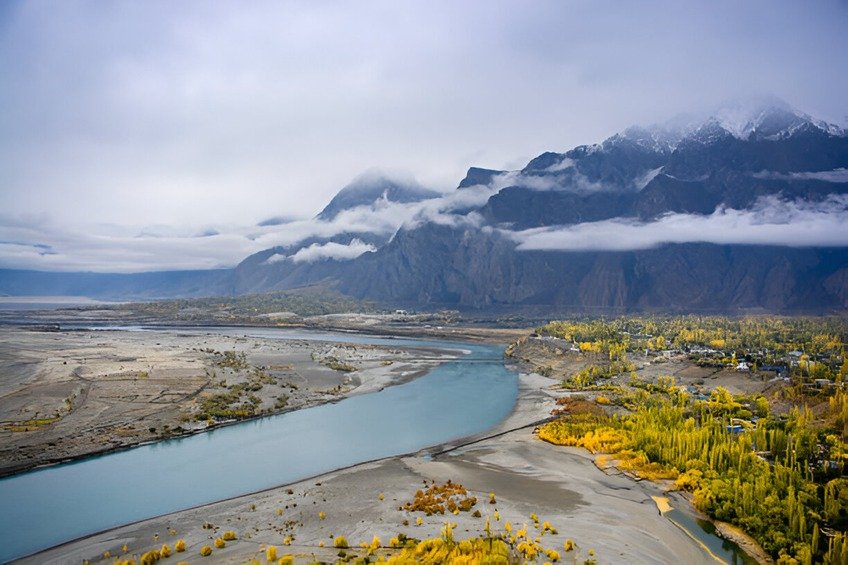
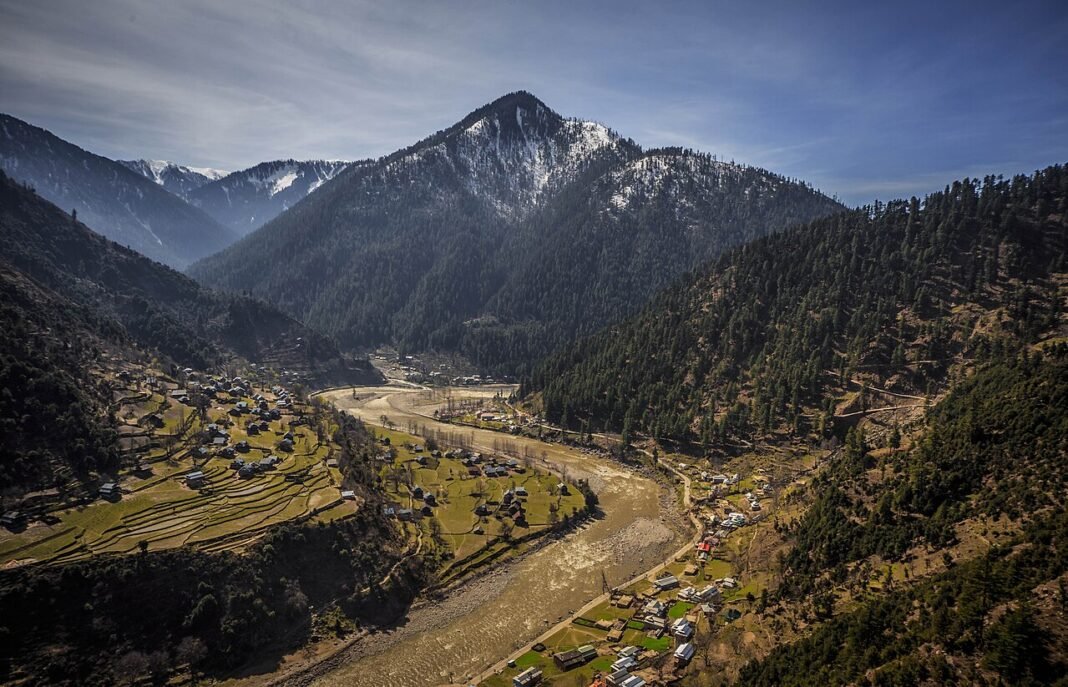
There is a lawn in Keran where you can sit with a cup of chai and watch one of the strangest, most beautiful borders in the world. Also, in front of you the Neelum River slides past, impossibly blue-green. In fact, on the far bank, villages of Indian-administered Kashmir climb the hillside, their lights twinkling on at dusk. The Line of Control runs down the middle of the river here — and yet the scene is utterly peaceful, a postcard of terraced fields, pine forests and snow-dusted ridges. Keran is where the Neelum Valley first shows you what it is truly made of.
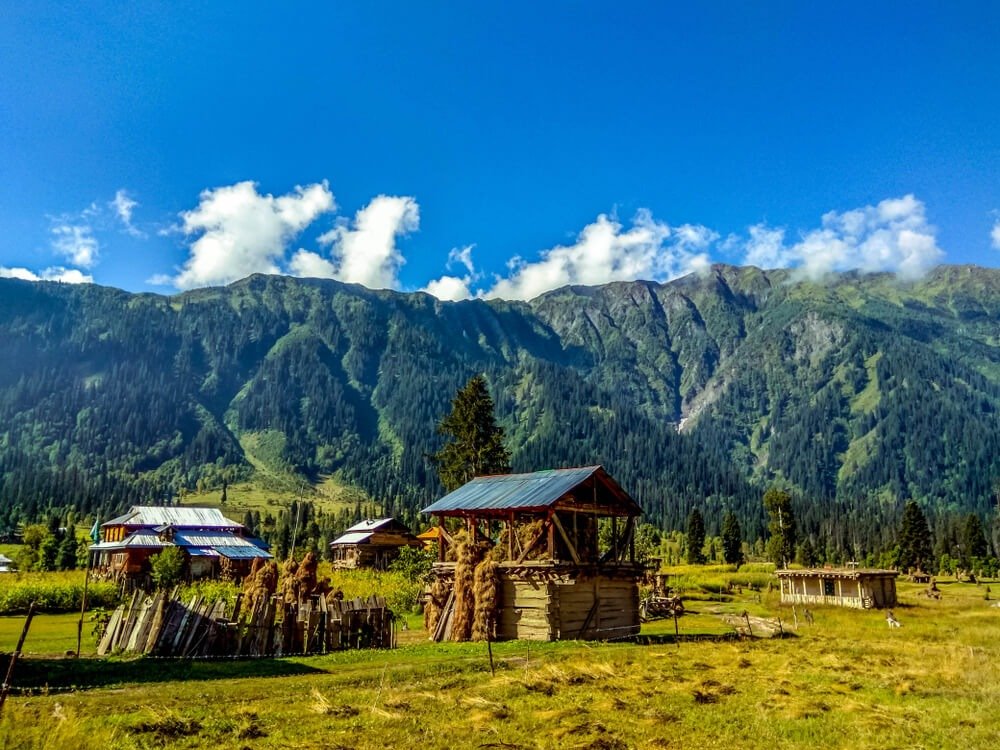
At 1,524 metres, Keran is the valley’s great middle ground: far enough up to feel properly mountainous, close enough to Muzaffarabad for an easy journey. The town stretches along the river in a string of resorts, guesthouses and bazaars, with the famous riverside lawns where families picnic with the whole panorama spread before them. Also, above the town, Upper Keran climbs the hillside to an even finer viewpoint — a small village of wooden houses with sweeping views across the river into the mountains beyond.
Neelum Without the Expedition
This Keran travel guide is for the traveller who wants the Neelum experience without the expedition. Also, Keran is the valley’s most comfortable introduction: proper resorts with hot water and real restaurants, trout fresh from the river, gentle walks along the water, and day-trip access to Sharda’s ancient ruins and the waterfalls of the lower valley. It is the stop that turns a long drive into a holiday. The place where you finally exhale, slow down, and let the mountains do the talking.
Perfect for families with children, for couples on a quiet getaway, for anglers chasing trout, and for photographers who want the classic Neelum composition — river, terraces, pines, peaks — without hiking for it. Keran does not demand anything of you except that you sit still for a while and look.
History of Keran
Keran’s story is written by the river it sits on. Also, the Neelum — known upstream by its older name, the Kishenganga — has for centuries been the great corridor of this region, carrying trade, armies and ideas between the Kashmir Valley and the northern mountains. For example, small settlements like Keran grew where the river could be forded or fished, where terraces could be cut into the hillsides, and where travellers on the old routes needed rest. For generations this was a quiet world of farmers, herders and fishermen, part of the princely state of Jammu and Kashmir.
1947 redrew everything. Also, the valley became part of Azad Jammu & Kashmir. In fact, the river at Keran became, in stretches, the Line of Control itself. The de facto boundary between the two administered parts of Kashmir. Keran found itself a frontier town, its far bank suddenly a different country in all but geography. For decades it remained a sleepy garrison-and-village settlement, known mainly to locals and soldiers.
Tourism changed Keran’s fortunes. Meanwhile, as the Neelum Valley road improved and Pakistan’s travellers discovered the valley’s beauty, Keran’s unique gift — those sweeping, accessible river views right from comfortable resort lawns — made it the natural first major stop up the valley. Resorts and guesthouses multiplied along the bank, the riverside promenade of lawns became famous. Keran grew into the valley’s most developed tourist town after Muzaffarabad. Today it welcomes thousands of visitors each season. The river still runs the same blue-green course it always has. The terraced village across the water still lights its lamps at dusk.
A reminder that some borders are drawn on maps, while the valley belongs to everyone who loves it.
Top Things to Do in Keran
Sit on the Riverside Lawns at Sunset
This is Keran’s signature experience and it costs nothing. Also, the resorts along the river maintain beautiful terraced lawns sloping down to the water, and in the evening the whole town seems to drift toward them. Order chai, find a bench, and watch the light change over the river — the far bank glowing gold, then pink, then violet as the sun drops behind the ridges. Photographers: this is your golden hour, every single day.
Climb to Upper Keran
A short drive or a stiff walk above the main town brings you to Upper Keran, a smaller, quieter village on the hillside with arguably the finest viewpoint in the lower valley. Also, from here the panorama opens wide: the Neelum winding below, the terraced fields on both banks. In fact, the great forested ranges marching to the horizon. Come in the morning for the clearest views, and walk the village lanes to see traditional wooden houses and small orchards.
Go Trout Fishing on the Neelum
The Neelum River around Keran is prime trout water — cold, clear and fast. Angling is one of the valley’s classic pursuits, and local guides and guesthouses can arrange spots, gear and the necessary permits. Also, dawn and dusk are the magic hours. Even non-anglers should try the local trout at a riverside restaurant: simply fried with salt, lemon and green chillies, eaten with the river in view, it is one of the definitive meals of Azad Kashmir.
Take a Day Trip to Sharda
Keran is the ideal base for visiting Sharda, about 30 km further up the valley — home to the evocative ruins of Sharda Peeth, an ancient centre of learning sacred in Kashmiri Hindu tradition, set among meadows by the river. Also, the drive from Keran to Sharda is itself spectacular, threading through forests and past waterfalls. Leave after breakfast, explore the ruins and the town, and be back in Keran for sunset on the lawns.
Chase the Waterfalls of the Lower Valley
The stretch of the Neelum road around Keran is waterfall country. Also, Dhani Waterfall, plunging in a white ribbon down the mountainside, is the most famous and makes a fine stop. Countless unnamed cascades appear after rain. Dowarian, a village a short drive up the valley, is another lovely halt with its own side-stream and forest walks. These are easy, family-friendly excursions — no trekking boots required.
Famous Places In and Around Keran
- Upper Keran viewpoint — the hillside village with the valley’s best panorama.
- Sharda (30 km) — ancient Sharda Peeth ruins and riverside meadows.
- Dhani Waterfall — dramatic cascade on the valley road.
- Dowarian — pretty village with forest walks, a short drive up-valley.
- Kutton — riverside settlement with the Jagran hydropower channel and picnic spots.
- Athmuqam — the Neelum district’s main town, on the way from Muzaffarabad.
How to Reach Keran
Keran is the most accessible of the Neelum Valley’s major destinations. A single good road, no jeep track, and a journey measured in hours rather than days. Also, this is the valley trip you can do in a long weekend.
Route Details
From Islamabad (around 223 km, 6–8 hours): Drive to Muzaffarabad first — about 130 km via the Murree Expressway (N-75) through Kohala, roughly 3–4 hours of scenic mountain highway. Also, From Muzaffarabad, take the Neelum Valley road north along the river: the 93 km to Keran takes about 3–4 hours, passing Athmuqam, Kundal Shahi and a string of waterfalls. The road is paved throughout but narrow and winding — drive in daylight and enjoy the stops.
From Lahore (around 500 km to Muzaffarabad, then as above): Take the M-2 motorway to Islamabad (about 5 hours), then follow the Islamabad route. Also, Most Lahore travellers overnight in Islamabad or drive straight through to Muzaffarabad — a very long day. Plan two days to reach Keran comfortably.
From Karachi: Fly to Islamabad (about 2 hours) and continue by road as above.
Nearest airport: Islamabad International Airport. Also, from there, hire a private car, join a tour coaster, or take public transport: vans and coasters run from Islamabad/Pirwadhai to Muzaffarabad, and onward valley transport (coasters, shared jeeps, suzukis) leaves from Muzaffarabad’s Neelum Valley stand. In fact, heavy snow spells can temporarily close the road — check conditions in December–February.. Still, in winter, Keran usually stays reachable on ordinary vehicles, Pakistani nationals need only their CNIC for the valley’s checkpoints. Foreign visitors require an NOC from the Azad Kashmir Tourism Department in Muzaffarabad (1–3 days to arrange).
Where to Stay in Keran
Keran has the best-developed accommodation in the Neelum Valley after Muzaffarabad, with genuine choice across budgets.
Riverside resorts: Keran’s pride is its string of resorts set right on the riverbank with terraced lawns facing the water — the famous sunset views come free with the room. Also, these mid-range properties offer comfortable rooms, attached baths, hot water and on-site restaurants serving Pakistani, Chinese and Kashmiri dishes. Meanwhile, book ahead in June–August; the river-facing rooms go first.
Government and mid-range motels: The valley’s public-sector tourist motels, including the well-known PTDC-style motel at Keran, offer reliable, no-frills comfort at fair rates in prime locations. They are popular with families and fill fast in season — reserve through the tourism department or your tour operator.
Guesthouses: Family-run guesthouses in the town and in Upper Keran provide clean, simple rooms at budget-friendly prices, often with home-cooked meals and personal attention that the bigger places cannot match. Also, a good option for longer, slower stays.
Camping: The riverside meadows and forest clearings around Keran suit camping, and some resorts allow tents on their grounds. Bring a warm sleeping bag — nights are cool even in summer — and camp only in established, safe spots away from the river’s edge during high water.
Where to Eat: Local Foods of Keran
Keran eats what the valley provides. Also, the valley provides generously. Trout is the undisputed star — pulled from the Neelum’s cold current and served fried, grilled or in a light masala at the riverside restaurants. In fact, it is fresh, delicate and inexpensive by city standards; order it whole and share.
The Kashmiri kitchen shapes the rest of the menu. Rogan Josh — tender mutton simmered in a rich, aromatic gravy — and Goshtaba, the velvety hand-pounded meatballs in yoghurt sauce that anchor the Kashmiri wazwan feast, appear on most resort menus. Also, simpler valley fare is just as good: rajma (kidney beans) and mixed daal with rice, saag with makki di roti in season, and trout or chicken karahi at the bazaar dhabas. As a result, breakfast means parathas, omelettes and the essential doodh patti, strong and milky.
The resort restaurants serve the widest menus (Pakistani, Chinese, continental basics). The bazaar dhabas serve the most honest food at the most budget-friendly prices. Also, stock up on dried apricots, walnuts and wild honey from the bazaar shops — the valley’s natural pantry.
Weather in Keran
At 1,524 metres, Keran enjoys one of the most pleasant climates in the valley — warm but rarely harsh summers, crisp colourful autumns, and winters cold enough for snow on the surrounding peaks while the town itself usually stays accessible. Also, the river keeps the air fresh. The monsoon (July–August) brings dramatic clouds and sudden showers that make the waterfalls thunder.
| Season | Temperature Range | Conditions |
|---|---|---|
| Winter (Dec–Feb) | -3 to 10°C | Cold, occasional snow in town, snow-covered peaks all around; road usually open but check after heavy spells |
| Spring (Mar–May) | 10–22°C | Valley greens up, orchards blossom, waterfalls swell; lovely and uncrowded |
| Summer (Jun–Sep) | 18–32°C | Warm pleasant days, cool evenings; peak season, all attractions open |
| Autumn (Oct–Nov) | 8–20°C | Golden foliage, crystal-clear views, quiet roads; the photographer’s season |
Language and Culture of Keran
Pahari is the mother tongue of Keran’s villages, with Kashmiri widely spoken and Urdu understood everywhere in the tourist areas. Also, the culture is classic Neelum: deeply hospitable, conservative and proud. Meanwhile, guests are treated with a warmth that surprises first-time visitors — expect offered tea, unhurried conversation and genuine help with anything you need.
Dress modestly, ask before photographing people (especially women), and accept hospitality graciously. Because the Line of Control runs along the river here, you will encounter military checkpoints and a visible but professional security presence — carry your CNIC, cooperate cheerfully, and never photograph checkposts, bridges or military installations. The far bank is a sensitive area: enjoy the view. It do not point cameras with long lenses at it in ways that could alarm the personnel watching.
Shopping in Keran
Keran’s bazaar is small but rewarding. The must-buys are the valley’s natural produce: dried apricots, walnuts, almonds and wild honey, all superb quality at a fraction of city prices. Look for hand-knitted woollens — caps, socks, gloves and shawls made for mountain winters — and simple Kashmiri handicrafts such as embroidered purses and walnut-wood items in the souvenir shops. Trek snacks and basic supplies are available for those heading further up the valley. There are no malls here; the bazaar’s charm is its scale — everything made or grown close by.
Travel Tips for Keran
Packing Essentials
Pack layers for cool evenings even in summer — a light jacket or shawl is essential year-round. Also, bring sun protection (mountain sun is strong), comfortable walking shoes for the riverside paths and the Upper Keran climb, a camera with zoom for the across-the-river views, binoculars for birdwatching along the water, and any medicines you need — pharmacies are basic. A power bank helps; electricity is generally reliable but outages happen.
Safety Tips
Keran is safe for tourists, including families and solo travellers, with a well-established tourist infrastructure. Also, standard mountain sense applies: supervise children near the fast-flowing river, swim only where locals say it is safe (the Neelum’s current is deceptively strong), and carry your CNIC for checkpoints. Respect the sensitivity of the LOC area — no drone flying without permission, no photographing military installations, and follow any guidance from security personnel promptly and politely.
Money & Connectivity
Withdraw cash in Muzaffarabad or Islamabad — Keran has limited ATM access and most hotels, restaurants and shops are cash-only. For mobile service, get a SCOM SIM in Muzaffarabad. Other Pakistani networks work patchily in Keran and vanish further up the valley. Data is slow — download offline maps and inform family of your itinerary before you leave the city.
Best Time to Visit Keran
Summer (May to September) — The Classic Season
Warm days, cool nights, the river at its most beautiful, and every resort, restaurant and attraction open. Also, june–August is peak season — book accommodation ahead. In fact, this is the season for trout fishing, waterfall chasing and long evenings on the lawns.
Autumn (October to November) — Gold and Clarity
The valley’s forests turn gold and russet, the air goes crystalline, and the crowds thin to almost nothing. Daytime temperatures are still pleasant; nights need a warm layer. Also, For photographers and peace-seekers, this is Keran’s finest hour.
Spring (March to April) — Blossom and Waterfalls
Orchards bloom, the hillsides green up, and snowmelt sends every waterfall into full voice. A lovely, quiet season — though nights are still chilly and some higher excursions may be limited.
Winter (December to February) — Quiet and Snow-Dusted
Keran in winter is serene, with snow on the surrounding peaks and far fewer visitors. The town usually stays accessible, but heavy snow spells can briefly close the road — check conditions, carry warm gear, and confirm your hotel is open before travelling.
Final Thoughts
Keran is the Neelum Valley at its most generous: all of the beauty, none of the hardship. Also, you do not need to be a trekker or an adventurer to stand on those riverside lawns and feel the valley work its magic. In fact, you only need to show up, sit down, and look across the water. It is the perfect first taste of Azad Kashmir, the comfortable base for exploring Sharda and the waterfalls. The sunset you will measure all other sunsets against.
Come in summer for the full, lively valley experience, or in October when the gold leaves fall and the river runs clear and quiet. Eat the trout, climb to Upper Keran, and give yourself at least one evening with no plans at all. For more northern journeys, browse our Explore Pakistan collection, continue up the valley with our Arang Kel travel guide, or cross to a different mountain world in our Malam Jabba guide. The river is waiting.
FAQs
Where is Keran located?
Keran is a town in the Neelum Valley of Azad Jammu & Kashmir, on the banks of the Neelum River about 93 km from Muzaffarabad, at an altitude of around 1,524 metres (5,000 feet).
What is the best time to visit Keran?
May to September is the classic season with warm weather and everything open. October–November offers golden foliage and fewer crowds; winter is quiet and usually accessible but check road conditions.
How do I reach Keran from Islamabad?
Drive Islamabad → Muzaffarabad (130 km, 3–4 hours), then the Neelum Valley road to Keran (93 km, 3–4 hours). The total journey is about 6–8 hours — an easy two-part drive doable in a day.
Is Keran safe for tourists?
Yes. Also, Keran is safe and well set up for tourists. The Line of Control runs along the river here, so carry your CNIC, cooperate at checkpoints. It do not photograph military installations.
Is Keran suitable for families?
Very much so — Keran is one of the most family-friendly destinations in the Neelum Valley, with comfortable resorts, gentle riverside walks, and easy excursions to waterfalls and Sharda.
Where can I stay in Keran?
Choose from riverside resorts with lawns facing the water, reliable public-sector motels, and budget-friendly family guesthouses in town and Upper Keran. Also, book ahead in June–August.
What food is Keran famous for?
Fresh Neelum trout is the signature dish, alongside Kashmiri specialities like Rogan Josh and Goshtaba, hearty daal and rajma. Also, the valley’s dried apricots, walnuts and honey.
Can you see the Line of Control from Keran?
Yes — the LOC runs along the Neelum River at Keran, and from the riverside lawns you look directly across at villages and mountains on the other side. Also, it is a peaceful, scenic view; simply respect the area’s sensitivity.