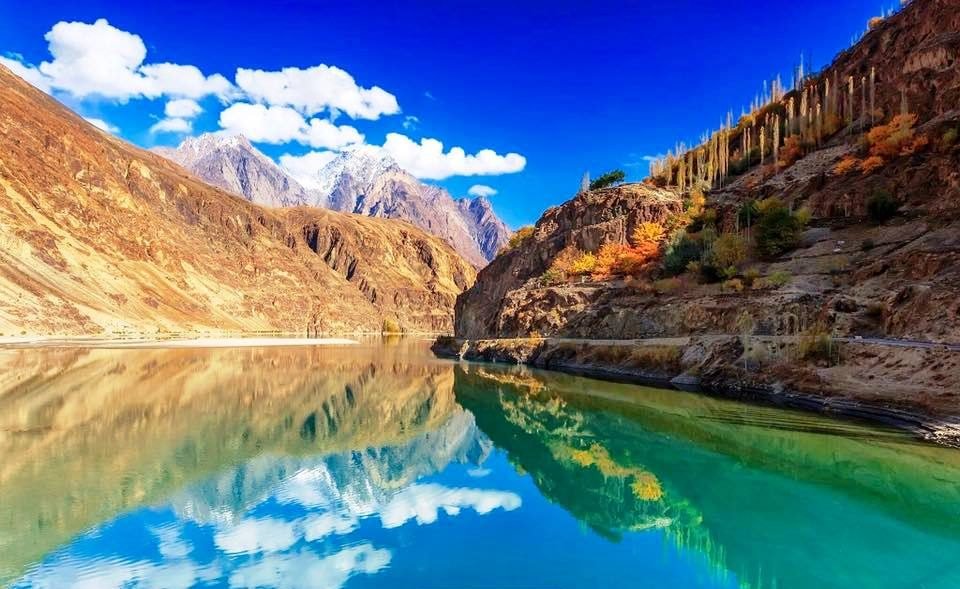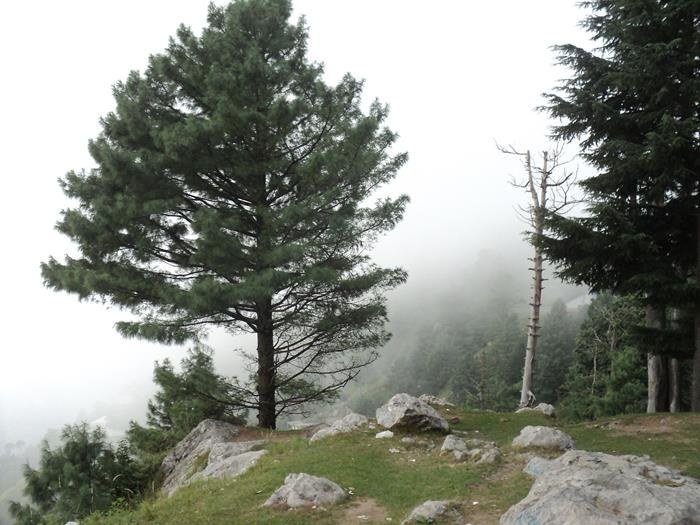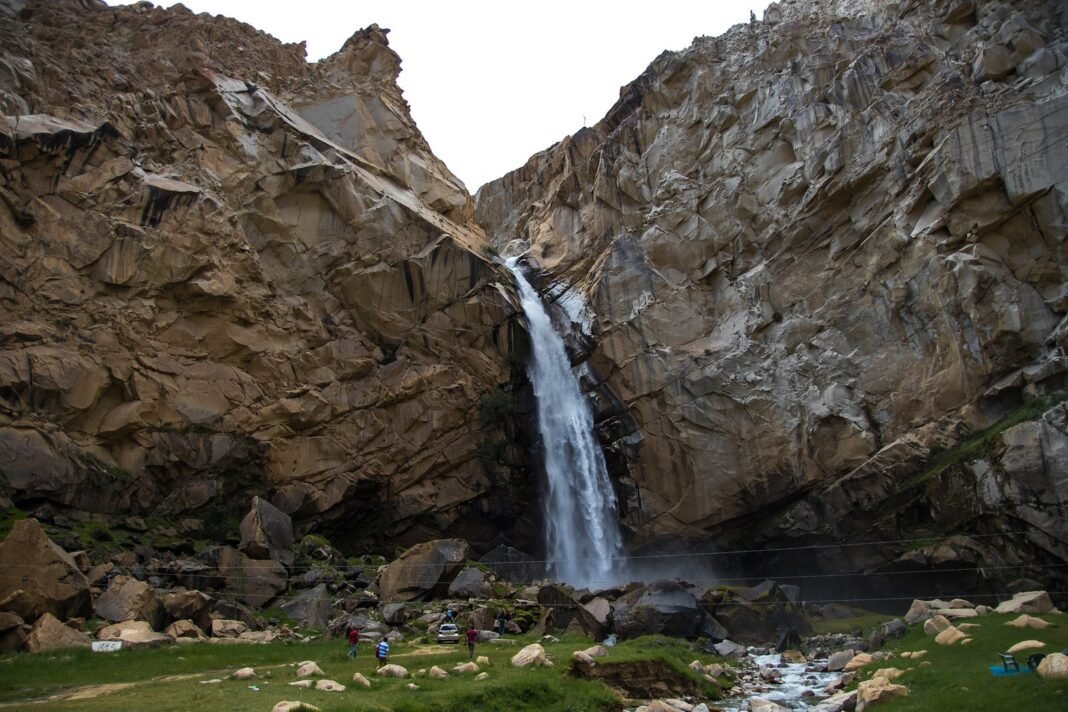
Some waterfalls demand your attention with crowds, ticket counters, and selfie sticks. Khamush Waterfall does the opposite. The name itself means silent in Urdu, and silence is exactly what you get here: a tall, graceful cascade pouring down a rocky gorge in the Kharmang valley of Gilgit-Baltistan, with no shops, no fences, and usually no one else around. Travelers who find it call it the “silent beauty” of Gilgit-Baltistan, and the description fits perfectly.
Tucked into a side pocket of the mountains east of Skardu along the Skardu-Kargil road, this khamush waterfall travel guide introduces you to one of the most peaceful hidden gems in the northern areas. It is not a place you build an entire trip around. It is a place you fold into a Kharmang road trip — and then remember longer than all the famous stops. If you are the kind of traveler who prefers the quiet version of a destination, who slows down at roadside turnouts while everyone else rushes past, then keep reading. This is your waterfall.
Quick Facts
- Location: Kharmang District, Gilgit-Baltistan, Pakistan — east of Skardu along the Skardu-Kargil road, near the Indus River.
- Altitude: Around 2,400-2,700 metres (the Kharmang valley floor sits at roughly 2,400 metres above sea level).
- Famous For: A tall natural cascade in a quiet rocky gorge; its peaceful, crowd-free setting.
- Nearest City: Skardu, approximately 70-90 km to the west.
- Accessibility: Road only — a jeep or sturdy car from Skardu along the Skardu-Kargil road; no air access.
- Known Landmarks: Manthoka Waterfall (on the same route), Tolti, Mehdiabad, Olding, and the Indus River.
- Best For: Nature lovers, photographers, campers, and travelers doing a Kharmang day trip or Skardu road tour.
Why Visit Khamush Waterfall
Let us be honest about something: most of Pakistan’s famous waterfalls have become busy picnic parks. Manthoka Waterfall, which sits on the very same road as Khamush, draws crowds every summer, and while it is beautiful, you will share it with dozens of families, vendors, and drone cameras. Khamush Waterfall is what Manthoka feels like in your imagination — wild, quiet, and entirely yours. The fall drops through a narrow gorge in the mountains, landing in a green meadow scattered with boulders, and the only sounds are water and wind. That contrast is the entire argument for visiting.
The second reason is the road itself. The drive from Skardu into Kharmang is one of the most underrated scenic drives in Gilgit-Baltistan. The turquoise Indus River keeps you company for much of the way, the valley opens into green fields and apple and apricot orchards, and every few kilometers there is a village — Mehdiabad, Tolti, Olding — that most travelers never stop in. Khamush Waterfall is the perfect excuse to make this drive instead of rushing straight to Shigar or Khaplu. A good khamush waterfall travel guide has to say this plainly: the waterfall is the highlight, but the journey is half the reward.
Third, this is a photographer’s dream. The gorge framing, the way the fall cuts through bare rock into green pasture, the soft mountain light in the early morning — you can shoot for an hour here without a single stranger walking into your frame. Camping-minded travelers also love it: there is enough flat ground near the base to pitch tents, and spending a night beside a waterfall in the Kharmang valley is the kind of memory that does not fade.
Finally, it is perfect for families who want nature without an expedition. You do not hike for hours to reach it; you drive, park, and walk a short distance. Elderly travelers and small children can enjoy it. And because it is not commercialized, there is no entry fee, no time limit, and no noise. If your idea of a perfect day is a picnic blanket on green grass with a waterfall thundering softly in the background, pack for Khamush.
History of Khamush Waterfall
Khamush Waterfall has no recorded founding date, no ruler who “discovered” it, and no plaque at its entrance — and that is an honest part of its story. For centuries, the Kharmang valley was home to Balti communities whose lives revolved around the Indus River, terraced fields, and orchards. The valley sat on old routes connecting Baltistan with Ladakh to the east, and falls like Khamush were simply part of the landscape the locals knew: a landmark for shepherds, a water source, a quiet corner of the gorge.
The name “Khamosh” (silent) almost certainly comes from local usage rather than any official naming — the fall sits off the main settlements, away from village noise, and travelers noticed the contrast. Kharmang itself entered the wider travel conversation only in the last couple of decades, as Skardu’s tourism boom pushed visitors east along the Skardu-Kargil road toward Manthoka Waterfall and Khaplu. Manthoka became the famous stop, with its developed picnic infrastructure; Khamush, a little further along and harder to spot from the road, stayed in the shadows.
In recent years, vloggers and travel photographers have started putting Khamush on the map, often contrasting it with Manthoka as the “natural” alternative to the busier site. That is how most travelers hear about it today — not from guidebooks, but from someone’s video titled something like “the silent beauty of Gilgit-Baltistan.” It remains, thankfully, undeveloped. There are no grand plans announced for it, no resort at its base, and the valley communities that farm the surrounding land continue their lives much as they have for generations. When you visit, you are seeing Kharmang as it has always been.
Top Things to Do in Khamush Waterfall
Stand at the Base of the Falls
The main event is simple and free: walk to the base of the cascade and just stand there. The fall drops through a rocky cleft, throwing up a fine mist that cools the whole meadow. On a hot summer afternoon in Kharmang, that mist feels like air-conditioning made by nature. Take your time — the rocks near the base are uneven, so wear shoes with grip, but the short approach is easy for most people. This is the single most rewarding thing you can do here, and it costs nothing.
Photography and Drone Shots
The gorge framing makes Khamush one of the most photogenic waterfalls in Gilgit-Baltistan. Morning light works best, when the sun comes over the ridge and lights the falling water without harsh shadows. If you fly a drone, be respectful: keep it away from any livestock or people in the meadow, and stay within sight. Landscape photographers should also walk a few minutes downstream along the stream — the water winding through boulders and green grass makes for excellent foreground shots of the fall itself.
Picnic in the Meadow
The flat green area near the base of the falls is made for picnics. There are no restaurants or stalls here, so bring everything with you from Skardu or Manthoka — food, water, a mat, and bags for your rubbish. Families love this: children can play on the grass while the adults sit with the waterfall as their backdrop. Carry out every scrap of litter. This place is beautiful precisely because nobody has ruined it yet, and keeping it that way is every visitor’s job.
Camping Under the Stars
For adventurous travelers, camping beside Khamush Waterfall is an unforgettable night. The valley sky here is dark, the fall’s soft thunder is the only soundtrack, and dawn breaks over the gorge in spectacular fashion. You must bring all your own gear — there is no campsite, no shop, and no drinking-water supply. Camp only on the flat meadow, well away from the water’s edge, never block the stream, and ask the nearest locals if you want to camp on land that looks cultivated. Leave no trace when you pack up.
Combine It with a Kharmang Road Trip
The smartest way to experience Khamush Waterfall is as the centerpiece of a full Kharmang day. Start from Skardu after breakfast, stop at Manthoka Waterfall, continue through Mehdiabad and Tolti, spend the middle of the day at Khamush, and wander the orchards and villages on the way back. The Skardu-Kargil road rewards slow travel — pull over at viewpoints over the Indus, buy apricots from a roadside seller, and watch village life go by. It is the kind of day that reminds you why you came to the mountains in the first place.
Famous Places In and Around Khamush Waterfall
- Manthoka Waterfall — the famous 180-foot fall on the same road, with picnic lawns and a restaurant; visit both and compare.
- Tolti — the district headquarters of Kharmang, a good stop for fuel and basic supplies.
- Mehdiabad and Olding — quiet villages with orchards and traditional Balti houses along the route.
- Ghundus Village — known for its apple and apricot gardens, set beside the Indus River.
- The Indus River — the turquoise giant that accompanies most of the drive; stop at a quiet bend for photos.
- Khaplu Valley — further east along the same road, with its famous fort and khanqahs, if you have a second day.
- Skardu — your base city, with Shangrila Lake, Shigar Fort, and the bazaar; see our guide to Deosai National Park for another epic day trip from the city.
How to Reach Khamush Waterfall
Reaching Khamush Waterfall is straightforward if you understand one thing: it is a road-trip destination, not a standalone excursion. You get to Skardu first, then drive east into Kharmang. The fall sits a short walk off the Skardu-Kargil road, and the drive from Skardu takes roughly two and a half to three hours, covering approximately 70-90 km depending on the exact turnoff. A jeep or a car with decent ground clearance is ideal; the road is paved in stretches and rough in others.
From Islamabad: The most common route is Islamabad to Skardu by air (about 1 hour) or by road via the Karakoram Highway and the Skardu road (approximately 630-650 km, 18-24 hours with breaks). Most travelers fly to Skardu and rent a jeep with a driver for the Kharmang trip. From Lahore: Fly or drive to Islamabad first, then continue to Skardu; budget a full day for the road journey. From Karachi: Fly to Islamabad, then take the connecting flight or road route to Skardu — plan at least two days of travel each way.
Nearest airport: Skardu International Airport, with regular flights from Islamabad and connections from other cities. Flights are weather-dependent, so keep a buffer day. Road conditions: The Skardu-Kargil road is generally open from May to October. In winter it can be blocked by snow and the waterfall freezes, so the trip is a summer-season plan. Transport options: Renting a private jeep with a local driver from Skardu is the easiest and most reliable option — drivers know the exact turnoff to the fall. Public vans run from Skardu toward Kharmang villages, but they will not stop at the waterfall, so private transport is strongly recommended.
Route Details
- Skardu to Manthoka Waterfall (approx. 60 km, ~2 hours): Leave Skardu heading east on the Skardu-Kargil road along the Indus. Stop at Manthoka for a look — it helps you appreciate how different Khamush feels.
- Manthoka to the Khamush turnoff (approx. 15-25 km, ~30-45 minutes): Continue east past Mehdiabad toward Tolti. Watch for the waterfall visible in a side gorge to the left of the road; locals and your driver will know it as Khamosh Waterfall.
- Park and walk: Park at the roadside turnout and walk the short track to the base of the falls — usually under 15 minutes on foot over meadow and rocks.
- Return: Head back the same way to Skardu, or continue east to Tolti and the villages beyond if you are exploring Kharmang more deeply.
Where to Stay in Khamush Waterfall
There is no hotel at Khamush Waterfall itself — and that is part of its charm. Almost every visitor stays in Skardu and makes this a day trip, which is exactly the right plan. Skardu has the full range of options: comfortable mid-range hotels and guesthouses cluster in and around the city, there are upscale resort-style properties near the lakes, and budget guesthouses serve backpackers. Book in advance for June to August, when Skardu fills up.
If you want to stay closer to the valley, the Manthoka area has small guesthouses and a modest resort setup near the famous fall, and some Kharmang villages offer simple family-run guesthouses. These are basic — clean rooms, home-cooked food, and warm Balti hospitality — which suits travelers who want an authentic experience. For campers, the meadow near Khamush works for a night with your own gear, as long as you camp responsibly and carry out all waste. Whatever you choose, plan your stay around Skardu as the base and the waterfall as the day’s adventure.
Where to Eat: Local Foods of Khamush Waterfall
There is no food at the waterfall, so the eating here happens in two places: the picnic you bring, and the Balti kitchens of Skardu and Kharmang. If you picnic at the falls, buy supplies in Skardu — fresh bread, fruit, and cooked food travel well for the three-hour drive. The valley is famous for apricots in summer, and buying a bag from a roadside orchard seller is both delicious and a small way to support the local economy.
For real Balti food, try the local dishes of the region. Balay is a hearty handmade-noodle soup, perfect after a day in the mountains. Mamtu are steamed dumplings filled with minced meat, usually served with a tangy chutney. Kisir is a buckwheat pancake, and buckwheat dishes in general are a Balti specialty you will not find in the plains. Dried apricots, apricot oil, and apricot kernel products are the valley’s signature — Kharmang’s orchards produce some of the finest. In Skardu, restaurants in the bazaar area serve these dishes alongside standard Pakistani food; expect a simple, filling meal to cost in the budget-friendly to mid-range bracket, roughly PKR 400-1,200 per person depending on where you eat.
Weather in Khamush Waterfall
Kharmang sits at roughly 2,400 metres above sea level, so the weather follows classic high-valley patterns: warm, pleasant summers and cold, snowy winters. The waterfall runs strongest in late spring and summer, when snowmelt feeds the streams. In winter the fall can freeze almost solid, and the road may be impassable — this is a May-to-October destination, and the sweet spot is June to September. Days are warm enough for a picnic, nights need a jacket even in July.
| Season | Temperature Range | Conditions |
|---|---|---|
| Winter (Dec-Feb) | Approximately -10 to 5°C | Very cold with snowfall; the waterfall may freeze; the road can be blocked. Not recommended for visiting. |
| Spring (Mar-May) | Approximately 5 to 20°C | Snowmelt begins; the fall runs strong; orchards bloom in April; the road reopens by May. |
| Summer (Jun-Sep) | Approximately 18 to 30°C | Best season — warm days, cool nights, full water flow, green meadows. Ideal for picnics and camping. |
| Autumn (Oct-Nov) | Approximately 5 to 18°C | Golden orchards and crisp air; water flow drops; nights get cold; the road usually stays open into October. |
Language and Culture of Khamush Waterfall
The Kharmang valley is Balti country. The people here speak Balti, a Tibetic language written in the Perso-Arabic script, though most people also understand Urdu, and younger folks and guides often speak some English. The dominant tribe and culture is Balti, with deep roots in Tibetan-Buddhist history before the valley’s conversion to Islam centuries ago — a heritage you can still feel in the architecture, the food, and the famous hospitality.
Culturally, Kharmang is conservative and traditional. Dress modestly — covered shoulders and knees are the respectful default, especially for women — and always ask before photographing people, particularly women and elders. If you are offered tea or food, accept graciously; refusing hospitality can feel rude. Remove shoes when entering homes or mosques. The people of Kharmang are known across Gilgit-Baltistan for their warmth toward travelers, and a little courtesy goes a very long way here. Friday is the prayer day, so some shops and transport may run on reduced hours.
Shopping in Khamush Waterfall
There is no shopping at the waterfall itself, but the Kharmang road trip is a wonderful place to buy authentic local products. The valley’s dried apricots are legendary — sweet, chewy, and far better than anything from a city supermarket. Look for them at roadside stalls and village shops between Skardu and Tolti. Apricot oil, pressed locally, is prized for cooking and skin care, and apricot kernels make a popular snack.
In Skardu’s bazaar, you will find the full range of Balti handicrafts: hand-woven woolen shawls and caps, traditional Balti jewelry, wood carvings, and pashmina-style wraps. There are no shopping malls anywhere near Kharmang — and that is the point. Buy directly from village sellers when you can; the prices are fair, the quality is genuine, and your money stays in the valley. Bargaining is gentle and expected in the bazaar, but not with roadside farmers selling their own produce.
Travel Tips for Khamush Waterfall
Packing Essentials
Pack for a mountain day trip: a warm layer even in summer (the mist and altitude cool things down), sun protection (the sun is strong at 2,400 metres), sturdy walking shoes with grip for the rocks near the falls, a rain jacket in case of sudden showers, and a full picnic kit — food, drinking water, a mat, and rubbish bags. If camping, bring a four-season tent, a warm sleeping bag, and a stove, since there is no firewood to spare and no shop nearby. A power bank helps, and a basic first-aid kit is wise given the distance from the nearest hospital in Skardu.
Safety Tips
Khamush Waterfall is a wild, unmanaged site, so your safety is in your own hands. Never climb the wet rocks around the fall — they are slippery and the drop is real. Keep children within arm’s reach near the water. Do not attempt to swim in the plunge pool; mountain streams are dangerously cold and the current is stronger than it looks. Start your return to Skardu well before dark, since mountain roads are unforgiving after sunset. Travel in daylight, keep your vehicle’s fuel topped up in Skardu or Tolti, and let your hotel know your plans if you are camping overnight.
Money & Connectivity
Bring all the cash you need from Skardu — there are no ATMs in the Kharmang valley and no card payments anywhere near the waterfall. Mobile signals are patchy along the Skardu-Kargil road; expect weak or no coverage near the falls themselves, with better reception in the villages. Download offline maps before you leave Skardu. In an emergency, your driver or the nearest village is your lifeline, so agree on a meeting point and time before anyone wanders off.
Best Time to Visit Khamush Waterfall
Summer (June to September) — The Prime Season
This is when to go. The fall runs at its strongest, the meadow is green, the road is open, and the weather is perfect for picnics, photography, and camping. July and August are the busiest months in Skardu, but Khamush itself stays quiet even then. Expect warm days around 25-30°C and pleasantly cool nights.
Spring (May) and Autumn (October) — The Quiet Shoulders
May brings snowmelt and strong water flow with blooming orchards along the road — a beautiful, crowd-free window if the road has reopened. October offers golden autumn colors in the valley and crisp, clear air, though the water flow is lower and nights turn cold. These shoulder months suit travelers who want the valley almost entirely to themselves.
Winter (November to April) — Skip It
Winter is not the time for this trip. The waterfall can freeze, the road may be blocked by snow, and temperatures drop well below zero. Save Khamush for the warm months and spend winter at lower-altitude destinations instead.
Final Thoughts
Khamush Waterfall will never be the most famous waterfall in Pakistan, and that is exactly why it deserves your visit. In a region where every beautiful spot seems to come with a crowd, this quiet cascade in the Kharmang valley offers something rarer than beauty: stillness. It asks little of you — a drive, a short walk, a packed lunch — and gives back a kind of peace that is hard to find anywhere else in the northern areas.
So fold it into your next Skardu trip. See Manthoka, by all means, but keep driving east. Stop where the road turns quiet, walk into the gorge, and stand in the mist of the silent waterfall. Then drive back slowly, the Indus glittering beside you, and count it among the best decisions of your journey. For more ideas on planning a northern adventure, browse our Explore Pakistan collection.
FAQs
1. Where is Khamush Waterfall located?
Khamush Waterfall is in the Kharmang District of Gilgit-Baltistan, east of Skardu along the Skardu-Kargil road, near the Indus River — approximately 70-90 km from Skardu city.
2. What is the best time to visit Khamush Waterfall?
May to September, with June to August being the prime months — the fall runs strongest, the road is open, and the weather is ideal for picnics and camping.
3. How do I reach Khamush Waterfall?
Fly or drive to Skardu first, then hire a jeep with a driver for the Kharmang trip. The fall is a short walk off the Skardu-Kargil road, about 2.5-3 hours from Skardu.
4. Is Khamush Waterfall safe for families?
Yes, for a day visit — the walk is short and the meadow is family-friendly. Keep children away from the slippery rocks and the water’s edge, and bring your own food and supplies.
5. Is there an entry fee or any facilities at the waterfall?
No. There is no entry fee, no restaurant, no shop, and no washroom. It is a completely natural, undeveloped site — bring everything you need and carry out all rubbish.
6. Can I camp at Khamush Waterfall?
Yes, with your own gear. The meadow near the falls is suitable for tents in summer. Camp responsibly, well away from the water, and leave no trace.
7. What should I eat during the trip?
Pack a picnic from Skardu, and try Balti specialties like balay (noodle soup) and mamtu (dumplings) in Skardu or Kharmang villages. Buy dried apricots from roadside sellers.
8. How is Khamush Waterfall different from Manthoka Waterfall?
Manthoka is developed and busy with crowds and facilities; Khamush is natural, quiet, and crowd-free. They sit on the same road, so visit both and enjoy the contrast.