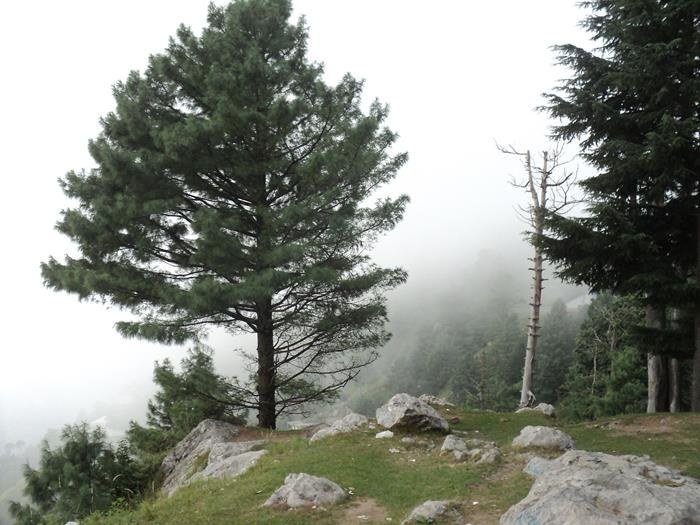
Everyone knows Murree. Most people know Nathiagali. But ask a seasoned traveler in Islamabad where they go when they want the Galiyat without the crowds, and you will hear a quieter name: Khanaspur. Tucked into the Ayubia hills of the Galiyat region at about 2,250 metres above sea level, Khanaspur is the peaceful sibling of the famous hill stations — old colonial-era buildings wrapped in pine forest, cool mountain air, and a calm that Murree lost decades ago. This khanspur travel guide (Khanaspur is also spelled Khanspur or Khanispur) is your invitation to discover it.
Khanaspur is not a place of grand attractions or tick-box sightseeing. It is a place of slow mornings, forest walks, and evenings on a veranda watching the mist roll through the pines. If you are planning a Galiyat trip and wondering whether to brave the Nathiagali crowds or try something gentler, read on — Khanaspur might be exactly the escape you did not know you needed.
Quick Facts
- Location: Galiyat region, Abbottabad District, Khyber Pakhtunkhwa — part of the Ayubia hill-station complex.
- Altitude: Around 2,250 metres (7,382 feet) above sea level.
- Famous For: Peaceful pine-forest setting, colonial-era buildings, and a calm alternative to Murree and Nathiagali.
- Nearest City: Abbottabad (about 30-40 km); Islamabad is roughly 69 km away, a 2-3 hour drive.
- Accessibility: Road only, via the Murree-Ayubia road; well-connected to Nathiagali and Ayubia.
- Known Landmarks: Ayubia chairlift (Ghora Dhaka), the Pipeline Track, Moto Tunnel, Mushkpuri Top, Ayubia National Park.
- Best For: Couples, families, honeymooners, writers, and anyone seeking a quiet mountain retreat close to Islamabad.
Why Visit Khanaspur
The first and best reason to visit Khanaspur is what it is not. It is not Murree on a summer weekend — no traffic jams, no blaring music, no shoulder-to-shoulder Mall Road. Khanaspur is what the Galiyat used to feel like: a handful of old buildings among towering pines, a bazaar you can walk in five minutes, and silence broken only by birdsong. For travelers from Islamabad, Rawalpindi, or Lahore who want a genuine mountain break without flying north, that difference is everything.
The second reason is the setting. At 2,250 metres, Khanaspur sits in dense temperate coniferous forest — pine, cedar, oak, and walnut — that stays green and cool through the hottest months. Summer temperatures hover between 21 and 26°C with refreshingly cool nights, which means you can sleep under a blanket in July while the plains swelter at 40°C. The air smells of pine resin, the mornings arrive with mist, and the whole town feels like it is breathing slowly. It is restorative in a way that is hard to explain until you have sat on a Khanaspur veranda with a cup of chai.
Third, Khanaspur is a perfect base. It sits at the heart of the Galiyat’s best experiences: the famous Pipeline Track walk to Ayubia, the chairlift at Ghora Dhaka, the hike up Mushkpuri Top, and the old Moto Tunnel are all within easy reach. You get the quiet of a hidden town and the activities of the whole region — the best of both worlds. Day trips to Nathiagali’s bazaar or the Galiyat’s viewpoints take minutes, and you return to your peaceful corner for the evening.
Finally, there is the history under your feet. Khanaspur is a genuine colonial-era hill station, with old buildings and institutions — the Punjab University Hostel, the old Bhutto House — that speak of a time when the British and later Pakistan’s elite came here to escape the summer heat. Walking its lanes feels like stepping into a slower, more gracious era. If you are a couple looking for a romantic getaway, a family wanting safe and calm surroundings for children, or a solo traveler needing quiet to think and write, Khanaspur is made for you.
History of Khanaspur
Khanaspur’s story is the story of the Galiyat itself. The region was first documented by British colonial officials in the 1840s — James Abbott, the officer who gave Abbottabad its name, ventured into these hills around 1846-47 — and the British quickly recognized the tracts as ideal summer retreats. The area was home to the Karlal tribe, whom the colonial administration called the “Karral country,” and the British began developing several of these hill sites as resorts to escape the punishing heat of the Punjab plains.
During British rule, Khanaspur was occupied by a detachment of British infantry, and it grew as a quiet cantonment-style settlement with the stone-and-timber buildings, churches, and rest houses typical of colonial hill stations. After the partition and independence of Pakistan in 1947, the Galiyat resorts were neglected for a time, but from the 1960s onward they were developed again as popular domestic tourist destinations. Khanaspur became part of the Ayubia complex — four hill stations including Khanaspur, Ghor Daka (Ghora Dhaka), Changla Gali, and Khairagali — named after President Ayub Khan, who belonged to the Haripur district of Hazara.
Institutions followed: the Punjab University established a hostel here, and the Bhutto House became part of local lore. More recently, the region earned international recognition when the Galiyat was included in UNESCO’s biosphere reserve sites in 2023 — a nod to its rich temperate forests and wildlife. Today Khanaspur remains what it has always been: the Galiyat’s quiet corner, loved by those who know and missed by those who rush past to Nathiagali.
Top Things to Do in Khanaspur
Walk the Pipeline Track to Ayubia
The single best experience near Khanaspur is the Pipeline Track — a gentle, mostly flat walking trail through dense pine forest connecting Nathiagali and Ayubia. The walk takes about 45 minutes to an hour each way, and it is suitable for almost everyone, including children and older travelers. Moss-covered stones, filtered sunlight, the smell of pine, and occasional monkeys in the trees make it feel like a walk through a storybook. Start early in the morning for the mist, or in the late afternoon for golden light. It is the kind of walk you will remember for years.
Ride the Ayubia Chairlift
At Ghora Dhaka, a short drive from Khanaspur, the Ayubia chairlift carries you up through the forest canopy for panoramic views of the Galiyat hills. On a clear day you can see for miles across the forested ridges. The ride is gentle and safe, and the top station has viewpoints and small tea stalls. Go on a weekday morning to avoid the weekend queues that build up from Nathiagali day-trippers.
Hike to Mushkpuri Top
Mushkpuri, at about 2,800 metres, is the second-highest hill in the Galiyat and a favorite day hike from the Khanaspur area. The trail climbs through beautiful forest and opens onto a summit with sweeping views — on very clear days, you can even glimpse distant peaks. The hike takes 2-3 hours up depending on your pace. Carry water and a snack, wear proper shoes, and start early. In winter the trail is snow-covered and suited only to experienced, well-equipped hikers.
Explore the Moto Tunnel
Near Ayubia, the restored Moto Tunnel is a piece of living history — a British-era tunnel, part of the old walking route through the hills, that has been renovated for visitors. Walking through it is a short but evocative experience, connecting you directly to the colonial history of the Galiyat. Combine it with the Pipeline Track for a full morning of easy exploration.
Wander Khanaspur’s Old Lanes
Do not underestimate the pleasure of simply walking around Khanaspur itself. The old colonial-era buildings, the quiet lanes under the pines, the small bazaar, and the viewpoints over the forested valleys reward slow exploration. Photographers will find endless material in the mist, the old stonework, and the play of light through the trees. This is a town to be savored, not rushed.
Famous Places In and Around Khanaspur
- Ayubia National Park — temperate coniferous forest with leopards, monkeys, and rare pheasants; see our Ayubia National Park travel guide for details.
- Nathiagali — the Galiyat’s most famous hill station, with its lively bazaar and Mukshpuri and Miranjani trailheads.
- Dunga Gali — a tiny, scenic settlement on the Pipeline Track route, perfect for a tea stop.
- Miranjani Top — the highest peak in the Galiyat (about 2,992 m), a full-day hike from Nathiagali.
- Ghora Dhaka — the chairlift base and the central point of the Ayubia complex.
- Thandiani — another quiet Galiyat hill station, further afield, for travelers exploring the whole region.
- Murree — the famous “Queen of Hill Stations,” about an hour away, for a contrasting day of bazaars and crowds.
How to Reach Khanaspur
Getting to Khanaspur is easy, which is a big part of its appeal. The town sits on the main Galiyat road network, well-connected to Murree, Nathiagali, and Ayubia. From Islamabad: Drive via the Murree Expressway to Murree, then continue on the scenic mountain road through Jhika Gali and Dunga Gali toward Ayubia and Khanaspur — roughly 69 km in total, taking 2-3 hours depending on traffic. From Lahore: Take the motorway to Islamabad (about 4-5 hours), then continue to Khanaspur; most travelers break the journey in Islamabad or Murree. From Karachi: Fly to Islamabad and drive up — plan the hill drive for daylight hours.
Nearest airport: Islamabad International Airport, about 100 km away (3-4 hours by road). Road conditions: The Murree Expressway is excellent year-round; the mountain road from Murree to Khanaspur is paved but winding — drive carefully, especially in fog or rain. In winter (December-February), the road can be affected by heavy snowfall; check conditions before traveling, and carry snow chains if a storm is forecast. Transport options: Your own car or a rented car with driver is the most comfortable option. Public vans and coasters run from Rawalpindi/Islamabad to Murree and onward to the Galiyat, but they are crowded on weekends — private transport gives you the freedom to stop at viewpoints along the way.
Route Details
- Islamabad to Murree (approx. 60 km, ~1.5 hours): Take the Murree Expressway from Islamabad; the road is fast and well-maintained.
- Murree to Khanaspur (approx. 25-30 km, ~1 hour): From Murree, follow the Galiyat road through Jhika Gali toward Ayubia. Pass Dunga Gali and continue to the Khanaspur turnoff — the drive is beautiful, with pine forest on both sides.
- Alternative via Abbottabad: From Abbottabad, drive up through the Galiyat via Nathiagali to Khanaspur — a longer but equally scenic route.
- Local movement: Once in Khanaspur, most places are walkable; hire a local taxi or jeep for Ayubia, the chairlift, and Mushkpuri trailheads.
Where to Stay in Khanaspur
Khanaspur has a small, charming selection of places to stay — this is a quiet town, not a resort strip, so book ahead in summer and on long weekends. The town’s hotels are modest, family-run places: names you will come across include the Canari Hotel, Safari Palace, Mount View Hotel, Metro Inn, Gohar Hotel, Snow Hill Villas, and the Breeze Inn Guest House, along with Pineview huts. Expect clean, comfortable rooms with hot water and heating, home-style food, and hosts who treat you like family rather than customers. Prices are generally reasonable compared to Nathiagali and Murree — this is one of the perks of choosing the quieter town.
For a more institutional option, the Punjab University Hostel operates here, and there are also flats and houses available for rent — a good choice for families staying a week or more. If you want luxury, look to Nathiagali’s upscale hotels a short drive away, and use Khanaspur as your peaceful daytime base. In winter, confirm heating arrangements before booking, as temperatures drop below freezing and snowfall is heavy. Whatever you choose, the nights are the real luxury: cool, silent, and scented with pine.
Where to Eat: Local Foods of Khanaspur
Khanaspur’s food scene is small and honest — hotel dining rooms, a few dhabas, and tea stalls — but the Galiyat’s pahari flavors shine through. The local cuisine leans on mountain staples: saag (slow-cooked greens) with makai ki roti (cornflat bread) and a generous dollop of desi ghee is the classic hill-country meal, hearty and warming after a forest walk. Desi chicken karahi, daal, and fresh tandoori rotis are dhaba standards, and no Galiyat trip is complete without endless cups of doodh patti (milky chai) at a roadside stall, preferably with pakoras when the mist rolls in.
In summer, roasted corn (bhutta) from street vendors is everywhere, and fresh fruit — apricots, plums, and apples from the region’s orchards — makes for perfect trail snacks. For a special meal, drive to Nathiagali or Ayubia, where restaurants offer a wider range, including BBQ platters and continental dishes. A simple dhaba meal in Khanaspur is very budget-friendly (a few hundred rupees per person), while a full dinner at a hotel restaurant will cost more but remains reasonable by hill-station standards. If you are staying in a rented house, buy desi ghee and fresh vegetables from local shops — cooking a pahari-style meal with mountain ingredients is a joy in itself.
Weather in Khanaspur
At 2,250 metres, Khanaspur enjoys a classic mountain climate: cool summers, cold snowy winters, and misty monsoon months. Summer days are pleasantly warm at 21-26°C with cool nights that call for a light sweater — the main reason half of Islamabad seems to dream of the Galiyat in June. Winter brings heavy snowfall and freezing temperatures, turning the town into a snow-globe landscape. The monsoon (July-August) adds rain and dramatic mist, which many travelers find magical and others find damp — pack accordingly.
| Season | Temperature Range | Conditions |
|---|---|---|
| Winter (Dec-Feb) | Approximately -5 to 8°C | Heavy snowfall and freezing nights; magical snowy landscapes; roads can be affected — check before traveling. |
| Spring (Mar-May) | Approximately 8 to 20°C | Flowers bloom, forests turn lush green, and the weather is crisp and fresh. Lovely and crowd-free. |
| Summer (Jun-Sep) | Approximately 15 to 26°C | Peak season — warm days, cool nights, perfect for walks and the chairlift. Monsoon mist in July-August. |
| Autumn (Oct-Nov) | Approximately 5 to 18°C | Clear skies, golden foliage, and thinning crowds. Excellent for photography and quiet getaways. |
Language and Culture of Khanaspur
The Galiyat is home to the Karlal tribe, the dominant community of these hills since long before the British arrived. The local language is Hindko — specifically the Dhundi-Kairali dialect of the Galiyat — though Urdu is widely understood and English is spoken in hotels and by guides. You will hear the musical lilt of Hindko in the bazaar and on the trails, a reminder that you are in Hazara, not Punjab.
The culture is pahari (mountain) through and through: warm, hospitable, and quietly proud. Guests are treated with genuine care — do not be surprised if a shopkeeper insists you sit for chai, or a hotel owner shares stories of the old days. Dress is modest and practical; the weather does most of the deciding for you. Respect local customs as you would anywhere in the hills: ask before photographing people, keep noise down in the quiet lanes (the town’s peace is its treasure), and dress modestly at religious sites. Friday prayers mean a slower midday in the bazaar. The people of Khanaspur are accustomed to visitors and welcoming to all, and a little courtesy in return keeps it that way.
Shopping in Khanaspur
Khanaspur’s own bazaar is tiny, but the Galiyat’s shopping traditions are within easy reach. In Ayubia and Nathiagali, shops sell the region’s signature handicrafts: hand-woven shawls, woolen caps, embroidered items, and traditional necklaces that make for authentic souvenirs. Dry fruits — walnuts, almonds, and dried apricots from the region — are excellent quality and make perfect gifts; buy from reputable shops where you can taste before you buy.
Honey from the Galiyat’s forests is another prized local product, along with herbal items and desi ghee. There are no shopping malls in Khanaspur or anywhere in the Galiyat — the shopping here is about craft and produce, not brands. Bargain politely in the bazaars, and remember that the best souvenir from Khanaspur might be a bag of walnuts and a hand-woven shawl that smells faintly of pine.
Local Events and Festivals
Khanaspur shares in the Galiyat’s biggest winter celebration: the Galiyat Snow Festival, organized by the Galiyat Development Authority and the Tourism Corporation of Khyber Pakhtunkhwa. Held in the winter months (January/February in recent editions), the multi-day festival spans venues across the Galiyat — Nathiagali, Ayubia, Dunga Gali, Khanaspur, and Mushkpuri Top — with skiing, snow tubing, snow hiking, tug of war, camping, food stalls, jeep rallies, and music nights featuring well-known performers. It is the liveliest the quiet hills get all year, and a wonderful time to see Khanaspur dressed in snow and celebration.
Beyond the festival, the Galiyat’s event calendar follows the seasons: summer brings the peak tourist buzz with occasional cultural programs, and religious festivals like Eid are celebrated warmly in the local community. If you are visiting in winter, check the Galiyat Development Authority’s announcements for the Snow Festival dates — they vary each year with the snowfall.
Travel Tips for Khanaspur
Packing Essentials
Layers are everything in the Galiyat. Even in summer, pack a warm jacket or sweater for the evenings — temperatures drop sharply after sunset. In winter, bring proper cold-weather gear: a heavy coat, gloves, a cap, and waterproof boots with grip, as lanes get icy. A rain jacket is wise in the monsoon months. Comfortable walking shoes are essential for the Pipeline Track and Mushkpuri; sunscreen and sunglasses matter year-round at this altitude. Carry a power bank, basic medicines, and snacks for the trails.
Safety Tips
Khanaspur is a safe, family-friendly hill station, but mountain sense still applies. Drive carefully on the winding Galiyat roads, especially in fog, rain, or snow — use low gears on descents and never rush. On the Mushkpuri hike, stay on the marked trail, start early, and turn back if weather closes in. In winter, check road conditions before traveling and avoid driving at night in snowfall. Keep children supervised near the chairlift and on forest trails. As always in the hills, respect the weather: it changes fast.
Money & Connectivity
Carry sufficient cash — while Nathiagali and Ayubia have some ATM access, machines in the Galiyat can run dry on busy weekends, and small shops and dhabas in Khanaspur are cash-only. Mobile signals from all major networks generally work in Khanaspur and along the main Galiyat road, though coverage thins on the hiking trails. Hotels and many restaurants offer Wi-Fi, but it can be slow — download offline maps and entertainment before you leave Islamabad. Fuel up in Murree or Abbottabad; there are limited fuel options in the hills themselves.
Best Time to Visit Khanaspur
Summer (May to September) — The Classic Season
This is the Galiyat at its best: green forests, cool 21-26°C days, blooming flowers, and all attractions open — the Pipeline Track, chairlift, and Mushkpuri hikes. It is also the busiest season, so book hotels in advance and prefer weekdays. Monsoon mist in July and August adds romance for some and dampness for others.
Winter (December to February) — The Snow Season
If you love snow, winter in Khanaspur is magical: heavy snowfall blankets the pines, the town turns silent and white, and the Galiyat Snow Festival brings celebration to the hills. Pack serious winter gear, confirm your hotel has heating, and check road conditions. For snow lovers, this rivals summer as the best time to visit.
Spring (March-April) and Autumn (October-November) — The Secret Seasons
These shoulder months are Khanaspur’s best-kept secret: spring brings blossoms and fresh green with few visitors, while autumn offers golden foliage and crystal-clear skies. Hotels are cheaper, trails are empty, and the weather is crisp and pleasant. If you can travel off-peak, this is when Khanaspur is most itself.
Final Thoughts
Khanaspur does not shout for your attention — and that is precisely its gift. While the crowds queue for Nathiagali’s chairlift and jostle through Murree’s Mall Road, this quiet pine-scented town goes on being what hill stations were always meant to be: a refuge. A place where the air is cool, the forest is close, the nights are silent, and the biggest decision of your day is whether to walk the Pipeline Track in the morning mist or the afternoon sun.
So the next time the plains heat up and you start dreaming of the mountains, skip the obvious choices. Drive past the crowds, turn toward Ayubia, and settle into Khanaspur. Walk its old lanes, breathe its pine air, and let the Galiyat work its slow magic on you. For more mountain escapes in our Explore Pakistan series — from ski slopes like Malam Jabba to northern valleys — keep exploring with us.
FAQs
1. Where is Khanaspur located?
Khanaspur is a hill station in the Galiyat region of Abbottabad District, Khyber Pakhtunkhwa, part of the Ayubia complex — about 69 km (2-3 hours) from Islamabad via Murree.
2. What is the best time to visit Khanaspur?
May to September for green forests and pleasant weather (21-26°C); December to February for snow and the Galiyat Snow Festival. Spring and autumn are lovely, crowd-free shoulder seasons.
3. How do I reach Khanaspur from Islamabad?
Drive the Murree Expressway to Murree, then continue on the Galiyat road through Dunga Gali to Ayubia/Khanaspur. Your own car or a rented car with driver is the most comfortable option.
4. Is Khanaspur safe for families?
Yes — it is one of the safest, calmest hill stations near Islamabad, with gentle walks, a family-friendly chairlift, and a peaceful atmosphere ideal for children and elders.
5. Where can I stay in Khanaspur?
The town has small family-run hotels and guesthouses (Canari Hotel, Safari Palace, Mount View, and others), plus rentable houses and flats. Book ahead in summer and winter weekends.
6. What is the local food of Khanaspur?
Pahari staples like saag with makai ki roti and desi ghee, desi chicken karahi, doodh patti chai, roasted corn, and fresh mountain fruit. Hotel restaurants and dhabas serve all of these.
7. What is the Galiyat Snow Festival?
A winter festival organized by the Galiyat Development Authority across Nathiagali, Ayubia, Dunga Gali, Khanaspur, and Mushkpuri Top, featuring skiing, snow tubing, food stalls, and music nights.
8. How is Khanaspur different from Nathiagali and Murree?
It is quieter, less commercial, and more peaceful — with the same pine forests and cool climate but far fewer crowds. It works beautifully as a calm base for exploring the whole Galiyat.