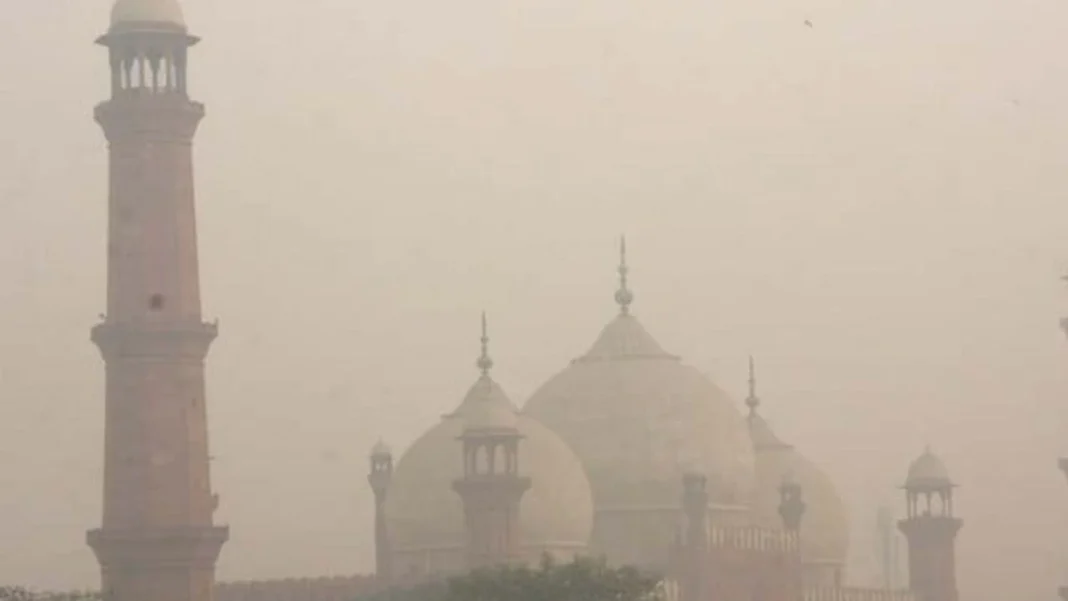
Lahore faces the return of toxic smog, even though the city recorded better air quality in September and October this year than in the previous two years. The Lahore smog return has pushed hourly readings sharply higher in the second half of October, and experts warn that the peak of smog season still lies ahead.
In Lahore, the daily struggle to breathe tells another story: a persistent dry cough, a child’s wheezing breath, and mornings shrouded in toxic air.
The figures behind the Lahore smog return
Punjab Environmental Protection Agency and IQAir data show the average air quality index (AQI) stood at 99 in September this year and around 109 in October so far. The table below sets those figures against the previous two years.
| Year | September average AQI | October average AQI |
|---|---|---|
| 2024 | 143 | 163 |
| 2025 | 89 | 182 |
| 2026 so far | 99 | around 109 |
Experts attribute the improvement partly to favourable weather and partly to government measures. They warn that sustained progress depends on controlling emissions, not on weather alone.
Despite the relatively better figures, pollution levels began rising again in the second half of October. According to hourly records from the Punjab EPA, Lahore’s AQI ranged between 229 and 290 from October 17 to 21, reaching 290 on October 21. High pollution levels were also recorded at several monitoring stations on October 22.
What the weather office expects
Muhammad Aleemul Hassan, director of the Pakistan Meteorological Department’s Lahore office, said severe winter cold had shortened from around 75 days to around 50 days.
The department’s three month forecast predicts near normal rainfall and slightly above average temperatures. Those factors could affect pollution levels in the coming months.
Hassan noted that a relatively favourable western weather system was expected during the last days of October and the first week of November. The system could bring a drop in temperatures and help improve air quality.
Why experts are not reassured
Abid Omar, founder of the Pakistan Air Quality Initiative, said the Punjab government had started measures to tackle air pollution in the right direction. He stressed that these efforts needed to continue.
Omar said the government had undertaken various initiatives with 30 million US dollars in funding from the World Bank, although it would take time for their results to become apparent.
He added that much of last year’s improvement had resulted from natural factors rather than government action alone, and warned against mistaking weather gains for lasting policy gains.
The Punjab government has introduced measures to curb emissions, including zigzag technology in brick kilns, industrial inspections, and vehicle emissions testing.
A study published in the Pakistan Journal of Science in June 2025 found that PM2.5 levels in Lahore typically remain high from October to February, when falling temperatures, low wind speeds and temperature inversions trap pollutants near the ground.
The wider picture for Lahore
Punjab Senior Minister Marriyum Aurangzeb warned that Lahore could again rank as the world’s most polluted city. She attributed the risk partly to polluted air from neighbouring countries. Experts, however, stress that local emissions from vehicles, industries, and brick kilns must also be addressed.
Despite this year’s relative improvement, experts warn that PM2.5 levels remain hazardous. A lower AQI does not necessarily mean safe air, particularly for people exposed to pollution over prolonged periods.
This is not the first time this month that Lahore’s air has made headlines. Our report on Lahore topping the global pollution ranking recorded an AQI of 189 on October 23, while our report on anti-smog guns at Lahore pollution hotspots covered the enforcement drive that followed. Earlier coverage of the Copernicus ozone findings and of rain bringing brief relief to Lahore shows the same cycle.
The question now is whether this return is a short spike or the start of the season’s worst phase. The late October weather system will give the first answer.
Source reporting: The Express Tribune.
How bad is Lahore’s air right now?
Hourly Punjab EPA records put Lahore’s AQI between 229 and 290 from October 17 to 21, reaching 290 on October 21, with high readings at several stations on October 22.
Is Lahore’s air better than last year?
On average, yes so far: around 99 in September and around 109 in October, against 89 and 182 in the same months of 2025. Experts say much of the gain reflects weather, not only policy.