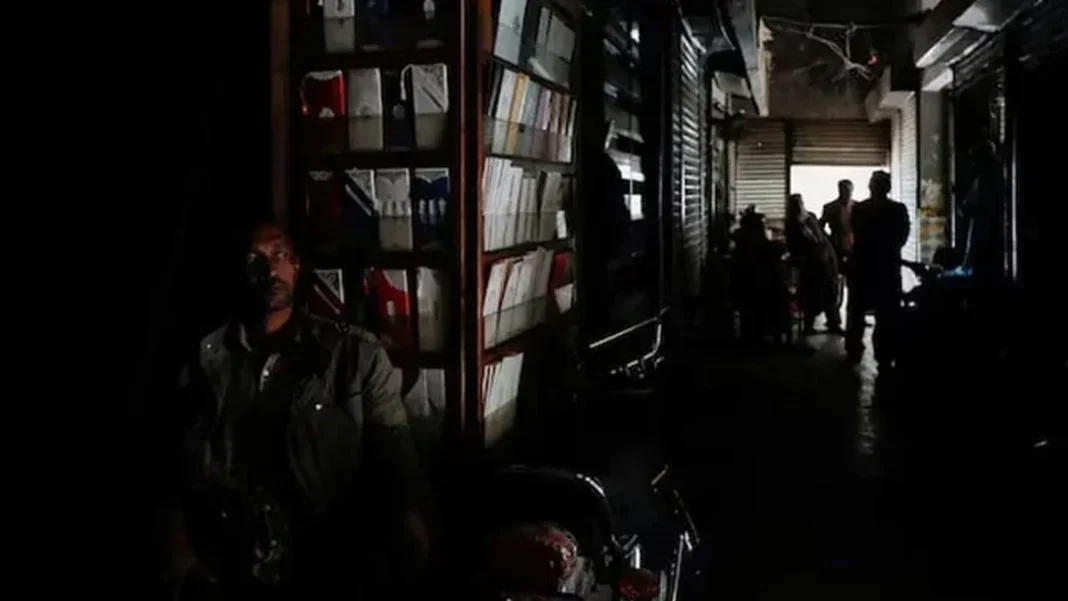
Lesco Lahore power shutdowns began on Monday, October 26, as the Lahore Electric Supply Company started a major wave of planned outages across Lahore and nearby districts. The shutdowns, for maintenance and system upgrades ahead of winter, will last five to seven hours a day in around 200 urban and rural subdivisions, and up to eight hours in some areas.
The outages will mainly fall between 9 a.m. and 4 p.m. They will affect 132kV and 220kV grid stations and their connected 11kV feeders. Lesco will replace worn conductors, insulators and other equipment, trim tree branches near high-voltage lines, overhaul grid stations, and divide feeders to manage seasonal demand.
The schedule was released on Sunday, giving households and businesses one day to prepare. Consumers in affected areas have been advised to charge essential devices and make arrangements ahead of the shutdowns.
Lesco Lahore power shutdowns: which areas are affected
In Lahore, the affected areas include Allama Iqbal Town, Gulshan-e-Ravi, Shadman, Johar Town, Model Town, Defence, Cantt and Walton Road. The News, reporting the same schedule, names Defence East and DHA Rahber within the Defence area.
Industrial and commercial areas around Raiwind, Manga Mandi, Sundar and Jubilee Town will also face shutdowns. Those areas include textile units, flour mills and commercial complexes, so the outages will affect work as well as homes.
The schedule also covers parts of Sheikhupura, including Qila Sattar Shah and Atta Abad, as well as Kasur, Okara, Muridke, Farooqabad, Hujra Shah Muqeem and Phool Nagar.
What work Lesco is doing, and why now
Lesco describes three main parts to the work. The first is system maintenance: replacing worn conductors, insulators and other equipment. The second is line safety: trimming tree branches near high-voltage lines to prevent tripping and faults. The third is grid station overhaul and feeder division, known as feeder bifurcation, to manage seasonal load.
The timing, ahead of winter, is deliberate. Winter brings different demand patterns, and maintenance done now is meant to reduce faults later. The News also reports that field staff are preparing for intensive work before winter and before the holy month of Ramazan.
In addition, The News reports a second reason for the shutdowns, based on sources. It says the planned cuts will also help the government shed load to curtail expensive power generation, and that officials are using the shutdowns as a demand-side management exercise to balance supply and demand during low-demand hours. That account, attributed to sources rather than to a Lesco statement, should be read alongside the official maintenance reason, not as a replacement for it.
A warning about equipment delays
Sources told both ProPakistani and The News that some Lesco field offices have reported delays in receiving essential maintenance equipment and replacement parts. The News adds that operational circles have submitted urgent requisitions to the Department of Material Management, but multiple field offices report that required equipment has not yet been fully delivered.
That warning matters for residents. A planned shutdown is one thing, but a delayed restoration is another. If equipment is late, a five-hour outage could run longer. Lesco has not, in the reporting so far, given a public response to the equipment concern.
For businesses, the risk is sharper. A textile unit or flour mill that loses power for seven hours loses a working day, and a delay in restoration adds to that loss. For homes, the risk is more basic: water pumps, fridges, phones, and medical devices all depend on power.
What this means alongside other energy pressures
The Lesco shutdowns arrive in a week when energy costs are already a major concern in Punjab. Residents in the twin cities have faced LPG prices far above the official rate, and Lahore saw protests over LPG shortages and rising fuel prices. Power shutdowns, even when planned, add to that pressure.
The power sector’s wider finances are also under strain. A CPEC wind project has warned of default risk over unpaid bills, showing how payment delays ripple through the system.
For readers in Lahore and nearby districts, the practical advice is simple. Check whether your area is on the schedule, charge phones and other essential devices before 9 a.m., store water, and plan work that needs power for the evening.