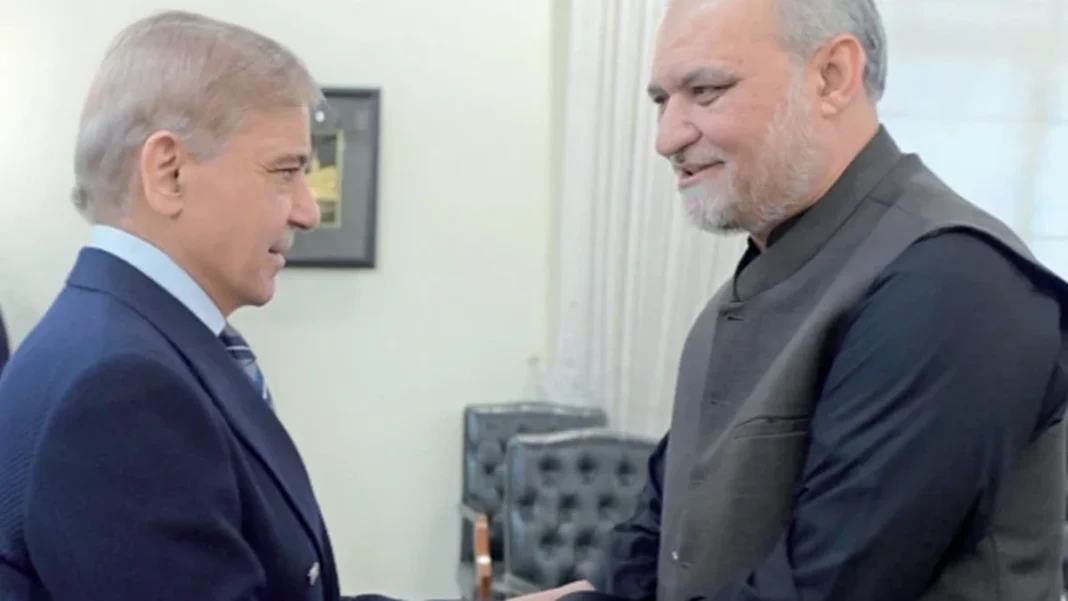
Prime Minister Shehbaz Sharif met a Jamaat-e-Islami (JI) delegation in Islamabad on Tuesday and agreed to form a fuel relief committee to prepare proposals for easing petroleum prices. The six-member committee will include three representatives from the government and three from JI, and it will work on two measures: expanding the existing petroleum relief scheme and preparing feasible proposals for a phased reduction of the petroleum levy.
Shehbaz thanked the JI delegation for choosing dialogue on fuel prices. He said the current crisis stemmed from regional and international developments rather than government policy alone. He also assured the delegation that the government would keep providing relief within its financial capacity, while it pursued diplomacy to ease regional tensions and stabilise global oil markets.
The prime minister acknowledged the burden that rising fuel prices had placed on citizens, particularly low-income households. That point matters because fuel prices feed directly into transport fares, food prices and household budgets. A cut in the levy, or wider relief for deserving households, would therefore reach far beyond the petrol pump.
Fuel relief committee: who sits on it and what it must decide
Shehbaz nominated Deputy Prime Minister and Foreign Minister Ishaq Dar, Planning Minister Ahsan Iqbal and Adviser to the Prime Minister Rana Sanaullah to represent the government on the committee. The JI delegation at the meeting included Liaquat Baloch, Syed Farasat Shah, Nasrullah Randhawa and Inayatullah.
Finance Minister Muhammad Aurangzeb, Petroleum Minister Ali Pervaiz Malik, Economic Affairs Minister Ahad Cheema and Minister of State for Finance Bilal Azhar Kiani also attended the meeting. The Prime Minister’s Office said the meeting focused on petroleum prices, inflation and the broader economic situation, with JI presenting proposals to reduce the burden on consumers.
JI called for the complete abolition of the petroleum levy. The government, in contrast, sought time to examine financially viable options. The committee must therefore bridge a clear gap: one side wants the levy gone, while the other side wants a phased and affordable path. Its recommendations on a phased reduction will go forward for consideration in the next federal budget.
JI chief Hafiz Naeemur Rehman said after the meeting that the government had sought time to work out a solution, but his party remained firm on its demand. He said the prime minister had assured the party that technical committees would be given eight to 10 days to formulate proposals. He added that the question was not whether relief would be given, but how and when it would arrive.
A mid-November deadline and a march warning
Hafiz Naeem also made clear that JI would keep its protest campaign running alongside the talks. He said the government should act by mid-November, and he warned that the party would resume its long march towards Islamabad if its demands were not met by then.
“The government has promised that relief will be provided. The question is not whether relief will be given, but how and when,” Hafiz said. He added that the talks had not ended in failure, because both sides had agreed on the need to ease the public’s financial burden. At the same time, he said JI would not accept further delays without concrete action.
Hafiz also claimed that the party’s campaign had already secured a Rs32-per-litre reduction in diesel prices. That claim comes from JI, and it was reported as the party’s position rather than as a verified government figure. Feature Pakistan has separately reported petrol and diesel prices for October 28, when petrol stood at Rs376.06 per litre and diesel at Rs398.07 per litre under the daily revision system.
What relief already exists, and why the levy debate matters
The Prime Minister’s Office said 12.7 million people had registered under the government’s petroleum relief scheme so far. Shehbaz briefed the delegation on assistance already provided to lower-income groups through that scheme. One task for the new committee is to expand the scheme to cover more deserving households.
The levy raises revenue for the government, so cutting it would lower pump prices but also reduce that revenue. That trade-off explains why the government has stressed sustainability.