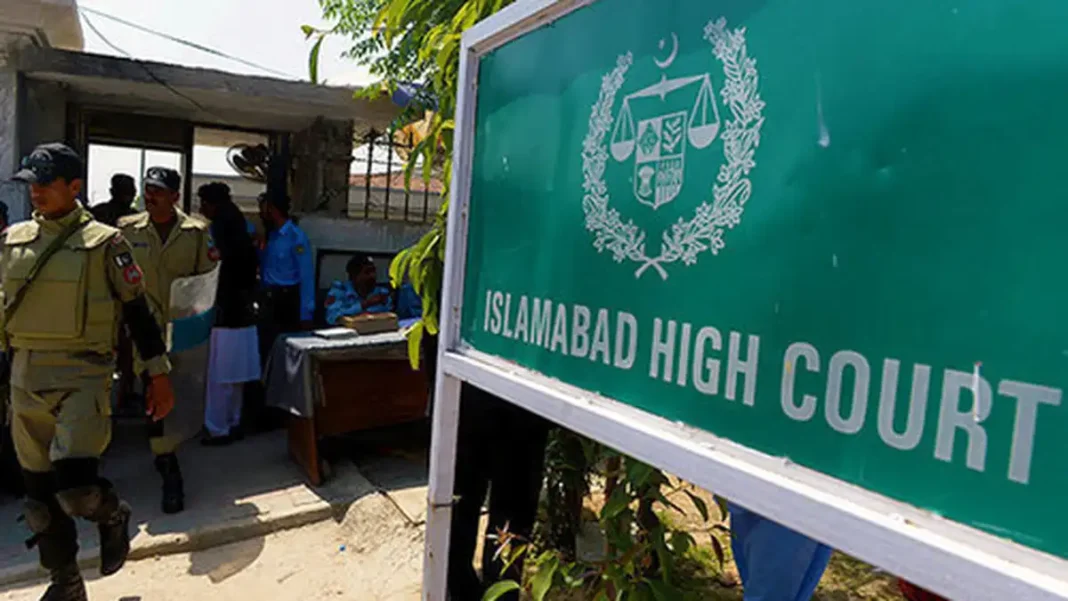
The Islamabad High Court (IHC) has disposed of the PTI MNAs detention pleas, ruling that they had become infructuous after the government conceded that the initial detention orders had lapsed.
The court, however, expressed no opinion on subsequent detention orders that had not been placed on record. That distinction matters: the disposal ends these four petitions, but it does not settle whether any later detention order was lawful.
Justice Khadim Hussain Soomro passed the judgement in four connected petitions filed by Khushdil Khan, Adil Khan Bazai, Dawar Khan Kundi and Basharatullah. The petitioners, represented by Dr Babar Awan and others, had challenged detention orders issued under Section 3 of the West Pakistan Maintenance of Public Order Ordinance, 1960.
PTI MNAs detention pleas: the September 21 orders
Adil Khan Bazai and Dawar Khan Kundi are PTI members of the National Assembly, while Basharat Ullah was described in earlier proceedings as a PML-N worker. The petitioners had challenged detention orders dated September 21, 2026, arguing that they had been issued mechanically, without application of mind, and in violation of Articles 9 and 10A of the Constitution.
They alleged that the action was motivated by political rivalry, that the material underlying their detention had not been supplied to them, and that they had been denied a meaningful opportunity to contest the allegations. They further alleged that they had been forcibly taken into custody outside Parliament Lodges on September 21 and subjected to inhuman treatment, including solitary confinement.
During the hearing, Islamabad Advocate General Naveed Hayat Malik submitted that the impugned orders had expired, and that subsequent orders issued on October 3 had also run their course. He argued that no representation had been filed before the competent authority, and that the petitioners had not sought to amend their petitions to bring the subsequent orders within the scope of the challenge.
Feature Pakistan has previously reported on the detention of PTI lawmakers through production orders for detained MNAs, a separate parliamentary route that sits alongside court challenges of this kind.
Why the court called the pleas infructuous
The court observed that preventive detention was an exceptional exercise of statutory power. It noted that Article 10(5) of the Constitution, read with Section 3(6) of the MPO Ordinance, required the grounds of detention to be communicated within 15 days, and detainees to be afforded the earliest opportunity to make a representation.
However, it held that once the specific detention order under challenge ceased to operate, the court had to determine whether any subsisting cause of action remained. Referring to the principle laid down in Shahid Orakzai versus Pakistan, the court acknowledged that relief could be moulded to ensure effective justice. It held, however, that this power did not dispense with the requirement to place any subsequent detention order on record, identify it and give the opposing party an opportunity to respond.
The judgement also referred to Article 199(1A) of the Constitution, introduced through the 26th Amendment, which restricts the High Court from issuing directions on its own or exercising suo motu jurisdiction beyond the contents of an application under Article 199(1).
“The subsequent detention orders constitute separate exercises of statutory authority, whose legality requires examination with reference to their respective grounds, duration, and supporting material,” the judgement stated.
“In the absence of those orders being properly placed on record and brought within the scope of the challenge, no finding regarding their independent legality can safely be recorded,” it added.
What the disposal does not decide
The court clarified that disposal of the petitions would not validate any detention contrary to the Constitution or the governing law. It said the petitioners remained free to challenge the October 3 orders or any other subsisting detention order through appropriate proceedings.
In plain terms, the ruling is procedural rather than a verdict on the detentions themselves. It says the orders challenged in these petitions no longer operate, so there is nothing left for the court to strike down in this case. It leaves open a fresh challenge, provided the petitioners place the later orders before the court and identify the grounds on which they object to them.