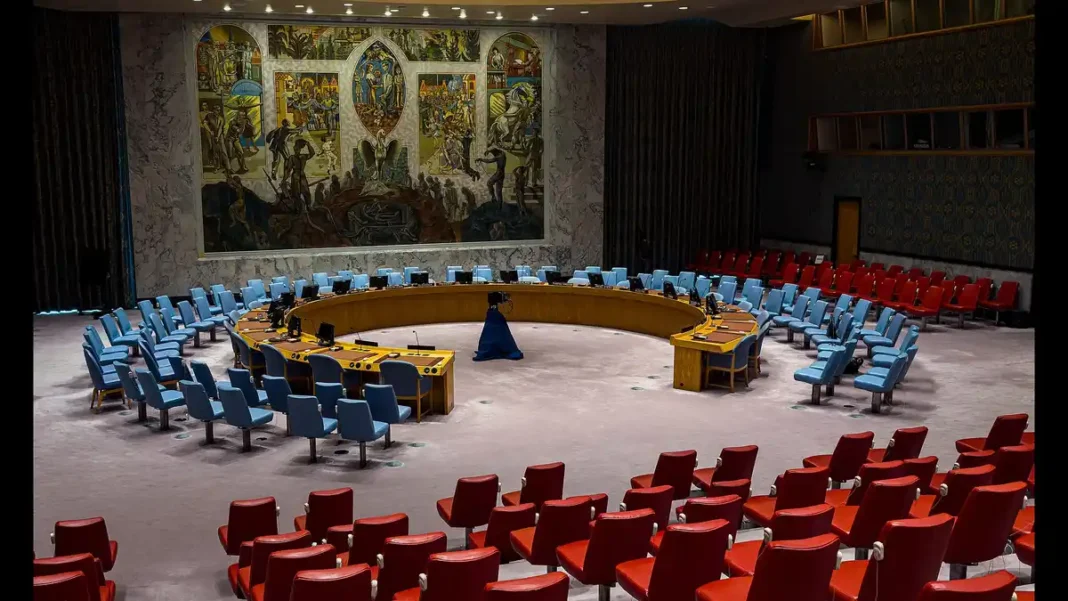
Pakistan has warned that the situation around Iran’s nuclear programme has sharply deteriorated, and it has urged all sides to choose restraint and diplomacy over further Iran escalation. The statement came from Ambassador Usman Jadoon, Pakistan’s Acting Permanent Representative, at a United Nations Security Council briefing on Iran and nuclear non-proliferation on Tuesday, October 27.
Jadoon told the council that mounting tensions and a lack of consensus had made a diplomatic settlement more urgent, not less. He said Pakistan remained concerned that the Iran nuclear file had sharply deteriorated, and that the deterioration was harming consideration of the issue, including in the Security Council itself.
Iran escalation: what Pakistan told the Security Council
The core of Pakistan’s message was restraint. Jadoon urged all parties to avoid rhetoric and actions that could aggravate the situation, and he called on them to refrain from what he described as irresponsible and destabilising rhetoric, actions and postures that could raise the risk of conflict. Instead, he said, the parties should choose a path that delivers peace, security and stability for all.
Pakistan also pressed a technical point. It called for the International Atomic Energy Agency (IAEA) to be allowed to address technical questions about the nuclear dispute without political interference. Jadoon said Pakistan had consistently held that any issues of non-compliance must be addressed through competent technical bodies like the IAEA, without politicisation and in line with the rights and obligations of the parties concerned. The agency, he added, must be enabled to carry out its work without hindrance and within its technical mandate.
That distinction between technical questions and political disputes runs through Pakistan’s position. It treats verification as a job for inspectors and technical experts, while it treats the wider settlement as a job for negotiation. The two tracks are linked, but Pakistan argues that mixing them makes both harder.
The 2015 deal and why it still frames the dispute
The dispute centres on international concerns over Iran’s nuclear activities and verification of its commitments under the non-proliferation regime. The 2015 nuclear agreement between Iran and world powers sought to limit Tehran’s nuclear programme in exchange for sanctions relief. The United States withdrew from that accord in 2018 during Donald Trump’s first presidency, and later efforts to restore the agreement failed.
That history explains why the council briefing carried extra weight. Without a working agreement, each side measures the other by statements and actions rather than by verified limits. Pakistan’s intervention tried to pull the discussion back to a process that can be checked, through the IAEA, and to talks that can produce a settlement.
Jadoon also pointed to a recent example of diplomacy working. He cited a memorandum of understanding signed in Islamabad in June as a successful manifestation of the diplomatic approach. That agreement, he said, shows that progress on the diplomatic track is possible. He acknowledged the support of Qatar, Saudi Arabia, Turkiye, Egypt, China and other partners, and he said Pakistan’s leadership continued working towards a peaceful settlement.
Why the statement matters for Pakistan
Pakistan’s position at the council fits a wider pattern in its recent UN diplomacy. Feature Pakistan reported Pakistan’s call for a fairer global order at the UN Security Council, and the country has also pressed for curbs on the veto power in General Assembly debate. The Iran statement adds a country-specific case to that general posture: reform the way the council works, and use diplomacy before force.
The statement also sits alongside Feature Pakistan’s running coverage of the wider confrontation, including the latest updates on US-Iran strikes and the Strait of Hormuz tensions. Those reports track the military side of the crisis. Jadoon’s briefing speaks to the diplomatic side, and it shows Pakistan trying to keep a channel open while fighting continues elsewhere in the region.
For readers in Pakistan, the practical stake is direct. A wider war would affect fuel prices, shipping through the Strait of Hormuz and the safety of Pakistanis working in the Gulf. Diplomacy that prevents further escalation therefore carries a domestic cost as well as a foreign policy value.