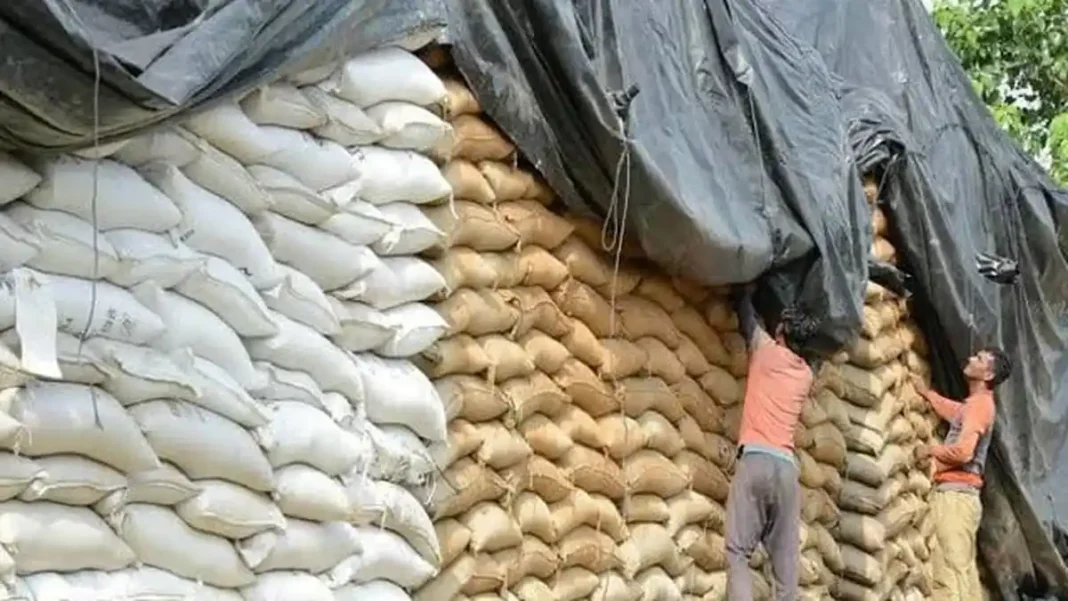
Sindh Wheat Release Price Cut, Flour Falls Rs17
The Sindh government has cut the release price of official wheat by Rs500 to Rs4,500 per 40 kilogrammes, and flour prices have already fallen in response. The Sindh wheat release price decision was announced by Senior Minister Sharjeel Inam Memon after a provincial cabinet meeting on Tuesday.
Memon said the cut has already triggered a Rs17 per kilogramme decline in flour prices. The release price is the rate at which the government supplies wheat from official stocks, and a lower rate usually feeds through to mills and then to retail flour. For households that buy flour weekly, even a small fall per kilogramme adds up across a month.
One point needs care. Dawn’s account of the same cabinet meeting put the flour price fall at Rs15 per kilogramme, while Tribune reported Rs17. Both accounts agree on the core decision, a Rs500 cut to Rs4,500 per 40 kilogrammes. Readers should treat the flour figure as the reported fall in each account, and watch retail prices in their own city for the actual change.
The Sindh wheat release price cut in a wider package
The cabinet meeting covered far more than wheat. It approved a $1 billion urban development programme, with Asian Development Bank support, for five divisional headquarters across Sindh. The programme will focus on water supply, drainage, sanitation and solid waste management, four services that shape daily life in large towns.
The cabinet also approved the registration of Lady Dufferin Hospital Trust under the Sindh Trust Act 2020. It approved draft rules for registering and regulating charitable organisations under the Sindh Charities Registration and Regulation Act 2019.
Development funds formed another part of the package. The cabinet approved Rs502.409 million in additional funds for five development schemes in Jamshoro district, including the main water supply scheme for Sehwan and reverse osmosis plants there. Another scheme worth Rs2.993 billion was approved to improve water supply and drainage facilities in Nawabshah town.
A cabinet committee has also been formed to address issues concerning katchi abadis and to develop a legal framework for a one-window operation to streamline their administration. On infrastructure, Memon said 75 per cent of the Ghotki-Kandhkot bridge over the Indus has been completed under a public-private partnership model.
Traffic, rallies and encroachments
Turning to Karachi traffic, Memon announced that a Traffic Management Authority would be established to improve traffic regulation, with legislation to be presented for approval soon. A smart traffic management system would also be introduced to improve traffic flow and monitor violations.
He warned of indiscriminate action against traffic violators, including vehicles carrying fancy or illegal number plates and those displaying firearms. People openly carrying weapons in plain clothes would be arrested, while the vehicle owner accompanying an armed guard would also face detention.
On the MQM-P’s proposed rally, Memon said political parties were free to hold public gatherings but must first obtain permission from the relevant authorities and comply with the law. He ruled out permission for any political gathering on Sharea Faisal, and he warned the party against attempting to repeat the events of May 12. He said the government would not allow a repeat of the violence witnessed that day.
He also said the government would remove encroachments from city roads, while insisting that it did not intend to deprive people of their livelihoods.
Other decisions from the meeting
On the debate over new provinces, Memon reiterated that the PPP and the Sindh government had made their position clear. He added that no law or decision could override the Sindh Assembly’s authority on the matter. He also criticised MQM-P leaders Mustafa Kamal, Farooq Sattar and Khalid Maqbool Siddiqui, questioning their electoral standing.
Responding to a question about the deadly Tharparkar ambulance incident, Memon said the provincial government had announced financial assistance for the affected families and taken immediate steps after the incident.
On public transport, Memon said more than 100 electric buses were expected to arrive in Sindh by the end of November, while double-decker buses would also reach the province soon. Construction of the depot for the Red Line BRT project was progressing rapidly, he added.
The wheat decision sits within a wider agricultural picture. Argentina has offered help to cut Pakistan’s agriculture losses, as reported in Argentina offers help to cut agriculture losses. The placement of China-trained agriculture experts has also drawn scrutiny, covered in ECC asks where China-trained experts are placed. Price relief for households was a theme in the fuel price cut for November 4, reported in Petrol price cut to Rs369.06 for November 4.
Frequently asked questions
What did Sindh decide on wheat prices?
Sindh cut the release price of official wheat by Rs500 to Rs4,500 per 40 kilogrammes. Senior Minister Sharjeel Inam Memon announced the decision after the provincial cabinet meeting.
How much have flour prices fallen?
Tribune reported a Rs17 per kilogramme fall in flour prices following the cut, while Dawn’s account of the same meeting put the fall at Rs15 per kilogramme. Both accounts agree on the Rs500 release price cut.
What else did the Sindh cabinet approve?
It approved a $1 billion urban development programme with Asian Development Bank support for five divisional headquarters, covering water supply, drainage, sanitation and solid waste management.
What is the new Traffic Management Authority?
It is a body the Sindh government plans to establish to improve traffic regulation in Karachi, with legislation to follow and a smart traffic management system to monitor flow and violations.
When will new buses arrive in Sindh?
More than 100 electric buses are expected by the end of November, and double-decker buses are also due to reach the province soon, according to the senior minister.