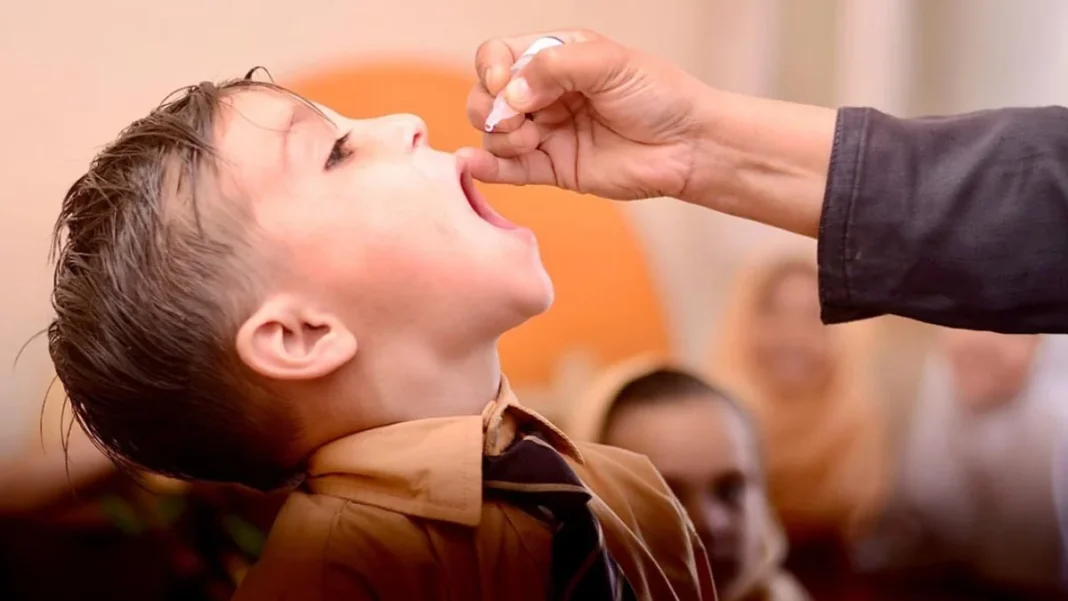
Peshawar Polio Booster Drive Targets 1.1m Children
A six-day polio booster campaign has begun in 48 high-risk union councils of Peshawar. It targets 1,111,107 children aged four months to 10 years, and it will run from Monday, 26 October 2026.
The District Emergency Operations Centre has completed its preparations for the drive. Health teams will visit schools, health facilities and community vaccination points across the targeted union councils. The aim is to strengthen immunity against poliovirus and to slow its spread in areas where the virus has been found in environmental samples.
Why a booster, and why older children
A routine vaccination schedule protects a child at set ages. A booster campaign does extra work on top of that schedule. It gives another dose to children in places where the virus is still circulating, so their protection stays strong even if they meet the virus in their surroundings.
This campaign covers children up to the age of 10. That upper limit matters. Recent polio cases in Khyber district and other parts of Khyber Pakhtunkhwa have shown that the threat does not stop with toddlers. A 10-year-old child in Khyber was recently infected, and that case helped shape the decision to protect older children in this drive.
Environmental samples add a second reason for the campaign. When sewage or other environmental samples test positive for poliovirus, health officials know the virus is present in an area even before a child falls ill. A booster drive in those union councils can then raise immunity before more cases appear.
Children aged five to 10 in the targeted union councils will also receive oral polio vaccine drops during the campaign. Younger children, from four months upwards, are covered by the booster doses at the vaccination points.
How the campaign will reach children
The District Emergency Operations Centre has deployed 1,728 trained polio teams for the six days. It has also deployed 1,383 social mobilisers, whose job is to speak with families, answer questions and help teams reach every eligible child.
Security arrangements have also been made for the vaccination teams. Polio teams in Pakistan have faced threats in the past, and the presence of security cover is now a standard part of planning for a large campaign.
Peshawar Deputy Commissioner Afaq Wazir has urged parents to make sure their children aged four months to 10 years receive the booster dose. He warned that polio can cause lifelong disability, and he asked religious scholars, health professionals and civil society representatives to support the campaign.
That appeal to community figures is a deliberate part of the plan. Parents often trust a local scholar, a family doctor or a neighbourhood elder more than a distant announcement. When those figures back a campaign, more children tend to reach the vaccination points.
What parents need to know
Parents in the 48 targeted union councils can take their children to a school, a health facility or a community vaccination point during the six days. Teams will also work in the community, so families should watch for local announcements about where teams will be on each day.
The campaign is a booster drive, not a replacement for routine vaccination. A child who has already had polio drops should still receive the booster dose in this campaign, because the extra dose is meant to reinforce protection in high-risk areas.
Families with questions can ask the social mobilisers working with the teams. Those mobilisers are trained to explain the campaign, and they can point parents to the nearest vaccination point.
The wider fight against polio
Pakistan remains one of the few countries where poliovirus still circulates. Campaigns like this one in Peshawar are therefore repeated in high-risk districts, and each one aims to close the immunity gaps that allow the virus to survive.
A campaign that reaches more than 1.1 million children in a single city shows the scale of that task. It also shows why the planning starts with environmental data. Officials do not choose the 48 union councils at random. They choose the places where samples, recent cases or both point to the greatest risk.
If the teams reach the children on their lists, the campaign will leave Peshawar with stronger protection than it had at the start of the week. That is the practical test of the drive, and it will be measured in the weeks that follow, when new environmental samples and case reports show whether transmission in those union councils has fallen.