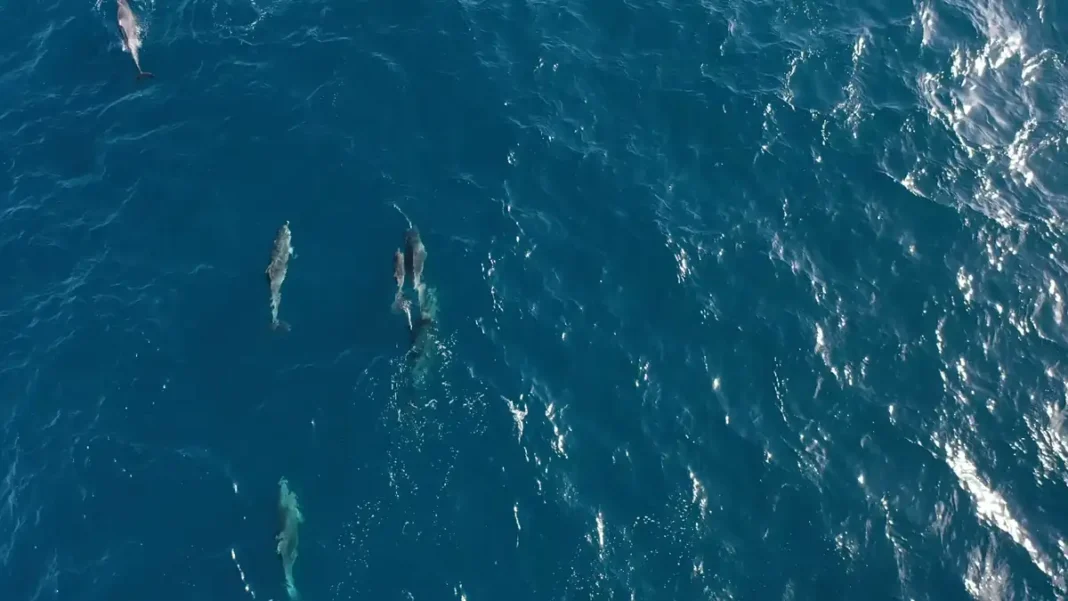
The Gwadar dolphins pod spotted this week numbered more than 500 animals, seen near a fishing boat in the coastal waters off Gwadar.
Marine experts and environmentalists described the sighting of such a large group as a positive indicator of abundant marine life, rich food sources and a healthy ocean ecosystem in the region.
The dolphins have been scientifically identified as Tursiops aduncus, commonly known as Indo-Pacific bottlenose dolphins.
Gwadar dolphins pod: why a group this large matters
Dolphins live in groups, but most groups number far fewer animals. Indo-Pacific bottlenose dolphins often travel in groups of five to 15, though their groups can number in the hundreds. A pod of more than 500 is therefore exceptional, even for a social species.
Amir Dad Khan, who was captaining a fishing boat, spotted the group leaping near his vessel in Gwadar, according to experts associated with the World Wide Fund for Nature Pakistan (WWF-P).
“The sighting of such a large pod engaging in playful activities in the shallow waters is a promising sign of a robust coastal ecosystem along Balochistan’s shores, and especially in Gwadar,” said Muhammad Moazzam Khan, WWF-P’s technical adviser.
He added that the sighting is an encouraging indicator of biodiversity and a healthy food chain in both coastal and offshore waters.
That judgement rests on a simple chain. A pod of 500 dolphins needs a large supply of fish and squid to feed on. Fish need clean water and intact habitats to thrive. When top predators gather in such numbers, it usually means the lower links of the food chain are holding up.
The species itself is well suited to these waters. Indo-Pacific bottlenose dolphins grow to about 2.6 metres long and weigh up to 230 kilograms. They live around India, northern Australia, South China, the Red Sea and the eastern coast of Africa, and Pakistan’s Balochistan coast sits inside that range.
Pakistan’s waters hold 26 cetacean species
Pakistan’s coastal waters, particularly along the Balochistan coast, are home to diverse marine life. Around 26 recorded species of cetaceans live there, including dolphins, whales and porpoises.
That diversity is easy to miss from land. Most Pakistanis never see a whale or a dolphin outside a photograph. Yet the waters off Balochistan and Sindh hold a large share of the Indian Ocean’s cetacean life, from small coastal dolphins to large migratory whales.
Highlighting the ecological significance of the sighting, marine conservationists urged authorities and local fishing communities to strengthen conservation efforts. They stressed that protecting dolphins, whales, sea turtles and other marine species is essential to maintaining the delicate balance of the coastal ecosystem.
That call has a practical side. Fishing communities are the first to notice changes at sea. When captains like Amir Dad Khan report large pods, they give scientists data that no survey ship could gather alone. Protecting the same waters from pollution, careless net use and habitat damage keeps those sightings coming.
Feature Pakistan also reported a raid in Jamshoro that seized 1,700 birds from the illegal wildlife trade. That enforcement action and the Gwadar sighting sit on opposite sides of the same story: Pakistan’s wildlife faces pressure on land and at sea, and both need protection.
The Gwadar pod is a reminder of what is at stake. A healthy coast can still gather 500 dolphins in one place. Keeping it that way depends on the choices made now by authorities and the fishing communities who work these waters every day.
Frequently asked questions
How many dolphins were spotted off Gwadar?
More than 500 dolphins were spotted near a fishing boat in the coastal waters off Gwadar.
What species were they?
The dolphins were identified as Tursiops aduncus, commonly known as Indo-Pacific bottlenose dolphins.
Who spotted the pod?
Amir Dad Khan, the captain of a fishing boat, spotted the group leaping near his vessel, according to experts associated with WWF-Pakistan.
Why do experts see the sighting as a good sign?
Marine experts say a pod this large points to abundant marine life, rich food sources and a healthy ocean ecosystem, with a strong food chain in coastal and offshore waters.
How many cetacean species live in Pakistan’s waters?
Around 26 recorded species of cetaceans, including dolphins, whales and porpoises, live in Pakistan’s coastal waters, particularly along the Balochistan coast.