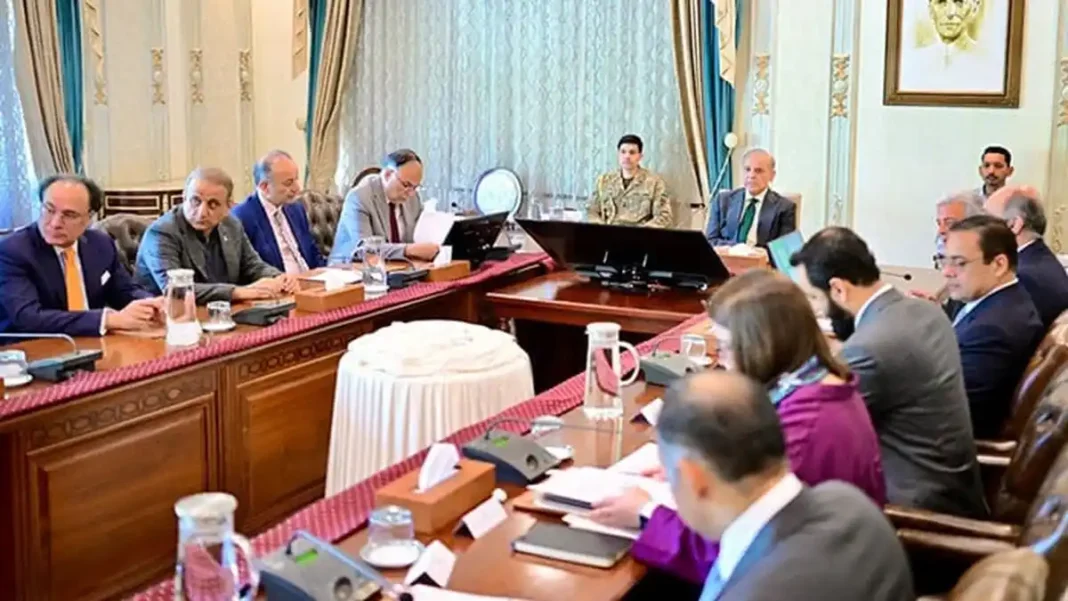
Prime Minister Shehbaz Sharif has convened a meeting to review the power sector’s outstanding debts, including CPEC power dues owed to electricity projects built under the China-Pakistan Economic Corridor.
Unpaid amounts owed to Chinese power companies have reportedly reached Rs500 billion, official sources told ProPakistani. The meeting will be briefed on the power sector’s outstanding debts, while details of CPEC-related electricity projects will also be presented.
The payments are owed by the Central Power Purchasing Agency (CPPA). The agency has been unable to clear the outstanding amounts due to financial constraints, according to government sources.
Chinese power companies have repeatedly issued reminders seeking payment of their outstanding dues. The prime minister is expected to issue directives during the meeting to address the issue. Key federal ministers and senior officials from relevant departments will also attend.
CPEC power dues: why the bill grew so large
The CPPA sits at the centre of Pakistan’s electricity market. It buys power from producers, including CPEC plants, and sells it on to distribution companies. When the money collected from consumers falls short of what producers are owed, arrears build up. Over time, those arrears become a large stock of unpaid dues.
That mechanism is the background to the Rs500 billion figure. The dues are not a single unpaid invoice. They are the accumulated result of a system in which power is bought at agreed prices while recovery from consumers lags behind.
CPEC energy projects were built to cut the load-shedding that once shut down factories and homes for hours each day. They added large amounts of generation capacity to the national grid. But capacity alone does not solve the payment chain. If distribution companies collect less than the cost of the power they supply, the gap lands on the CPPA, and producers wait for their money.
Chinese companies operating these plants have now pressed repeatedly for payment. Their reminders matter because the projects sit inside a wider economic relationship. CPEC is Pakistan’s largest programme of Chinese-backed infrastructure and energy investment. Unpaid energy bills, if left to grow, can strain that relationship and make future investment harder to secure.
What the meeting must decide
The prime minister’s meeting is a review, not yet a settlement. Its purpose is to establish the size of the problem and the options for dealing with it. The briefing will cover the power sector’s outstanding debts as a whole, with CPEC project details presented alongside.
Any directive from the meeting will need to answer three questions. First, how much of the Rs500 billion can be paid now, and from where. Second, what payment schedule will apply to the balance, so producers can plan with certainty. Third, what changes will stop the same arrears from building up again.
The third question is the hardest. Paying off today’s dues without fixing the collection gap only resets the clock. Power sector reform, including better recovery from consumers and lower losses in distribution, is the long-term answer. But those reforms take time, while the producers’ reminders are immediate.
The meeting also carries a signal. By convening ministers and senior officials to review the dues, the government is treating the issue as a priority rather than a routine billing dispute. That signal matters to the companies waiting for payment, and to lenders watching how Pakistan handles its energy obligations.
No payment plan has been announced yet. The outcome to watch is whether the meeting produces a dated schedule for clearing the dues, or only a general commitment to address them.
Frequently asked questions
How much is owed to CPEC power companies?
Unpaid dues owed to Chinese power companies operating under CPEC have reportedly reached approximately Rs500 billion, according to official sources.
Who owes the money?
The payments are owed by the Central Power Purchasing Agency (CPPA), which buys power from producers and sells it to distribution companies. The agency has been unable to clear the amounts due to financial constraints.
What has the prime minister done?
Prime Minister Shehbaz Sharif has convened a meeting to review the power sector’s outstanding debts and the dues owed to CPEC electricity projects. He is expected to issue directives during the meeting.
Why do the dues matter beyond the power sector?
CPEC energy projects form a large part of Chinese-backed investment in Pakistan. Unpaid bills can strain that relationship and affect confidence in future investment, which is why the government is reviewing the issue at the highest level.