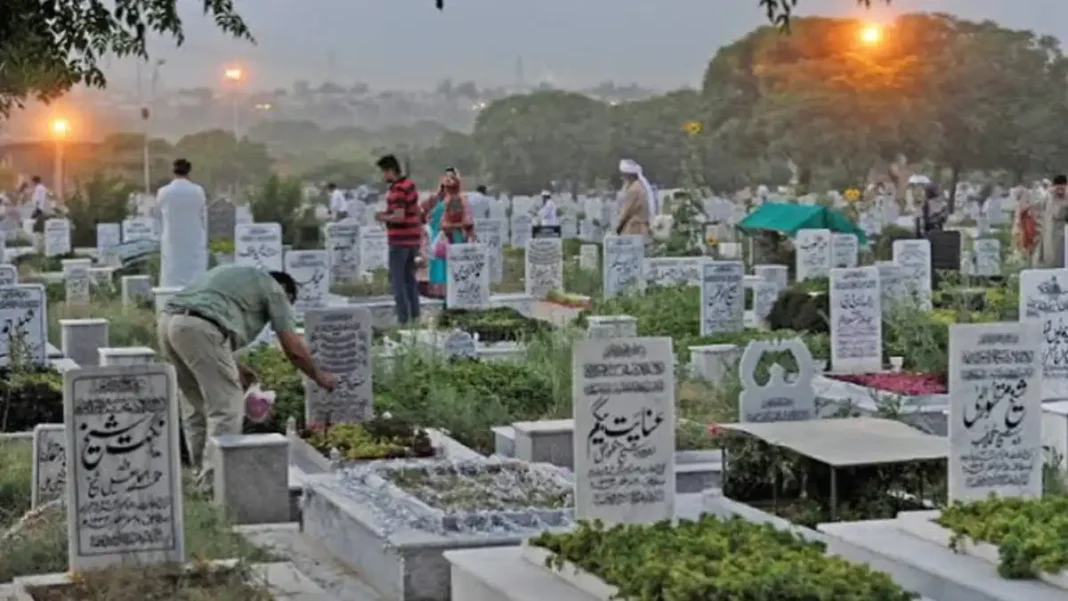
The Islamabad High Court (IHC) has restrained the Capital Development Authority (CDA) from taking any further action affecting the Islamabad D-12 graveyard, an ancestral burial ground in Sector D-12.
The court also sought a written response from the civic body to a petition challenging the proposed removal of graves at the site.
Justice Muhammad Azam Khan issued the written order while hearing a petition filed by Waqar Ahmed. The petitioner has sought protection for the Elahi Mosque graveyard in Mauza Sari Saral, Sector D-12.
Islamabad D-12 graveyard: what the petition says
The petitioner submitted that the graves of his ancestors and other residents lie at the site. He urged the court to stop the CDA from carrying out development work, constructing roads, or levelling the land.
According to the petition, revenue records, survey reports and Google Maps imagery also identify the site as a graveyard and funeral ground. That evidence is central to the case. If the records confirm the land as a burial ground, the CDA’s development plans for the area would need to work around it, not through it.
The petitioner’s counsel requested the court to order the installation of fencing and demarcation of the burial ground. The aim is to protect the site from encroachment or removal, and to secure the graveyard before any development work begins in the area.
In its interim order, the court directed that the existing position of the graveyard be maintained. It also sought a written reply from the CDA.
What an interim order does, and does not, decide
An interim order is a pause, not a final verdict. It freezes the situation while the court hears the full case. In this instance, the freeze means the CDA cannot alter the graveyard, build roads across it, or level the land until the court decides otherwise.
The order also shifts the next step to the CDA. The civic body must now file a written reply answering the petition. That reply will set out whether the CDA accepts the site as a graveyard, disputes the petitioner’s records, or claims a competing plan for the land.
The fencing and demarcation request remains open. The court has not yet ordered the CDA to fence the site. It has only preserved the current position and asked for the civic body’s response. Whether fencing follows will depend on how the case develops.
Cases like this arise often where cities expand over older settlements. Mauza Sari Saral predates the planned sectors around it, and its graveyard holds generations of local families. When development reaches such areas, the question is rarely just legal. It is also about how a growing city treats the burial grounds of the communities already living there.
For the families involved, the interim order brings immediate relief. No graves will be disturbed while the case is heard. For the CDA, it sets a clear limit: any development in the area must wait for the court’s decision and must account for the graveyard’s status.
The case will now proceed on the basis of the CDA’s written reply. Until then, the graveyard in Sector D-12 stays as it is.
Frequently asked questions
What did the Islamabad High Court order?
The court restrained the CDA from taking any further action affecting an ancestral graveyard in Sector D-12, and directed that the existing position of the graveyard be maintained.
Who filed the petition?
Waqar Ahmed filed the petition, seeking protection for the Elahi Mosque graveyard in Mauza Sari Saral, Sector D-12.
What evidence does the petition cite?
The petition cites revenue records, survey reports and Google Maps imagery, all of which identify the site as a graveyard and funeral ground.
What happens next?
The CDA must file a written reply to the petition. The court will then consider the case further, including the request for fencing and demarcation of the burial ground.