Naqvi defends Tehran visit in Senate amid Fazl row
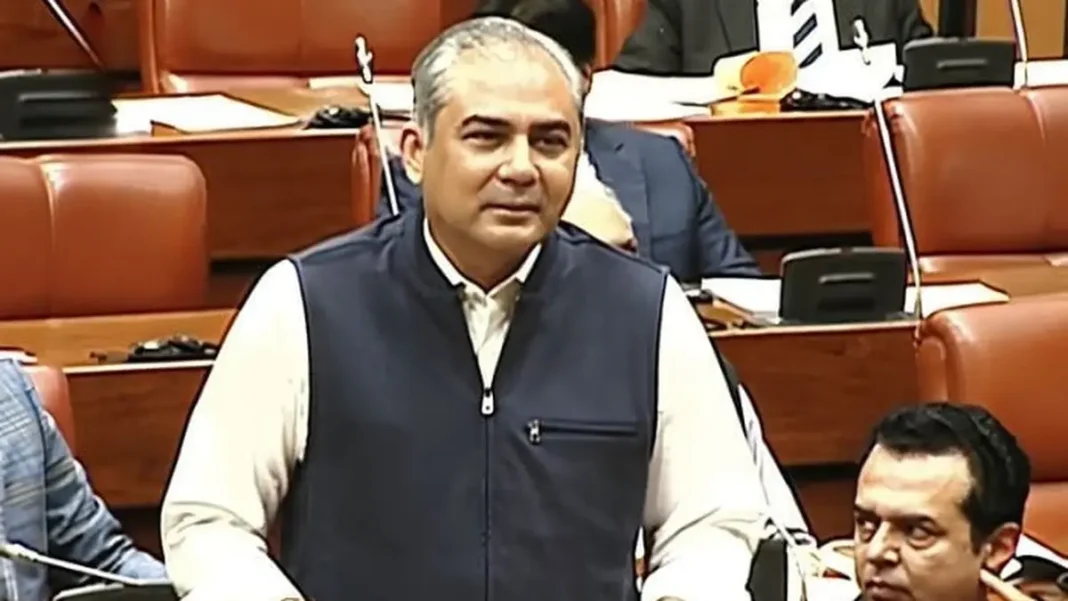
Interior Minister Mohsin Naqvi has told the Senate that his recent visit to Iran was not aimed at negotiating a defence agreement. He said he travelled to Tehran on a special assignment from Prime Minister Shehbaz Sharif concerning the ongoing crisis.
Naqvi spoke during a Senate session on Thursday, a day after Jamiat Ulema-e-Islam-Fazl (JUI-F) chief Maulana Fazlur Rehman criticised Defence Minister Khawaja Asif in the National Assembly for his absence from talks in Tehran.
“A campaign has been going on against me for some time,” Naqvi said. He added that it was said the visit was meant to make a defence agreement. “We did not go for a defence agreement. We went in connection with the ongoing crisis.”
What Naqvi told the Senate
Naqvi said the defence minister had been asked about the visit and was unaware of it, because no defence-related discussions took place. “The prime minister gave me a special task, which is why I went. I have no desire to travel abroad,” he said.
He said JUI-F had been making comments about him for several days. He added that he had long respected Fazlur Rehman, but that respect ended when Fazl said, “I spit on the state”. Naqvi described that as filthy remarks about the institutions.
“If they get a share in the government, everything is fine. If they have no role in the government, they start speaking against it,” Naqvi said. “When they receive money from the state, the state is good. When they do not receive money, they turn against it.”
He said critics use Islam for business and politics, and added: “If they criticise, they should also have the courage to listen to the response.”
Opposition lawmakers protested during his address, while Senator Kamran Murtaza objected to his choice of words.
The Assembly uproar
The row had already flared in the National Assembly earlier on Thursday, when Asif responded to Fazl’s criticism. Asif said his presence at the Tehran talks was not required.
“No defence agreement was being negotiated in Tehran,” Asif said. He said Chief of Defence Forces and Chief of Army Staff Field Marshal Asim Munir had played a role in promoting reconciliation and regional peace.
Asif said he had participated in both defence agreements but had no role in the Tehran discussions. He thanked Fazl for expressing concern about his absence but described the criticism as misplaced.
The defence minister then turned to Fazl’s political career. He accused the JUI-F chief of selectively overlooking his own history of cooperation with successive governments while criticising political opponents.
Asif’s sharpest remarks
Asif referred to Fazl’s tenure as opposition leader and his participation in governments formed under previous constitutional and political arrangements. He said Fazl had played a significant role in forming earlier coalition governments, including administrations in which the two leaders had been political allies.
He questioned Fazl’s decade-long tenure as chairman of the parliamentary Kashmir Committee. “What achievements did he accomplish as chairman of the Kashmir Committee?” Asif asked. He said the tenure amounted to little more than a “free ride”.
Asif also criticised Fazl’s political role during the Legal Framework Order period, saying the JUI-F chief had participated in the political system while serving as opposition leader. He said he did not consider it appropriate to erase his political past while attacking opponents, adding that he had publicly apologised for his previous positions. “I am the only politician who has apologised for his past,” he claimed.
The speech prompted strong protests from JUI-F lawmakers, who repeatedly interrupted the minister. As the exchanges intensified, Asif warned opposition members against provoking him into further disclosures.
“They have turned religion and politics into a source of income. If I start revealing what they did during the PDM government, I will tell everything,” he said.
Governor’s rule exchange
Naqvi also touched on governor’s rule in his Senate remarks. He said that before governor’s rule, the same critics used to say, “Get us rid of them”. He added: “You will no longer get money and jobs from the state.”
The exchanges in both houses show the Tehran row has moved beyond a question about who attended a meeting. It has become a wider political argument about the government’s handling of the regional crisis, the Makkah defence pact, and the opposition’s record in government.
Related coverage:
- https://featurepakistan.com/asif-fazl-tehran-huddle-response-october-2026/
- https://featurepakistan.com/pakistan-tehran-security-dialogue-october-2026/
- https://featurepakistan.com/houthi-missile-eastern-saudi-intercepted-october-2026/
- https://featurepakistan.com/imaan-hadi-atc-sentence-october-2026/