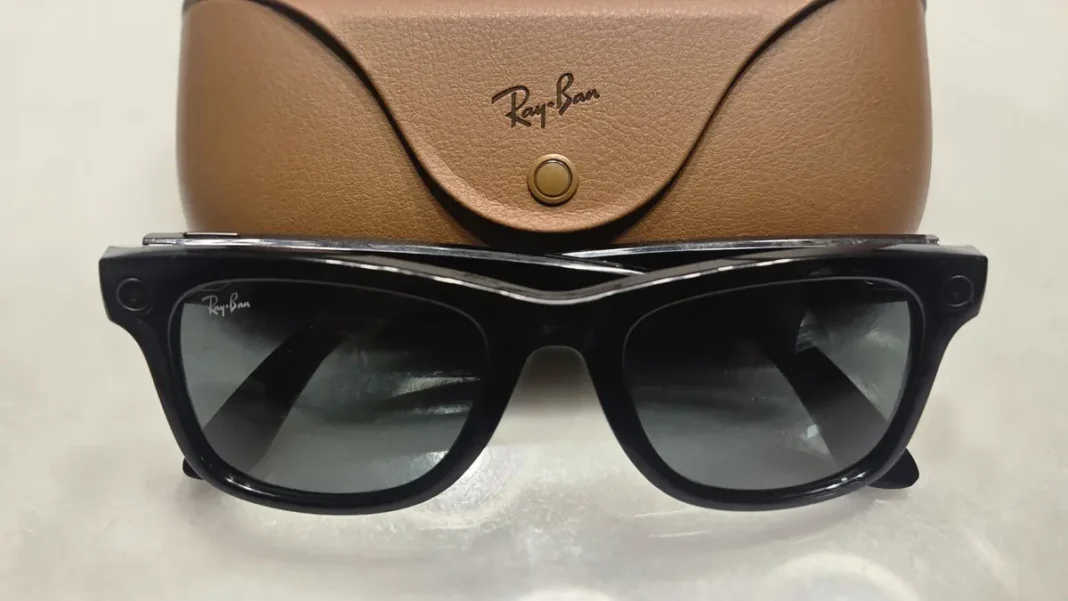
Austria has opened a parliamentary inquiry into smart glasses, after growing concern that camera glasses can film people without their knowledge. The Austria smart glasses inquiry follows a plan set out on Wednesday by the country’s secretary of state for digitalisation, Alexander Pröll.
Pröll presented a three-stage model to regulate the devices, public broadcaster ORF reported. Smart glasses can carry built-in cameras, microphones and artificial intelligence functions, inside frames that look like ordinary glasses. That ordinary look sits at the centre of the debate, because people nearby may not know they are being recorded.
What the Austria smart glasses inquiry will examine
Under the proposed model, recordings would be banned in sensitive areas. The list covers schools, kindergartens, changing rooms, toilets, courts, prisons, and police and military facilities. In public places, recording would have to be clearly visible to other people.
Pröll said a parliamentary inquiry would be the next step. It would bring together experts in science, data protection and technology, along with representatives of people affected by the use of such glasses.
He ruled out a total ban on the technology. The government aims to allow technical progress while stopping people from being secretly filmed, he said. Manufacturers should also be required to make recording clearly recognisable, through visible recording lights and acoustic signals.
Why the devices worry regulators
The concern is simple. A phone camera is easy to spot, but a camera inside a pair of glasses is not. A wearer can record video, take photos or capture audio while looking like any other person in the street, a classroom or a changing room.
Nearly 25,000 people have signed a petition calling for a ban on smart glasses, according to ORF. Last week, the Vienna city government urged federal authorities to examine a possible ban on the devices in public transport, government offices and schools.
Vienna stops short of that demand, drawing a line between places where recording is never acceptable and public places where it must be obvious.
Punjab chose a ban while Austria chose a study
Pakistan has already faced the same question. On October 20, Punjab imposed a 30-day ban on camera-enabled smart glasses under Section 144, covering use and sale across the province and naming the privacy of women and children as a central reason.
The order listed airports, examination centres, secure government buildings, healthcare facilities, shopping malls, court premises and public places as areas of particular risk, warning of secret recording and unauthorised transmission of protected information.
Austria’s approach points the other way. Rather than a province-wide or country-wide ban, Vienna has chosen a study first and targeted restrictions second. The contrast matters for readers in Pakistan: two governments started from the same worry and picked opposite tools. Read the Punjab order here: Punjab bans camera-enabled smart glasses for 30 days under Section 144.
A wider European pattern
Austria is not acting alone. Regulators across Europe have answered the same question in different ways.
Europe’s data protection board has said the glasses make covert recording easier, including recording of bystanders’ conversations. It urged makers to combine visible indicators with sound signals and alerts to nearby devices, plus limits such as blurred faces and geofencing in hospitals and schools.
Norway has gone further, planning a temporary ban on AI glasses in places where the public gathers, such as parks, beaches, museums, shopping centres and public events. Oslo banned the glasses in schools in August.
Australia has considered barring camera glasses in government workplaces, courts in England and Wales have prohibited Meta smart glasses, and cinema operators in Britain have started to restrict them. Each step reflects the same core problem: a camera that does not look like a camera.
That pattern gives the Austrian inquiry ready examples: a full ban, a school ban, a workplace ban and a court ban. The decision will rest on expert evidence rather than a single minister’s order.
What happens next
The parliamentary inquiry is the next stage of the Austrian plan. No date for its findings has been announced, and the proposed restrictions are not yet law.
Still, the direction is clear: no outright ban, but no unregulated use either. The likely outcome bans recording where privacy matters most, forces it to be visible elsewhere, and puts the burden on makers to be honest about what their devices do.