Google AI Response From Space in Suncatcher Test
Google says its Project Suncatcher satellite has sent back the first Google AI response from space, a short haiku written by its Gemma 4 model running on a data-centre-class chip in orbit. The company announced the milestone on 30 October, calling it a “Hello World” moment for its research into computing in space.
Google chief executive Sundar Pichai shared the news in a post on X, writing that the team had sent a command up to orbit, booted up the Tensor Processing Unit, ran the prompt, and received the first complete response back on Earth, a haiku.
How the Google AI response from space was produced
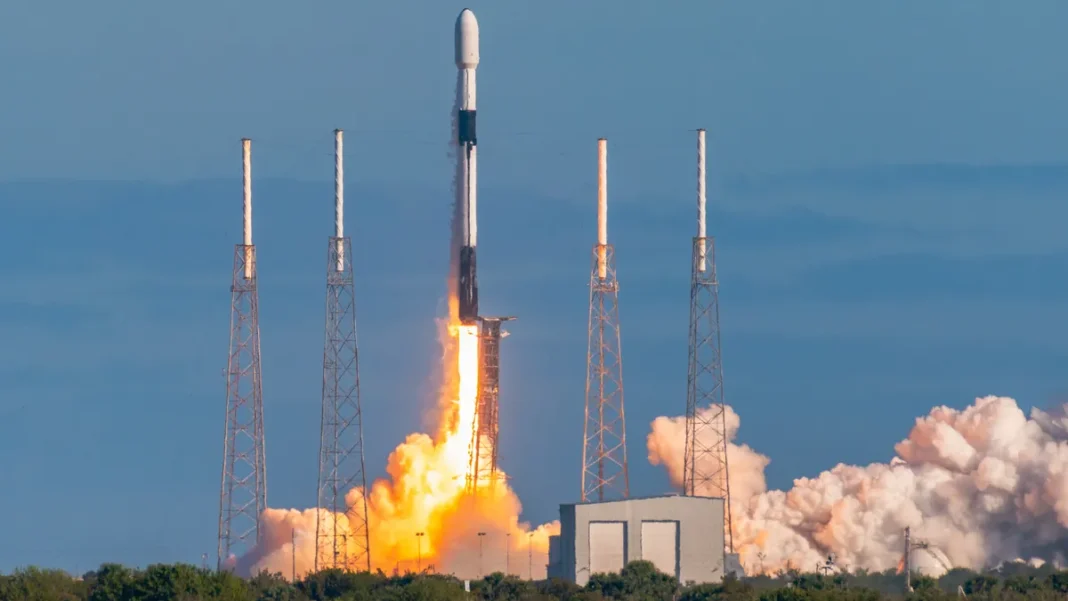
The prototype satellite launched on 1 October aboard a SpaceX Transporter-18 rideshare mission, carrying about 100 other spacecraft, and was built in partnership with Planet. After a few weeks of commissioning, including powering up the host computer and the TPU trays and running early machine learning tests, the team sent its first prompt during a ground-station pass.
Engineers asked Gemma 4, Google’s open AI model, to write a haiku about being in space. As the satellite passed over Svalbard, Norway, it sent the response back to Earth:
Blue marble below
Data streams in silent grace
Starlight feeds my core.
Google said it then tested space-themed limericks and prompts asking the satellite to report the technical status of its own systems.
Travis Beals, Google’s Senior Director of Paradigms of Intelligence, described the result as the mission’s “Hello World” milestone in a Google Research post dated 30 October. Google characterised it as the first AI response from a data-centre-class TPU in orbit.
Why Google is testing AI hardware in orbit
Project Suncatcher, announced in November 2025, is a long-term research effort into whether solar-powered satellites carrying Google’s TPU chips could one day support machine learning work in space. AI data centres on Earth need large amounts of electricity to power processors and cooling equipment, and Google is exploring whether sunlight in space could supply some of that energy instead.
The test also shows the limits of the idea today. TechCrunch reported that the prototype carries four TPUs and generates up to 1 kilowatt of electricity, which means it can run only one TPU at a time, for about 20 minutes per session.
Space itself is harsh on hardware. Satellites must withstand extreme temperature changes and radiation, which can flip bits in memory and corrupt calculations. Google has already tested its chips in a proton beam facility at the University of California, Davis, and reported that its Trillium TPUs survived a radiation dose greater than what they would receive during a five-year mission. The next tests in orbit will check how the TPUs perform under thermal stress and radiation exposure.
What the milestone does and does not prove
It is worth being clear about what happened. The model was already loaded onto the satellite before launch. Running it on a new prompt is called inference: the chip applies a model that has already been built, rather than doing the much longer work of building one. A command went up from Earth, the TPU started, Gemma 4 composed the response aboard the spacecraft, and the completed text came back down.
Frequently asked questions
What was the first AI response from space?
A haiku written by Google’s Gemma 4 model: “Blue marble below / Data streams in silent grace / Starlight feeds my core.” Engineers had asked the model to write a haiku about being in space.
When did Google announce the milestone?
Google announced the result on 30 October 2026. Its prototype satellite had launched on 1 October aboard a SpaceX Transporter-18 rideshare mission.
What is Project Suncatcher?
Project Suncatcher is Google’s research effort into whether solar-powered satellites carrying its TPU chips could one day support machine learning work in space. It is an experiment, not a product, and the current satellite is a single prototype.
Will AI services move into space now?
No. The test involved one prototype answering a few prompts. Google’s next step is to launch two interconnected satellites in 2027 and to test how its chips cope with heat and radiation in orbit.