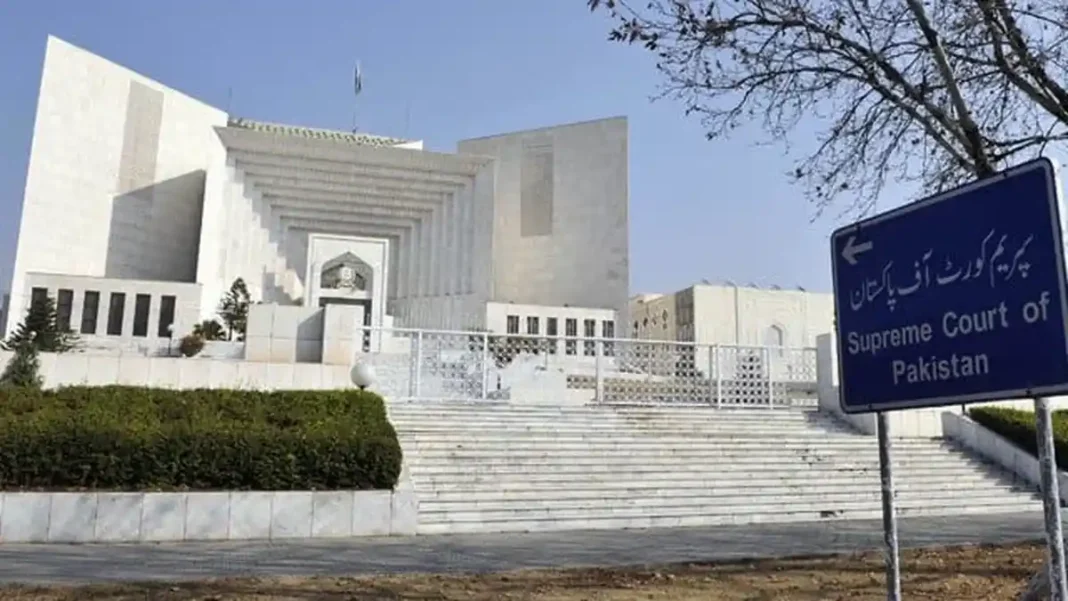
Civil Servant Private Conduct Can Be Misconduct, Rules Court
Civil servant private conduct can count as service misconduct, the Supreme Court has ruled, even when the act took place outside office hours and had no direct link to official duties.
The court dismissed a petition by an Intelligence Bureau employee and upheld his compulsory retirement. The employee, Jawad Abbasi, served as a cook in the Intelligence Bureau. He had challenged a Federal Service Tribunal decision that maintained the departmental penalty imposed on him.
The judgment was authored by Justice Shahid Waheed, with Justice Ayesha A. Malik on the bench. It held that an acquittal in a criminal case did not automatically cancel departmental proceedings, where evidence had independently established misconduct.
Civil servant private conduct: why the court did not treat the home as a private zone
The court observed that the dignity of women was a fundamental constitutional value. A civil servant’s conduct at home, it said, could reflect on his suitability for public office and on the reputation of his institution.
It added that violence did not become a private matter merely because it occurred within the home. Under the Civil Servants (Efficiency and Discipline) Rules, 2020, conduct unbecoming of an officer and prejudicial to service discipline could constitute misconduct even outside the workplace.
In this case, the employee was accused of setting his wife on fire. The court noted that the departmental inquiry had examined the charges on their own evidence, including the allegation of violence against his wife and his attempt to portray the incident as her suicide.
The court found no legal error, no violation of due process, and no substantial question of law of public importance. It therefore refused leave to appeal and dismissed the petition.
Criminal acquittal is not the same as departmental clearance
The judgment turns on a distinction that often confuses readers. Criminal and departmental proceedings serve different purposes and apply different standards of proof.
A criminal acquittal means that guilt was not established beyond reasonable doubt. It does not necessarily establish innocence for departmental purposes, and it does not certify fitness for government service.
In this case, the court stressed that the departmental process had its own safeguards. The inquiry officer examined 13 witnesses in the employee’s presence, and the employee had an opportunity to cross-examine them. The inquiry independently established the charges, so the department was not simply relying on a criminal complaint.
The court also clarified that a first information report alone could not justify departmental punishment. Something more was needed: an inquiry, evidence tested in the employee’s presence, and a finding that the conduct met the definition of misconduct under the 2020 rules.
That reasoning sets a limit as well as a principle. A civil servant cannot be punished at work merely because a complaint was filed, or merely because of private behaviour that has no bearing on service discipline. The department must prove, through its own process, that the conduct was unbecoming of an officer and prejudicial to discipline.
Why the penalty stood
The court observed that the employee had been given an opportunity to defend himself. It also held that compulsory retirement was proportionate to the gravity of the misconduct found.
Proportionality matters here. Compulsory retirement ends a career, but it is not the harshest penalty in service law. The court weighed the seriousness of the conduct found, the fact that the inquiry had tested the evidence, and the absence of any due process flaw, and concluded that the penalty could stand.
For civil servants, the ruling is a clear warning. Conduct at home is not automatically shielded from service consequences when it is serious, proved through a fair inquiry, and capable of harming the reputation of the institution. For departments, the ruling is equally clear: they must run a proper inquiry, give the employee a fair hearing, and show that the penalty fits the finding. A shortcut on any of those steps would leave the penalty open to challenge.
The ruling follows other recent court decisions, including the Supreme Court’s gross negligence test for doctors, the FCC’s reserved ruling on super tax review petitions, and the IHC’s bar on mentioning FIRs in character certificates after acquittal.
Frequently asked questions
What did the Supreme Court decide?
It ruled that serious private misconduct by a civil servant can constitute service misconduct, even outside office hours, and upheld the compulsory retirement of an Intelligence Bureau cook.
Does a criminal acquittal clear a civil servant at work?
No. The court said an acquittal means criminal guilt was not proved beyond reasonable doubt. It does not automatically cancel departmental proceedings or certify fitness for service.
What safeguards did the inquiry have in this case?
The inquiry officer examined 13 witnesses in the employee’s presence, and the employee had an opportunity to cross-examine them.
Can any private behaviour lead to punishment?
No. The department must show, through its own inquiry, that the conduct was unbecoming of an officer and prejudicial to service discipline under the 2020 rules. A complaint alone is not enough.
Who wrote the judgment?
Justice Shahid Waheed authored the judgment, with Justice Ayesha A. Malik on the bench.