Abbasi Shaheed Hospital New Block Ready After 52 Years
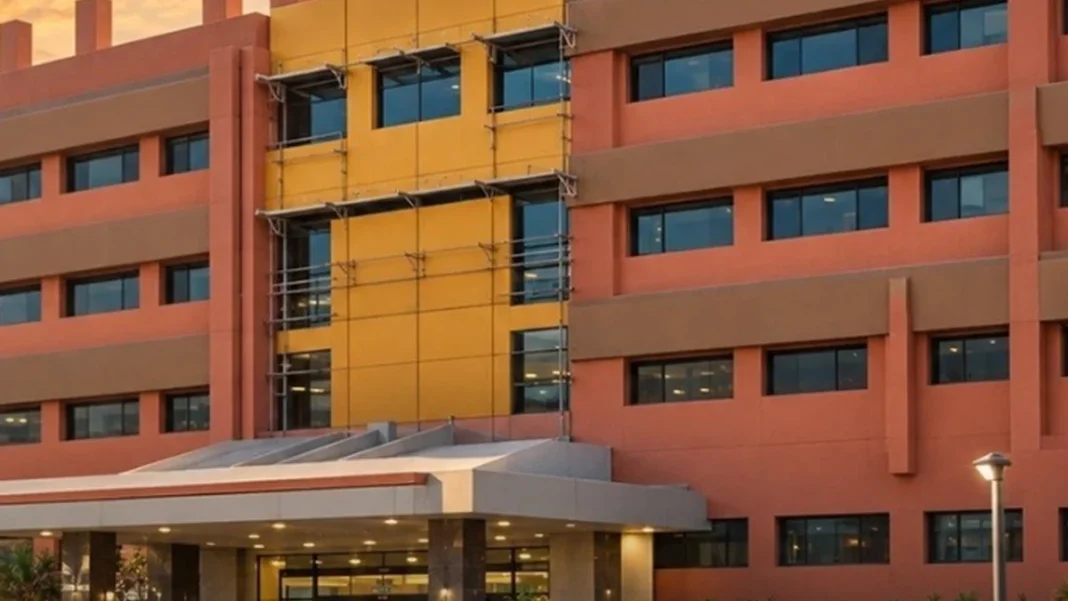
Construction of the Abbasi Shaheed Hospital new block in Karachi has been completed after 52 years, through a joint initiative of the Sindh government and the Karachi Metropolitan Corporation (KMC).
The ground-plus-three-storey building spans 200,000 square feet and will have a capacity of 150 to 200 beds. It is expected to be formally inaugurated next week.
The new facility is expected to benefit patients from District Central as well as other parts of Karachi. For a hospital that serves a large and densely populated part of the city, added beds and diagnostic services address a long-standing shortage.
What the Abbasi Shaheed Hospital new block will offer
Karachi Metropolitan University Registrar Mahmood Ahmed Khan said the new block will operate as a multi-purpose healthcare facility. It will offer treatment for gastroenterological, cardiac, pulmonary and dermatological conditions.
Modern diagnostic services will also be available, including X-rays, echocardiography and endoscopy. The hospital has ordered additional modern medical equipment for the block.
The block will provide outpatient department (OPD) services across various specialties, along with modern diagnostic and treatment facilities. Patients will be able to access multiple healthcare services under one roof, rather than travelling between facilities for tests and treatment.
A phased opening
According to the hospital administration, the facility will be made operational in phases. The phased approach is meant to ensure patients can access multiple healthcare services as each part of the block comes into use, rather than waiting for every service to start at once.
Plans are also under consideration to provide medical facilities for children with autism and persons with disabilities. Those plans are not yet confirmed as services, but they show the direction the hospital wants the block to take.
The 52-year wait is the striking part of the story. A project completed after more than five decades says as much about past delays as it does about the new building. Patients in District Central lived with the old capacity for years while the block remained unfinished.
What patients should watch for
The inauguration next week will mark completion, not full operation. The phased opening means services will arrive in stages, and patients will need clear information about which departments open first.
Three points will matter in the weeks after inauguration. The first is staffing: whether doctors, nurses and technicians are in place for the new beds. The second is equipment: whether the ordered diagnostic machines arrive and work as planned. The third is access: whether OPD services run at hours that suit working families in District Central and beyond.
If those three points hold, the block will ease pressure on Abbasi Shaheed Hospital and on other public hospitals in Karachi. If they slip, the building alone will not change the experience of patients waiting for a bed or a test.
For now, the facts are clear. The building is complete. It holds 150 to 200 beds across four levels. It will open in phases, with inauguration expected next week, and it is intended to serve District Central and the wider city.
Related coverage on Feature Pakistan includes the Sindh opposition’s demand for a probe into minor girls cases, the KU panel probing law college results, Sindh’s first cattle embryo transfer project and the warning over Pakistan’s GSP+ access.
Frequently asked questions
Where is the new hospital block?
It is at Abbasi Shaheed Hospital in Karachi, built through a joint initiative of the Sindh government and the Karachi Metropolitan Corporation.
How large is the new block?
The ground-plus-three-storey building spans 200,000 square feet and will have a capacity of 150 to 200 beds.
When will it open?
The block is expected to be formally inaugurated next week, and it will then be made operational in phases.
What services will it offer?
It will offer treatment for gastroenterological, cardiac, pulmonary and dermatological conditions, with X-rays, echocardiography, endoscopy and OPD services across various specialties.
Who will benefit?
Patients from District Central and other parts of Karachi are expected to benefit, with multiple healthcare services available under one roof.