Pakistan UK Counter-Terrorism Talks Flag Afghan Threat
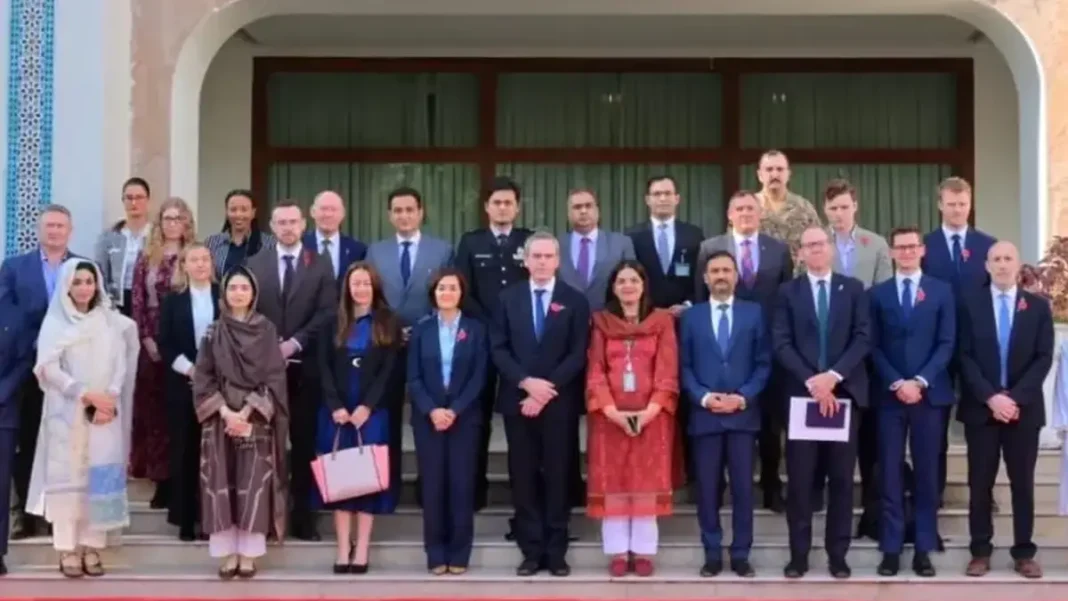
Pakistan UK counter-terrorism talks in Islamabad on November 4, 2026, voiced concern over the threat posed by terrorist groups operating in and from Afghanistan. The Foreign Office said both countries reviewed bilateral and multilateral counter-terrorism cooperation, and they reaffirmed a shared commitment to combat terrorism in all its forms.
The meeting was the annual bilateral dialogue on counter-terrorism between the two countries. It took place in Islamabad, and it covered the regional and global security environment in detail. The two sides exchanged views on threats from terrorist entities, including transnational networks.
The Foreign Office statement named the Tehreek-i-Taliban Pakistan (TTP) among the groups of concern. It said both sides expressed concern over the continuing threat posed by terrorist groups, including the TTP, operating in and from Afghanistan. It added that they underscored the urgent need for a stable and secure Afghanistan as a cornerstone for lasting peace and prosperity across the region.
Pakistan UK counter-terrorism dialogue looks beyond groups
The dialogue did not stop at named groups. Both sides also discussed new trends in terrorism, including campaigns of misinformation and disinformation. They looked at the exploitation of social media platforms and emerging technologies, and they exchanged best practices for countering those trends.
That part of the agenda matters for readers in Pakistan. Modern terrorist propaganda does not travel only through remote camps. It also travels through phones, social media feeds and fake news. A counter-terrorism dialogue that covers online trends is therefore about daily life, not just about border security.
The UK delegation expressed condolences over the loss of innocent lives in terrorist attacks in Pakistan. It reiterated that the UK stood with Pakistan in the fight against terrorism. The statement also said both sides acknowledged Pakistan’s contributions to regional stability and security.
The two delegations agreed to strengthen institutional links and to maintain regular engagement. They also agreed to hold the next round of the dialogue in London in 2027, on dates to be agreed by both sides. That commitment gives the dialogue a fixed next step, rather than leaving it as a one-off meeting.
What this means for Pakistan and Afghanistan ties
Ties between Pakistan and Afghanistan have been strained for the past few years. Islamabad has repeatedly voiced concern over cross-border terrorism, and it has urged the Taliban administration in Kabul to dismantle terrorist sanctuaries on Afghan soil. Officials say those appeals have gone unheeded, particularly where sanctuaries linked to the banned TTP are used for attacks in Pakistan.
The joint concern voiced with the UK does not, by itself, change the situation in Afghanistan. It does, however, put Pakistan’s concern on record with a major Western partner, in a formal dialogue setting. That record can shape later diplomatic work, including work at multilateral forums such as the United Nations.
Earlier this year, Pakistan and the UK agreed to enhance cooperation in counter-terrorism, combating illegal migration and human smuggling, institutional collaboration and police training. The November dialogue builds on that agreement. It also sits alongside Pakistan’s agreement with the European Union to strengthen cooperation at multilateral forums, including the United Nations.
For Pakistani readers, the practical point is simple. Counter-terrorism cooperation with the UK covers training, institutional links and shared assessments. It does not replace Pakistan’s own security operations. Those operations continue on the ground, and they carry their own costs in lives and resources.
Feature Pakistan reported on recent security operations in 17 Killed in Balochistan Operations, Soldier Martyred, and on the civil and military leadership’s decision to scale up intelligence-based operations in Civil-Military Huddle Agrees to Scale Up KP IBOs. The country’s defence advances were covered in Pakistan Tests First Home-Made Faaz Air-to-Air Missile.
Dawn reported the Foreign Office statement on November 4, 2026.
Frequently asked questions
What did the Pakistan UK counter-terrorism talks conclude?
Both sides expressed concern over terrorist groups operating in and from Afghanistan, reaffirmed their commitment to combat terrorism in all its forms, and agreed to hold the next round in London in 2027.
Which group did the Foreign Office statement name?
It named the Tehreek-i-Taliban Pakistan (TTP) among the groups of concern, alongside transnational terrorist networks.
Where and when did the dialogue take place?
It took place in Islamabad on November 4, 2026, as the annual bilateral dialogue on counter-terrorism.
What new trends did the talks cover?
They covered misinformation and disinformation campaigns, the exploitation of social media platforms, and emerging technologies used in terrorism.
What did the UK delegation say about Pakistan?
It expressed condolences over innocent lives lost in terrorist attacks in Pakistan, and it reiterated that the UK stood with Pakistan in the fight against terrorism.
Does the dialogue change Pakistan’s ties with Afghanistan?
No. It records a shared concern with the UK, but Pakistan’s ties with Afghanistan remain strained, and Islamabad says its appeals to Kabul over terrorist sanctuaries have gone unheeded.