Delhi World’s Most Polluted City on Diwali Eve
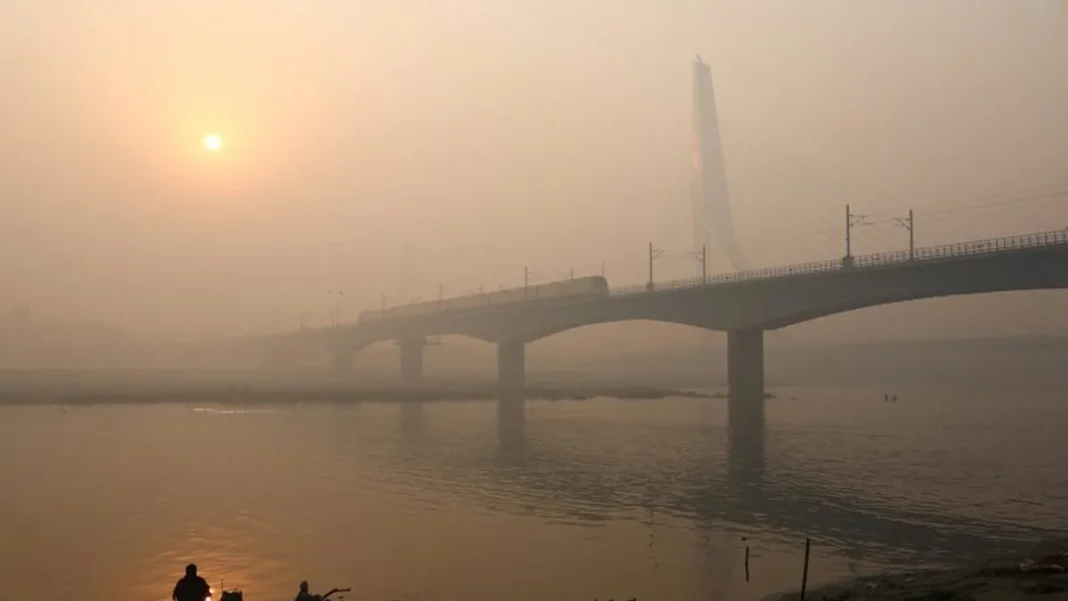
Delhi pollution reached a new peak on Saturday, as the Indian capital ranked the world’s most polluted major city on the Swiss group IQAir’s live ranking a day before Diwali.
IQAir ranked Delhi first among the world’s major cities at 10:35am, with a United States air quality index reading of 581. That figure was double the reading for Lahore in neighbouring Pakistan, which stood at 285.
India has ordered schools in and around Delhi to offer online classes and encouraged people to work from home ahead of Diwali on Sunday. The Hindu festival of lights is usually marked by the widespread use of firecrackers, which further worsen the air quality.
India’s Central Pollution Control Board put Delhi’s air quality index at 363 at 10am, in the “very poor” category. The IQAir reading is based on concentrations of air pollutants and is not directly comparable to India’s official index, which uses a different scale and methodology.
Delhi pollution: worst pre-Diwali air in eight years
Friday’s air quality in Delhi was the worst pre-Diwali air in eight years, local media said, citing official data. The deterioration follows a week in which the city’s air grew steadily worse.
Delhi’s toxic air surged earlier in the week to more than 30 times the World Health Organisation’s recommended daily limit, according to data from air monitors. That reading came on Wednesday, three days after authorities tightened measures, including restrictions on traffic and construction, to curb smog in the capital.
Pollution is an annual problem in many parts of northern India from the onset of winter. Cold, heavy air traps vehicle emissions, construction dust and smoke from crop-waste burning, and the smog settles over the cities of the plains.
Lahore is breathing the same air
The ranking carried a direct message for Pakistan. Lahore, at 285 on the same IQAir scale, sat far below Delhi but still deep in hazardous territory. The two cities share the same winter air, and the same sources feed it.
Punjab’s air pollution has reached alarming levels this season, and the province has recorded hundreds of stubble-burning hotspots. Punjab found 593 stubble-burning hotspots in a recent count, as farmers clear fields by burning crop residue. The smoke drifts across the border region and adds to the haze over both Lahore and Delhi.
Faisalabad’s air quality index hit 220 this week, which put the province’s environment watchdog under scrutiny for inaction. The pattern repeats across Punjab each winter: the air worsens, the readings climb, and the official response lags behind.
Diwali itself is a shared occasion across the border. Sindh has announced a holiday for the Hindu community on November 9, so families in the province will mark the festival while the region’s air stays thick with smog.
What happens next
Diwali falls on Sunday, and the firecrackers that mark the festival will add a fresh load of smoke to air that is already rated very poor. Indian authorities will watch the readings through the weekend to see how far they climb.
The longer pattern will not change with the festival. Winter smog returns to the plains every year, and it eases only when the weather shifts. Until then, both Delhi and Lahore face days of grey skies, closed schools and warnings to stay indoors.
Frequently asked questions
How bad is Delhi’s air?
IQAir ranked Delhi as the world’s most polluted major city on Saturday morning, with a United States air quality index reading of 581. India’s Central Pollution Control Board put the city’s index at 363, in the “very poor” category.
Why is Lahore mentioned in the Delhi story?
Lahore stood at 285 on the same IQAir scale, about half of Delhi’s reading. The two cities share the same winter air and many of the same pollution sources, including vehicle emissions and crop-waste burning.
What has India ordered before Diwali?
India has ordered schools in and around Delhi to offer online classes and encouraged people to work from home ahead of Diwali on Sunday, when firecrackers usually worsen the air further.
Why does the air worsen before Diwali?
Cold, heavy winter air traps vehicle emissions, construction dust and smoke from crop-waste burning. Firecrackers during Diwali add more smoke to air that is already polluted.