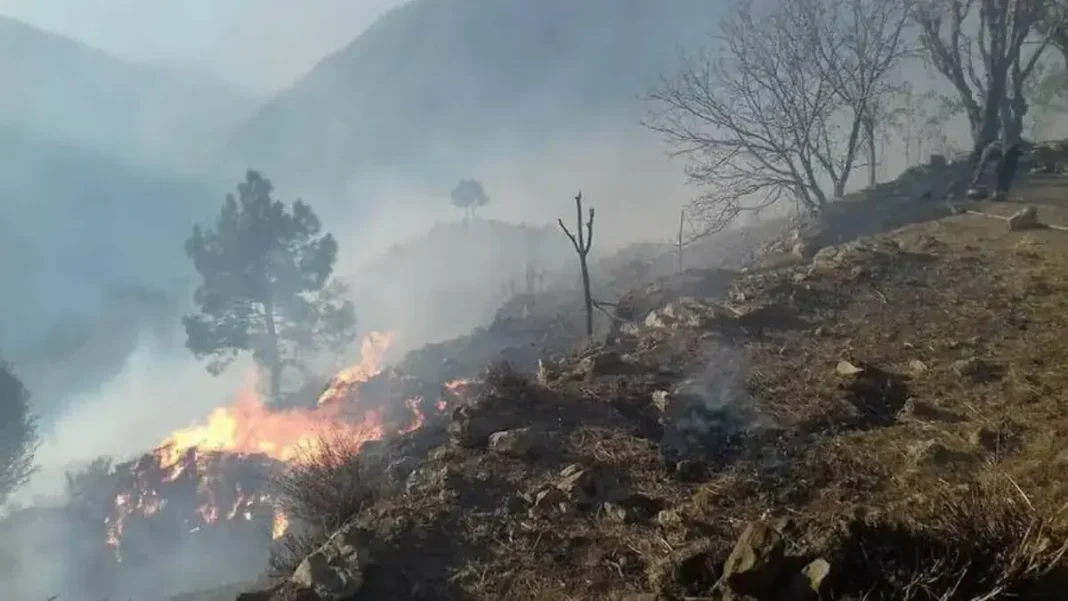
Punjab Stubble Burning: 593 Hotspots Found
Punjab stubble burning fires reached 593 across eight districts, and the Punjab Environment Protection Agency (EPA) extinguished 581 of them, as it intensifies surveillance and enforcement to prevent crop-residue burning during the ongoing anti-smog campaign.
The incidents were detected in Hafizabad, Sheikhupura, Nankana Sahib, Faisalabad, Kasur, Sialkot, Sargodha and Gujranwala through satellite-based monitoring, field surveillance and specialised night squads, according to the EPA.
Punjab stubble burning: how the EPA tracks fires
The agency has expanded its monitoring mechanism through the Punjab Climate Watch Hub, which analyses satellite-generated fire anomalies round the clock and forwards verified alerts to district field teams for on-ground action.
The operation is being supported by Quick Response Units equipped with tractor-mounted fire bowsers, firefighting equipment and dedicated personnel to reach reported locations and extinguish fires.
EPA Director General Abdullah Nayyar Sheikh conducted surprise inspections over the past week to assess the deployment of field teams and surveillance arrangements along major motorways and Grand Trunk (GT) roads.
During the visits, he directed officials to ensure uninterrupted night patrolling, immediate response to satellite alerts and strict monitoring of agricultural areas identified as vulnerable to crop-residue burning.
The agency has also deployed specialised night squads to monitor agricultural belts, motorway corridors and adjoining settlements, where fires can remain undetected during nighttime hours.
Why the fires matter for Punjab’s air
Crop-residue burning is one of the main drivers of the smog that settles over Punjab’s cities each winter. Smoke from burning fields mixes with vehicle exhaust, industrial emissions and dust, and it hangs in the air when cold weather traps pollution close to the ground.
Punjab’s air pollution has already reached alarming levels, with more than 2,900 patients reporting respiratory and eye complaints at hospitals in Rawalpindi. Lahore faces air pollution through the year, not just in the smog season, according to a recent report on the city’s air. Across the border, Delhi’s toxic air has run at 30 times the World Health Organisation limit, showing that the whole region faces the same problem.
The 12 fires that were detected but not yet extinguished show why the EPA has put night squads on the roads. Fires lit after dark can burn for hours before anyone notices them, and by morning the smoke has already spread. The Climate Watch Hub’s round-the-clock satellite monitoring is meant to close that gap, so that a fire detected at night reaches a field team within hours rather than days.
Farmers burn crop residue because it is the cheapest way to clear a field before the next sowing. The practice is the target of the EPA’s enforcement campaign, which pairs surveillance with action on the ground. Pakistan recorded its sixth-hottest October in 66 years, and hotter, drier autumns make the residue drier and easier to burn, which adds to the pressure on the anti-smog drive.
What happens next
The EPA will keep its field teams, night squads and Quick Response Units deployed through the smog season. District teams will continue to act on satellite alerts from the Climate Watch Hub, and officials will keep inspecting vulnerable areas along motorways and GT roads.
With 581 of 593 fires already extinguished, the agency’s message is that detection is working. The test will be whether the numbers fall as the wheat-sowing season advances and the smog season peaks.
Frequently asked questions
How many stubble burning fires were found in Punjab?
The Punjab EPA detected 593 agricultural fire incidents across eight districts and extinguished 581 of them.
Which districts were affected?
The fires were detected in Hafizabad, Sheikhupura, Nankana Sahib, Faisalabad, Kasur, Sialkot, Sargodha and Gujranwala.
How does Punjab detect stubble burning?
The Punjab Climate Watch Hub analyses satellite-generated fire anomalies round the clock and forwards verified alerts to district field teams. Field surveillance and specialised night squads back up the satellite monitoring.
Why is stubble burning a problem?
Smoke from burning crop residue adds to the smog over Punjab’s cities, which already suffer from vehicle exhaust, industrial emissions and dust. The smoke harms breathing and eyes, and hospitals report more respiratory cases during the smog season.