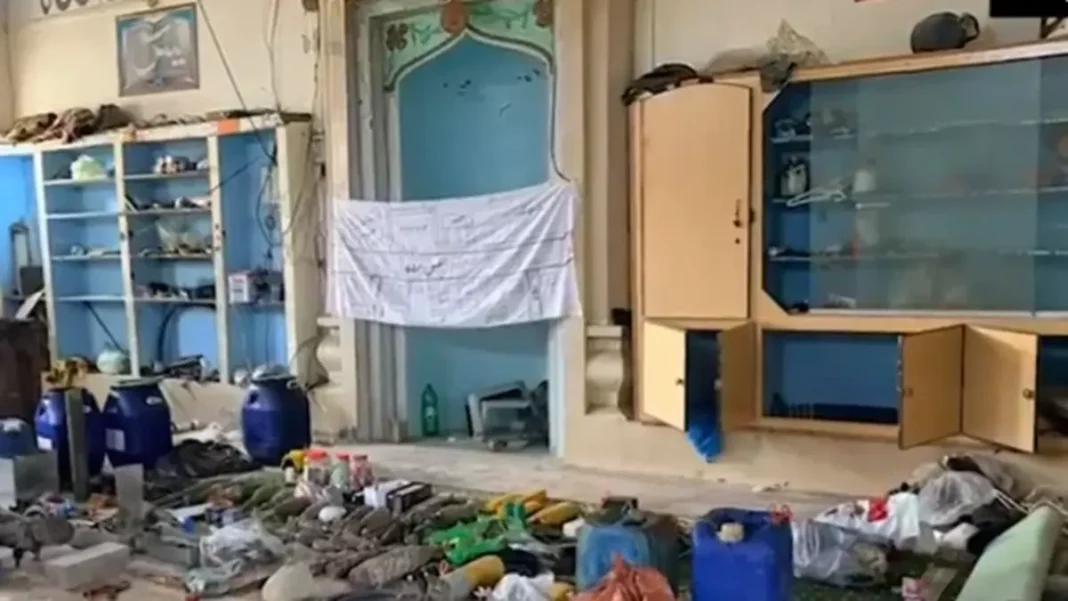
Security forces recovered a large cache of improvised explosive devices, explosives, weapons and ammunition from two terrorist hideouts set up inside North Waziristan mosques, the military’s media wing said on Monday.
The operation took place on Sunday in Muzak village, on the southern outskirts of Mir Ali. The Inter-Services Public Relations (ISPR) said the hideouts belonged to Indian proxy Fitna Al-Khawarij, the state-designated term for the banned Tehreek-e-Taliban Pakistan (TTP).
According to the statement, the two hideouts inside mosques were sanitised during the intelligence-based operation. It added that the terrorists had deliberately set up hideouts in mosques to store explosive materials and were also running torture cells there.
“This reprehensible desecration of places of worship by Indian proxy Fitna Al-Khawarij serves as yet another clear piece of evidence of their utter disregard for the fundamental teachings of Islam,” the statement said.
North Waziristan mosques cleared, search continues
The ISPR said a sanitisation operation was under way to clear any other terrorist hideouts in the area. It added that terrorists backed by the Afghan Taliban have nothing to do with Islam, and that their distorted interpretation and misuse of religion is unacceptable and fully rejected by the people of Khyber Pakhtunkhwa and Pakistan.
The statement said the counter-terrorism campaign under the vision of Azm-e-Istehkam, approved by the Federal Apex Committee on the National Action Plan, would continue at full pace. Security forces and law enforcement agencies would keep working to wipe out foreign-sponsored terrorism from the country, it added.
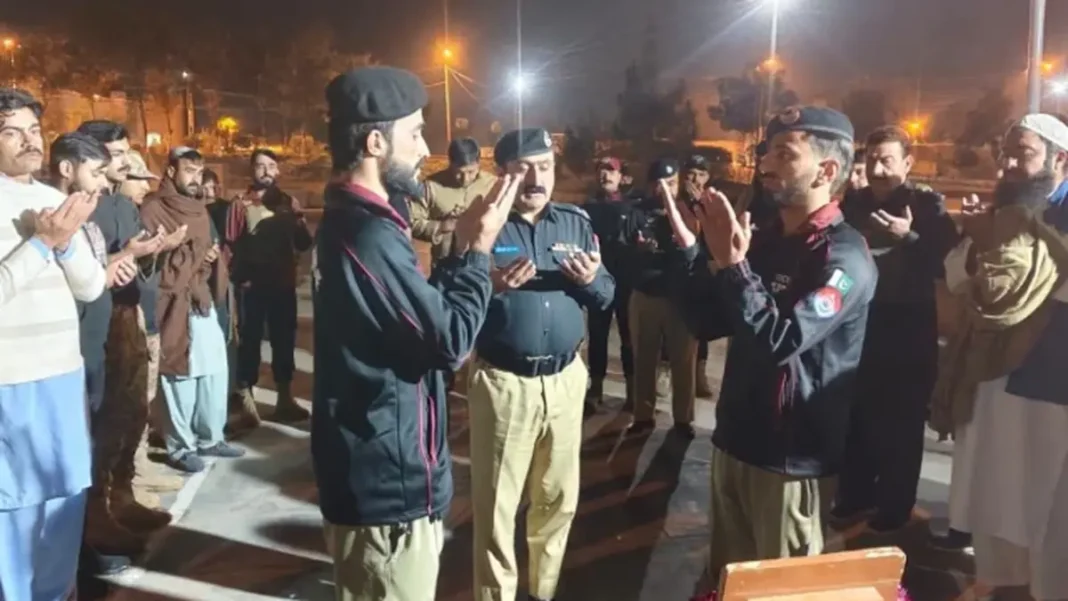
The recovery comes as attacks on police and security personnel continue across Khyber Pakhtunkhwa. A constable was martyred and three personnel abducted in an attack on a police post in Hangu on Sunday night, while a police officer was attacked with his son in Tank on Saturday. Police deaths in Bannu, Lakki Marwat and Bajaur underlined the same pattern in October.
Attacks have risen sharply
Terrorism has grown steadily in Pakistan, with attacks rising every year since 2022, according to the Armed Conflict Location and Event Data (ACLED) monitoring group. Its data shows attacks in Pakistan rose nearly fourfold to 2,425 in 2025, up from 658 in 2022.
The scale of the threat kept growing in 2026. Two security reports presented to the federal cabinet in October showed that terrorist incidents in Khyber Pakhtunkhwa had risen by 195 per cent between March 2024 and September 2026. The reports also found that 73 per cent of attacks recorded in the province during 2026 had targeted police and security personnel, while drones and improvised explosive devices had emerged as growing threats.
Operations against the militants continue in the tribal districts. Three militants were killed in an intelligence-based operation in Mir Ali in October, and a soldier was martyred and 17 terrorists killed in operations in Balochistan.
Cross-border concerns
Pakistan has repeatedly accused the Afghan Taliban authorities of letting the banned TTP operate from Afghan territory and launch attacks inside Pakistan. A United Nations Security Council monitoring report published in February 2026 backed Islamabad’s concerns, saying TTP attacks originating from Afghanistan had increased and that the group was being given greater liberty and support by Afghanistan’s de facto authorities.
The report also noted that Al Qaeda kept providing training and support to the TTP, while the group had acquired advanced weapons, including night-vision equipment and drone systems.
The use of mosques to store explosives marks a further escalation in the militants’ tactics. The ISPR said the desecration showed the group’s disregard for the teachings of Islam, a point it stressed in its statement on the Muzak operation.
Frequently asked questions
Where did the operation take place?
Security forces carried out the intelligence-based operation on Sunday in Muzak village, on the southern outskirts of Mir Ali in North Waziristan.
What was recovered from the mosques?
The forces recovered improvised explosive devices, explosives, weapons and ammunition from two hideouts set up inside mosques.
Which group did the hideouts belong to?
According to the ISPR, the hideouts belonged to Fitna Al-Khawarij, the state-designated term for the banned Tehreek-e-Taliban Pakistan.
What did the ISPR say about the use of mosques?
It said the terrorists had deliberately set up hideouts in mosques to store explosive materials and were also running torture cells there, calling it a reprehensible desecration of places of worship.
How serious is the terrorism threat in Khyber Pakhtunkhwa?
Two security reports presented to the federal cabinet in October showed terrorist incidents in the province had risen by 195 per cent between March 2024 and September 2026, with 73 per cent of 2026 attacks targeting police and security personnel.