450,000 Vehicles Declared Token Tax Defaulters
Punjab’s Excise and Taxation Department has declared more than 450,000 vehicles token tax defaulters, with nearly Rs5 billion in unpaid token tax outstanding.
Director Motors Shahid Geelani said the department had already collected more than Rs4.25 billion in token tax from about 400,000 vehicle owners during the first four months of the fiscal year.
He said the registrations of major defaulters had been suspended in the system. Defaulters will be charged the tax along with penalties this year, he said.
Checkpoints across the city
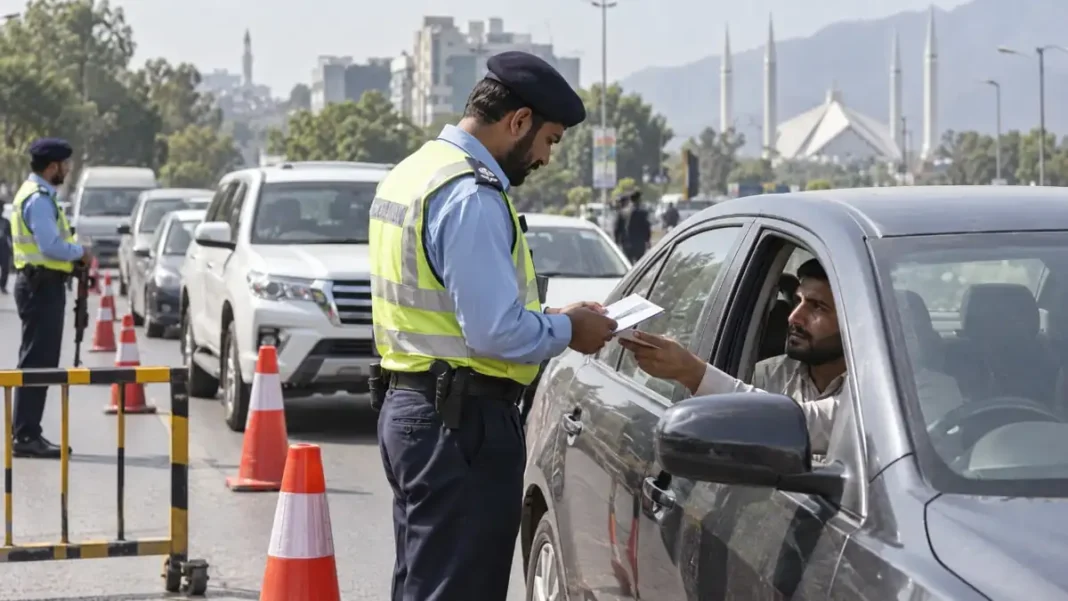
Geelani said the department had set up checkpoints at eight locations across the city to check vehicles and take legal action against defaulters. Officials are inspecting vehicles and acting against those found in violation.
He appealed to vehicle owners to pay their token tax on time to avoid legal action, penalties or suspension of their registration.
Token tax is the annual motor vehicle tax that the Punjab Excise, Taxation and Narcotics Control Department collects on registered vehicles. It is a key source of revenue for the provincial exchequer, and the department has stepped up enforcement in recent months.
Token tax defaulters face a familiar crackdown
The new figures follow a larger drive earlier this year. In June, the Punjab Excise Department suspended the registrations of more than 850,000 vehicles over unpaid token tax, as it pushed to recover dues before the close of the fiscal year. At the time, more than 1.7 million vehicle owners across Punjab were required to pay the annual tax. Nearly 875,000 had paid about Rs9 billion, while more than 850,000 still owed over Rs9 billion.
In January 2025, the department’s director general ordered strict action against defaulters, including suspension of registrations and impounding of vehicles belonging to major defaulters. Between January 1 and January 25, 2025, excise teams inspected 173,411 vehicles at 1,051 checkpoints across Punjab. They found 5,427 unregistered vehicles, 18,958 token tax defaulters and 9,156 vehicles using fake number plates.
The department has also linked enforcement to technology. It is integrating the e-pay system with the Punjab Safe Cities Authority so defaulters can be tracked in real time.
For the current fiscal year, Punjab charges token tax at 0.3 per cent of the invoice price for cars from 1,001cc to 2,000cc, and 0.4 per cent for cars above 2,000cc. Cars up to 1,000cc pay a fixed Rs20,000. Owners who paid the full year’s tax by August 31 received a 10 per cent rebate, a window that has now closed.
The Lahore High Court has been asked to decide a challenge to Punjab’s e-challan system for traffic fines. The petroleum levy brought in Rs220 billion in the first two months of the fiscal year, another major source of government revenue. Petrol pumps in the twin cities have halted a prime ministerial fuel subsidy, showing how closely pump prices are watched. Pakistan has set out a roadmap for 100 per cent digital payments, which will make tax payments easier to track. Karachi Customs recently uncovered an import fraud worth Rs277 million, another case of revenue going missing.
ProPakistani reported the figures on Tuesday.
Frequently asked questions
How many vehicles are token tax defaulters in Punjab?
The Excise and Taxation Department has declared more than 450,000 vehicles defaulters, with nearly Rs5 billion in unpaid token tax.
How much token tax has Punjab collected this year?
The department has collected more than Rs4.25 billion from about 400,000 vehicle owners in the first four months of the fiscal year.
What happens to major defaulters?
Their vehicle registrations have been suspended in the system, and they will be charged the unpaid tax along with penalties this year.
Where are the checkpoints?
The department has set up checkpoints at eight locations across the city to check vehicles and take legal action against defaulters.
What are the token tax rates in Punjab this year?
Cars from 1,001cc to 2,000cc pay 0.3 per cent of the invoice price, cars above 2,000cc pay 0.4 per cent, and cars up to 1,000cc pay a fixed Rs20,000.