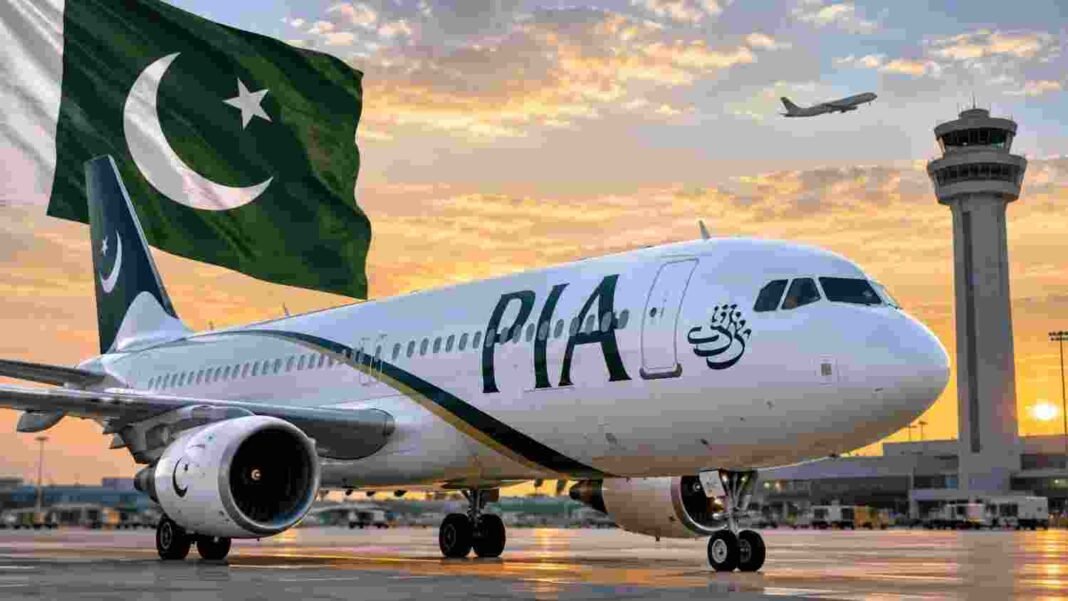
PIA Major Success has brought positive news for Pakistan’s aviation sector as Pakistan International Airlines cleared an important international safety assessment. The achievement strengthens the national airline’s operational safety credentials.
The International Air Transport Association (IATA) conducted PIA’s latest safety assessment. The organization examined different areas of the airline’s operations under its internationally recognized safety framework.
According to available details, IATA informed PIA management about the successful outcome of the assessment. As a result, the airline can continue operating under the renewed safety audit status until 2028.
This PIA major success is particularly important because IATA conducted a risk-based, detailed safety audit this year. The assessment examined how effectively the national airline manages safety across its operational activities.
Moreover, the audit covered several important areas that directly affect safe airline operations. These checks help airlines identify possible risks and improve their procedures before those risks create serious operational problems.
IATA operates the IATA Operational Safety Audit, commonly known as IOSA. The global aviation industry recognizes this program as an important system for evaluating airline operational management and safety practices.
Through IOSA, IATA uses established standards to assess participating airlines. As a result, airlines can compare their operational systems with internationally recognized aviation safety requirements.
Meanwhile, PIA expects its next audit in September 2028, according to the airline’s spokesperson. The latest development gives the carrier more time before its next scheduled assessment.
Previously, the airline underwent the IATA Operational Safety Audit at shorter intervals. However, PIA has now secured a three-year registration period after successfully meeting the required standards.
The PIA Major Success also comes at an important time for the national flag carrier. PIA has faced several operational and financial challenges over the years, so international safety recognition can help strengthen confidence in the airline.
Safety remains one of the most important factors for any international airline. Therefore, meeting recognized standards can help an airline improve its reputation among passengers, aviation authorities, airports, and international partners.
In addition, a strong safety record can support an airline when it expands its international network. Aviation authorities closely examine operational standards when airlines seek access to international markets and new destinations.
PIA can also use this achievement to demonstrate its commitment to improving operational procedures. However, the airline must maintain these standards throughout the certification period rather than treating the audit as a one-time achievement.
Furthermore, regular monitoring plays a major role in aviation safety. Airlines must continuously train staff, maintain aircraft, review operating procedures, and identify risks before they affect passengers or flight operations.
IATA supports airlines in improving safety standards across the global aviation industry. At the same time, the association works with airlines and other aviation stakeholders on efficiency, sustainability, and industry-wide operational challenges.
Environmental responsibility has also become an important issue for global aviation. Therefore, IATA supports efforts that aim to reduce the environmental impact of air travel and encourage more sustainable aviation practices.
For Pakistan, the latest PIA Major Success could also help create a more positive image of the country’s aviation sector. International recognition can play an important role when an airline works to rebuild passenger confidence and strengthen overseas operations.
However, passengers usually judge an airline through more than safety certification alone. They also expect reliable schedules, better customer service, clean aircraft, smooth booking systems, and professional handling of delays or cancellations.
Therefore, PIA still needs to focus on the overall passenger experience while maintaining strong safety standards. Consistent improvements in both areas could help the airline compete more effectively with regional and international carriers.
Nevertheless, the successful audit marks an encouraging development for the national airline. It shows that PIA has met the relevant operational safety requirements under the international assessment system.
More importantly, the three-year period allows PIA to maintain its progress and further strengthen its internal systems. Continuous improvement could help the airline build greater trust among domestic and international travelers.
For now, the PIA Major Success represents an important milestone for Pakistan International Airlines. The airline will face its next scheduled IATA operational safety assessment in September 2028, while maintaining safety standards will remain a key priority during the coming years.