


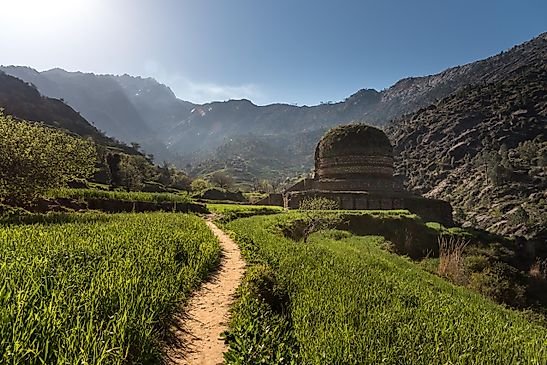
Swat is famous for its rivers, orchards, and ski slopes — but its deepest story is written in stone, two thousand years old, in a quiet field outside Mingora. Butkara I is the great Buddhist stupa of Swat: a monument first raised in the age of the Mauryan Empire, enlarged five times across the centuries, and excavated by Italian archaeologists who used it to decode the entire sequence of Gandharan Buddhist art. This is where the Buddha image itself may have been born. If you want your Swat trip to include something no mountain view can give you — a direct, physical connection to the ancient world — this butkara i swat travel guide will show you why this site deserves half a day of your itinerary, and exactly how to visit it.
Quick Facts
- Location: Gulkada area, near Mingora, Swat District, Khyber Pakhtunkhwa, Pakistan
- Altitude: around 950–1,000 meters (valley floor of the Swat Valley)
- Famous For: the great stupa of Swat — one of the earliest and longest-lived Buddhist sites in the valley, excavated 1956–1962 by the Italian Archaeological Mission
- Nearest City: Mingora (a few kilometers away); Saidu Sharif is adjacent
- Accessibility: easy — paved road from Mingora, reachable by car, rickshaw, or taxi year-round
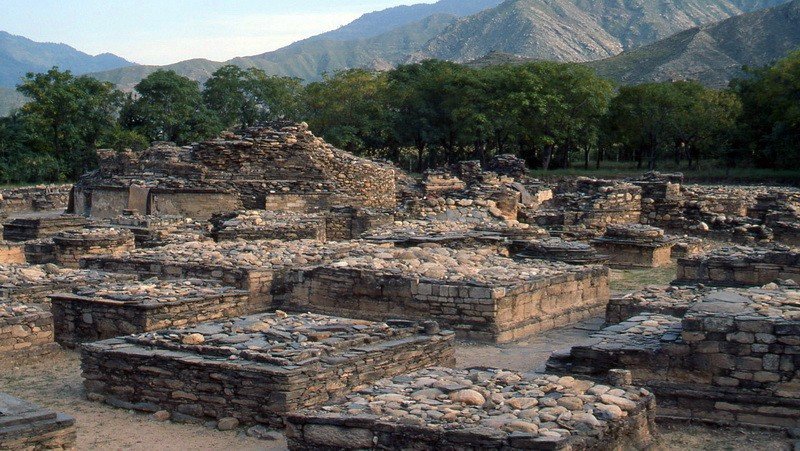
- Known Landmarks: the great central stupa, over 200 surrounding votive stupas, the schist-paved courts, and the large rectangular water tank
- Best For: history lovers, culture travelers, photographers, school groups, and anyone who wants the ancient side of Swat
Why Visit Butkara I (Swat)
Every year, millions of travelers come to Swat for Kalam’s meadows and Malam Jabba’s snow — and drive straight past the valley’s most extraordinary secret. Swat was once one of the great centers of Buddhism in the ancient world, a place Chinese pilgrims wrote about with awe, and Butkara I is its crown jewel. The great stupa standing here has watched empires rise and fall for over two thousand years. You can walk the same paved courts that monks walked in the age of the Kushans, and stand before one of the earliest known images of the Buddha ever carved.
What makes Butkara I special is not just age but revelation. When the Italian archaeologists dug here between 1956 and 1962, they uncovered something no one had fully understood before: the stupa had been enlarged five times, each new structure built over and encapsulating the last, like the rings of a tree. Coins found in the layers — from Chandragupta Maurya to Menander I to Azes II to the Kushan king Kujula Kadphises — let scholars date each phase precisely. This single site became the key that unlocked the chronology of Gandharan art across the whole region.
And the art itself is breathtaking. The excavation proved that in the 2nd century BCE, Hellenistic architectural decoration was added to the stupa — direct evidence that the Indo-Greek rulers of the northwest helped create the Greco-Buddhist style that would define Gandhara. An Indo-Corinthian capital found here, carved as a Buddhist devotee within foliage, with a reliquary and coins of Azes II buried at its base, is securely dated to before 20 BCE. The seated Buddha found in the third stratum may be the earliest known Buddha image in northwestern India — the moment, perhaps, when the Buddha first took human form in art.
Best of all, visiting is effortless. Unlike Swat’s remote archaeological sites, Butkara I sits minutes from Mingora — no trekking, no permits, no rough roads. It is the perfect half-day addition to any Swat itinerary, and the natural companion to the Swat Museum, where many of the site’s finest sculptures are now housed.
History of Butkara I (Swat)
The story of Butkara I begins in the 3rd century BCE, in the age of the Mauryan Empire. The stupa may have been originally built by the Mauryan emperor Ashoka himself, though scholars generally date the first structure slightly later, to the 2nd century BCE. What is certain is the depth of its roots: the oldest core stratum of the excavation (GSt 1) yielded a coin of Chandragupta Maurya, placing the site firmly in the Ashokan period — more than 2,200 years ago.
Over the following centuries the stupa was enlarged on five occasions, each time by building over and encapsulating the previous structure. The coin sequence reads like a roll call of ancient empires: a coin of the Indo-Greek king Menander I in the second stratum; a coin of the Indo-Scythian ruler Azes II under a plinth of the third stratum, dating it to the end of the 1st century BCE or the beginning of the 1st century CE; and late coins of Azes II alongside coins of the Kushan king Kujula Kadphises in the fourth. The monastery flourished until around the 10th century CE — one of the earliest and longest-extant Buddhist sites in the Swat Valley.
The modern chapter began in 1956, when the Italian Archaeological Mission of IsMEO (later IsIAO), led by Domenico Faccenna, began excavating at Butkara in partnership with Pakistan’s Department of Archaeology. The mission’s great discovery was the “monumentalization” of the stupa in the 2nd century BCE through the addition of Hellenistic architectural decoration — proof of direct Indo-Greek involvement in the birth of Greco-Buddhist architecture. Among the masterpieces recovered was the in-situ seated Buddha from the Azes II layer, dated to the late 1st century BCE or early 1st century CE (more conservative scholars place it in the 1st–2nd century CE) — a central piece of evidence in the great debate over when the Buddha image first appeared, roughly contemporary with the earliest Mathura Buddhas like the Isapur Buddha of circa 15 CE.
Scholars today identify Butkara I with the Tuoluo Temple described by the Chinese pilgrim Songyun in the early 6th century CE, whose travelogue — preserved in “A Record of Buddhist Monasteries in Lo-Yang” — described a great monastery north of the city with a high, large stupa, densely packed monks’ cells, and six thousand golden statues, where the king held annual ceremonies. Many of the site’s sculptures are now preserved in the Swat Museum in Mingora, with a large quantity also held in the National Museum of Oriental Art and the City Museum of Ancient Art in Turin, Italy.
Top Things to Do in Butkara I (Swat)
Walk the Great Stupa Court
The heart of the site is the great central stupa, circular in plan like the famous stupa at Sanchi, ringed by more than two hundred subsidiary votive stupas, chapels, and columns. The floors throughout are paved with schist slabs — you are literally walking on the stones the monks walked. Take your time circling the stupa the way devotees did, to the right, and look for the carved reliefs on the drum that pilgrims came to venerate.
Read the Layers of Time
Parts of the excavation are left open so visitors can see the construction phases — the encapsulated stupas within stupas that made Butkara famous. Standing before a cross-section where a 3rd-century-BCE core sits inside a Kushan-era shell is one of the most powerful history lessons in Pakistan. Bring the coin story with you: Maurya, Indo-Greek, Indo-Scythian, Kushan — four empires in one mound.
See the Water Tank and Monastery Remains
On the eastern side of the complex stands a large rectangular water tank, part of the monastic infrastructure that sustained hundreds of monks. Around the stupas lie the remains of viharas (monasteries), columns, and shrines — though note that part of the monastic area was never excavated and modern houses now stand over it, a reminder of how fragile the archaeological record is.
Visit the Swat Museum
No visit to Butkara I is complete without the Swat Museum on the Mingora–Saidu Sharif road, a short drive away. A large number of the sculptures excavated at Butkara — the carved panels, the capitals, the Buddha images — are housed here, displayed in galleries that tell the Gandharan story beautifully. See the stones in the field first, then see the art in the museum: together they make the complete experience.
Combine with Butkara III
Butkara III, the valley’s other great excavated monastic site, lies a short distance beyond the Butkara I turn-off — about half a kilometer further, then a short climb. The two sites were excavated by different missions (Italian at Butkara I, the University of Peshawar under Prof. Abdur Rahman at Butkara III) and belong to slightly different eras, making them perfect companion visits. See our Butkara III travel guide for details.
Famous Places In and Around Butkara I (Swat)
- Swat Museum (Saidu Sharif road): houses the great collection of Butkara sculptures — an essential companion visit
- Butkara III: the second excavated monastic complex, minutes away
- Saidu Sharif Stupa: another ancient stupa near the old capital
- Amluk Dara Stupa: the beautifully situated stupa in the side valley near Barikot — see our Amluk Dara travel guide
- Mingora bazaar: the valley’s main market town, minutes from the site
For more heritage journeys, explore the Explore Pakistan collection.
How to Reach Butkara I (Swat)
Butkara I is one of the easiest archaeological sites in Pakistan to reach — it sits in the Gulkada area on the edge of Mingora, the Swat Valley’s main city, on paved roads passable year-round.
Route Details
- Islamabad to Mingora: take the M-1 motorway to Peshawar, then the Swat Expressway toward Chakdara and Mingora — roughly 260–280 kilometers, about 5 to 6 hours by car. Comfortable public options include the air-conditioned coaches that run between Islamabad/Rawalpindi and Mingora daily.
- Lahore to Mingora: drive via the motorway network to Islamabad/Peshawar and join the Swat route — about 8 to 10 hours — or fly to Islamabad and continue by road.
- Karachi to Mingora: fly to Islamabad (about 2 hours), then drive to Swat. There is no commercial airport at Mingora itself, so the road journey from Islamabad is unavoidable.
- Mingora to Butkara I: from central Mingora, drive toward Gulkada — the site is a few kilometers out, a 10–15 minute drive by car, rickshaw, or taxi. Ask any local driver for “Butkara Stupa”; everyone knows it.
Road conditions: the Swat Expressway and the Mingora roads are excellent by Pakistani standards, and the site is accessible in every season. Within Mingora, traffic can be congested — allow extra time during bazaar hours. Parking is available near the site. No permits or special transport are needed; this is a straightforward city-edge visit, not an expedition.
Where to Stay in Butkara I (Swat)
You will stay in Mingora or Saidu Sharif — the site itself has no accommodation, but the twin cities offer the widest range of lodging in the Swat Valley.
Mid-range hotels: the main roads of Mingora and the Mingora–Saidu Sharif road are lined with mid-range hotels catering to domestic tourists — comfortable rooms, attached baths, and on-site restaurants. This is the sweet spot for most visitors: good value, easy access to both the site and the bazaar.
Budget guesthouses: plenty of budget guesthouses and smaller hotels cluster near the bazaar areas. They are simple but serviceable, and the owners are usually excellent sources of local advice.
Upper-range options: a handful of better-appointed hotels on the Saidu Sharif side offer more polished rooms and gardens. If you want comfort after a day in the field, this is where to look.
Book ahead on summer weekends and public holidays, when Swat fills with domestic tourists. For a quieter stay, consider Saidu Sharif — the old capital is calmer than Mingora’s bustle and closer to the museum.
Where to Eat: Local Foods of Butkara I (Swat)
Swat’s cuisine is hearty Pashtun mountain food, and the dhabas and restaurants around Mingora serve it proudly. The signatures to try: chapli kebab — the great flat minced-meat kebab of the northwest, best eaten fresh off the griddle; Kabuli pulao with its sweet carrots and raisins; seekh kebabs and tikka; and makai ki roti (maize bread) with saag in the colder months. Swat’s orchards fill the tables in season — peaches, plums, apricots, and the valley’s famous persimmons in autumn.
Do not leave without trying Swat honey, widely considered among the finest in Pakistan, and the fresh dairy — yogurt, lassi, and white butter — that mountain valleys do so well. The food streets around Mingora’s bazaar come alive in the evening with kebab houses and sweet shops. Meals are very budget-friendly: a full dhaba dinner costs little, and even a proper restaurant meal remains modest by city standards. As always in the north, the best food is often the simplest — ask your guesthouse host what is cooking.
Weather in Butkara I (Swat)
Mingora sits at roughly 950–1,000 meters, giving it a classic valley climate: hot summers, cool winters, and long, pleasant springs and autumns. The site is visitable year-round — there is no snow closure here — but the experience changes with the seasons.
| Season | Temperature Range | Conditions |
|---|---|---|
| Winter (Dec–Feb) | roughly 0°C to 15°C | Cool, crisp days; occasional frost; clear views of snow on the surrounding peaks |
| Spring (Mar–May) | roughly 12°C to 28°C | Green valley, blossoming orchards, ideal sightseeing weather |
| Summer (Jun–Sep) | roughly 22°C to 38°C | Hot afternoons — visit the site early morning or late afternoon; monsoon showers possible |
| Autumn (Oct–Nov) | roughly 8°C to 25°C | Golden harvest season, persimmons ripening, excellent light for photography |
When is the Butkara I Swat weather best for visiting? March to May and October to November offer the most comfortable sightseeing — mild days, clear skies, and green or golden valley scenery. Summer visits are fine if you go early in the day; winter brings a quiet, crowd-free site with the mountains white above the valley.
Language and Culture of Butkara I (Swat)
The language of Mingora and the surrounding valley is Pashto — specifically the Yusufzai dialect of the region — with Urdu widely spoken in the bazaars and hotels, and English understood by guides and educated locals. The people of Swat are Pashtuns, renowned across Pakistan for their hospitality: the code of melmastia (hospitality) means guests are treated with genuine honor.
Swat is a conservative Muslim society. Dress modestly — covered arms and legs for everyone, and a headscarf for women is respectful at religious and village sites. The archaeological site itself is a place of heritage rather than worship today, but treat it with the same respect you would any sacred ground: do not climb on the stupas, do not remove stones, and keep the grounds clean. Ask before photographing people, especially women. A few words of Pashto greeting will earn you warm smiles everywhere.
Shopping in Butkara I (Swat)
The site has no shops of its own, but Mingora’s bazaars — minutes away — are among the best-stocked in the north. Swat is famous for its handicrafts: woolen shawls and blankets, embroidered caps, and woodwork. The valley’s dry fruits — walnuts, almonds, and dried apricots — and its celebrated honey make ideal souvenirs. In season, fresh fruit from the orchards is sold everywhere.
For Gandhara-themed keepsakes, the shops near the Swat Museum sell books, replicas, and prints related to the valley’s Buddhist heritage — far more meaningful than generic souvenirs. Mingora also has modern shopping plazas and general stores for anything you forgot to pack. Haggle politely in the bazaar; fixed prices are the exception, not the rule.
Local Events and Festivals
Butkara I itself hosts no annual festival, but Swat’s calendar gives heritage travelers good reasons to time their visits. The Kalam Summer Festival (also called the Swat Summer Festival), held every year in July or August in Kalam Valley about 100 kilometers up the valley from Mingora, is the region’s great cultural event — a week of paragliding, handicraft displays, jeep rallies, traditional Khattak and Chitrali dances, and music concerts, organized by the KP tourism authorities. Pairing a few days at the festival with the Buddhist sites of Mingora makes an outstanding Swat itinerary.
In winter, the Kalam Snow Festival brings snow sports — snow kabaddi, tug-of-war, skiing culture — to the upper valley. And throughout the year, Swat’s towns celebrate Eid with the warmth and open hospitality the valley is famous for. Check dates before traveling, as festival schedules can shift.
Travel Tips for Butkara I (Swat)
Packing Essentials
For the site itself you need little: comfortable walking shoes (the schist paving is uneven), a hat and sunscreen, and water — there is minimal shade on the stupa court. In summer, carry extra water and plan your visit for morning or late afternoon. A camera is essential; a guidebook on Gandharan art will deepen the experience enormously. If combining with the museum, allow a full half day for both.
Safety Tips
Swat is peaceful and welcoming to tourists, with a visible police and tourism-police presence at major sites. The usual precautions apply: keep valuables secure in Mingora’s busy bazaars, drink bottled or filtered water, and hire registered guides through your hotel for the best experience. At the site, watch your step on the ancient paving and keep children from climbing the structures.
Money & Connectivity
Mingora has banks and ATMs, but carry cash for the site area — small vendors and rickshaw drivers do not take cards. Mobile coverage in Mingora is good across all major networks (Jazz, Telenor, Zong, Ufone). The site itself has no facilities, so use the restrooms and buy water before you arrive.
Best Time to Visit Butkara I (Swat)
Spring (March to May) — the sweet spot
The valley is green, the orchards are in blossom, temperatures are mild, and the site is at its most photogenic. This is the finest season for combining archaeology with Swat’s natural beauty.
Autumn (October to November) — the golden season
Harvest time brings golden fields, ripening persimmons, and superb light. Crowds thin out after the summer rush, and the site feels contemplative and calm.
Summer (June to September) — hot but easy
The site is fully accessible, but afternoons are hot. Visit early morning or toward sunset, then retreat to the museum’s cool galleries at midday. This is also Kalam festival season up the valley.
Winter (December to February) — quiet and clear
Cool, crisp, and crowd-free, with snow visible on the peaks above the valley. A lovely time for travelers who prefer their history without the hustle — just bring a warm jacket.
Final Thoughts
Butkara I is the kind of place that rearranges your sense of Pakistan. We think of the north as mountains and the south as history — but here, on the edge of an ordinary bazaar town, stands a monument that was old when Rome was young, excavated by Italians, dated by the coins of four empires, and central to one of art history’s great questions: when did the Buddha first take human form?
It asks only half a day of your Swat trip, and it gives back two thousand years. Walk the schist courts, visit the museum, and then drive up the valley to Kalam or Malam Jabba with a deeper understanding of the land you are traveling through. That is what the best destinations do — they change how you see everything after them.
FAQs
Where is Butkara I located?
Butkara I is in the Gulkada area near Mingora, in Swat District, Khyber Pakhtunkhwa, Pakistan — a few kilometers from central Mingora, reachable by car or rickshaw in 10–15 minutes.
What is the best time to visit Butkara I?
March to May and October to November offer the most pleasant weather. The site is open year-round; in summer visit early morning or late afternoon to avoid the heat.
How do I reach Butkara I from Islamabad?
Drive the M-1 motorway and Swat Expressway to Mingora (about 5–6 hours, 260–280 km), then take a short taxi or rickshaw ride to the Gulkada site. Daily coaches also run between Islamabad and Mingora.
Is Butkara I safe for families?
Yes. It is an easy, flat, open site minutes from the city — ideal for families, school groups, and elderly visitors. No trekking or special fitness is required.
What is Butkara I famous for?
Its great stupa, first built in the 3rd–2nd century BCE and enlarged five times; its excavation by the Italian Archaeological Mission (1956–1962); and its role in dating Gandharan art — including one of the earliest known Buddha images.
How much time do I need at Butkara I?
One to two hours at the site, plus another hour or two at the nearby Swat Museum, where many of the excavated sculptures are displayed.
What food should I try near Butkara I?
Swat’s chapli kebabs, Kabuli pulao, seekh kebabs, seasonal orchard fruit, and the valley’s famous honey — all available in Mingora’s bazaars and restaurants.
Can I combine Butkara I with other Buddhist sites?
Easily. Butkara III is minutes away, the Saidu Sharif Stupa is nearby, and Amluk Dara near Barikot makes a superb half-day trip — Swat is dense with Gandharan heritage.
, Pakistan? Discover why it deserves your visit, the best time to go, top things to do and how to reach.)