Long before Swat became the Buddhist kingdom the world knows from the Gandhara ruins, people were already scratching their lives into stone. At Gogdara, a village a short drive from Saidu Sharif, a great rock slab at the foot of the Sakhi-sar mountain carries more than 100 engravings: wild ibex, carts, herds of horses, riders, and standards, carved by hand some 3,000 to 4,000 years ago. The Gogdara rock carving is not a museum piece behind glass. It is a prehistoric storybook still standing in the open air, visited today by historians, archaeologists, and students who come to read its lines like pages. This Gogdara rock carving travel guide tells you why this quiet corner of Swat deserves your visit, how to reach it, and the best time to go.
Quick Facts
- Location: Gogdara village, near Saidu Sharif, Swat District, Khyber Pakhtunkhwa, Pakistan, just off the Mingora-Peshawar GT Road
- Site: Gogdara-1, a large engraved rock slab at the foot of the northern slopes of Mount Sakhi-sar, in the Mount Elum chain
- Altitude: Around 1,000 metres in the lower Swat valley floor
- Famous For: About 117 prehistoric petroglyphs — 71 animal figures, 17 objects, and 29 unidentified engravings — dating from the Late Bronze Age to the classical period (roughly 1600–400 BCE)
- Nearest City: Saidu Sharif and Mingora, the twin cities of Swat
- Accessibility: Motorable road to Gogdara village; the carved rock stands a short walk from the main road
- Known Landmarks: The Gogdara-1 carved rock wall, and the nearby Gogdara Buddha statue boulder with four seated figures
- Best For: History and archaeology enthusiasts, photographers, students of ancient rock art, and curious travellers already exploring Swat
Why Visit Gogdara Rock Carving
Here is the honest pitch: the Gogdara rock carving will not dazzle you the way a fort or a waterfall does. There is no ticket booth, no light show, no crowd. What it offers is rarer — a direct, unfiltered conversation with people who lived in this valley around 4,000 years ago, before any writing script existed here. They told their stories the only way they could: by scratching animals, carts, weapons, and banners into a rock face. When you stand in front of that wall and trace a wild ibex with your eyes, you are reading someone’s diary from the Late Bronze Age.
For history lovers, this is one of the most evocative rock-art sites in Pakistan. It was the great Italian archaeologist Giuseppe Tucci who first explored it in 1955, and it has been studied systematically by Dr Luca Maria Olivieri of the Italian Archaeological Mission. The engravings belong to two phases: huge, powerful wild animal figures (mostly ibex) from the Bronze Age, and later Iron Age scenes of carts, herds of horses, riders, and standards. The site captures a moment of transition — the ancient Dardic world of Swat slowly giving way to new peoples, new animals, and eventually Buddhism.
Gogdara is also perfect as a half-day add-on to a Swat trip. You are already coming to Swat for Malam Jabba, Kalam, or the Buddhist stupas — this costs you two or three hours and gives your trip a depth that most tourists miss. Archaeology students, photographers chasing golden-hour light on stone, and families who want their children to see history outside a textbook will all find something here. And because the site sits a short walk from the road, it asks very little of you physically.
History of Gogdara Rock Carving
The people who carved the Gogdara rock did not leave their names. What archaeologists do know is that they belonged to the ancient Dardic communities who formed the aboriginal stratum of Swat as early as two millennia before the Common Era. These were pastoral and farming people of the high valleys, speaking a language that was most probably an early Dardic tongue — the same family of languages still spoken today in Dir, Swat, and Indus-Kohistan. Their world was one of deities, warriors, and wild animals, a pristine world that, as Dr Olivieri has described, was slowly entered by Buddhists in a later period.
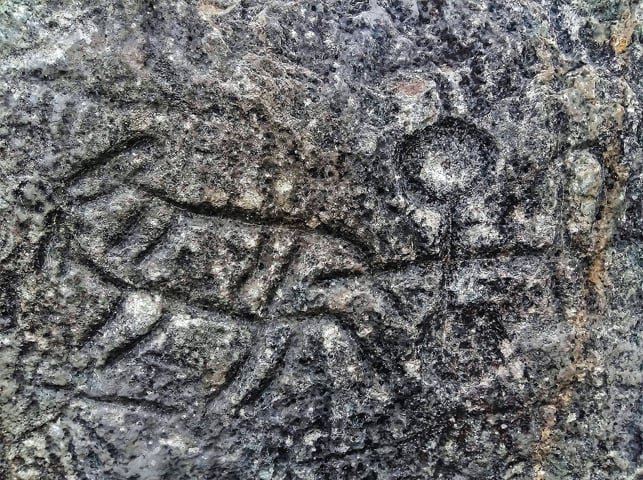
The carvings at Gogdara-1 were made across a long span of time. The earliest phase belongs to the Late Bronze Age, roughly from 1600 BCE onward, when artists engraved large, bold figures of wild animals — above all the ibex, the mountain goat that still roams these hills. A second phase, belonging to the Iron Age, shows carts, herds of horses, riders, and standards or banners — signs of a changing society with new animals, new transport, and perhaps new social organisation. Taken together, the engravings are dated between the Late Bronze Age and the classical period, approximately 1600 to 400 BCE.
Modern scholarship of the site begins with Professor Giuseppe Tucci, the Italian archaeologist and scholar who first explored Gogdara-1 in 1955 during his pioneering exploration of the Swat valley. In 1956 he reported the carved wall at Gogdara I standing over the road. The rock art of Swat — both the engravings at Gogdara and the painted rock shelters of the valley, which Dr Olivieri has called “talking stones from the past” — has since been studied systematically, notably by Luca Maria Olivieri in the 1990s. In recent years, the carvings have been cleaned and documented under the ACT (Archaeological Community Tourism) Field School Project, a joint effort of the Italian Archaeological Mission and the Khyber Pakhtunkhwa Directorate of Archaeology and Museums, which also trains local people as guides.
Just up the road stands a second treasure: the Gogdara Buddha statue boulder, a large rock (about 350 by 230 cm) carved with four seated Buddha figures in white marble-like stone. It belongs to Swat’s later Buddhist centuries — the age of the Gandhara stupas at Butkara and Amluk-dara — and visiting both rocks in one stop lets you see, side by side, Swat’s prehistoric and Buddhist chapters. The Buddha figures are weathered and have suffered damage over the years, which makes the conservation argument for sites like these all the more urgent.
Top Things to Do in Gogdara Rock Carving
Study the Gogdara-1 Carved Wall
This is the main event, so give it real time. The rock is a large panoramic slab, and the engravings reward slow looking: the early phase’s great wild ibex with their sweeping horns, the later phase’s carts and horse herds, the standards that may have been tribal banners, and the 29 figures nobody has identified yet. Bring a pair of binoculars or a camera with a decent zoom — some of the finer lines sit high on the rock face. Visit in the late afternoon if you can; the low sun rakes across the stone and makes the shallow engravings pop out of the surface. As cultural visitors to the site have long noted, every image tells a story: what animals lived here, what transport people used, what objects they decorated their lives with.
Visit the Gogdara Buddha Statue Boulder
A short distance away, on the left side of the main road going toward Mardan and about a minute on foot from the road, stands the Gogdara Buddha boulder with its four seated figures carved into white marble-like rock. It is badly weathered and partially damaged — a sobering sight — but it is a genuine piece of Swat’s Buddhist heritage, carved centuries after the petroglyphs at Gogdara-1. Seeing the two rocks together is like watching 3,000 years of Swat’s religious history in a single afternoon.
Photograph Ancient Stone in Golden Light
Gogdara is a photographer’s site. The contrast of dark carved lines against the pale rock, the mountain backdrop of the Sakhi-sar slopes, and the complete absence of crowds make for atmospheric shots. Early morning and late afternoon give the best raking light. A polarising filter helps cut glare on the stone. If you shoot video, a slow pan across the wall with a voiceover explaining the two phases makes excellent travel content.
Pair It With Swat’s Buddhist Trail
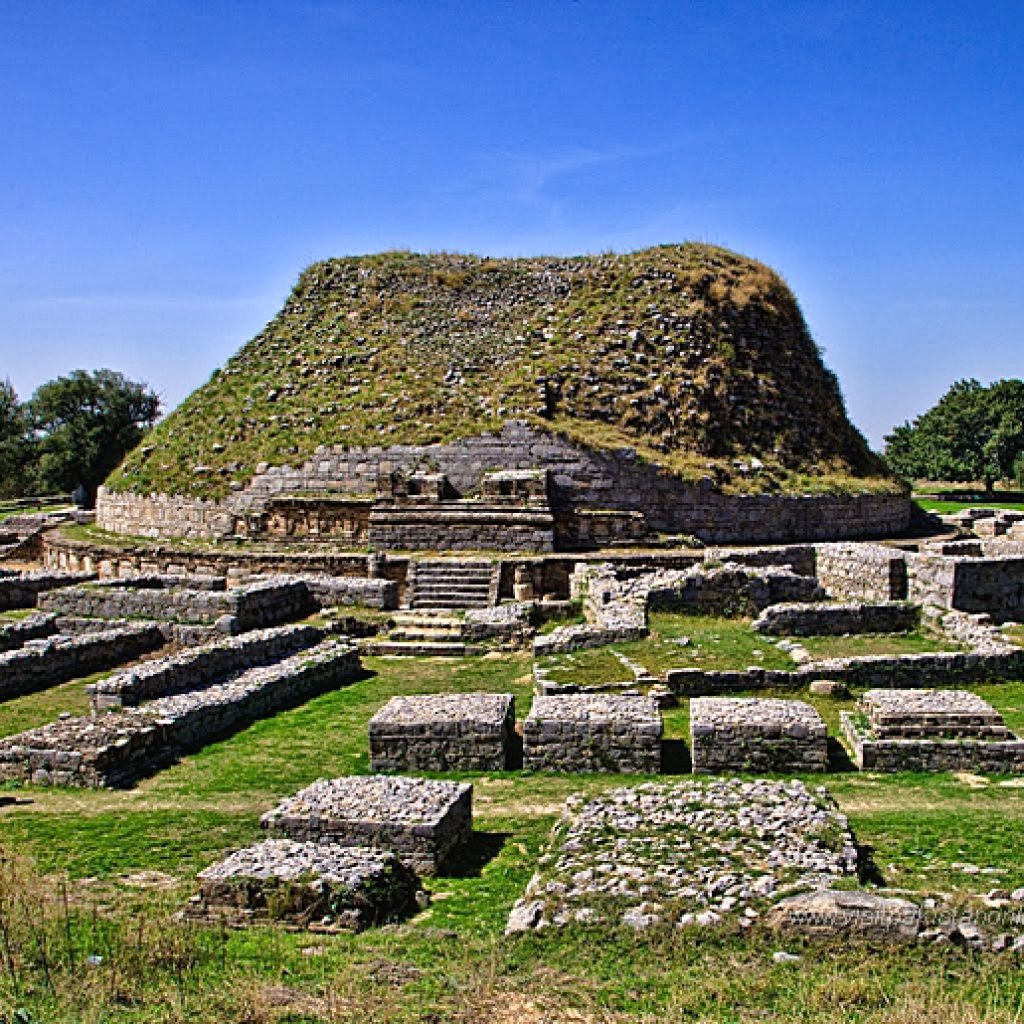
Gogdara works best as part of a wider archaeology day. Combine it with the great Gandhara sites of lower Swat — the stupas of Butkara, the Amluk-dara stupa, and Barikot (ancient Bazira, besieged by Alexander the Great) — and you will have walked from the Bronze Age to the Buddhist age in a single itinerary. The Amluk-dara Stupa and Butkara stupas are both within easy reach, and Barikot’s ancient Bazira adds the Alexander chapter.
Walk the Village and Talk to Locals
Gogdara is a living village, not a fenced site. A short walk around it gives you a feel for rural Swat life — wheat fields, orchards, and the mountain looming above. Local people are used to visitors asking about the “carved rock,” and under the ACT Field School project, community members are being trained as guides. If you find one, take the tour: a local reading of the rock, layered over the archaeology, is the richest way to experience it.
Famous Places In and Around Gogdara Rock Carving
- Swat Museum, Saidu Sharif — the essential companion visit: Gandhara sculptures and artefacts that put the Gogdara carvings in context.
- Butkara Stupas — the great Buddhist monastery complex excavated by the Italian mission.
- Amluk-dara Stupa — a beautifully sited stupa in the hills above the valley floor.
- Barikot (Bazira) — the ancient fortified city associated with Alexander the Great’s campaign.
- Malam Jabba — Swat’s ski resort and summer hill station, about 45 km northeast of Saidu Sharif; see our Malam Jabba guide.
- Marghazar and the White Palace — the former Wali of Swat’s marble palace, 13 km from Saidu Sharif.
- Fizagat Park — a riverside family park near Mingora for an easy evening after your archaeology day.
How to Reach Gogdara Rock Carving
Getting to Gogdara is straightforward because the site sits right on the main Mingora–Peshawar GT Road corridor, at the foot of the Sakhi-sar mountain. From Saidu Sharif or Mingora you drive out toward the GT Road and reach Gogdara village in well under an hour; the carved rock stands a short distance from the road, and the Buddha boulder is about a minute on foot from the main road on the Mardan side. Any car can do this trip — no jeep, no trekking, no special gear.
From Islamabad: Take the M-1 motorway and then the Swat Motorway (M-16) toward Chakdara and Mingora — roughly 240 km and 4 to 5 hours of driving depending on traffic. From Mingora/Saidu Sharif, follow the GT Road toward Peshawar to Gogdara. From Lahore: Drive the M-2 to Islamabad and continue as above — a full day’s drive of about 9 to 10 hours, so most travellers break the journey in Islamabad or Peshawar. From Karachi: Fly to Islamabad (about 2 hours) and drive from there, or take the train to Rawalpindi and continue by road. The nearest airport with regular commercial flights is Islamabad International Airport; Saidu Sharif has a small airport but scheduled services are irregular, so plan on Islamabad.
Road conditions are good year-round on the motorway and the GT Road stretch to Gogdara. In winter, the Swat valley floor rarely blocks, though mountain routes further up (Kalam, Malam Jabba) can see snow — Gogdara itself, at around 1,000 metres, stays accessible. For transport, a private car or a hired car with driver gives the most flexibility; ride-hailing and local taxis cover Mingora and Saidu Sharif, and tour vans from either city can be hired for a half-day archaeology circuit covering Gogdara, Butkara, and the Swat Museum.
Route Details
- Reach Mingora/Saidu Sharif via the Swat Motorway (M-16) from the M-1.
- From Saidu Sharif, join the Mingora–Peshawar GT Road heading west/southwest toward Mardan.
- Drive to Gogdara village at the foot of Mount Sakhi-sar (well under an hour from Saidu Sharif).
- Park near the road; the Gogdara-1 carved wall is a short walk from the road on the mountain side.
- For the Buddha statue boulder, continue to the left side of the main road toward Mardan — about one minute on foot from the road.
- Return the same way; combine with Butkara and the Swat Museum for a full archaeology day.
Where to Stay in Gogdara Rock Carving
Nobody sleeps at Gogdara itself — it is a village site, not a resort — and that is part of its charm. You base yourself in Mingora or Saidu Sharif, both a short drive away, and visit Gogdara as a half-day trip. Mingora is Swat’s commercial hub with the widest range of options: budget guesthouses and small hotels for the economical traveller, and comfortable mid-range hotels with hot water, Wi-Fi, and in-house restaurants for those who want more ease. Saidu Sharif, the administrative capital, is quieter and greener, and hosts some of Swat’s better-known established hotels, including the Serena property, for travellers who want a reliable full-service stay.
For a more immersive option, look for family-run guesthouses around Saidu Sharif and the lower valley, where home-cooked food and local guidance come with the room. Book ahead during the summer peak season (June to August) and on public holidays, when Swat fills up. In the off-season, walk-in rates are usually negotiable, and you will have the sites — and quite possibly the whole of Gogdara — to yourself.
Where to Eat: Local Foods of Gogdara Rock Carving
You will eat in Mingora and Saidu Sharif rather than in Gogdara village, and the food is classic Khyber Pakhtunkhwa. Start with chapli kebab — the minced-beef patty fried with tomatoes, pomegranate seeds, and green chillies that is the province’s signature dish — best eaten hot off the griddle with naan. Lamb lovers should try namkeen gosht or rosh, slow-cooked with little more than salt and its own fat, and the tandoori naan of Swat’s bazaars is worth the trip on its own. Swat’s rivers are known for fresh trout, served fried or grilled at restaurants along the valley; ask for it wherever you see it on the menu.
Finish with kahwa, the green tea brewed with cardamom that is the valley’s default hospitality drink, or a glass of fresh sugarcane juice from a Mingora street cart in summer. Meals here are budget-friendly by Pakistani city standards — a hearty desi lunch for two at a local restaurant costs little, while hotel restaurants charge more for comfort and variety. For food shopping, Mingora’s bazaars sell Swat honey, dried apricots, and walnuts to take home.
Weather in Gogdara Rock Carving
Gogdara sits on the lower Swat valley floor at around 1,000 metres, so its climate is far gentler than the high valleys of Kalam or Malam Jabba. Summers are warm to hot, winters are cool with chilly nights but rarely disruptive snow at the site itself, and spring and autumn are the sweet spots — mild days, clear skies, and the valley at its greenest or most golden. Because the rock art is an open-air site with no shade, avoid the midday summer sun; morning and late-afternoon visits are both cooler and better for photography.
| Season | Temperature Range | Conditions |
|---|---|---|
| Winter (Dec–Feb) | 2–15°C | Cool days, cold nights, occasional frost; valley stays accessible; crisp clear views |
| Spring (Mar–May) | 15–30°C | Mild and green; blossom season; excellent for sightseeing and photography |
| Summer (Jun–Aug) | 28–38°C | Hot at midday; visit the rock early morning or late afternoon; monsoon showers possible |
| Autumn (Sep–Nov) | 15–28°C | Pleasant and dry; harvest colours in the fields; ideal travel weather |
Language and Culture of Gogdara Rock Carving
The valley speaks Pashto — the Yusufzai dialect of the region’s Pashtun majority — with Urdu widely understood in Mingora and Saidu Sharif and English spoken in hotels and among educated guides. The people of Swat are known across Pakistan for their hospitality, and visitors asking about the carved rock are usually met with pride and helpful directions.
Cultural norms are traditional but welcoming. Dress modestly — for women, a shawl or dupatta and covered arms and legs; for men, avoid shorts in the village. Always ask before photographing people, especially women. If you are invited for tea, accept: refusing hospitality can offend. Remember that Gogdara-1 is a fragile archaeological site — do not touch the engravings with oily hands, never chalk or trace over them, and take your litter back to the car. The carvings survived 4,000 years; they deserve to survive your visit.
Shopping in Gogdara Rock Carving
There is no shopping at the rock itself, but Mingora’s bazaars — a short drive away — are among the best in northern KP for handicrafts. Swat is famous for its hand-woven shawls and woollen cloth, its carved wooden furniture and decorative boxes (the woodwork tradition of the valley is appreciated across Pakistan), and its honey, dried fruits, and walnuts. Gemstone dealers in Mingora sell aquamarine and tourmaline from the northern valleys — buy only from established shops and ask for authenticity if you are spending real money. There is no shopping mall at Gogdara, and none is needed: the bazaar experience is the point.
Travel Tips for Gogdara Rock Carving
Packing Essentials
Pack for an open-air archaeology stop, not a trek: comfortable walking shoes with grip (the ground around the rock is uneven), a hat and sunscreen, and at least a litre of water per person — there are no shops at the site. A camera or phone with a good zoom, plus binoculars if you have them, will transform what you can see on the rock face. In winter, bring a warm layer for the morning chill; in summer, the hat and water are non-negotiable.
Safety Tips
Gogdara and the lower Swat valley are firmly on the tourist circuit and welcome thousands of domestic visitors every year. Standard travel sense applies: keep valuables out of sight in the car, carry a charged phone, and let your hotel know your plans if you are heading out alone. The site itself involves no climbing or danger — just watch your footing on loose stones around the rock base. As always in Pakistan’s north, check current travel advisories before a long trip, and prefer daylight hours for driving.
Money & Connectivity
Carry cash for the day: there are no ATMs or card machines at Gogdara village, though Mingora and Saidu Sharif have banks, ATMs, and money changers. Mobile signals from the major networks (Jazz, Telenor, Zong, Ufone) generally work in the lower valley, including around Gogdara, but data speeds vary — download offline maps before you leave Mingora. Hotels in the twin cities offer Wi-Fi of varying quality.
Best Time to Visit Gogdara Rock Carving
Spring (March to May) — The Best Overall
Mild temperatures, green valley, blossom on the fruit trees, and soft light on the rock. This is the finest season for the Gogdara rock carving: comfortable walking weather, clear photography, and the whole of Swat waking up. Combine it with the lower valley’s Buddhist sites before the summer crowds arrive.
Summer (June to August) — Peak Season, Visit Smart
Swat’s peak tourist season means full hotels and busy roads, but Gogdara itself never gets crowded. The trick is timing: see the rock early in the morning or after 4 pm, when the heat eases and the low sun makes the engravings stand out. Carry water and sun protection.
Autumn (September to November) — The Photographer’s Season
Dry, golden, and quiet. The harvest colours in the fields around the village, the crisp air, and the thinning tourist crowds make autumn arguably the most beautiful time to stand in front of 4,000-year-old art. Hotel rates soften after the summer peak.
Winter (December to February) — Quiet and Crisp
Cold mornings, clear views, and near-total solitude. The site stays accessible since the valley floor rarely sees blocking snow, though you should check road conditions after any cold snap. Pair the visit with Malam Jabba’s snow season for a two-mood Swat trip.
Final Thoughts
The Gogdara rock carving is not the kind of place that shouts for attention. It rewards the traveller who slows down — who stands quietly in front of an ibex carved by a hand that turned to dust three millennia ago and feels, for a moment, the thread that connects that hand to their own. In a valley famous for ski slopes and emerald lakes, this humble rock wall is Swat’s deepest story.
If you are planning a Swat trip, give Gogdara half a day. See the prehistoric wall, walk to the Buddha boulder, then let the Swat Museum and the stupas of Butkara and Amluk-dara complete the timeline. You will leave with more than photographs: you will leave with 4,000 years of human history under your skin. For more ideas across the country, browse our Explore Pakistan guides and start planning your next destination.
FAQs
Where is the Gogdara rock carving located?
In Gogdara village near Saidu Sharif, Swat District, Khyber Pakhtunkhwa — at the foot of the northern slopes of Mount Sakhi-sar, a short walk from the Mingora–Peshawar GT Road.
How old are the Gogdara rock carvings?
The engravings date from the Late Bronze Age to the classical period, roughly 1600 to 400 BCE — around 3,000 to 4,000 years old, made before any writing script existed in the region.
What do the carvings depict?
About 117 figures: 71 animals (mostly wild ibex from the earlier phase), 17 objects (carts, horse herds, standards from the later Iron Age phase), and 29 unidentified engravings.
How do I reach Gogdara from Mingora?
Drive the Mingora–Peshawar GT Road toward Mardan to Gogdara village — well under an hour. The carved wall is a short walk from the road; any car can make the trip.
Is Gogdara safe for tourists and families?
Yes. It is a quiet village site on the main road in the tourist-friendly lower Swat valley, suitable for families, students, and elderly visitors — no trekking required.
What is the best time to visit the Gogdara rock carving?
Spring (March–May) and autumn (September–November) offer the best weather and light. In summer, visit early morning or late afternoon to avoid the midday heat on the exposed rock.
Where should I stay when visiting Gogdara?
Base yourself in Mingora or Saidu Sharif, a short drive away, which offer everything from budget guesthouses to comfortable mid-range and full-service hotels.
What else can I see near Gogdara?
The Gogdara Buddha statue boulder (four seated figures) is minutes away; the Swat Museum, Butkara stupas, Amluk-dara stupa, and Barikot (ancient Bazira) are all easy additions to the same day.