Everyone who visits Taxila sees the museum and the famous stupas of Dharmarajika and Jaulian. Almost no one walks the rocky glen southeast of Sirkap where the Giri Buddhist Remains lie hidden in the hills — a 1st to 5th-century monastic complex of stupas, courtyards, and monks’ cells, with a medieval mosque, tomb, and fortress layered on top. If you want to experience Taxila the way the early archaeologists did — as a discovery, not a tour — Giri is the site that will give it to you.
This Giri Buddhist Remains, Taxila travel guide will help you decide whether to add this off-the-beaten-path site to your Taxila journey. If you are a Buddhist heritage enthusiast, a student of Gandhara art, a hiker who likes their history with a walk, or a traveler who has already seen Taxila’s headline sites and wants the deeper story, Giri deserves your visit.
Quick Facts
- Location: Glen of Giri, in the hills southeast of Taxila, Punjab, Pakistan — near the villages of Khuram Paracha and Khuram Gujar
- Altitude: the glen sits in low hills below the Margalla range, a few hundred meters above the Taxila valley floor
- Famous For: 1st-5th century CE Buddhist stupa and monastery remains; medieval mosque, ziarat, and fortress on the same site; one of Taxila’s least-visited archaeological complexes
- Nearest City: Taxila town; Islamabad is around 32 km to the southeast
- Accessibility: reached via Taxila and local roads; the final approach is on foot through the glen — a local guide is strongly recommended
- Known Landmarks: the A-B stupa and monastery, the B-area cell courtyard, the raised C-D-E terrace, the medieval three-domed mosque
- Best For: Buddhist heritage travelers, archaeology enthusiasts, hikers, photographers, and repeat Taxila visitors seeking hidden sites
Why Visit Giri Buddhist Remains, Taxila
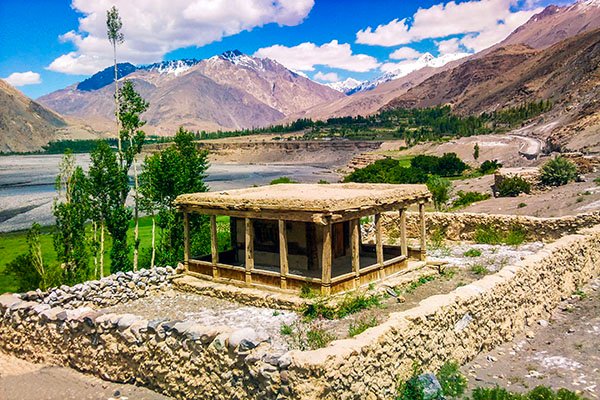
Taxila is a UNESCO World Heritage Site with more than fifty archaeological locations, yet nearly all visitors see the same three or four. Giri is the antidote to the checklist. Set in a secluded, rocky valley — the “Glen of Giri” — about four miles southeast of Sirkap, the complex rewards the traveler who is willing to walk. You will likely have the entire site to yourself: a great dilapidated stupa, monastery courtyards ringed with monks’ cells, and the remains of a medieval Muslim complex, all lying quiet in the hills.
The site’s layered history is what makes it special. Most Buddhist sites give you one era; Giri gives you two. The Buddhist establishment dates from the early Kushan period through the 4th-5th centuries CE, while the same ridge later hosted a fort, a three-domed mosque, a ziarat (tomb), and a madrassa of the medieval period. Standing among the ruins, you can read fifteen centuries of faith and power in a single landscape — Buddhism giving way to Islam, monks’ cells overlooked by a fortress.
For students of Gandhara, Giri fills an important gap. The great Taxila sites — Dharmarajika, Jaulian, Mohra Moradu — show Buddhism at its most monumental. Giri shows it at a more human scale: the courtyards where monks actually lived, the assembly hall where they gathered, the vestibules and cells arranged for daily monastic routine. Combined with a visit to the Taxila Museum, where the region’s sculptures and relics are displayed, Giri turns a Taxila day trip into a genuine education. Our Bhir Mound guide and Badalpur Stupa guide cover more of the valley’s sites for a full itinerary.
Be honest with yourself about the effort involved: Giri is not a drive-up monument. The final approach is a walk through rough terrain, there are no facilities, and you will need a local guide to find the remains and understand what you are looking at. But that is precisely the point — in a country where the famous sites draw crowds, Giri offers the rarest travel experience of all: discovery.
History of Giri Buddhist Remains, Taxila
To understand Giri, you must first understand Taxila. This valley was one of the great urban and intellectual centers of the ancient world — a city at the crossroads of the Silk Road routes linking China, Central Asia, and the West. The earliest settlement traces go back to the late 2nd millennium BCE; the Bhir Mound became the first historic city around the 6th century BCE under the Achaemenians, and Alexander the Great entered Taxila in 326 BCE. Under the Mauryans — tradition holds that the young Ashoka governed here — and later the Indo-Greeks and Kushans, Taxila flourished as a center of learning that the Chinese pilgrim Xuanzang would later describe, and its monasteries made it a destination for Buddhist pilgrims from across Asia.
Giri belongs to the mature Buddhist phase of this story. The monastic establishments in the Glen of Giri date from the early Kushan period through the 4th and 5th centuries CE — the era when, under rulers like Kanishka, Gandharan Buddhism produced its greatest art and Taxila’s monasteries were at their most active. The eastern group of remains contains a stupa on its northern side and a monastery to the south, with chapels between them; the western group mirrors this arrangement. Coins recovered from Taxila’s monasteries — of Azes II, the Kushan kings, and even Sassanian rulers — trace the long commercial and cultural life of these foundations.
What makes Giri historically distinctive is what came after. The same ridge preserves the remains of a fort, a Muslim ziarat, mosques, and a madrassa — structures spanning from the Kushan period to the time of the Mughal emperor Akbar (1556-1605). The Giri complex thus captures the valley’s great religious transition: the Buddhist world that the White Huns shattered in the 5th century, and the Islamic civilization that rose in its place. When Xuanzang visited in the 7th century, he found Taxila’s Buddhist glory already in ruins; the medieval structures at Giri belong to the centuries that followed.
The modern rediscovery of Taxila began in 1863-64, when Sir Alexander Cunningham, founder of the Archaeological Survey of India, identified the ruins with the ancient city. Sir John Marshall then excavated the valley systematically over two decades in the early 20th century, exposing its cities and monasteries. In 1980, UNESCO inscribed Taxila as a World Heritage Site. Giri is protected under Pakistan’s Antiquities Act of 1975 and is owned by the Federal Government — one of the many satellite sites that make the Taxila serial property so rich, and one of the few that still feels like an expedition.
Top Things to Do in Giri Buddhist Remains, Taxila
Explore the A-B Stupa and Monastery
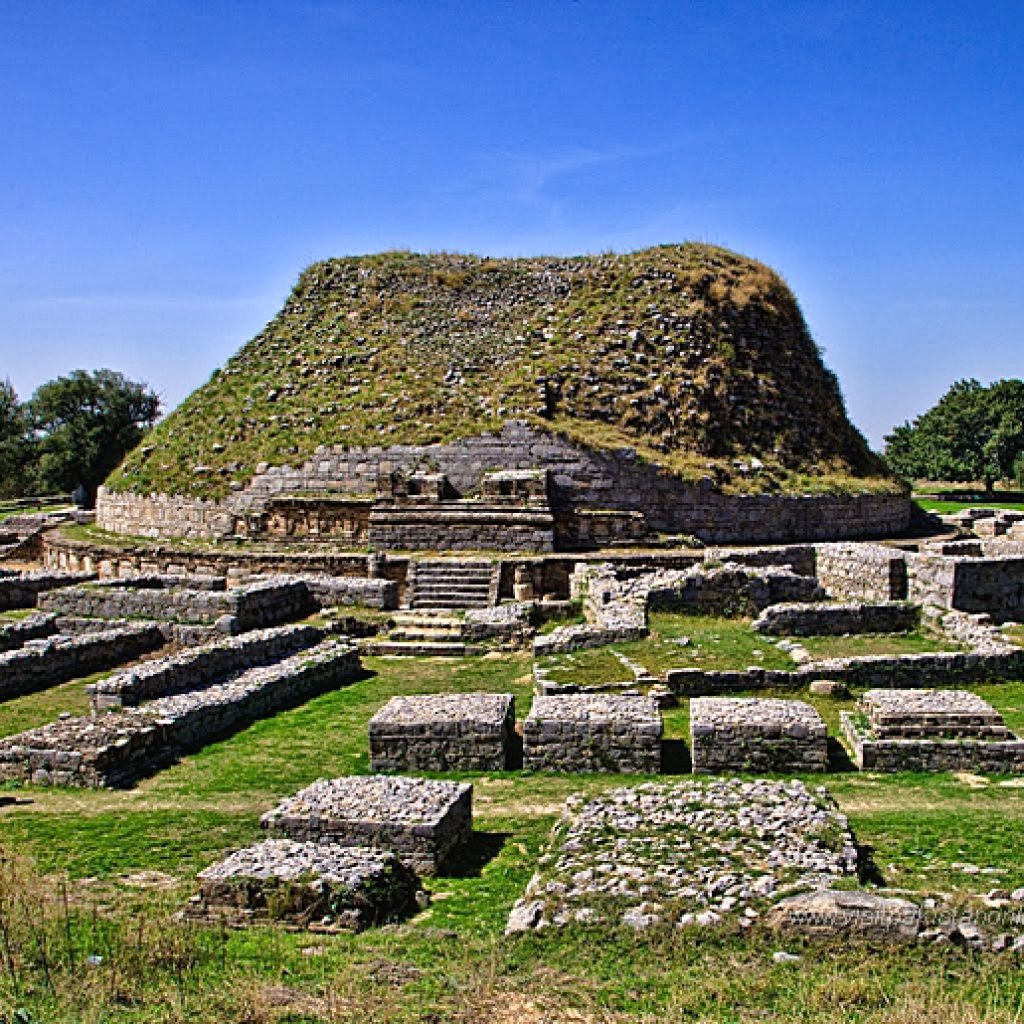
The largest area of the site measures about 110 by 55 meters and holds the complex’s great stupa — now dilapidated but still imposing — alongside a monastery with some twenty rooms. Walk the outline of the stupa’s base and imagine it crowned and gleaming; then step into the monastery area and trace the monks’ daily routes between their quarters.
Stand in the B-Area Courtyard
The better-preserved B area arranges eighteen monastic cells around a central courtyard, with a ruined hall of assembly beside it. This is the most evocative part of Giri: you can stand where the community gathered and look into the small, spare cells where individual monks lived and studied. It is monastic life at human scale.
Climb to the C-D-E Terrace
The second major area sits on a raised terrace with steep slopes falling away to the west and a torrent bed running to the south and east — a naturally defensive, naturally serene position. Its first court centers on a vestibule with eight cells. The climb rewards you with the site’s best views back across the glen.
Find the Medieval Mosque and Ziarat
Seek out the remains of the three-domed mosque, the tomb, and the madrassa of the medieval period, along with the old fortifications. These structures — dating roughly to the 10th-14th centuries — are the reason Giri is more than a Buddhist site: they are the physical evidence of the valley’s second religious age.
Walk the Glen of Giri
The setting is half the experience. The glen is a secluded, rocky valley tucked below the Margalla hills, sheltered from the wind with fresh running water — the same qualities that drew the Buddhist monks fifteen centuries ago. Early explorers described it as a spot “far from the world,” and it still feels that way. Bring water, wear hiking shoes, and allow two to three hours.
Combine with the Taxila Museum
No visit to Giri is complete without the Taxila Museum in town, which houses the sculptures, coins, jewelry, and everyday objects excavated from the valley’s sites. Seeing the museum’s Gandharan Buddhas in the morning and walking the empty monastic courtyards of Giri in the afternoon is the ideal Taxila day.
Famous Places In and Around Giri Buddhist Remains, Taxila
- Taxila Museum: the essential starting point — Gandharan sculpture, coins, and relics from across the valley.
- Dharmarajika Stupa: Taxila’s great 3rd-century BCE stupa, attributed to Ashoka, with surrounding monastery chapels.
- Jaulian Monastery: the best-preserved monastery in the valley, famous for its stucco Buddhas — see our Buddhist heritage guides for context.
- Sirkap: the Indo-Greek planned city with its grid streets, a short distance northwest of Giri.
- Bhir Mound: the earliest historic city of Taxila — our Bhir Mound travel guide covers it in depth.
- Mohra Moradu: another beautifully preserved stupa-monastery complex with remarkable stucco work.
- Khanpur Cave area: Mesolithic caves high in the hills for the prehistory enthusiast.
How to Reach Giri Buddhist Remains, Taxila
Giri is reached via Taxila town. Get yourself to Taxila first, arrange a local guide there (the museum staff or local tour operators can help), and drive toward the villages southeast of Sirkap — the remains lie in the glen near Khuram Paracha and Khuram Gujar. The last stretch is on foot.
Route Details
- From Islamabad (around 32 km, 45-60 minutes): Take the Grand Trunk Road (N-5) northwest through Wah Cantt to Taxila. The road is excellent and the drive is straightforward.
- From Lahore (around 300 km, 4-5 hours): Travel northwest on the M-2 motorway toward Islamabad, exit for Taxila via the GT Road.
- From Karachi (around 1,500 km): Fly to Islamabad — the overland journey is a two-day drive. From Islamabad, Taxila is an easy day trip.
- Nearest airport: Islamabad International Airport, around 40 km from Taxila.
- Local transport: From Taxila town, hire a car or Suzuki to the trailhead near the villages, then walk with your guide. There is no public transport to the glen itself.
The site has no ticket office, no signage, and no facilities — this is raw archaeology. Go in the cool months, carry water and sun protection, and do not attempt the glen alone: a guide is essential both for finding the remains and for understanding the layout of stupas, cells, and medieval structures.
Where to Stay in Giri Buddhist Remains, Taxila
There is no accommodation at the site — you stay in Taxila town or, more comfortably, in Islamabad. Taxila has simple mid-range hotels and guesthouses catering to domestic travelers and school groups. Most international visitors base themselves in Islamabad, which offers everything from luxury hotels to budget guesthouses, and drive the 45 minutes to Taxila for the day. For a heritage-focused trip, two days work well: one for the museum and the headline sites (Dharmarajika, Jaulian, Sirkap, Mohra Moradu), and one for Giri and the lesser-known remains. Book Islamabad accommodation in advance during the spring and autumn tourist seasons.
Where to Eat: Local Foods of Giri Buddhist Remains, Taxila
The Taxila area serves classic Punjabi-Pothohari food: fresh tandoori roti, daal, saag in season, grilled chicken tikka and kebabs, and hearty lentil and vegetable curries at roadside dhabas. The GT Road between Islamabad and Taxila is lined with well-known dhaba stops serving travelers. In Taxila town you will find simple restaurants and sweet shops; for a wider choice, Islamabad’s food streets are 45 minutes away. Carry your own water and snacks for the Giri walk itself — there is nothing to buy at the site. A dhaba meal is very budget-friendly; even a comfortable restaurant lunch costs little.
Weather in Giri Buddhist Remains, Taxila
The Taxila valley shares the climate of the Islamabad-Rawalpindi plains: hot summers, cool winters, and a monsoon spell in July-August. The glen walk is exposed, so the cool months are by far the best for exploring on foot.
| Season | Temperature Range | Conditions |
|---|---|---|
| Winter (Dec-Feb) | 3°C to 18°C | Cool, clear, and ideal for walking the site; carry a warm layer for mornings |
| Spring (Mar-Apr) | 15°C to 32°C | Pleasant and green; the best season for combining Giri with the whole valley |
| Summer (May-Aug) | 28°C to 40°C | Hot, with monsoon humidity in July-August; walk only at dawn if visiting |
| Autumn (Sep-Nov) | 15°C to 33°C | Cooling and clear; October-November excellent for archaeology walks |
Language and Culture of Giri Buddhist Remains, Taxila
The Taxila area speaks Punjabi and Hindko in daily life, with Urdu universal and English understood in tourism contexts. The valley’s culture is Punjabi-Pothohari: hospitable, direct, and proud of the region’s ancient heritage — Taxila’s UNESCO status is a genuine source of local pride. When visiting the medieval mosque and ziarat remains at Giri, show the respect you would at any Islamic site: dress modestly and keep voices low. The Buddhist remains themselves are archaeological rather than active religious sites, but treat them with the same care — do not climb on stupas, move stones, or remove anything. If your guide introduces you to villagers near Khuram Paracha or Khuram Gujar, a greeting in Urdu and a genuine interest in their home goes a long way.
Shopping in Giri Buddhist Remains, Taxila
The Taxila Museum’s souvenir shops are the right place to buy: small Buddha statues, replicas of Gandharan artefacts, replica coins, and books on Taxila’s history. These make meaningful souvenirs directly connected to what you have seen. In Taxila town’s bazaars you will find everyday Punjabi market goods. Avoid buying anything presented as a genuine ancient artefact — the trade in looted antiquities is illegal and destructive, and reputable sellers deal only in replicas. There are no shopping malls attached to this experience; the museum shop is the authentic retail stop.
Travel Tips for Giri Buddhist Remains, Taxila
Packing Essentials
Hiking shoes with ankle support (the glen terrain is rocky and uneven), a hat, sunscreen, at least two liters of water per person, and snacks. A camera with a good zoom helps capture the stupa and terrace details. Carry a small first-aid kit.
Safety Tips
The Taxila area is settled and generally safe for visitors. The main risks at Giri are environmental: heat, dehydration, and uneven ground. Never walk the glen alone — go with a local guide. Inform your hotel of your plans and expected return time.
Money & Connectivity
ATMs and banks are available in Taxila town and Wah Cantt; carry cash for your guide and driver. Mobile signals from all major networks work in Taxila town but may weaken in the glen. Pay your guide in cash at the agreed rate.
Best Time to Visit Giri Buddhist Remains, Taxila
Winter (November to February) — the ideal window
Cool, dry, and clear — perfect for walking the glen and studying the remains without heat stress. This is the season archaeology lovers should target, and it combines beautifully with all of Taxila’s other sites.
Spring (March to April) — the green season
The valley is at its most beautiful, with mild temperatures and green hillsides. An excellent time for a full Taxila itinerary including Giri, the museum, and the headline monasteries.
Summer (May to August) — avoid the midday glen
Temperatures reach 40°C and the exposed walk becomes punishing. If summer is your only option, start at dawn, finish by mid-morning, and spend the afternoon in the air-conditioned museum.
Autumn (September to October) — the second-best choice
Clear skies return after the monsoon, temperatures moderate, and the walking is pleasant again. October is a fine month for Giri.
Final Thoughts
Giri Buddhist Remains will never be Taxila’s most famous site, and that is its gift. While tour buses queue at Jaulian, you can walk a silent glen where monks lived fifteen centuries ago, where a medieval mosque rose among the stupas, and where the Margalla hills still guard the valley the way they guarded the Silk Road. It is Taxila for the traveler rather than the tourist.
Come prepared — with a guide, with water, with curiosity — and Giri will repay you with one of the most atmospheric archaeological experiences in Pakistan. Pair it with the museum and the great sites, and you will leave the valley understanding not just what Taxila was, but how it felt to live, pray, and build here across two thousand years. Our Explore Pakistan collection continues the journey through the country’s ancient heartlands.
FAQs
Where are the Giri Buddhist Remains located?
In the Glen of Giri, in the hills southeast of Taxila near the villages of Khuram Paracha and Khuram Gujar — about four miles southeast of Sirkap, around 32 km northwest of Islamabad.
How old are the Giri Buddhist Remains?
The Buddhist stupa and monastery remains date from the 1st to 5th centuries CE (early Kushan period onward). The site also has medieval structures — a mosque, tomb, madrassa, and fort — from later centuries.
What can I see at Giri?
A large dilapidated stupa with a 20-room monastery (A-B area), a courtyard ringed with 18 monks’ cells and a ruined assembly hall (B area), a raised terrace complex (C-D-E area), and medieval Islamic remains including a three-domed mosque.
What is the best time to visit Giri?
November to February for cool, clear walking weather; March-April is also excellent. Avoid midday visits in the hot summer months.
How do I reach Giri from Islamabad?
Drive the GT Road to Taxila (around 32 km, under an hour), arrange a local guide in town, and continue to the trailhead near Khuram Paracha/Khuram Gujar — the final approach is on foot.
Do I need a guide for Giri?
Strongly recommended. The site has no signage or facilities, and a local guide is essential for finding the remains and understanding the layout of the Buddhist and medieval structures.
Is Giri part of the Taxila UNESCO World Heritage Site?
Yes — Giri is one of the many archaeological sites of the Taxila serial property, inscribed by UNESCO in 1980. It is protected under Pakistan’s Antiquities Act of 1975.
Is Giri suitable for families?
Older children who enjoy walking and history will love the adventure, but the rocky glen walk is not suitable for small children or elderly visitors with mobility issues. The Taxila Museum is the family-friendly alternative.
What should I bring to Giri?
Hiking shoes, sun protection, at least two liters of water, snacks, and a camera. There are no shops or facilities at the site.
Can I combine Giri with other Taxila sites?
Absolutely — allow two days: one for the Taxila Museum, Dharmarajika, Jaulian, Sirkap, and Mohra Moradu, and one for Giri and the lesser-known remains. See our Bhir Mound guide for more.