This Gurdwara Baba Gurbaksh Singh, Nainakot travel guide leads you to one of the most atmospheric Sikh heritage sites in Punjab’s border country — the mansion-like shrine of a descendant of Baba Budha Ji, in a village 24 km from Shakargarh. Inside you will find the history of Baba Gurbaksh Singh and his samadh, what remains of the gurdwara today, how to reach Nainakot from Lahore, Islamabad and Karachi, the best time to visit, nearby places including the Kartarpur corridor, and practical tips for a respectful trip.
Quick Facts
- Location: Eastern side of Nainakot village, about 24 km from Shakargarh tehsil, Narowal District, Punjab, close to the Pakistan–India border
- Altitude: Around 260 m (the flat, fertile Narowal–Shakargarh plain)
- Famous For: The mansion-like gurdwara of Baba Gurbaksh Singh (Ram Kanwar) Ji, a descendant of the revered Baba Budha Ji; its spellbinding prakashasthan of three rooms in a row and the round samadh facing it
- Nearest City: Shakargarh (24 km); Narowal is about 40 km; Lahore about 155 km
- Accessibility: Straightforward road trip — Lahore to Shakargarh is about 2 hours by car, then a 24 km village road to Nainakot. The shrine is on the eastern side of the village, now housing a primary school
- Known Landmarks: The round samadh of Baba Gurbaksh Singh, the 1935 water tank built by the Gurdwara Parbandhak Committee, Government Primary School Nainakot
- Best For: Sikh-heritage pilgrims, history lovers, photographers of old religious architecture, travelers combining a Kartarpur corridor visit with the border countryside
Why Visit Gurdwara Baba Gurbaksh Singh, Nainakot
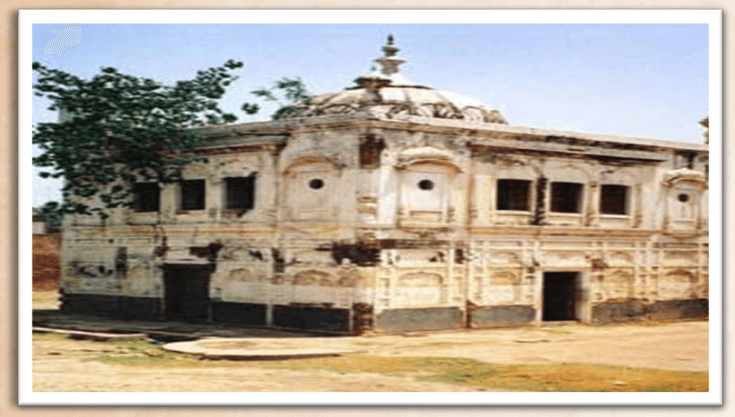
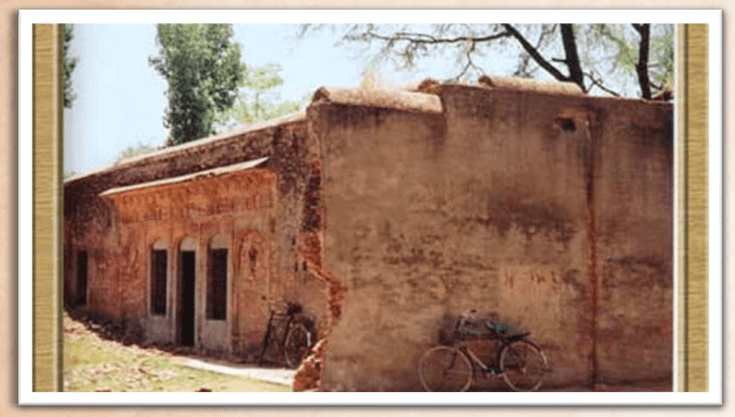
There is a particular kind of magic in places where grandeur has faded but grace remains. Gurdwara Baba Gurbaksh Singh in Nainakot is one of those places. The outer walls of this mansion-like gurdwara have collapsed, yet heritage surveys describe the beauty of its prakashasthan as “spellbinding even today” — three rooms in a row where the scriptures were once read, facing the round samadh of Baba Gurbaksh Singh across the courtyard. If you want to understand what Sikh heritage in the Punjab countryside truly feels like — not the grand, restored monuments, but the village shrines where history breathes — this is the destination to choose.
The human story here reaches back to the earliest days of Sikhism. Baba Gurbaksh Singh (Ram Kanwar) Ji is remembered as the pride of the descendants of Baba Budha Ji — Baba Budha, one of the most revered figures in Sikh tradition, a contemporary and close companion of Guru Nanak himself. A shrine connected to that lineage carries a weight that goes far beyond its village setting. Pilgrims — yatrees — still come here for spiritual satisfaction, even though formal prakash no longer takes place. That quiet, continuing devotion, in a place the world has largely forgotten, is profoundly moving.
Nainakot is also perfectly placed for a bigger journey. It sits in Narowal district, the same district that hosts the world-famous Kartarpur corridor and Gurdwara Darbar Sahib. Pairing a visit to Kartarpur with the lesser-known gurdwaras of the Shakargarh border belt turns a standard pilgrimage into a genuine heritage expedition — one that most travelers never attempt. Add the Ravi River countryside, Shakargarh’s old bazaars, and some of the greenest farmland in Punjab, and you have a road trip with texture, depth and soul.
Finally, visit because places like this need witnesses. A 3,000-acre endowment once supported this shrine; today its walls have fallen and a primary school keeps the rooms in use. Every respectful visit, every photograph, every story told about Baba Gurbaksh Singh’s gurdwara is a small act of preservation. Come in the cool months, walk the village lanes, stand before the round samadh, and let Nainakot add its chapter to your understanding of Punjab’s shared heritage.
History of Gurdwara Baba Gurbaksh Singh, Nainakot
To understand this shrine, you must first understand the name it honors. Baba Budha Ji (1506–1631) was one of the most venerated figures in early Sikh history — a devoted follower of Guru Nanak from childhood who later performed the formal installation ceremonies of several Gurus and is remembered for a lifetime of service and meditation. His descendants remained respected figures in Sikh society, and Baba Gurbaksh Singh (also remembered as Ram Kanwar) Ji is described in heritage records as “the pride of Baba Budha Ji’s descendants” — a man whose sanctity drew the community to this spot in the Shakargarh countryside.
The gurdwara that grew around his memory was built in the manner of a mansion — a large, impressive structure that spoke of the community’s devotion and means. Heritage surveys record that the shrine is set in three rooms built in a row, and that the beauty of the prakashasthan — the place where the Guru Granth Sahib was installed and read — remains spellbinding even after the outer walls have collapsed. Facing these rooms stands the circular samadh of Baba Gurbaksh Singh, built on a platform about one foot above ground level, a beautifully built memorial to the saint. An endowment of 3,000 acres of land was attached to the shrine in its flourishing days, a measure of how significant this institution once was.
The shrine’s later history is written in its additions. In 1935 AD, the Gurdwara Parbandhak Committee, under the leadership of Sardar Bahadur Mahtab Ji, constructed a water tank at the site, standing about five feet above ground level — one of those practical, community-minded improvements that mark a living institution. Then came 1947. With Partition, the Sikh congregation dispersed, formal prakash ceased, and the building entered the long, slow decline that has left its outer walls in ruins.
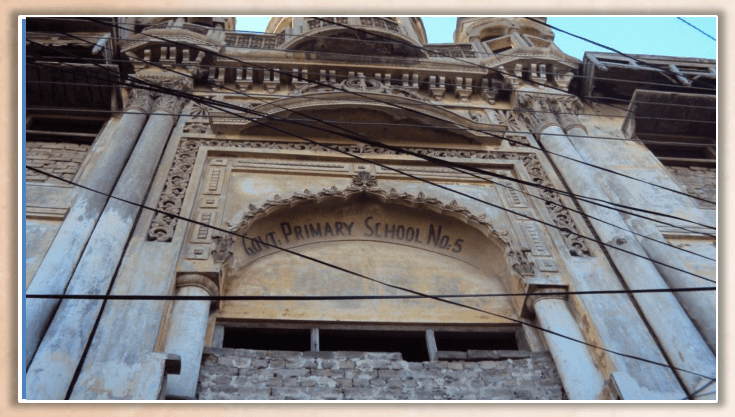
Today, Government Primary School Nainakot functions on the eastern side of the village within the sacred precinct, and schooling continues where scripture was once read. Yatrees still visit and, as the heritage records put it, “get spiritual satisfaction.” The shrine’s story is thus not one of simple loss but of transformation — from a mansion-like centre of devotion with a vast land endowment to a quiet village school that still draws pilgrims. It is a history written in brick, in a round samadh, and in the devotion of those who still make the journey.
Top Things to Do in Gurdwara Baba Gurbaksh Singh, Nainakot
Stand before the three-room prakashasthan
The heart of the shrine is the row of three rooms that housed the prakashasthan. Even in their ruined state, heritage surveys call their beauty spellbinding — take time to stand in the courtyard and read the architecture: the proportions of the rooms, the remnants of detail, the way the space was organized for worship. This is the finest surviving feature of the gurdwara, and it rewards slow looking.
Visit the round samadh of Baba Gurbaksh Singh
Directly facing the shrine rooms stands the circular samadh of Baba Gurbaksh Singh on its low platform. Samadhs — memorials built over the cremation or burial place of revered figures — are among the most evocative structures in the subcontinent’s sacred architecture, and this round form is particularly graceful. Circumambulate it quietly, as pilgrims do.
See the 1935 water tank
Look for the water tank built in 1935 by the Gurdwara Parbandhak Committee under Sardar Bahadur Mahtab Ji, standing about five feet above ground level. It is a modest structure, but it tells a story of community care in the shrine’s last flourishing decade — and it anchors the site’s timeline between its 19th-century origins and Partition.
Walk Nainakot village
Nainakot is described as a big town by local standards, and its lanes give you the real Punjab countryside: wheat and rice fields, village life, warm and curious people. The shrine sits on the eastern side of the village — ask any local for the old gurdwara or the primary school and you will be guided there with pride.
Combine with the Kartarpur corridor
Narowal district is home to Gurdwara Darbar Sahib Kartarpur, the final resting place of Guru Nanak and one of the holiest sites in Sikhism, linked to India by the Kartarpur corridor. A Nainakot–Kartarpur combined trip gives you both the world-famous shrine and the forgotten village gurdwara — the full spectrum of Sikh heritage in this border district.
Famous Places In and Around Gurdwara Baba Gurbaksh Singh, Nainakot
- Gurdwara Darbar Sahib, Kartarpur — Guru Nanak’s final resting place, in Narowal district; the corridor complex is the region’s great pilgrimage destination
- Shakargarh old town and bazaars — the historic tehsil town 24 km away, with old bazaars and a frontier-town character
- Ravi River embankments — picnic and sunset points along the river that waters this whole region
- Narowal city — the district headquarters, with its railway station, colleges and growing urban life
- Border-zone viewing areas — the Shakargarh sector sits close to the international border; the countryside itself, with its watchtowers and border atmosphere, is part of the experience
How to Reach Gurdwara Baba Gurbaksh Singh, Nainakot
Nainakot is an easy road trip from Lahore and a comfortable day trip if you start early. The route runs through some of Punjab’s greenest farmland, and the last stretch from Shakargarh to the village is pure countryside.
- From Lahore: About 155 km via Shakargarh — roughly 2 hours to Shakargarh (about 127–134 km by road) plus about 30–40 minutes for the 24 km to Nainakot. Take the Lahore–Narowal road or the Sialkot–Lahore motorway (M-11) toward Narowal, then the Narowal–Shakargarh road.
- From Islamabad: About 254 km, roughly 4 to 5 hours by road via the motorway network to Lahore/Sialkot and then the Narowal–Shakargarh road.
- From Karachi: About 1,140 km — a very long drive of 16+ hours. Fly to Lahore and drive the rest; this is the only sensible option.
- Nearest airport: Allama Iqbal International Airport, Lahore — about 150–160 km from Nainakot, roughly 2.5 to 3 hours by road.
- Road conditions: The Lahore–Narowal–Shakargarh roads are in reasonable condition; the final 24 km to Nainakot is a village road — fine for cars, slower for large vehicles. In the monsoon (July–September), which is heavy in this border belt, expect muddy patches and drive carefully.
- Transport options: A private car or rented car with driver is ideal. Pakistan Railways runs a daily train between Lahore Junction and Narowal (about 2.5 hours); from Narowal, hire a taxi for Shakargarh and Nainakot. Local vans and wagons also connect Lahore with Narowal and Shakargarh.
Route Details
- From Lahore, head toward Narowal via the Lahore–Narowal road or the M-11 motorway corridor.
- From Narowal, take the Narowal–Shakargarh road (about 39 km) to Shakargarh town.
- From Shakargarh, follow the village road about 24 km to Nainakot.
- The gurdwara and primary school are on the eastern side of the village — ask locally for the old gurdwara; everyone knows it.
Where to Stay in Gurdwara Baba Gurbaksh Singh, Nainakot
Nainakot is a village — there are no hotels here, and that’s part of the plan. Base yourself in Shakargarh, Narowal or Lahore.
- Shakargarh: The tehsil town has basic hotels and guesthouses — simple, affordable, and the closest base to Nainakot (24 km). Fine for a night if you want an early start at the shrine.
- Narowal: The district headquarters offers a wider choice of mid-range hotels with better facilities — a comfortable base for a Kartarpur + Nainakot combined trip.
- Lahore: For full comfort and choice — from budget guesthouses to five-star hotels — stay in Lahore and do Nainakot as a long day trip (about 2 hours each way to Shakargarh). This is what most heritage travelers do.
- Booking tip: Winter (November–March) is the best season and the busiest for Punjab heritage travel — book Lahore hotels ahead, especially on weekends.
Where to Eat: Local Foods of Gurdwara Baba Gurbaksh Singh, Nainakot
This is the Punjab countryside, and the food is classic Punjabi — hearty, desi-ghee-rich, and deeply satisfying after a morning at the shrine.
- Saag and makki di roti — the iconic Punjabi winter combination; in the villages around Shakargarh it’s made the traditional way, with white butter on top.
- Desi chicken and mutton karahi — the dhabas along the Narowal–Shakargarh road do excellent karahi and desi murghi; stop at a busy one and you won’t go wrong.
- Lassi and doodh patti — thick, creamy lassi in the morning and strong milky chai through the day; the roadside dhabas take pride in both.
- Seasonal produce — this is wheat, rice and sugarcane country; in season you’ll find fresh kinnow, guavas and sugarcane juice along the road.
- Costs: Village and small-town Punjab is very budget-friendly. A full dhaba meal costs little, and even a comfortable restaurant meal in Narowal or Shakargarh stays modest. Carry cash — dhabas and village shops don’t take cards.
Weather in Gurdwara Baba Gurbaksh Singh, Nainakot
Nainakot shares the Narowal district climate: hot, humid summers, a heavy monsoon (this border belt gets serious rain), and cool, pleasant winters. The heritage-travel window is November to March.
| Season | Temperature Range | Conditions |
|---|---|---|
| Winter (Dec–Feb) | 4°C to 15°C | Cool and dry; crisp mornings, mild sunny days. Best season for the shrine and village walks. |
| Spring (Mar–Apr) | 15°C to 32°C | Pleasant turning warm; the wheat fields are golden — beautiful countryside. |
| Summer (May–Jun) | 28°C to 42°C | Hot and humid; sightseeing only in early morning or evening. |
| Monsoon (Jul–Sep) | 28°C to 38°C | Heavy rainfall in this border belt; village roads can get muddy — avoid if possible. |
| Autumn (Oct–Nov) | 15°C to 30°C | Cooling and drying; November is lovely and a fine shoulder season. |
Language and Culture of Gurdwara Baba Gurbaksh Singh, Nainakot
Punjabi is the mother tongue here, with Urdu widely understood — you’ll have no trouble communicating in Urdu, and a few Punjabi greetings will open every door. This is the cultural heartland of Pakistani Punjab: warm, direct, hospitable people, strong traditions of respect for saints and shrines of all faiths, and a village rhythm built around the agricultural seasons.
At the shrine, follow standard gurdwara etiquette: cover your head, remove your shoes before entering the inner rooms, dress modestly, and keep your voice low. The site houses a primary school, so be considerate of classes in session — visit in the morning before school starts or in the afternoon, avoid photographing children, and check in with the school staff on arrival. In the village, modest dress is appreciated, and asking before photographing people is essential courtesy.
Shopping in Gurdwara Baba Gurbaksh Singh, Nainakot
Nainakot village has only everyday shops — do your souvenir hunting in Shakargarh or Narowal.
- Shakargarh bazaars — the old bazaars of the tehsil town sell traditional Punjabi jutti shoes, phulkari-style embroidered fabrics, and everyday crafts at very fair prices.
- Agricultural produce — rice, wheat products, desi ghee and seasonal fruit bought directly in this farming belt are excellent quality and cheap.
- No malls: There are no shopping malls in Shakargarh or Narowal — this is traditional bazaar country. Bargain politely; it’s part of the experience.
Travel Tips for Gurdwara Baba Gurbaksh Singh, Nainakot
Packing Essentials
- A head covering for the shrine and modest clothing.
- Comfortable walking shoes — village lanes and the shrine courtyard are uneven.
- Winter: a warm jacket for cold mornings (temperatures can dip to 4°C).
- Monsoon season: rain gear and waterproof footwear if you must travel July–September — though avoiding these months is wiser.
- Sun protection and water for the warmer months; a power bank and camera.
Safety Tips
- Nainakot sits close to the international border — this is a normal, settled farming area, but keep your CNIC/passport with you and cooperate politely at any checkpoints.
- Travel in daylight, especially on the village road from Shakargarh.
- Respect the school: keep noise down and follow staff guidance.
- Check current travel advisories before any border-belt travel, as you would anywhere.
Money & Connectivity
- Carry cash — ATMs are available in Shakargarh and Narowal, but village shops are cash-only.
- Mobile coverage from all major Pakistani networks is generally available; 4G works in the towns. Download offline maps for the village stretch.
Best Time to Visit Gurdwara Baba Gurbaksh Singh, Nainakot
Winter (November to March) — the best season
Cool, dry and comfortable — daytime temperatures of 10–20°C, clear skies, and golden winter light on the shrine’s old brickwork. This is the season heritage surveys themselves recommend, and the only season when the village lanes are a genuine pleasure to walk.
Spring (March to April) — beautiful but warming
The countryside is at its most photogenic with ripening wheat, but temperatures climb fast — go early in the season and start your sightseeing at dawn.
Summer and monsoon (May to September) — avoid
Heat up to 42°C followed by heavy monsoon rain makes this the worst window: uncomfortable sightseeing and potentially muddy village roads.
Autumn (October to November) — the shoulder season
Cooling, drying, and crowd-free — November in particular is an excellent time for a quiet, reflective visit.
Final Thoughts
Gurdwara Baba Gurbaksh Singh, Nainakot, is not a monument you tick off a list — it is a place you feel. The collapsed mansion walls, the three spellbinding rooms of the prakashasthan, the round samadh standing quiet across the courtyard, the schoolchildren’s voices where pilgrims once chanted: this is heritage as a living, breathing, imperfect thing. For anyone tracing the Sikh story of Punjab beyond the famous shrines, Nainakot is essential.
Pair it with Kartarpur, linger in Shakargarh’s bazaars, eat saag and makki di roti at a roadside dhaba, and drive home through the greenest fields in Pakistan as the winter sun goes down. The border countryside doesn’t perform for tourists — it simply is, generously and honestly. Come between November and March, come with respect, and Nainakot will give you one of the most authentic heritage days in Punjab.
FAQs
Where is Gurdwara Baba Gurbaksh Singh, Nainakot?
On the eastern side of Nainakot village, about 24 km from Shakargarh tehsil in Narowal District, Punjab, near the Pakistan–India border.
Who was Baba Gurbaksh Singh?
Baba Gurbaksh Singh (Ram Kanwar) Ji is remembered as the pride of the descendants of Baba Budha Ji — Baba Budha being one of the most revered figures in early Sikh history and a companion of Guru Nanak.
What is the best time to visit Nainakot?
November to March. Winters are cool and dry (4–15°C); summers are hot (up to 42°C) and the July–September monsoon is heavy in this border belt.
How do I reach Nainakot from Lahore?
Drive to Shakargarh via Narowal (about 2 hours, 127–134 km), then 24 km on the village road to Nainakot — about 155 km total. Alternatively, take the daily train from Lahore to Narowal and hire a taxi onward.
Is the gurdwara still used for worship?
Formal prakash no longer takes place, but yatrees (pilgrims) still visit for spiritual satisfaction. The building now houses Government Primary School Nainakot — visit respectfully and check in with the school staff.
Can I combine Nainakot with Kartarpur?
Absolutely — it’s one of the best combinations in Punjab heritage travel. Gurdwara Darbar Sahib Kartarpur is in the same district (Narowal); do Kartarpur and Nainakot over one or two days.
Is the area safe for tourists?
Nainakot is a settled farming village near the border. Keep ID with you, cooperate at checkpoints, travel in daylight, and check current advisories before you go.
Where should I stay and eat?
Stay in Shakargarh (basic hotels), Narowal (mid-range), or Lahore (full choice, day trip). Eat classic Punjabi food — saag, makki di roti, desi karahi, lassi — at dhabas along the Narowal–Shakargarh road.
Find more heritage journeys on our Explore Pakistan page, and explore fellow Sikh-heritage sites in our Ali Baig Gurdwara travel guide and Dera Baba Bhuman Shah travel guide. For a mountain contrast to the plains, see Hunza Valley.