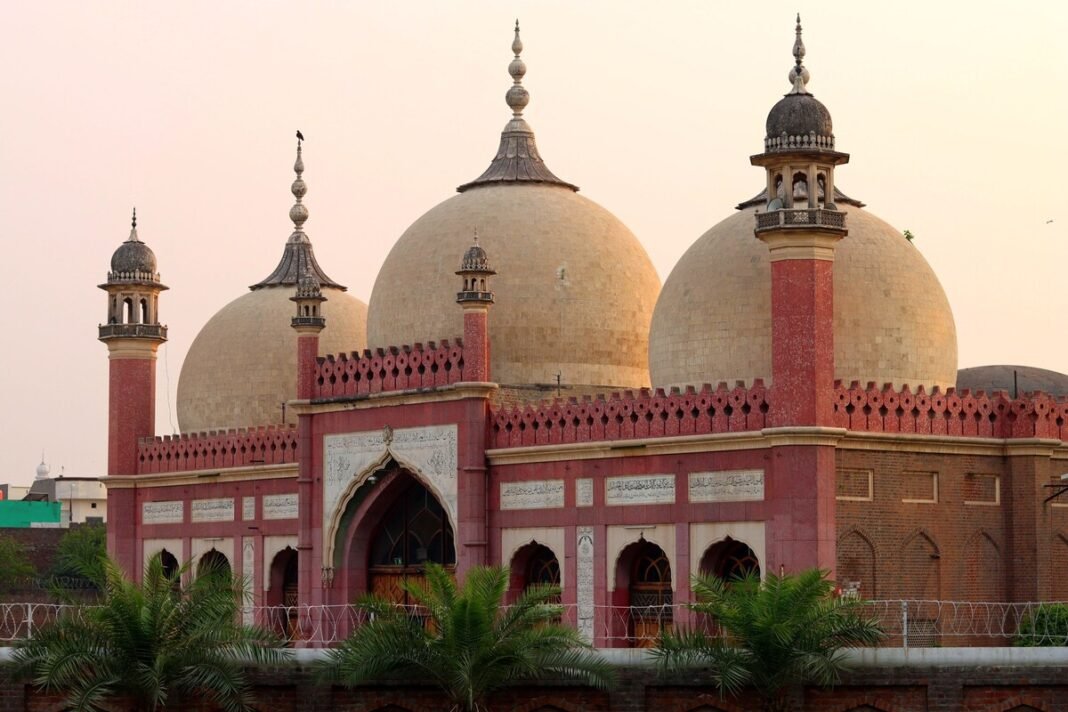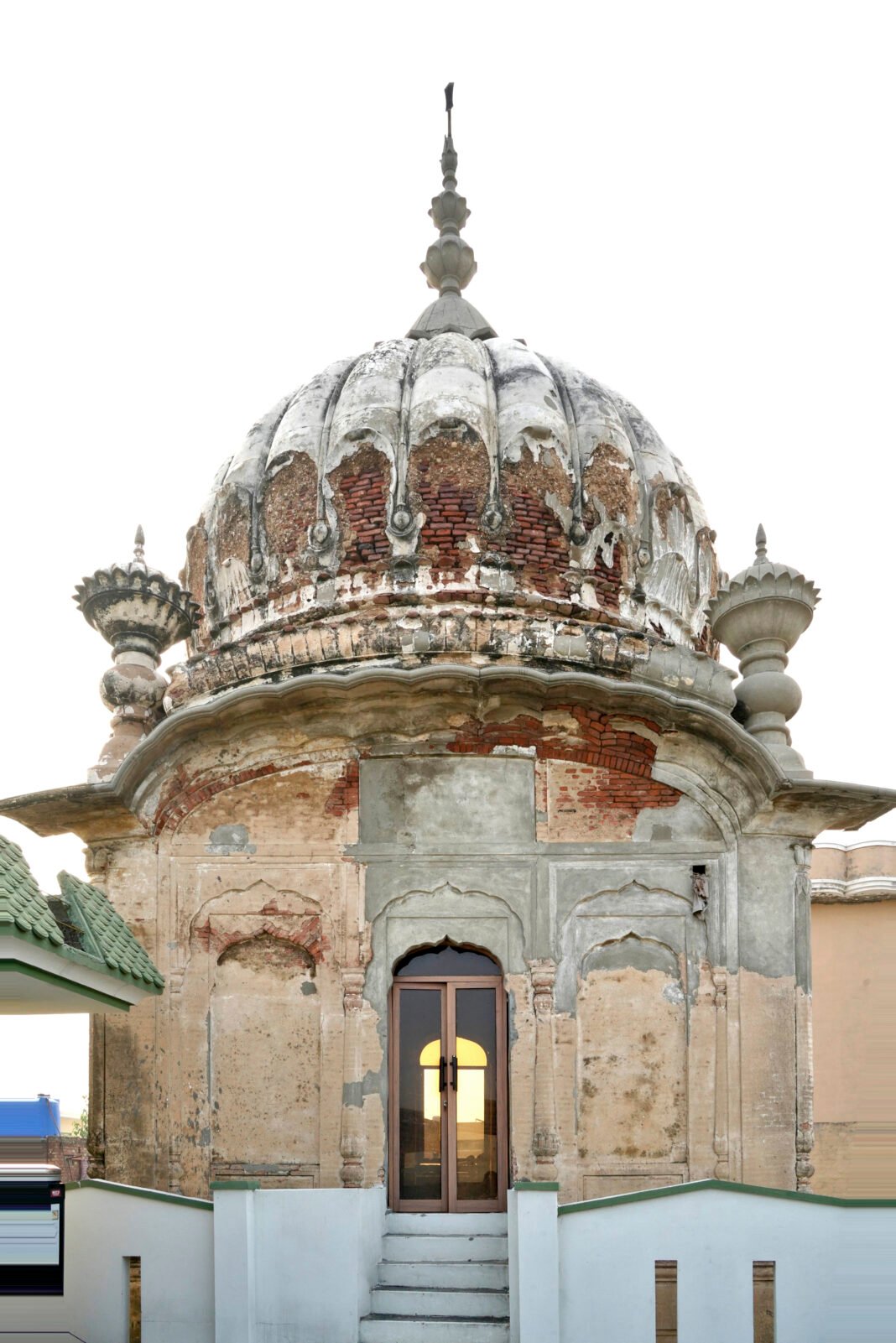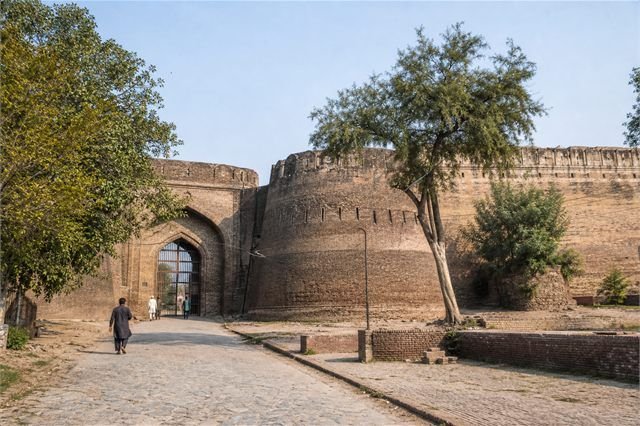
From miles away, across the flat green fields of Sialkot district, one dome rises above everything else. It belongs to a village called Ghalotian Khurd, and it crowns the tallest building in the settlement: the Gurdwara Chhevin Patshahi, raised in honour of Guru Hargobind, the sixth Sikh Guru, who stayed here at a devotee’s earnest request while returning from Kashmir. The shrine’s white marble prakash room has held no prakash since 1947, the building is in danger of collapse, and it is currently used as a marriage hall — yet it still dominates its village the way it has for generations. If you want to see Punjab’s Sikh heritage in its most dramatic and most vulnerable form, all at once, this Gurdwara Chhevin Patshahi, Ghalotian Khurd travel guide will show you the way.
Quick Facts
- Location: Ghalotian Khurd village, 3–4 km off the Gujranwala–Sialkot (Gujranwala–Daska) road, district Sialkot, Punjab, Pakistan; the bus stop is known as Glutian
- Altitude: around 240 metres above sea level (typical of the Sialkot plain)
- Famous For: being the tallest building in the village; its beautiful dome visible from afar; the white marble prakashasthan; Guru Hargobind’s stay at a devotee’s request
- Nearest City: Daska and Sialkot (both a short drive away)
- Accessibility: easy by road — a metalled road leads to the village; tongas and mini-buses serve the area; around 140 km from Lahore via the M-11 motorway
- Known Landmarks: the domed gurdwara at the village’s highest central spot, the white marble prakash room, 13 ghumaon of attached shrine land
- Best For: Sikh pilgrims, heritage photographers, architecture lovers, and travellers exploring Sialkot district
Why Visit Gurdwara Chhevin Patshahi, Ghalotian Khurd
Visit for the silhouette alone. In a landscape of single-storey village homes, the gurdwara’s dome rises like an exclamation mark — visible long before you reach Ghalotian Khurd, exactly as the old surveys describe it. There is something unforgettable about a sacred building that still announces itself across the fields even as it crumbles. Photographers: this is the shot — the dome at dawn or dusk, floating above the village rooftops, is one of the most evocative heritage images in Punjab.
Visit for the story, too. Unlike grand imperial shrines, this gurdwara exists because one devotee asked, earnestly and persistently, and the Guru said yes. Guru Hargobind stayed here on his way back from Kashmir not as a conqueror or a king, but as a guest honouring a follower’s love. That intimacy — a whole shrine born from one person’s devotion — is the beating heart of the Sikh village tradition, and Ghalotian Khurd preserves it in stone.
Visit because the building needs you to. The old surveys warned bluntly that the structure is in such poor condition it could collapse at any moment, and it has since been repurposed as a marriage hall — a practical reuse that keeps the roof over it, but not the reverence within. The white marble prakashasthan, where the Guru Granth Sahib was once enthroned, has seen no prakash since 1947. Every visitor who documents, photographs, and speaks about Ghalotian Khurd adds to the case for its rescue.
And visit because Sialkot district rewards the trip many times over. The historic Sialkot Fort, the city’s world-famous sports goods bazaars, the green banks of the Chenab at Head Marala — all lie within easy reach. Ghalotian Khurd slots perfectly into a Sialkot heritage day, giving you the region’s spiritual history alongside its better-known sights.
History of Gurdwara Chhevin Patshahi, Ghalotian Khurd
The history of this shrine turns on a single, touching episode. In the early 1600s, Guru Hargobind (1595–1644) — the “Chhevin Patshahi,” the Sixth Mastership — was travelling back from Kashmir through the Punjab plains. In the village then called Ghalutian Khurd, a devotee pressed the Guru with solicitous, heartfelt entreaties to stay. The Guru accepted, and halted in the village. That act of devotion became the founding memory of the gurdwara, which was later raised on the highest spot in the centre of the village — the most honoured position the settlement could offer.
The shrine that grew from that memory was a handsome one. Its beautiful dome became the tallest structure in Ghalotian Khurd, visible from a great distance across the flat fields. The prakashasthan — the sanctum where the Guru Granth Sahib is enthroned — was built of white marble, a mark of real investment and reverence. In the Guru’s own time, a banyan tree stood at the site; it is gone now, but its memory survives in the old records. The village assigned 13 ghumaon of land to the gurdwara, securing its upkeep for generations.
For three centuries the shrine served the village’s Sikh community as its spiritual centre. Then came Partition in 1947. The Sikh families left, the prakash was never held again, and the building began its long decline. At some point it was repurposed as a marriage hall — the village’s practical answer to an empty sacred space. The old heritage surveys found the structure in poor and worsening condition, warning that it could collapse at any moment without urgent repair.
Today the gurdwara stands as both landmark and warning: a landmark, because its dome still defines the village skyline; a warning, because without intervention, one of the Sialkot district’s most distinctive Sikh monuments may not survive. It is not currently a functional gurdwara, and visitors should understand they are seeing a heritage building in distress — which makes a respectful, documented visit all the more worthwhile.
Top Things to Do in Gurdwara Chhevin Patshahi, Ghalotian Khurd
See the dome from the fields
Before you even enter the village, stop on the approach road and look: the gurdwara’s dome rising above Ghalotian Khurd is the classic view, and the one the old surveys marvelled at. Early morning or late afternoon light turns it golden. This is the photograph that captures the shrine’s enduring presence.
Visit the shrine at the village’s highest spot
Walk to the centre of the village and climb to the gurdwara’s position — deliberately chosen as the highest ground. From here you can survey the whole settlement and the fields beyond, and understand why the village gave its sacred building the place of honour. Ask permission before entering the building, which is currently used as a marriage hall.
Study the white marble prakashasthan
The white marble sanctum is the architectural jewel of the complex — the room where the Guru Granth Sahib was once enthroned with full ceremony. Even empty and silent since 1947, its craftsmanship speaks of the devotion that built it. Observe respectfully and do not disturb the interior.
Remember the banyan tree
No trace remains of the banyan tree that stood here in the Guru’s time, but knowing it was there changes how you see the site. Sacred trees marked sacred ground across old Punjab; stand where it would have shaded the Guru’s party and the centuries collapse into a single moment.
Explore the village lanes
Ghalotian Khurd is a typical Sialkot-district farming village — buffaloes, wheat fields, and warm Punjabi hospitality. A slow walk, a greeting to the elders, and a cup of tea with a local family will teach you more about the shrine’s place in village life than any guidebook.
Famous Places In and Around Gurdwara Chhevin Patshahi, Ghalotian Khurd
- Sialkot Fort — the ancient fort of Sialkot city, traditionally linked to Raja Man Singh, a short drive away
- Gurdwara Bair Sahib, Sialkot — another historic Sialkot gurdwara of the Sikh tradition: Gurdwara Bair Sahib, Sialkot
- Head Marala — the great Chenab headworks near Sialkot, a popular scenic spot
- Daska — the nearby tehsil town with lively bazaars
- Gurdwara Chhevin Patshahi, Amar Sidhu — the restored Lahore shrine of the same Sixth Guru: Gurdwara Chhevin Patshahi, Amar Sidhu
- Gurdwara Chhevin Patshahi, Buzurgwal — the Gujrat shrine of Guru Hargobind’s Kashmir journey: Gurdwara Chhevin Patshahi, Buzurgwal
How to Reach Gurdwara Chhevin Patshahi, Ghalotian Khurd
Ghalotian Khurd sits on the Gujranwala–Sialkot road; the bus stop is known as Glutian, and the village lies 3–4 kilometres from the main road, connected by a metalled road. Tongas (horse-drawn carriages) and mini-buses serve the area, so even without your own vehicle the last stretch is manageable. Sialkot International Airport is the nearest airport, a short drive away.
From Lahore (around 140 km): take the M-11 Sialkot motorway (about 1.5–2 hours), then the Gujranwala–Sialkot/Daska road to the Glutian stop and the metalled village road.
From Islamabad (roughly 270 km): take the M-2/M-11 route toward Sialkot (about 3.5–4 hours), then local roads to the village.
From Karachi: fly to Sialkot International Airport and drive — the most sensible option by far.
Route Details
- Reach the Gujranwala–Sialkot road (via Daska) from the M-11 motorway.
- Look for the Glutian bus stop on the main road.
- Take the metalled road 3–4 km into Ghalotian Khurd village (tongas and mini-buses ply this stretch).
- Head for the centre of the village and its highest spot — the gurdwara’s dome is unmissable. Ask permission before entering the building.
Where to Stay in Gurdwara Chhevin Patshahi, Ghalotian Khurd
Ghalotian Khurd is a village with no hotels, so stay in Sialkot city, which offers the full range — from well-known business hotels to comfortable mid-range guesthouses — or in Daska for simpler lodgings. Sialkot is the natural base: it puts the gurdwara, the Fort, the sports goods markets, and Head Marala all within easy day-trip range. Gujranwala, on the other side, is another solid option with plenty of hotels. Most visitors fold the village into a Sialkot overnight stay.
Where to Eat: Local Foods of Gurdwara Chhevin Patshahi, Ghalotian Khurd
Sialkot district eats classic Punjabi food done well. In Sialkot city, try the local breakfasts — halwa puri, siri paye, and thick lassi — and the standard dhaba favourites: chicken karahi, daal fry, and tandoori roti. Daska’s bazaars have good, cheap eateries popular with locals. In the village itself, options are limited to small shops, so carry water and snacks, and consider an invitation to a villager’s home for doodh patti the highlight of your day. As ever in Punjab, a full dhaba meal is very budget-friendly.
Weather in Gurdwara Chhevin Patshahi, Ghalotian Khurd
Ghalotian Khurd shares the Sialkot plain’s climate — among the wetter parts of Punjab, with a proper monsoon and cool, sometimes foggy winters. The shrine visit is entirely outdoors, so time it for comfort.
| Season | Temperature Range | Conditions |
|---|---|---|
| Winter (Dec–Feb) | around 4–18°C | Cool with foggy mornings; clear, pleasant afternoons. Best season. |
| Spring (Mar–Apr) | around 15–32°C | Warm, green, and lovely; excellent for the trip. |
| Summer (May–Jun) | around 30–43°C | Hot; plan early-morning visits. |
| Monsoon (Jul–Aug) | around 27–36°C | Heavy rains — Sialkot gets some of Punjab’s highest rainfall; fields vividly green. |
| Autumn (Sep–Nov) | around 17–34°C | Comfortable and clear; fine for photography. |
Language and Culture of Gurdwara Chhevin Patshahi, Ghalotian Khurd
Punjabi is the village’s mother tongue, with Urdu universally understood. Sialkot district’s culture blends farming traditions with the city’s famous industrial energy — people are direct, hospitable, and proud of their region. At the shrine, remember it is currently used as a marriage hall: be extra courteous, ask before entering, avoid visiting during wedding functions, and never disturb the structure, which is fragile. Cover your head and dress modestly as you would at any gurdwara; the sanctity of the place endures even in its altered state.
Shopping in Gurdwara Chhevin Patshahi, Ghalotian Khurd
Do your shopping in Sialkot city, world-famous for sports goods and surgical instruments — factory outlets and bazaars sell footballs, cricket gear, and quality leather goods at excellent prices. The city’s bazaars also offer traditional Punjabi suits, khussas, and everyday goods. Daska’s markets cover daily needs at village prices. There is no shopping mall in Ghalotian Khurd itself; Sialkot city’s malls and markets handle everything else. A Sialkot-made football or cricket bat makes a genuinely local souvenir.
Travel Tips for Gurdwara Chhevin Patshahi, Ghalotian Khurd
Packing Essentials
A headscarf, sun protection, drinking water, snacks, and sturdy shoes for uneven village ground. Bring a camera with a zoom lens — the dome-from-the-fields shot rewards it. In winter, a warm layer for foggy mornings.
Safety Tips
The area is generally safe, but the building itself is fragile: do not climb on it, lean on walls, or enter any section that looks unstable. Visit in daylight, and be considerate if a wedding function is using the hall — come back later rather than intruding.
Money & Connectivity
Carry cash; the village has no ATMs (Sialkot and Daska do). Mobile signals from all major networks are generally good in this well-populated district. Cards work in Sialkot city’s larger shops and hotels.
Best Time to Visit Gurdwara Chhevin Patshahi, Ghalotian Khurd
Winter (November to February) — the sweet spot
Cool, clear days with the best light for photographing the dome. Morning fog usually burns off by mid-morning — time your arrival accordingly.
Spring (March–April) — beautiful
Mild temperatures and green fields make this the prettiest season; an excellent alternative to winter.
Summer and Monsoon (May–August) — challenging
Heat followed by Sialkot’s famously heavy monsoon rains. The landscape is at its greenest, but travel is uncomfortable and the village tracks can get muddy.
Autumn (September–October) — good
Pleasant, clear weather returns; a calm, crowd-free window for a reflective visit.
Final Thoughts
Ghalotian Khurd’s gurdwara is a paradox: the tallest building in its village and one of its most endangered; a monument to a devotee’s love and a marriage hall; silent since 1947 yet still visible for miles. It condenses the whole story of Punjab’s village Sikh heritage into a single skyline — devotion, grandeur, loss, and stubborn survival.
Go and see it before the warning in the old surveys comes true. Photograph the dome from the fields, stand quietly in the marble sanctum, and carry the story home. For more of Punjab’s spiritual heritage, explore our Explore Pakistan collection — and if you want the full Sixth Guru trail, our Amar Sidhu guide shows you the shrine that has just come back to life.
FAQs
Where is Gurdwara Chhevin Patshahi, Ghalotian Khurd located?
In Ghalotian Khurd village, 3–4 km off the Gujranwala–Sialkot (Daska) road in Sialkot district, Punjab. The bus stop is known as Glutian.
What is the best time to visit?
November to February for cool, clear weather and the best photography light; March–April is also excellent.
How do I reach Ghalotian Khurd?
From Lahore take the M-11 motorway to Sialkot (around 140 km), then the Daska road to the Glutian stop and the metalled village road. Sialkot International Airport is nearest.
Is the gurdwara still functional?
No — no prakash has been held since 1947, and the building is currently used as a marriage hall. It is in poor condition and needs urgent repair.
Is it suitable for families?
Yes, as a short stop on a Sialkot day trip; the building is fragile, so supervise children closely and do not enter unstable areas.
Where can I stay?
Sialkot city has the full range of hotels; Daska has simpler options. Most visitors come as a day trip.
What food should I try?
Sialkot’s halwa puri breakfasts, siri paye, lassi, and dhaba karahi — all hearty and budget-friendly.
Why is the dome so famous locally?
It is the tallest building in Ghalotian Khurd, visible from far across the fields — the village’s defining landmark for generations.