Right in the middle of Lahore — on Temple Road in the old neighborhood of Mozang, between the traffic and the tea stalls — stands a doorway into 1619. Gurdwara Chhevin Patshahi in Mozang is where Guru Hargobind, the sixth Sikh Guru, stayed during his historic visit to Lahore, and where, in one of the most beloved episodes of his life, he asked his devoted follower Bibi Kaulan to ride his horse. Unlike its ruined sister shrines in the Burki villages, this one is alive: its doors are open to the sangat every day, its building carries the layers of Ranjit Singh’s Lahore and a 1926 rebuilding, and a sacred peepal tree still marks where the Guru is said to have tied his horse. If you are visiting Lahore and want one stop that connects the city’s Mughal, Sikh and colonial layers in a single courtyard, this gurdwara chhevin patshahi mozang travel guide is your starting point.
Quick Facts
- Location: Temple Road, Mozang, Lahore, Punjab, Pakistan — in the old city neighborhood between Chauburji and the lower Mall area
- Altitude: Around 217 metres (the Lahore plains level)
- Famous For: Guru Hargobind’s stay in Lahore in 1619; the episode of Bibi Kaulan riding the Guru’s horse; a shrine whose doors are always open to the sangat
- Nearest City: Lahore itself — the gurdwara is inside the city
- Accessibility: Easy — city roads, reachable by car, rickshaw, ride-hailing or even on foot from nearby old-city areas
- Known Landmarks: The 1926 gurdwara building, the sacred peepal tree, the nine endowed shops within the complex
- Best For: Everyone — Sikh pilgrims, history lovers, families, photographers, and any Lahore visitor who wants the city’s Sikh layer without leaving town
Why Visit Gurdwara Chhevin Patshahi, Mozang
The first reason is pure convenience married to deep history. Of all the Chhevin Patshahi shrines around Lahore — the collapsed tower at Minhala, the restored dome at Padhana, the vanished darbar at Rampur Khurd — Mozang is the one you can visit between breakfast and lunch without leaving the city. And it is not a ruin or a reconstruction: it is a living shrine, with a daily congregation and doors that the surveys describe as ever open to the sangat. You walk in off a busy Lahore street and step into a continuous four-hundred-year-old tradition. That contrast — rickshaws outside, stillness inside — is worth the trip on its own.
The second reason is the story, and it is a beautiful one. In 1619 Guru Hargobind came to Lahore with Diwan Chandu, and it was here, at this spot in Mozang, that he asked Bibi Kaulan — remembered in the shrine’s tradition as a devoted lover of the Guru, a “Gur Premi” — to mount and ride his horse. In the Sikh telling, the gesture was an honor of extraordinary intimacy: the Guru’s horse was no ordinary animal, and to ride it was to be publicly claimed as his own. The episode has been retold in the village-level histories for centuries, and standing in the courtyard where it happened gives the old words a physical address. Pilgrims still come to this spot precisely because the story feels personal rather than monumental.
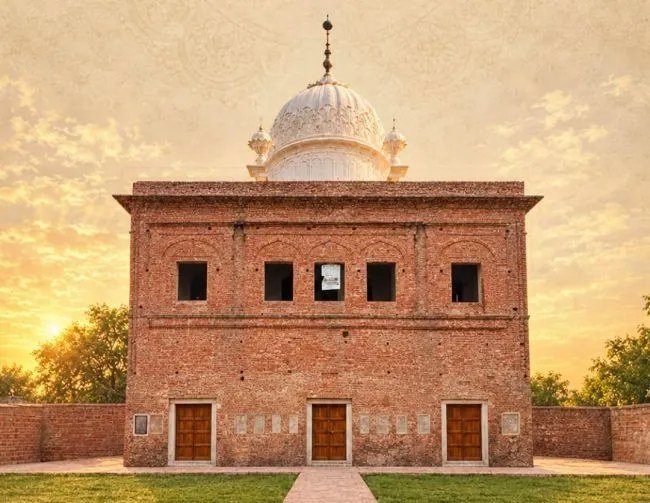
The third reason is the building itself, which is a document of Lahore’s layered past. The first structure here was raised by Maharaja Ranjit Singh, the Sikh ruler whose capital this city was; the present building dates to 1926, erected through the generosity of Sardar Mehar Singh; the Shiromani Gurdwara Parbandhak Committee maintained it from 1927 until Partition in 1947; and today it rests in the custody of the government endowment authorities, with nine shops inside the complex still endowed to its upkeep. To read those layers — empire, community, partition, state — in one modest building is to read the last two centuries of Punjab in miniature. Architecture students and history obsessives will find more here than in many grander monuments.
Finally, come for the completeness of the Lahore day it enables. Mozang sits within easy reach of the walled city’s greatest hits: Chauburji’s Mughal gateways a short drive away, the Badshahi Mosque and Lahore Fort to the north, Anarkali’s bazaars for the afternoon. Slot the gurdwara into a heritage day and you get the one thing most Lahore itineraries miss — the city’s Sikh chapter, told at the exact spot where the sixth Guru once tied his horse under a peepal tree that, by local tradition, still stands.
History of Gurdwara Chhevin Patshahi, Mozang
The year 1619 is the hinge of this shrine’s history. Guru Hargobind, then in the prime of his long guruship, came to Lahore — the Mughal provincial capital, and the city where his father Guru Arjan had been martyred thirteen years earlier — in the company of Diwan Chandu, the imperial official whom Sikh tradition holds responsible for that martyrdom. The meeting of the Guru and the Diwan at Lahore was, in the words of the shrine histories, a memorable encounter with far-reaching consequences for the Sikh relationship with the ruling power. It was during this Lahore stay that the Guru lodged at the spot now marked by the Mozang gurdwara, and it was from here that he asked Bibi Kaulan, his devoted follower, to ride his horse — the episode that gives the shrine its intimate, personal character in Sikh memory.
For two centuries the spot was remembered rather than built upon in any grand way. The first proper building came with Maharaja Ranjit Singh, who raised the initial structure of the sacred place during the Sikh Empire’s rule from Lahore. Then, in 1926 — through the courtesy and generosity of the late Sardar Mehar Singh, as the shrine histories record — the gurdwara was shifted into its present building, the one visitors see today. From 1927 to 1947 the Shiromani Gurdwara Parbandhak Committee remained in charge of its maintenance, the daily congregation was held, and nine shops inside the gurdwara building were endowed to support it — a classic piece of community economics that kept the shrine self-sustaining.
Partition in 1947 changed the shrine’s world without closing its doors. The Sikh sangat of Mozang migrated east, and the gurdwara passed into the custody of the Waqf/endowment authorities, as did Sikh shrines across Pakistan. But unlike the village shrines of the Burki belt, which emptied and decayed, the Mozang gurdwara remained in the middle of a great city — and the city kept it alive. The tradition of the Akhand Path, the complete continuous recitation of the Guru Granth Sahib, is still performed here on the birth anniversary of Guru Hargobind, and the surveyors’ line about this place remains its best description: its doors are ever open for the sangat.
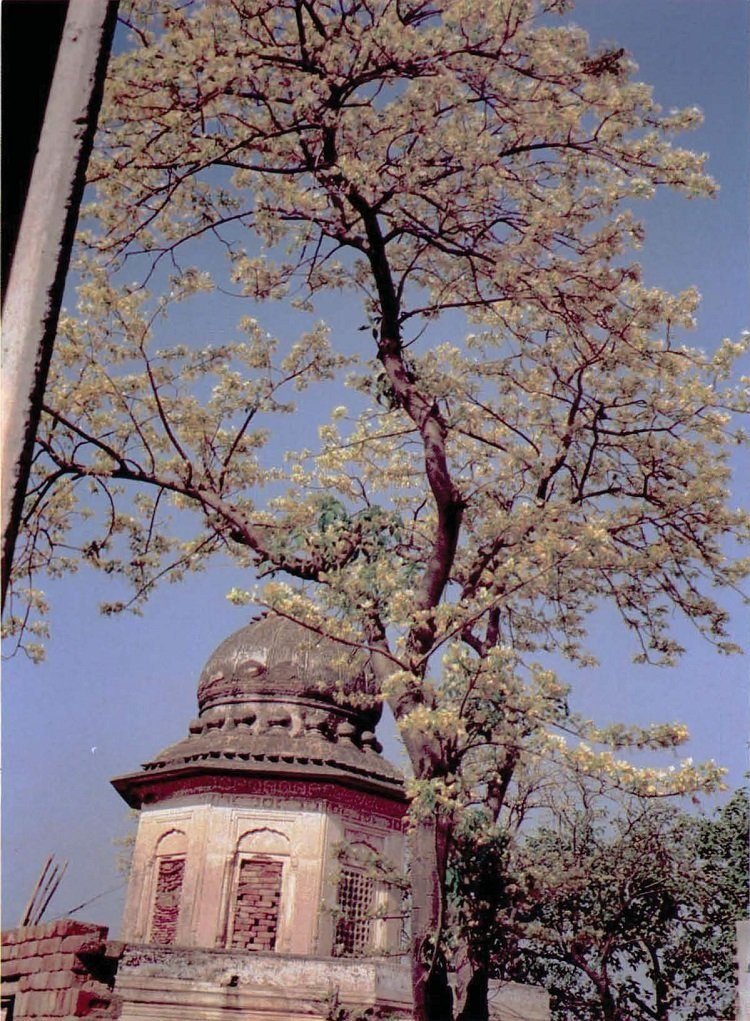
One more thread of the history deserves mention: the sacred peepal tree. Local tradition holds that Guru Hargobind rested under a peepal at this spot and tied his horse to it, and the tree is still pointed out to visitors as a living witness to 1619. Whether the present tree is the original or a descendant planted in its place, the tradition itself is old — and in a shrine whose power has always been personal rather than architectural, the tree may be the most eloquent relic of all.
Top Things to Do in Gurdwara Chhevin Patshahi, Mozang
Enter the Courtyard and Read the Signboard
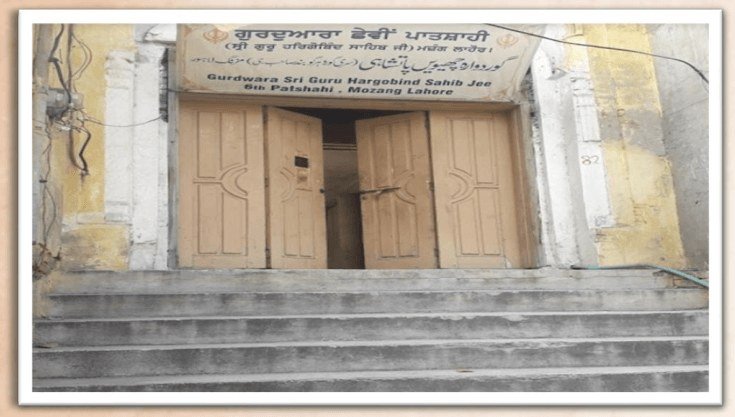
Begin at the entrance on Temple Road, where the signboard — in Gurmukhi, Urdu and English — announces “Gurdwara Sri Guru Hargobind Sahib Jee, 6th Patshahi, Mozang Lahore.” Climb the worn steps and take in the facade: the 1926 building wears its age plainly, and that plainness is the point. This is not a showpiece; it is a working shrine. Cover your head, remove your shoes at the designated spot, and step inside with the quiet that the darbar hall asks of you.
Sit in the Darbar Hall
The prayer hall is the living heart of the shrine. If you time your visit for the morning or evening, you may catch kirtan — the devotional hymn-singing — or simply the peaceful rhythm of individual prayer. Sit for a while even if the hall is empty; the proportions of the 1926 interior, modest and human-scaled, make it easy to feel the continuity with the congregation that has gathered here daily for a century. Remember the etiquette: sit cross-legged or kneeling, never point your feet toward the Guru Granth Sahib, and keep your head covered throughout.
Find the Sacred Peepal Tree
Ask the granthi or any regular about the peepal tree, and you will be shown the spot where tradition says Guru Hargobind tied his horse in 1619. Stand under it for a moment and think about what this courtyard looked like four hundred years ago — an open camping ground on the edge of the Mughal city, the Guru’s retinue, Bibi Kaulan being helped onto the horse. The tree turns an abstract history lesson into something you can touch.
Walk the Temple Road Neighborhood
Mozang itself is worth an hour on foot. Temple Road and its surrounding streets are old Lahore at its most lived-in: shrines, mosques, churches and temples sharing the same blocks (the road’s name is no accident), street vendors, old havelis with carved wooden balconies slowly surrendering to time. It is a reminder that Lahore’s religious layers were never segregated into museums — they grew up side by side, and in Mozang they still do.
Time a Visit for the Akhand Path
If your dates align with the birth anniversary of Guru Hargobind in mid-June, the gurdwara holds its annual Akhand Path — the complete, continuous recitation of the scripture over several days, ending in communal prayer. It is the shrine’s great annual gathering and the single best time to see it in full devotional use. One honest caveat: mid-June in Lahore is ferociously hot, so plan accordingly with early-morning visits, water, and shade.
Famous Places In and Around Gurdwara Chhevin Patshahi, Mozang
Chauburji — the four-towered Mughal gateway, minutes away, glowing at sunset.
Badshahi Mosque and Lahore Fort — the city’s Mughal crown jewels, a short drive north.
Anarkali Bazaar — one of South Asia’s oldest markets, perfect for an afternoon’s wander.
Gurdwara Baoli Sahib, Rang Mahal — Guru Arjan’s lost stepped well in the walled city, the great “detective story” shrine.
Gurdwara Bhai Buddhu Da Awa, Lahore — another historic Lahore gurdwara for the Sikh-heritage circuit.
Gurdwara Chhevin Patshahi, Padhana — the restored village shrine east of the city, for the full Sixth Master trail.
How to Reach Gurdwara Chhevin Patshahi, Mozang
This is the easiest of the four Chhevin Patshahi shrines to reach, because it sits inside Lahore itself. Temple Road runs through Mozang in the older part of the city, roughly between Chauburji and the Sant Nagar side — any Lahore taxi or ride-hailing driver knows Mozang, and “Temple Road gurdwara” will get you to the door. From central Lahore (say, Gulberg or the Fort area) it is a 15–30 minute drive depending on traffic; from DHA or Bahria Town, allow 30–45 minutes.
Coming from farther afield: from Islamabad, take the M-2 motorway to Lahore — about 375 km, four to five hours — then navigate the city to Mozang. From Karachi, the road journey is roughly 1,360 km via the M-9 and M-2, a two-day drive for most people; flying into Allama Iqbal International Airport (LHE) is the sensible option, and the airport is about 18–22 km from Mozang, roughly 35–50 minutes by car. Within the city, ride-hailing apps, auto-rickshaws and Qingqis all serve Temple Road; parking a private car on the narrow street can be tight, so consider parking on a main road and walking the last stretch. Road conditions are city-standard year-round — this is one heritage site where the monsoon will not strand you.
Route Details
From anywhere in Lahore: Navigate to Mozang / Temple Road (near Chauburji). The gurdwara’s entrance, with its trilingual signboard, faces the street — look for the steps and the gate rather than a dome, since the building sits flush with the street frontage.
From Islamabad: M-2 to Lahore, exit toward the city center, and follow Multan Road or the Ring Road to the Chauburji/Mozang side. Total: about 375 km.
From Karachi: Fly to Lahore (1.5 hours) and drive 35–50 minutes from the airport; or drive the ~1,360 km motorway route with an overnight halt.
Best transport option: A ride-hailing car for door-to-door ease, or a rickshaw for the full old-Lahore flavor. If you are doing a full heritage day (Mozang, Chauburji, Fort, Badshahi Mosque, Anarkali), hire a car with driver for the day.
Where to Stay in Gurdwara Chhevin Patshahi, Mozang
Stay in Lahore — the gurdwara is in the city, so the entire city’s accommodation is your oyster, and Mozang itself is a short hop from most of it. The luxury tier is anchored by the grand old names on and around Shahrah-e-Quaid-e-Azam: the Pearl-Continental and the Avari, both decades-old Lahore institutions with the pools, gardens and breakfast spreads to match. For a heritage-flavored stay, look at the boutique guesthouses and restored havelis in and around the walled city — waking up inside old Lahore, with the Fort Road Food Street a walk away, is an experience in itself.
The mid-range sweet spot — comfortable business hotels and serviced guesthouses with parking and Wi-Fi — clusters along Main Boulevard Gulberg, in Model Town and across DHA; these put you 20–35 minutes from Mozang in normal traffic and close to the city’s modern restaurants and malls. Budget travelers will find simple, clean guesthouses around the railway station, in Ichhra and near Data Darbar; they are basic but perfectly serviceable for a heritage-focused trip. Wherever you sleep, plan the Mozang visit for the morning, when the light is soft, the streets are calmer, and the shrine is at its most peaceful.
Where to Eat: Local Foods of Gurdwara Chhevin Patshahi, Mozang
Mozang sits in one of Lahore’s great food neighborhoods, so eat well and eat locally. Within walking and short-rickshaw distance you are in the orbit of Lakshmi Chowk — the city’s legendary late-night grill strip — and the old-city breakfast circuit. The Lahori canon applies in full: nihari slow-cooked overnight, paye with fresh naan, halwa puri with lassi for the classic sweet-savory breakfast, and in winter, sarson da saag with makki di roti. Street snacks — samosas, pakoras, dahi bhallay, gol gappay — are everywhere and cost very little; a full street-food graze is one of the cheapest great meals in Pakistan.
For the sit-down experience, Fort Road Food Street pairs Mughlai grills and karahis with a floodlit view of the Badshahi Mosque — touristy, yes, but the view earns it — while Gawalmandi’s old eateries serve the food Lahoris actually grew up on. Everything in this tier is budget-friendly by any international standard; even a generous dinner for two at a proper restaurant rarely strains the wallet. One note of etiquette: the gurdwara itself does not run a public langar for casual visitors on ordinary days, so do not arrive expecting a meal — arrive fed, or plan to eat before or after in the neighborhood, which is half the fun anyway.
Weather in Gurdwara Chhevin Patshahi, Mozang
Lahore’s weather needs no introduction to Pakistanis, but visitors from cooler places should take it seriously: the city does winter beautifully, spring briefly, and summer like a furnace. Because the Mozang gurdwara is a city visit — mostly indoors or in a shaded courtyard, with food and bazaars around it — the weather matters less here than at the village shrines. Still, November to March is the golden window for combining the shrine with old-city walking.
Lahore — approximate seasonal weather:
| Season | Temperature Range | Conditions |
|---|---|---|
| Winter (Dec–Feb) | Around 4–20°C | Cool, dry, often sunny days; foggy mornings; ideal for heritage walks |
| Spring (Mar–Apr) | Around 18–32°C | Warm and pleasant; the city’s best outdoor weather before the heat |
| Summer (May–Jun) | Around 28–45°C | Intensely hot; visit the shrine early morning, sightsee indoors midday |
| Monsoon (Jul–Sep) | Around 27–38°C | Humid with heavy downpours; streets can flood briefly; carry an umbrella |
| Autumn (Oct–Nov) | Around 18–33°C | Warm, dry and clear; an excellent shoulder season for the city |
Language and Culture of Gurdwara Chhevin Patshahi, Mozang
Lahore is Punjab’s cultural capital, and Mozang speaks its language — literally. Punjabi (the Majhi dialect) is the mother tongue of the neighborhood, Urdu is universal, and English will get you through any hotel, restaurant or ride-hailing interaction. Inside the gurdwara you may hear Punjabi in its Gurmukhi-script Sikh register during kirtan; you do not need to understand the words to feel the music.
Shrine etiquette is simple and non-negotiable: cover your head before entering (carry a scarf or use the clean cloths usually available at the entrance), remove your shoes and wash your hands and feet at the designated spot, dress modestly with shoulders and knees covered, and keep your voice low in the darbar hall. Photography inside the prayer hall should be discreet — ask the granthi first, and never photograph people at prayer without permission. The neighborhood around Temple Road is mixed and traditional; the same modest dress that serves in the shrine serves on the street. A greeting goes a long way here: “Assalam-o-Alaikum” to Muslim shopkeepers, “Sat Sri Akal” to Sikhs at the gurdwara.
Shopping in Gurdwara Chhevin Patshahi, Mozang
Mozang is one of the best-placed shrines in Lahore for shoppers, because the city’s great bazaars fan out in every direction. Anarkali — a short drive north — is the essential stop: a Mughal-era market still selling khussa shoes, phulkari embroidery, brass and copper ware, fabrics and street food in glorious, honking chaos. Ichhra Bazaar, closer to hand, is where Lahoris actually shop for clothes and household goods at local prices, and Liberty Market in Gulberg covers the modern end — boutiques, tailors, and everything in between.
For Sikh visitors looking for religious items — rumallas, kirpans for the initiated, literature — the shops around the city’s gurdwaras and in the old bazaars are the honest places to look; ask at the shrine for guidance rather than buying from touts. If you want air-conditioning and fixed prices, Emporium Mall in Johar Town is Lahore’s big verifiable mall option, about 30–40 minutes from Mozang. And for the edible souvenir, pick up a box of Lahori sweets — barfi, gulab jamun, or the winter-only specialty habshi halwa — from any established mithai shop near Lakshmi Chowk.
Local Events and Festivals
The gurdwara’s one great annual occasion is the Akhand Path on the birth anniversary of Guru Hargobind, observed in mid-June — the sixth Guru was born on 19 June 1595, and Sikh tradition marks the day with the complete continuous recitation of the Guru Granth Sahib, concluding in communal ardas. The shrine fills with the sangat, the kirtan runs long into the evening, and the courtyard takes on its most festive air of the year. It is the single best time to see the Mozang gurdwara in full devotional use.
The honest trade-off is the weather: mid-June is the peak of Lahore’s furnace season, with temperatures that can push past 45°C. If you come for the anniversary, plan shrine visits for the early morning and late evening, rest through the midday hours, and drink water constantly. For travelers who prefer comfort to crowds, the winter months offer the shrine at its most peaceful — open doors, soft light, and all the time in the world.
Travel Tips for Gurdwara Chhevin Patshahi, Mozang
Packing Essentials
City-visit packing with a shrine kit: a light scarf or dupatta for head covering (non-negotiable at the gurdwara), modest clothing covering shoulders and knees, comfortable walking shoes for the old-city streets, sun protection for the warmer months, and a water bottle. A small daypack for bazaar purchases is useful — Anarkali has a way of filling your hands. Keep valuables minimal and close in crowded markets.
Safety Tips
Mozang is a busy, lived-in Lahore neighborhood, and normal city awareness applies: keep your phone and wallet secure in crowds, use ride-hailing rather than hailing unknown cars late at night, and agree rickshaw fares before you climb in. Inside the gurdwara, follow the etiquette above and you will be welcomed warmly. Lahore is accustomed to tourists at its shrines and monuments; a calm, respectful manner is the only special equipment you need.
Money & Connectivity
You are in the middle of Lahore, so money and signal are non-issues: ATMs are plentiful along the main roads (carry some cash anyway for the bazaars, where cash is king), and Jazz, Zong, Telenor and Ufone all offer strong 4G across the city. Most mid-range and luxury hotels have reliable Wi-Fi. Mobile maps work fine in Mozang — the one place on this trail where you will not need offline downloads.
Best Time to Visit Gurdwara Chhevin Patshahi, Mozang
November to March — The Best Season
Cool, dry, often brilliantly sunny days made for walking the old city. Combine the gurdwara with Chauburji, the Fort, the Badshahi Mosque and Anarkali in complete comfort. This is when Lahore shows visiting friends its best face, and the shrine’s courtyard is at its most inviting.
April and October — The Shoulder Months
Warm but very manageable, with clear skies and thinner crowds at the monuments. October in particular is lovely — the monsoon washed, the heat broken, the bazaars in full swing. A fine time for the heritage day this article describes.
May to September — Hot and Monsoon
The furnace (May–June) followed by the humid monsoon (July–September). The gurdwara itself is visitable year-round — it is indoors and shaded — but old-city walking is punishing at midday. Go early, rest in the afternoon, and emerge for food and bazaars in the evening. The one exception is mid-June: the Guru’s birth-anniversary Akhand Path makes the heat almost worth it.
Final Thoughts
Every city has a layer that tourists walk past without seeing, and in Lahore that layer is often the Sikh one — the shrines tucked into bazaars and side streets, overshadowed by the Mughal showpieces. Gurdwara Chhevin Patshahi in Mozang is the easiest possible correction to that oversight: a living, open-doored shrine where the sixth Guru stayed in 1619, ten minutes from wherever you happen to be in old Lahore. It asks little of you — an hour, a covered head, a quiet step — and it gives back a story you will not find in the guidebooks’ greatest-hits lists.
Pair it with the village shrines if you have the days — Padhana restored, Minhala ruined, Rampur Khurd remembered — and you will have walked the full Sixth Master trail around Lahore. But even on its own, Mozang earns its hour. In the Explore Pakistan series, this is the chapter that proves the best discoveries are sometimes the closest ones.
FAQs
Where is Gurdwara Chhevin Patshahi, Mozang?
On Temple Road in Mozang, an old neighborhood of Lahore, Punjab, Pakistan — inside the city, a short drive from Chauburji and the walled city.
What is the best time to visit Gurdwara Chhevin Patshahi, Mozang?
November to March for the most comfortable weather. The shrine’s big annual event — the Akhand Path on Guru Hargobind’s birth anniversary — falls in mid-June, which is spectacular but extremely hot.
How do I reach the Mozang gurdwara from elsewhere in Lahore?
Any taxi, ride-hailing car or rickshaw driver knows Mozang; ask for Temple Road. From central Lahore it is 15–30 minutes by car; from the airport, 35–50 minutes.
Is the gurdwara open to visitors every day?
Yes — the shrine’s tradition is that its doors are ever open to the sangat, and a daily congregation is held. Cover your head, remove your shoes, and dress modestly.
Is Gurdwara Chhevin Patshahi, Mozang suitable for families?
Very. It is a city visit, easily combined with Lahore’s other attractions, with food and facilities all around. Children should be supervised in the darbar hall and taught the basic etiquette beforehand.
Where can I stay near the Mozang gurdwara?
Anywhere in Lahore works — luxury options like the Pearl-Continental and Avari, mid-range hotels in Gulberg and Model Town, and budget guesthouses near the railway station are all a short drive away.
What food should I try around Mozang?
The full Lahori canon: nihari, paye, halwa puri with lassi for breakfast, and street snacks like samosas and dahi bhallay. Lakshmi Chowk, Gawalmandi and Fort Road Food Street are the famous nearby food destinations.
What is the story of Bibi Kaulan at this gurdwara?
Shrine tradition holds that during Guru Hargobind’s 1619 stay in Lahore, he asked his devoted follower Bibi Kaulan to mount and ride his horse — an extraordinary public honor. The episode is why the Mozang shrine is remembered as a place of personal devotion rather than just a historical halt.