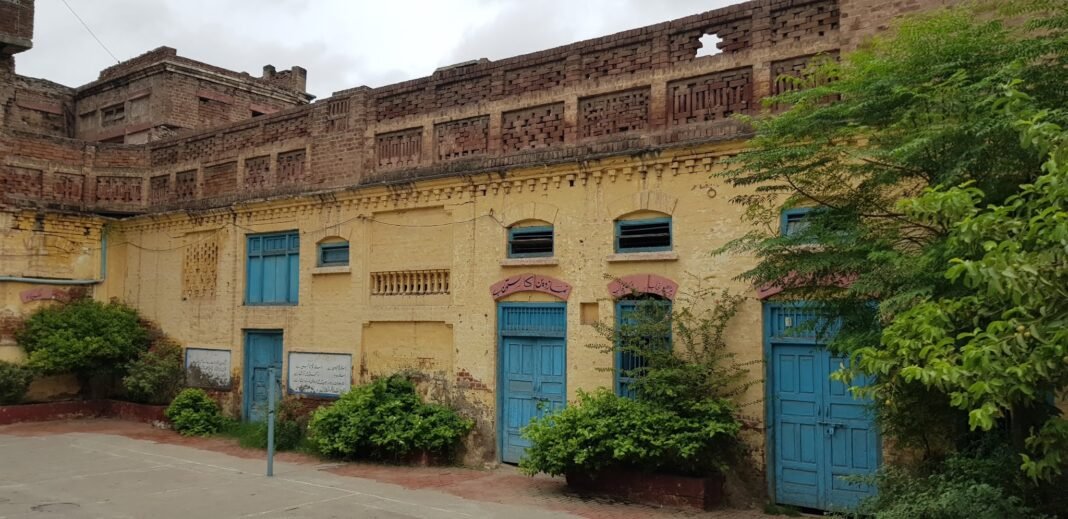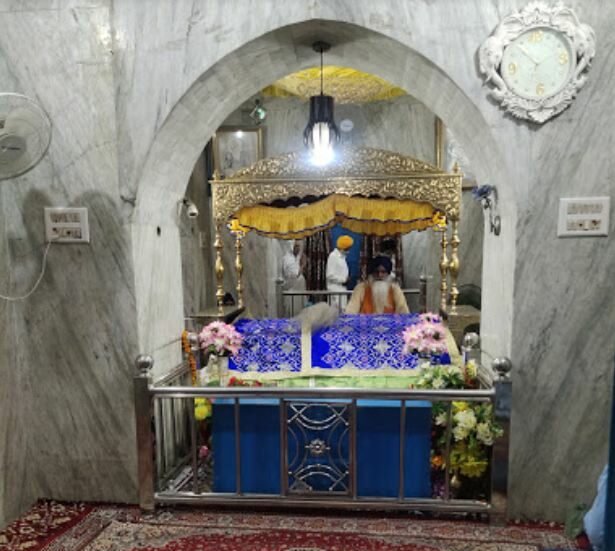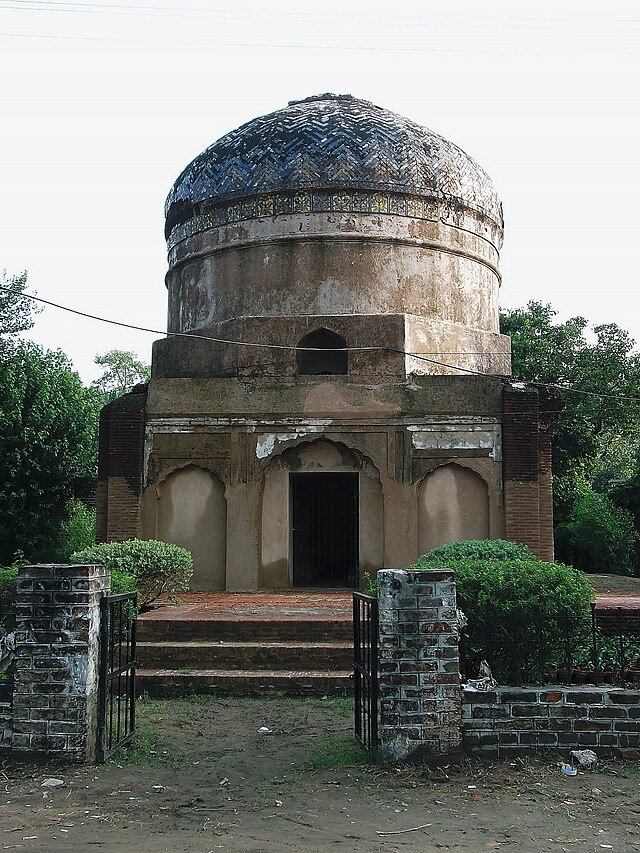
This Gurdwara Bhai Buddhu da Awa, Lahore travel guide covers one of Lahore’s most storied and least-visited heritage sites: the shrine at a humble brick kiln where a devotee of Guru Arjan learned that a curse can be lifted by grace — and that unbaked bricks can sell like baked ones. Inside you will find the full legend of Bhai Buddhu and Bhai Kamalia, the site’s Mughal and Sikh-era history, how to reach it from anywhere in Lahore (and from Islamabad and Karachi), the best time to visit, where to stay and eat nearby, and practical tips for the trip.
Quick Facts
- Location: On the Lahore–Amritsar Grand Trunk Road near Shalimar Road, across from the University of Engineering and Technology (UET), Lahore, Punjab, Pakistan
- Altitude: Around 210 metres above sea level (Lahore plain)
- Famous For: The site of Bhai Buddhu’s brick kiln (“awa”), blessed by Guru Arjan, the fifth Sikh Guru; the gurdwara Bhai Buddhu built in gratitude; Buddhu’s tomb on the same grounds; a 17th-century Mughal-era tomb at the heart of it all
- Nearest City: Lahore itself — the shrine is inside the city, about 3 km from the Shalimar Gardens
- Accessibility: Very easy — on the GT Road, served by city buses, wagons, rickshaws and ride-hailing; wheelchair access is limited on the old grounds
- Known Landmarks: Buddhu’s tomb (c. 1641), the kiln site, the 1938 gurdwara building, nearby Shalimar Gardens and UET
- Best For: Sikh heritage travellers, Mughal-history buffs, and Lahore explorers who have done the Fort and want the city’s hidden layers
Why Visit Gurdwara Bhai Buddhu da Awa, Lahore
Lahore has no shortage of famous monuments — but the city’s real magic is in the places the tour buses drive straight past. Buddhu da Awa is one of those places. On the roaring Grand Trunk Road, across from the engineering university, stands the ground where a 17th-century brick-maker’s kiln became a Sikh shrine, where Mughal nobles lie buried, where a Sikh prince once pitched his army’s headquarters, and where a French general of Ranjit Singh’s army built his summer house. Four centuries of Punjab, compressed into a single walled compound.
The legend that made this place is worth the trip on its own. Bhai Buddhu was a successful brick-maker whose wealth had made him proud — so proud that when a humble, blanket-wrapped Sikh named Bhai Kamalia stopped at his kiln asking for a meal, Buddhu turned him away. The hungry man’s curse was simple and devastating: your bricks shall always remain unbaked. And so they did — until Buddhu begged Guru Arjan’s forgiveness in Lahore, and the Guru blessed him with words every struggling craftsman should frame: the curse of a poor man cannot be challenged, but your unbaked bricks will sell at the price of baked ones. That year the rains were heavy, demand for bricks soared, and Buddhu sold every last brick at a profit. In gratitude, he built a gurdwara on the site of his kiln.
What makes the site genuinely fascinating is that it refuses to be just one thing. Sikh tradition honours it as Bhai Buddhu’s gurdwara; the Archaeology Department maintains it as a protected monument; historians note the handsome tomb at its centre (dated to about 1641) was actually raised for a Mughal noble’s wife; and old Lahoris still call the whole area by Buddhu’s name, four hundred years after his kiln fired its last brick. If you love history with layers — where every century left a fingerprint — this compound will delight you.
And it is absurdly easy to visit. Pair it with the Shalimar Gardens, three kilometres away, on a cool winter morning, and you have done two UNESCO-grade centuries of Lahore before lunch. Come between October and March, bring your curiosity, and leave with a story none of your friends have heard.
History of Gurdwara Bhai Buddhu da Awa, Lahore
The story of Buddhu da Awa begins with an awa — a brick kiln — on what is now the Grand Trunk Road, in the early 1600s. Bhai Buddhu, from a family of potters, baked bricks here and prospered; his kiln supplied the building boom of Mughal Lahore. He was also a devotee of Guru Arjan, the fifth Sikh Guru. One day a Sikh named Lakhu Almast — brother of the Udasi saint Baalu Hasna, known as Bhai Kamalia because he always wore a kambli (blanket) around his shoulders — passed the kiln and asked for a meal. Success had made Buddhu arrogant; he refused the hungry man and sent him away. Bhai Kamalia’s curse followed him home: his bricks would always remain unbaked.
When Guru Arjan was in Lahore, Bhai Buddhu implored his mercy. The Guru’s answer is the moral heart of the legend: the curse of a poor man could not be challenged — but the unbaked bricks would sell at the same price as fully baked ones. That year, heavier-than-usual rains in Lahore drove up demand for bricks, and Bhai Buddhu sold his entire stock at a huge profit. In gratitude and devotion to Guru Arjan, he constructed a gurdwara at the site of his kiln.
The Sikh period layered more history onto the ground. During the struggles for Lahore, Maharaja Sher Singh and Raja Hira Singh each gathered the armies of the Khalsa here before laying siege to the city. General Avitabile — the Italian commander in Maharaja Ranjit Singh’s service — built a summer house next to Buddhu da Awa; a sign still marks its gate, though no trace of the house survives. The gurdwara itself was long managed by the Mahants of Gurusar Satlani; after the Gurdwara Reform Movement, the 1927 Gurdwara Act brought it under the Gurdwara Parbandhak Committee, and a new gurdwara building was added in 1938.
Then there is the tomb at the centre of the compound — the handsome structure that gives the site its protected-monument status. Traditionally ascribed to Buddhu himself (son of Suddhu, the Shah Jahan-era brick supplier), historical research suggests it was actually built around 1641 as the mausoleum of the wife of Khan-e-Dauran Bahadur Nusrat Jang, an amir of the Mughal court; the amir himself was buried there after his death in 1643. Prince Sher Singh later used the site as his army’s headquarters during his invasion of Lahore. After Partition, the whole site — gurdwara, tomb and kiln ground — came under the care of the Archaeology Department, which maintains it today.
The result is a palimpsest rare even in Lahore: a Sikh shrine, a Mughal tomb, a Sikh army’s mustering ground and a colonial-era archaeological monument, all sharing one compound on the GT Road. The kiln that started it all is long gone, but the name — Buddhu da Awa — still marks the map of Lahore.
Top Things to Do in Gurdwara Bhai Buddhu da Awa, Lahore
See Buddhu’s Tomb (c. 1641)
The architectural centrepiece of the compound is the 17th-century tomb traditionally called Buddhu’s Tomb. Study its Mughal funerary form — the chamber, the dome, the graves within — and remember the scholarly twist: this is very likely the mausoleum of a Mughal noble’s wife, later joined by her husband, the amir Khan-e-Dauran, in 1643. Local storytellers explain the two graves as the saint and Buddhu himself; either way, you are looking at one of Lahore’s oldest surviving tombs, older than the Shalimar Gardens down the road.
Stand on the Kiln Ground
Walk the compound and picture the awa as it was: a sprawling brick-making works whose bricks helped build Mughal Lahore, tended by a proud master who learned humility the hard way. The kiln itself has vanished — a recent loss lamented by Lahore’s heritage writers — but standing on its ground, beside the shrine its owner built in gratitude, is the whole point of the visit. This is industrial heritage, Sikh heritage and moral fable in one.
Visit the 1938 Gurdwara Building
The gurdwara building added in 1938 under the Gurdwara Parbandhak Committee represents the shrine’s last great building phase before Partition. View it as the closing chapter of the site’s Sikh history: built by a community that would, within a decade, leave Lahore. Cover your head and behave with shrine etiquette in its vicinity, even though the site is now an archaeological monument rather than an active gurdwara.
Find the Avitabile Summer House Gate
History nerds will enjoy hunting for the marked gate of General Avitabile’s summer house, built beside the Awa in the Sikh period. Avitabile — Paolo Avitabile, the Italian soldier of fortune who became one of Ranjit Singh’s most effective (and feared) governors — chose this spot for his country retreat. The house is gone, but the sign at the gate is a small, delicious detail of Lahore’s endlessly cosmopolton past.
Pair It with the Shalimar Gardens
The Shalimar Gardens lie about 3 km away — a ten-minute drive — and pairing the two is the smartest half-day in east Lahore. Do Buddhu da Awa first in the morning light, then spend the late morning in the Mughal gardens (a UNESCO World Heritage site, laid out in 1641 — the very year of Buddhu’s tomb). The contrast is perfect: one intimate and layered, the other imperial and formal, both born in the same decade.
Famous Places In and Around Gurdwara Bhai Buddhu da Awa, Lahore
Shalimar Gardens — the great Mughal garden, 3 km away, a UNESCO World Heritage site. University of Engineering and Technology (UET) — directly across the GT Road, on the site of the old Sikh National College. Lahore Fort and Badshahi Mosque — the city’s imperial core, a 20-minute drive west. Minar-e-Pakistan and Greater Iqbal Park — the national monument in its landscaped park. Anarkali and Fort Road Food Street — for the evening food run after a day of heritage.
How to Reach Gurdwara Bhai Buddhu da Awa, Lahore
This is the easiest shrine in this guide to reach: it sits on the Grand Trunk Road inside Lahore, near Shalimar Road and directly across from UET. From anywhere in the city — Gulberg, DHA, the airport, the old city — a ride-hailing car or auto-rickshaw will get you there in 20 to 40 minutes depending on traffic. Ask for “Buddhu ka Awa” near UET; every Lahori driver knows the name even if they have never stopped.
From Islamabad: Around 375 km via the M-2 motorway to Lahore (about 4–5 hours), then 30–40 minutes across the city to the GT Road site. From Karachi: Around 1,200 km by road — fly to Lahore’s Allama Iqbal International Airport (about 1.5 hours) and drive 20–30 minutes to the shrine. Within Lahore: Metrobus and city wagons run along the GT Road corridor; get down near the UET/Shalimar Road stop and walk or take a rickshaw the last stretch.
Nearest airport: Allama Iqbal International Airport, roughly 10–12 km away. Rail: Lahore Junction railway station, about 6–7 km west. Road conditions: The GT Road is a major highway in good condition; the compound itself has old, uneven ground — wear proper shoes. Best approach: Combine with Shalimar Gardens in one morning; start at the Awa at 9 a.m. when the Archaeology Department sites open and the light is soft.
Route Details
Step 1: From central Lahore (or the airport), take the GT Road east toward Shalimar. Step 2: Pass the Shalimar Gardens turn and continue to the UET / Shalimar Road junction — the Buddhu da Awa compound is on the GT Road near this junction, opposite the university. Step 3: Enter the compound (it is an Archaeology Department site; follow any posted timings and the caretaker’s guidance). Step 4: Walk the tomb, the gurdwara building and the old kiln ground at leisure — an hour is plenty. Step 5: Drive 3 km back to the Shalimar Gardens for the second half of your morning, then lunch in the city.
Where to Stay in Gurdwara Bhai Buddhu da Awa, Lahore
Being inside Lahore, the shrine gives you the city’s full range of accommodation. For comfort and convenience, the Gulberg and DHA areas offer the best-known luxury and four-star hotels, with restaurants, malls and the airport all within easy reach. Business travellers usually pick the hotels along the airport road or in Gulberg; both put the Awa about 25–35 minutes away by car.
Mid-range options cluster around Mall Road, Jail Road and the airport approach — solid three-star hotels with breakfast included, at prices far below the luxury tier. Budget travellers find plenty of guesthouses and economy hotels near Lahore Junction railway station and in the old city’s haveli guesthouses, some of them genuinely atmospheric. Because this shrine is a morning stop rather than a destination in itself, choose your hotel for your overall Lahore itinerary — the Fort, food streets and Shalimar — and slot Buddhu da Awa into a heritage morning.
Book ahead on Eid holidays, wedding season (December–February) and during the Lahore Literary Festival or other big events, when the good hotels fill fast. On ordinary weekdays, walk-in availability is usually fine.
Where to Eat: Local Foods of Gurdwara Bhai Buddhu da Awa, Lahore
Lahore is Pakistan’s undisputed food capital, and the GT Road corridor near the shrine is lined with the dhabas and tandoors that feed the city’s working east. Start the heritage morning with a Lahori breakfast: halwa puri, nihari or paya with fresh tandoori naan, washed down with sweet lassi or doodh patti. The area around Shalimar and the GT Road has excellent budget breakfast spots where the regulars have eaten for decades.
For lunch, the city’s classics await: chicken chargha, mutton karahi, daal fry and kebabs at any of the GT Road restaurants, or head into the old city for the full experience — nihari at the famous old-city shops, haleem, and falooda for dessert. In the evening, Fort Road Food Street (with the lit-up Badshahi Mosque as your backdrop) and the eateries of Anarkali serve everything from desi to fast food. Winter visitors should try sarson da saag with makki di roti and gajar ka halwa; summer visitors get the mango season. A full Lahori food day is budget-friendly by any standard — generous meals at local restaurants cost little, with the luxury hotel buffets at the top end.
Weather in Gurdwara Bhai Buddhu da Awa, Lahore
Lahore’s weather is the Punjab plain’s in its most extreme form: a short, smog-tinged winter, a glorious spring, a brutal summer and a dramatic monsoon. The shrine compound is entirely outdoors, so plan around the heat. The sweet spot — October to March — coincides with Lahore’s best festival and wedding season, when the city is at its liveliest.
| Season | Temperature Range | Conditions |
|---|---|---|
| Winter (Dec–Feb) | 5–22°C | Cool and pleasant; morning fog and occasional smog in Dec–Jan |
| Spring (Mar–Apr) | 20–35°C | Beautiful; the city’s best weather, gardens in bloom |
| Summer (May–Jul) | 35–48°C | Extremely hot; visit only at opening time, carry water |
| Autumn (Aug–Nov) | 28–38°C | Monsoon rains Jul–Sep; clear and lovely from October |
Language and Culture of Gurdwara Bhai Buddhu da Awa, Lahore
Lahore speaks Punjabi at home and Urdu everywhere else, with English common in hotels and restaurants. Lahoris are famously warm to visitors — “Lahore Lahore aye” is not just a slogan — and the GT Road belt is used to travellers. The site’s layered identity (Sikh shrine, Mughal tomb, archaeology monument) deserves a matching attitude: quiet curiosity, not loud commentary on religion or history.
Dress modestly for the shrine portion of the visit and cover your head near the gurdwara building, as Sikh custom asks. Remove shoes if you enter any prayer space. The tomb is a Mughal funerary monument — treat it with the same respect you would a mosque: no climbing, no loud music, no littering. Photography of the buildings is generally fine at an archaeology site, but follow the caretaker’s instructions and any posted rules.
Shopping in Gurdwara Bhai Buddhu da Awa, Lahore
The shrine itself has no shops, but you are in Lahore — shopping is never far. The GT Road corridor has practical markets for everyday goods; for the real experience, head to Anarkali (centuries-old bazaars for cloth, shoes and street food), Ichhra (famous for affordable fashion and khussas), and Liberty Market in Gulberg for a modern bazaar feel. Lahore’s big malls — Emporium, Packages, Fortress Square — cover international brands and food courts.
Souvenir hunters should look for blue Multani pottery, camel-skin lamps, phulkari embroidery and Punjabi juttis in the old bazaars. Book lovers: Urdu Bazaar near the old city is one of Pakistan’s great book markets. Edible souvenirs — Lahore’s mithai, dried fruits, and in winter, fresh kinnows — travel well. Do not buy “antiques” from street sellers near monuments; most are reproductions.
Travel Tips for Gurdwara Bhai Buddhu da Awa, Lahore
Packing Essentials
A head covering for the shrine, comfortable closed shoes (the compound ground is old and uneven), sun protection, and drinking water. In winter (December–February) bring a warm jacket — Lahore mornings are cold and the smog can bite; a mask helps on bad-air days. In summer, the visit must be short and early: hat, sunglasses and far more water than you expect. Keep your phone charged for ride-hailing; the GT Road area has patchy shade but good signal.
Safety Tips
Lahore is a major, well-policed city and this is a routine urban heritage stop. Visit in daylight, use reputable ride-hailing rather than unmarked taxis, and keep valuables discreet in crowded bazaars. On the GT Road itself, be careful crossing — it is a fast, busy highway; use pedestrian bridges where available. The old tomb structure is fragile: do not climb on it or lean on cracked masonry.
Money & Connectivity
Lahore is Pakistan’s most card-friendly city after Karachi and Islamabad — hotels, malls and chain restaurants take cards — but carry cash rupees for the shrine area, rickshaws, dhabas and bazaars; ATMs are everywhere in the city. Mobile data (Jazz, Zong, Telenor, Ufone) is fast and reliable across Lahore, including on the GT Road. Ride-hailing apps work well here and are the easiest way to reach the site.
Best Time to Visit Gurdwara Bhai Buddhu da Awa, Lahore
Winter (November–February): The Ideal Season
Cool days, soft light, green lawns at Shalimar — this is Lahore at its best and the perfect season for Buddhu da Awa. Pair the shrine with the gardens on a crisp morning. Note that December–January can bring dense fog (slowing early travel) and smog episodes; check the air quality and plan midday visits on bad-air days.
Spring (March–April): Beautiful and Festive
Spring is Lahore’s glory season — mild weather, blooming gardens, outdoor food in the evenings. March is arguably the single finest month for heritage walks in the city, with none of winter’s fog.
Summer (May–July): Only at Dawn
Lahore’s summer is among the hottest urban experiences in South Asia, touching the high 40s. If you must visit, be at the compound gate at opening time, finish within the hour, and retreat to air conditioning. This is not the season for lingering.
Autumn (August–October): The Monsoon Break
July–September rains wash the city clean but make for humid, muddy outings. From October the weather turns superb — clear skies, pleasant evenings — and the crowds are thinner than in peak winter. A fine shoulder season.
Final Thoughts
Buddhu da Awa is Lahore in miniature: a brick-maker’s kiln that became a Sikh shrine, a Mughal tomb at its heart, a Sikh prince’s headquarters, a French general’s summer retreat — all on one compound on the GT Road that most Lahoris speed past without a glance. It rewards exactly the kind of traveller this guide is written for: the one who stops, looks closer, and asks what happened here.
Come on a cool morning, pair it with the Shalimar Gardens, and give the legend of Bhai Buddhu a thought as you stand on the kiln ground: pride brought the curse, humility brought the blessing, and gratitude built the shrine. For more of Lahore and Punjab’s hidden heritage, browse the Explore Pakistan collection, and continue in the city with our Badshahi Mosque travel guide and Bagh-e-Jinnah, Lahore travel guide.
FAQs
Where is Gurdwara Bhai Buddhu da Awa located?
On the Lahore–Amritsar Grand Trunk Road near Shalimar Road, across from the University of Engineering and Technology (UET), about 3 km from the Shalimar Gardens.
What does “Awa” mean?
Awa means a brick kiln in Punjabi. The shrine marks the site of Bhai Buddhu’s kiln, where the unbaked-bricks legend took place.
What is the story of Bhai Buddhu and Guru Arjan?
Bhai Buddhu, a proud brick-maker, was cursed by the humble Sikh Bhai Kamalia that his bricks would never bake. Guru Arjan blessed him that his unbaked bricks would sell at the price of baked ones — and they did. Buddhu built the gurdwara in gratitude.
What is the best time to visit?
October to March, with November–February ideal. Avoid the midday heat of May–July entirely.
How do I reach it within Lahore?
By ride-hailing car, auto-rickshaw or GT Road wagons to the UET/Shalimar Road stop — 20 to 40 minutes from most parts of the city.
Is there an entry fee?
As an Archaeology Department site it may have a nominal ticket or none; carry small cash and follow the caretaker’s guidance on timings.
Is it suitable for families?
Yes — an easy, short stop, especially combined with the Shalimar Gardens. The compound ground is uneven, so watch small children and elderly visitors.
What else can I see nearby?
The Shalimar Gardens (3 km), UET’s historic campus across the road, and, further west, the Lahore Fort, Badshahi Mosque and the old city’s food streets.