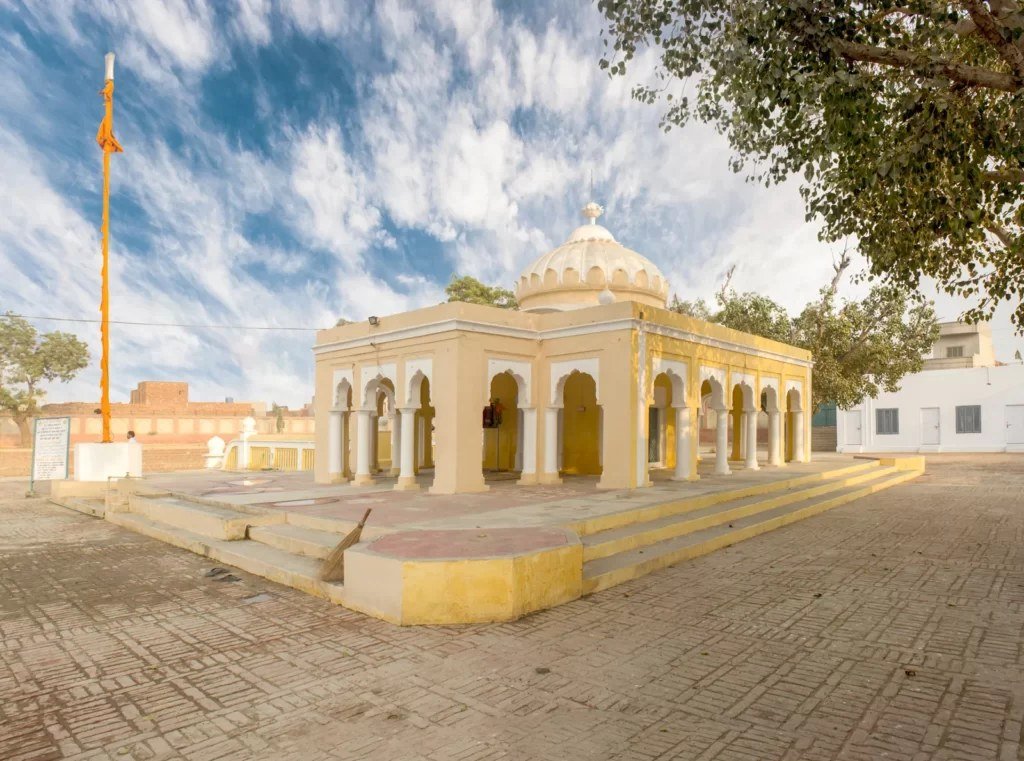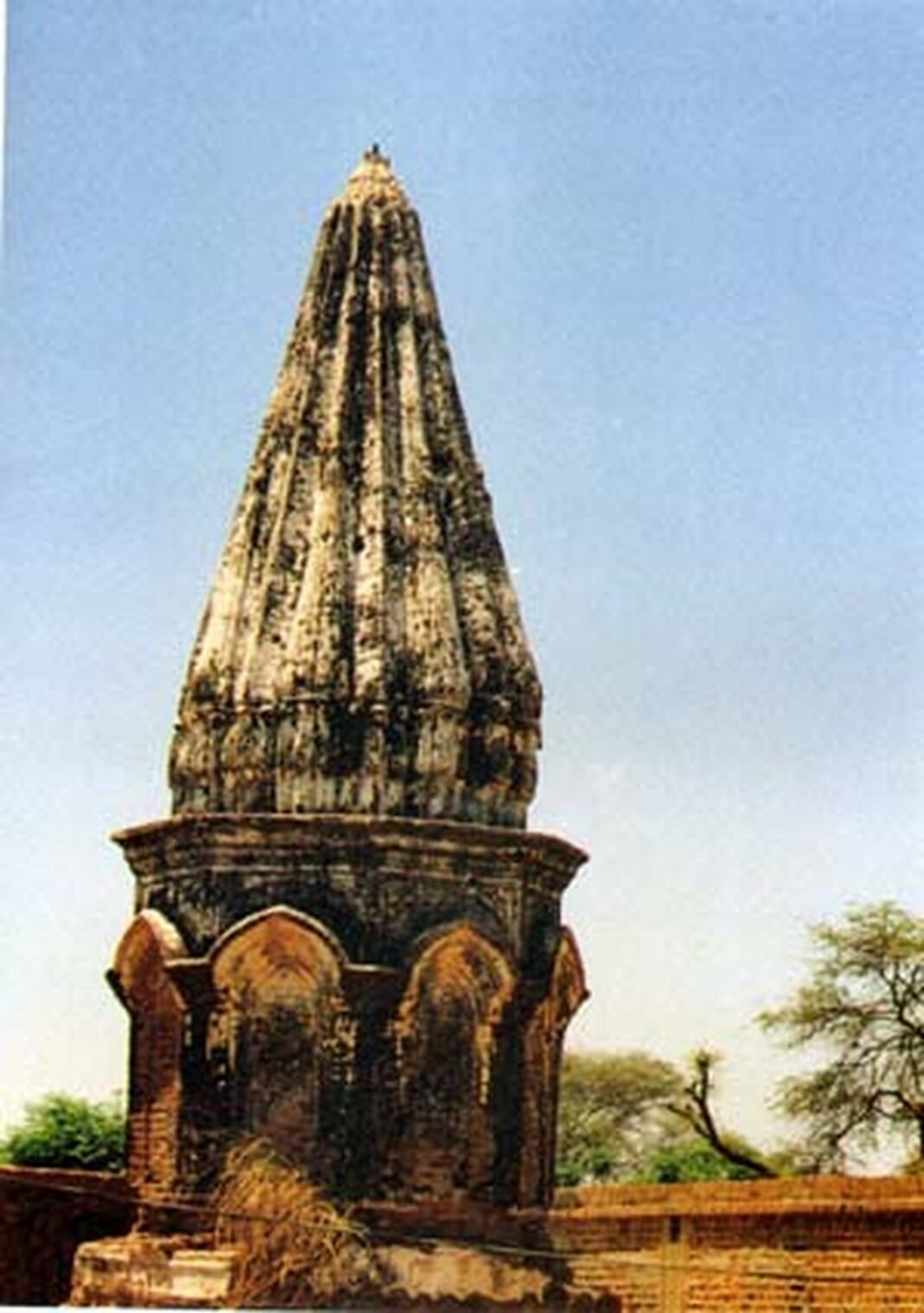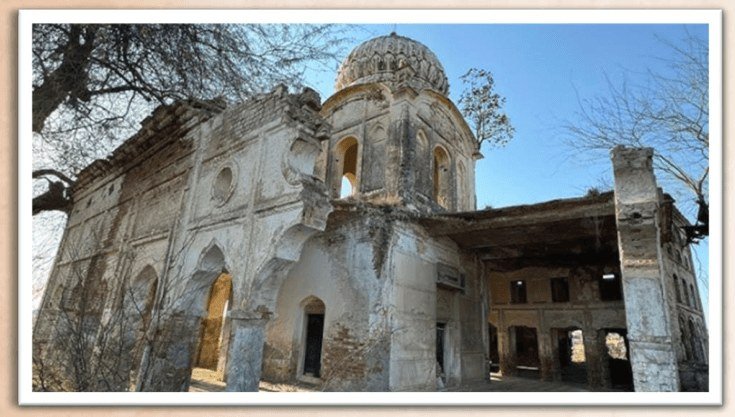
Some shrines are famous for their founders. This one is famous for its friends. In a quiet village of Attock district stands a gurdwara built not for a Guru, but for a saint — Baba Than Singh — a man so loved that the village landlord gave up his own name for the place, and so revered that Muslims and Sikhs venerated him together. Gurdwara Kot Bhai Than Singh in Fateh Khan village is one of Punjab’s most atmospheric heritage sites: part shrine, part memorial, part art gallery of fading frescoes, all of it wrapped in the golden light of the Pothohar plateau. This Gurdwara Kot Bhai Than Singh travel guide is your invitation to discover a corner of Pakistan that almost nobody visits — and everybody should.
Quick Facts
- Location: Western side of Kot Fateh Khan village, Fateh Jang tehsil, Attock district, Punjab, Pakistan
- Altitude: Around 500 metres (Pothohar plateau country)
- Famous For: The samadh and gurdwara of the saint Baba Than Singh (also called Baba Thana or Sultan); rare syncretic Sikh-Muslim veneration; Pothohari-style frescoed samadhis
- Nearest City: Fateh Jang (tehsil headquarters); Islamabad is roughly 40–50 km northeast
- Accessibility: Good — village roads off the Islamabad–Kohat road; ask in Fateh Khan village for directions
- Known Landmarks: The two samadhis (one with Sikh and Hindu frescoes), the gurdwara building, sarovars and step-wells (baolis)
- Best For: Heritage explorers, photographers of fresco art, Sikh history enthusiasts, offbeat travellers, and day-trippers from Islamabad
Why Visit Gurdwara Kot Bhai Than Singh, Fateh Khan
Pakistan’s famous Sikh sites — Kartarpur, Nankana Sahib, Panja Sahib — draw pilgrims by the thousand. Kot Bhai Than Singh draws almost no one, and that is exactly its magic. This is a shrine where history has been left to breathe: an abandoned gurdwara complex with ribbed domes, old tanks, and samadhis whose walls still carry frescoes of Sikh and Hindu themes, including Krishna lifting the Govardhan hill. It is beautiful, melancholic, and utterly authentic — the kind of place heritage travellers dream of finding.
The story here is as compelling as the architecture. Baba Than Singh was a saint who settled in Fateh Khan village, and his spiritual presence was so powerful that Malik Fateh Khan — the feudal lord of the village — became his devotee, arranged a residence for him, and donated toward the langar. The place took the saint’s name: Kot Than Singh. What makes this extraordinary is what happened next: local Muslims continued to venerate Baba Than Singh as “Baba Thana” or “Sultan” long after 1947, and it is local Muslims who have preserved the site to this day. In an age of division, this gurdwara stands as quiet proof that reverence once crossed every boundary in Punjab — and in this village, it still does.
For the practical traveller, the location is a gift. Kot Fateh Khan sits in Fateh Jang tehsil, barely an hour from Islamabad, in the rolling Pothohar countryside of Attock district. You can pair it with Attock Fort, the shrine town of Hasan Abdal with its famous Gurdwara Panja Sahib, or the Gandhara ruins of Taxila — all within easy reach. It is the perfect offbeat addition to an Islamabad weekend: no tickets, no crowds, no commercialisation, just you, the frescoes, and a story worth telling.
Visit if you are a photographer hunting for atmospheric ruins, a history buff who has done the big sites and wants the real thing, or a Sikh heritage traveller completing the map of Punjab’s shrines. This is also a wonderful trip for families with curious teenagers — the frescoes, the step-wells, and the tale of the landlord and the saint make history feel alive. For more journeys across the country, browse our Explore Pakistan collection.
History of Gurdwara Kot Bhai Than Singh, Fateh Khan
The history of this place begins with a man, not a monument. Baba Than Singh was a well-known Sikh saint who settled in the village of Fateh Khan in Attock district. His piety and spiritual presence drew the attention of Malik Fateh Khan, the feudal lord of the village, who became his devotee. The Malik arranged a place for the saint’s residence and donated generously toward the langar (community kitchen). So deep was this bond that the settlement came to be known as Kot Than Singh — the abode of Than Singh — a rare honour in which a landlord’s village took the name of a holy man rather than the other way round.
The samadh (memorial) and gurdwara were built during the reign of Maharaja Ranjit Singh (1799–1839), the golden age of Sikh architecture in Punjab. The complex grew into something remarkable: two samadhis, one of them decorated with frescoes depicting Sikh and Hindu themes, set among tanks (sarovars), step-wells (baolis), ribbed domes, and high-necked drums in the distinctive Pothohari style. Scholars of the region’s heritage, including Zulfiqar Ali Kalhoro, date the complex’s fabric to the British colonial period in its present form, noting how it blends Sikh, Hindu, and local Pothohari architectural traditions — a physical expression of the syncretic devotion the saint inspired.
Kot Bhai Than Singh was never a quiet backwater in Sikh history. In its heyday it hosted a Baisakhi mela (festival) every April–May that drew around 4,000 people — the 1893 gathering is recorded at that strength — making it one of the region’s significant religious fairs. During the Akali movement of the 1920s, the shrine became politically important: the Sikh leader Kartar Singh Jhabbar and his jatha of twenty-five Sikhs took possession of half of the gurdwara, and in 1938 its administration was formally transferred to the Sikh committee of Hasan Abdal. The site even entered legal history: in July 1937, a confrontation between the Muslim landowner Sardar Muhammad Nawaz Khan and the local gurdwara leadership over drawing water from a local stream led to a riot, settled first by the district magistrate and then pursued in higher courts — an episode studied as an example of how communal politics played out in late colonial Punjab.
Partition in 1947 emptied the shrine of its Sikh congregation, as Sikhs migrated from the area. But unlike many abandoned gurdwaras, Kot Bhai Than Singh was not left to ruin by indifference — it has been preserved by the local Muslims of the area, who continue to honour Baba Than Singh as Baba Thana or Sultan. Today the gurdwara is officially listed as abandoned and is in poor condition; many of the beautiful wall paintings depicting Sikh history are badly defaced. Yet the complex survives — the domes, the tanks, the frescoed samadhi — waiting for the heritage attention it deserves.
Top Things to Do in Gurdwara Kot Bhai Than Singh, Fateh Khan
Study the Frescoed Samadhi
The artistic highlight of the complex is the samadhi decorated with frescoes on Sikh and Hindu themes — including the beloved scene of Krishna upholding the Govardhan hill to shelter his devotees. These wall paintings, though badly defaced in places, are rare survivors of Punjab’s 19th-century religious art. Bring a camera with a good zoom and soft morning light; the details reward patience. This is folk art with deep devotion behind every brushstroke.
Walk the Gurdwara and Samadh Complex
Take your time moving through the whole complex: the gurdwara building itself, the two samadhis, the sarovars (tanks), and the baolis (step-wells). The Pothohari architectural vocabulary — ribbed domes, high-necked drums, deep step-wells — is distinct from the shrines of central Punjab, and seeing it in a Sikh context is unusual and fascinating. Wear sturdy shoes; this is a heritage ruin, not a manicured monument, and uneven ground is part of the experience.
Reflect at a Syncretic Shrine
Pause at the spot where a Sikh saint was — and is — venerated by Muslims as a Sultan. Ask village elders about Baba Thana; their stories, passed down through Muslim families who kept the shrine alive after 1947, are a living oral history you will find in no book. Few places in Pakistan illustrate interfaith respect as tangibly as this one.
Photograph the Pothohar Landscape
The gurdwara sits in classic Pothohar countryside — rolling, rocky, dotted with acacia and cut by seasonal streams, with the Kala Chitta and Khairi Murat ranges framing the horizon. Late afternoon light turns the old brickwork gold. Landscape photographers can combine the shrine with the surrounding fields for a portfolio of rural Punjab at its most evocative.
Pair It with Attock Fort
You are in Attock district, one of Punjab’s great historic regions. Combine your visit with Attock Fort — the mighty Mughal fortress on the Indus — for a full day of history spanning the Mughals, the Sikhs, and the British. The contrast between imperial military architecture and this humble saint’s shrine tells the district’s story beautifully.
Famous Places In and Around Gurdwara Kot Bhai Than Singh, Fateh Khan
- Gurdwara Panja Sahib, Hasan Abdal (~30 km): One of Sikhism’s holiest shrines, with the sacred spring and the Guru’s handprint in rock.
- Attock Fort (district): Akbar’s great Indus fortress — see our Attock Fort travel guide.
- Taxila ruins (~1 hour): The ancient Gandhara city, a UNESCO World Heritage site of stupas and monasteries.
- Fateh Jang town: The tehsil headquarters with traditional bazaars and the Civil Hospital’s colonial-era surroundings.
- Kala Chitta & Khairi Murat ranges: The low hills framing Fateh Jang — good for scenic drives.
How to Reach Gurdwara Kot Bhai Than Singh, Fateh Khan
Kot Fateh Khan village lies in Fateh Jang tehsil, southwest of Islamabad near the M-1 motorway corridor. The gurdwara stands on the western side of the village — ask any local for “Baba Than Singh da gurdwara” or “Kot Than Singh” and you will be guided.
From Islamabad: About 40–50 km to Fateh Jang (roughly an hour), then local roads to Kot Fateh Khan village — plan about 1.5 hours total. Take the Islamabad–Kohat road (N-80) or the M-1 motorway toward Peshawar, exiting for Fateh Jang. This is the easiest and most popular route.
From Lahore: About 297 km via Fateh Jang — roughly 4 to 4.5 hours. Take the M-2 motorway north to the Balkasar/M-1 interchange, then the M-1 toward Peshawar, exiting for Fateh Jang.
From Karachi: Over 1,000 km — fly to Islamabad International Airport, then drive about an hour to Fateh Jang and on to the village.
Nearest airport: Islamabad International Airport, roughly 40–45 km from Fateh Jang — the most convenient gateway.
Road conditions: The motorways and the Islamabad–Fateh Jang road are excellent. Village roads around Kot Fateh Khan are paved but narrow; a normal car handles them fine in dry weather. Avoid the unpaved tracks after heavy rain.
Transport options: A private car is strongly recommended — public transport will get you to Fateh Jang town, but the village and the shrine need your own wheels or a hired taxi from Fateh Jang. Ride-hailing works from Islamabad to Fateh Jang; negotiate the village leg locally.
Route Details
Islamabad → Kot Fateh Khan: Leave Islamabad on the N-80 (Islamabad–Kohat road) heading southwest, or take the M-1 and exit at the Fateh Jang interchange. Reach Fateh Jang town (about 40–50 km, roughly an hour). From Fateh Jang, take local roads southwest toward Kot Fateh Khan village; the gurdwara complex stands on the village’s western side. Ask locals for “Baba Thana” — the saint’s local name — and they will point you the last few hundred metres. Total: about 1.5 hours from central Islamabad.
Where to Stay in Gurdwara Kot Bhai Than Singh, Fateh Khan
Kot Fateh Khan is a village, so you will not find hotels at the shrine — and you do not need them. Fateh Jang town, the tehsil headquarters a short drive away, has simple guesthouses and budget hotels catering to travellers and officials; they are basic but clean and perfectly adequate for a night.
The smarter base for most visitors is Islamabad, about an hour away, with the full spectrum from budget guesthouses to five-star hotels. This makes Kot Bhai Than Singh an ideal day trip: breakfast in Islamabad, the shrine and Attock Fort by afternoon, dinner back in the capital. If you are touring Attock district more widely, Hasan Abdal also has pilgrim-oriented accommodation near Panja Sahib. Book nothing in advance for the village itself — there is nothing to book — but do carry the phone number of your Fateh Jang taxi driver for the return leg.
Where to Eat: Local Foods of Gurdwara Kot Bhai Than Singh, Fateh Khan
You are in the Pothohar region, and Pothohari food is honest, hearty, and built around the land. In Fateh Jang town and the villages, dhabas serve desi ghee cooking at its best: saag with makki di roti in winter, dal fry with tandoori roti, desi murgh (free-range chicken) curry, and tall glasses of thick lassi topped with malai. Breakfast here is a ceremony — halwa puri or parathas with chai — and it costs very little.
Pack snacks and water for the shrine visit itself; there are no restaurants at Kot Fateh Khan village, though villagers may offer you tea — accept it, it is the Pothohari way. For a proper meal, eat in Fateh Jang before or after, where a full dhaba lunch is budget-friendly at a few hundred rupees per person. If you are day-tripping from Islamabad, you have the capital’s restaurants waiting on your return — but try at least one village dhaba meal; the desi ghee flavour is something city kitchens rarely match.
Weather in Gurdwara Kot Bhai Than Singh, Fateh Khan
The Pothohar plateau around Fateh Jang sits at about 500 metres, giving it slightly sharper seasons than the central Punjab plain: cold, sometimes frosty winter nights and hot, dry summers. The best visiting season is October to March, when the air is clear and the countryside is at its most beautiful.
| Season | Temperature Range | Conditions |
|---|---|---|
| Winter (Dec–Feb) | 2°C – 18°C | Cold nights, crisp sunny days; occasional frost. Ideal for ruins and photography. |
| Spring (Mar–Apr) | 15°C – 30°C | Pleasant and green; the historic Baisakhi mela season (April–May). |
| Summer (May–Jun) | 28°C – 42°C | Hot and dry; visit early morning or late afternoon only. |
| Autumn (Oct–Nov) | 14°C – 30°C | Clear, comfortable, golden light — arguably the finest season. |
Monsoon rains (July–September) are lighter here than in the eastern Punjab but can still make village tracks muddy. Winter mornings can be foggy on the low roads — drive carefully.
Language and Culture of Gurdwara Kot Bhai Than Singh, Fateh Khan
The Pothohar plateau speaks Punjabi in its distinctive Pothohari dialect, with Urdu universally understood. Village culture here is conservative, hospitable, and deeply rooted — guests are honoured, elders are respected, and the saint’s memory is a point of shared pride across faiths. The syncretic veneration of Baba Than Singh as both Sikh saint and Muslim Sultan is not a historical footnote here; it is living culture, maintained by the Muslim families who preserved the shrine after 1947.
Visit with the respect this story deserves. Dress modestly, ask before photographing people, and accept the hospitality offered — refusing tea can offend. At the shrine, behave as you would at any place of worship: quiet voices, covered heads, no littering. If you meet the caretakers, listen more than you speak; their account of Baba Thana is the real heritage of Kot Fateh Khan.
Shopping in Gurdwara Kot Bhai Than Singh, Fateh Khan
There is no souvenir industry at Kot Bhai Than Singh, and that is part of its integrity. The shopping here is the everyday commerce of rural Punjab: Fateh Jang’s bazaars sell cloth, shawls, traditional shoes, and excellent local ghee and honey if you ask around. Pothohari khussas and hand-embroidered fabrics make authentic, inexpensive keepsakes.
For wider options, Islamabad’s markets (an hour away) have everything from handicrafts to books on Sikh heritage. Do not expect malls or tourist shops near the shrine — come for the history, and do your shopping in Fateh Jang town or the capital.
Local Events and Festivals
Baisakhi Mela (April–May): In its heyday, Kot Bhai Than Singh hosted a Baisakhi fair that drew around 4,000 people — recorded at that strength in 1893 — making it one of the notable religious melas of the Attock region. The fair has not been held in its historic form since Partition, but Baisakhi (13–14 April) remains the most meaningful time to visit: nearby Panja Sahib at Hasan Abdal comes alive with Sikh yatrees, and the whole district feels festive. Time your trip for mid-April to experience the region at its most vibrant.
Travel Tips for Gurdwara Kot Bhai Than Singh, Fateh Khan
Packing Essentials
Sturdy walking shoes (uneven ruin terrain), a head covering, sun protection, and water — there are no shops at the site. In winter, bring a warm jacket for the plateau’s cold mornings and evenings. A camera with zoom is essential for the fresco details; a power bank too, since you will be away from charging points for hours.
Safety Tips
The area is peaceful and the villagers are welcoming, but this is an abandoned, unmaintained complex: watch your step around old tanks, step-wells, and crumbling masonry, and do not climb unstable structures. Keep children close near the baolis. Travel in daylight — the site has no lighting — and let someone know your plans if you are exploring solo.
Money & Connectivity
Carry cash; there are no ATMs in the village (Fateh Jang town has them). Mobile coverage from all major networks is generally good on the plateau, though it can dip inside thick-walled old buildings. Download offline maps before leaving Fateh Jang — village lanes are not well signposted.
Best Time to Visit Gurdwara Kot Bhai Than Singh, Fateh Khan
Autumn to Winter — October to February (Best Season)
Clear skies, comfortable temperatures, and the plateau’s famous golden light. This is the ideal window for photography, long walks through the complex, and combining the shrine with Attock Fort and Taxila. December–January mornings are cold — start after the fog lifts.
Spring — March to April (Festive)
Green fields, mild weather, and the Baisakhi season. Mid-April is special: Panja Sahib’s celebrations are nearby, and the whole region is in festive mood. An excellent time for a combined Attock-district heritage tour.
Summer — May to June (Early or Late Only)
Hot and dry on the plateau. Restrict shrine visits to before 10 am or after 4 pm, carry plenty of water, and use Fateh Jang or Islamabad as an air-conditioned base between outings.
Monsoon — July to September (Caution)
Moderate rains can make village tracks slippery and the old masonry damp. The shrine is visitable, but check road conditions locally and prefer the paved approaches.
Final Thoughts
Gurdwara Kot Bhai Than Singh is not the kind of place that shouts for attention. It waits — domes weathering, frescoes fading, tanks holding the sky — for travellers curious enough to find it. And those who do find something rare: a shrine built on devotion rather than power, preserved across Partition by the very neighbours history said would forget it, honouring a saint who belonged to everyone.
Go for the frescoes and stay for the story. Stand where Malik Fateh Khan once bowed to a holy man, and where Muslim villagers still say “Baba Thana” with affection. Then widen the lens: our Attock Fort guide and the Explore Pakistan collection will keep you moving through one of the richest heritage corridors in the country.
FAQs
Where is Gurdwara Kot Bhai Than Singh located?
On the western side of Kot Fateh Khan village, in Fateh Jang tehsil of Attock district, Punjab — about 40–50 km southwest of Islamabad.
Who was Baba Than Singh?
A revered Sikh saint who settled in Fateh Khan village. The village landlord, Malik Fateh Khan, became his devotee and the place was named Kot Than Singh after him. Local Muslims venerate him as Baba Thana or Sultan.
When was the gurdwara built?
The samadh and gurdwara were built during the reign of Maharaja Ranjit Singh (1799–1839); scholars note the present Pothohari-style fabric dates to the British colonial period.
What is the best time to visit?
October to March for the best weather; mid-April for the Baisakhi season atmosphere in the district.
How do I get there from Islamabad?
Drive 40–50 km to Fateh Jang (about an hour), then local roads to Kot Fateh Khan village — about 1.5 hours total. A private car is recommended.
Is the site safe to visit?
Yes, the village is peaceful and welcoming. But the complex is an unmaintained ruin — watch your step around old tanks and step-wells, and visit in daylight.
What else can I see nearby?
Gurdwara Panja Sahib at Hasan Abdal (~30 km), Attock Fort, the Taxila Gandhara ruins, and the Kala Chitta and Khairi Murat hills.
Are there hotels near the shrine?
Simple guesthouses in Fateh Jang town; most visitors base themselves in Islamabad (about an hour away) and visit on a day trip.