There is a shrine in Kasur district where the building has crumbled but the well still gives water — and tall trees still shade the ground where a Sufi-minded saint once lived. That is Gurdwara Mahme Sar, and this gurdwara mahme sar, lalyani travel guide is for the traveler who prefers ruins with soul over monuments with crowds. It will not take you a whole day. It may, however, stay with you much longer than that.
Quick Facts
- Location: 1.5 km north-west of Lalyani town (also called Mustafa Abad), Kasur district, Punjab, on the Lahore–Ferozepur road
- Famous For: Being the residence and gurdwara of Baba Mahme Singh, a Sufi-minded saint (mystic) of the area
- Nearest City: Kasur (about 15 km south); Lahore (about 40 km north-west)
- Accessibility: Easy by road — right off the Lahore–Ferozepur (Ferozpur) road; any car can reach it
- Known Landmarks: The ruined gurdwara building, the still-working historic well, the tall shade trees, 85 ghumaon of attached farmland
- Best For: Heritage explorers, Sikh pilgrims, photographers, travelers interested in Sufi–Sikh spiritual crossover
Why Visit Gurdwara Mahme Sar, Lalyani
Visit Mahme Sar because it is honest. Most heritage sites in Pakistan have either been restored beyond recognition or abandoned beyond hope. This one sits in the rare middle: the building is in ruins — the survey teams say frankly that the remnants may survive only a few years more — but the well still runs, the trees still stand, and the place still breathes. You come here to see heritage as it actually ages, without scaffolding and without gift shops.
The second reason is the man at the center of it. Baba Mahme Singh was not one of the famous Gurus whose names are on the big gurdwaras; he was a well-known sufi (mystic) of this area, a saint whose residence this was. His gurdwara is a reminder that Punjab’s spiritual landscape was never a set of sealed boxes — Sufi shrines and Sikh gurdwaras grew in the same soil, and holy men crossed the lines we draw today. For anyone interested in that shared, syncretic Punjab — the Punjab of poetry, music and wandering saints — Mahme Sar is a small but genuine chapter.
Third, it is wonderfully combinable. Lalyani sits on the Lahore–Ferozepur road in a belt of Kasur district that is thick with small historic gurdwaras and Sufi shrines. You can stand at Mahme Sar in the morning, be in Kasur city for lunch — the city of Bulleh Shah, the great Sufi poet — and be back in Lahore for dinner. Few heritage outings in Punjab give you that much depth in a single easy day.
Finally, visit because it needs visitors. Ruined shrines that no one visits are the ones that disappear. The heritage surveys that documented Mahme Sar did so partly as a plea: this is what survives, come and see it while it does. Your visit is a vote for the idea that the small, unglamorous shrines of Punjab matter too.
History of Gurdwara Mahme Sar, Lalyani
The recorded history of Mahme Sar is short, specific, and unusually well documented for a shrine of its size — thanks largely to the surveys of Sikh heritage in Pakistan, including the detailed accounts compiled by Iqbal Qaiser. The Gurdwara Mahme Sar stands in the vicinity of Lalyani town in Kasur district, on the Lahore–Ferozepur road, about one and a half kilometres north-west of the town.
Baba Mahme Singh was a well-known sufi — a mystic — of this area, and this was his residence. He built a gurdwara here, and it came to be known as Mahme Sar Gurdwara. That single fact carries the whole character of the place: it was not founded to commemorate a Guru’s visit, but as the home and spiritual seat of a local saint, in the Punjab tradition where the lines between Sufi khanqah and Sikh dharamshala were often beautifully blurred. The shrine had 85 ghumaon of agricultural land attached to it — a substantial endowment that tells you the place once had standing and support in the surrounding countryside.
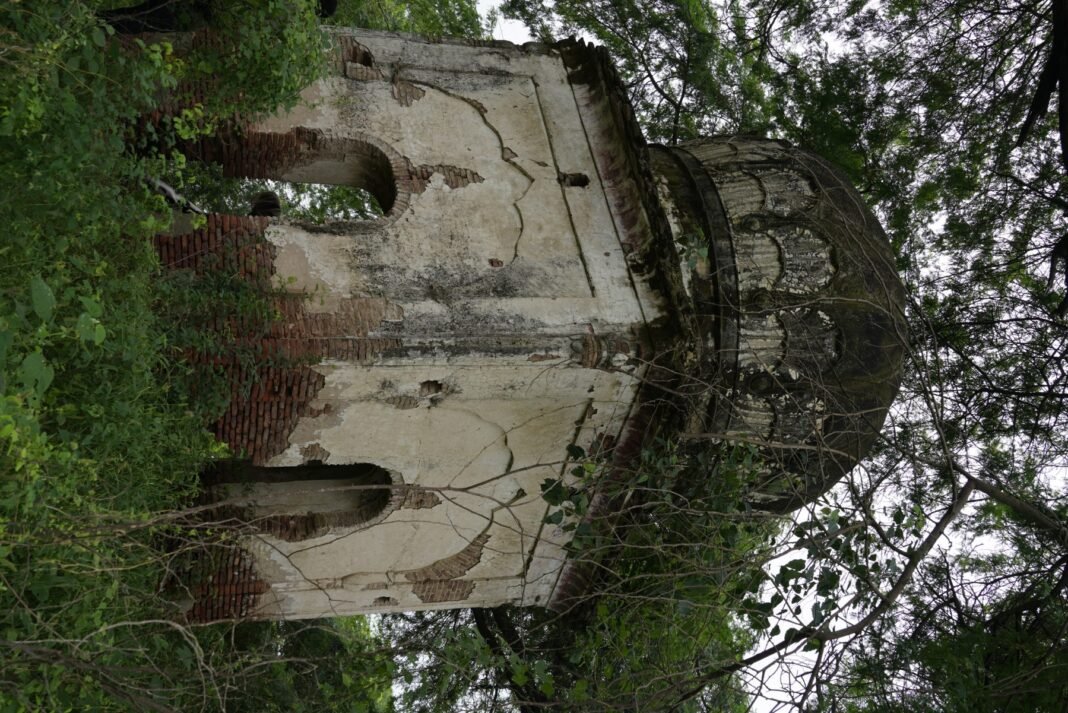
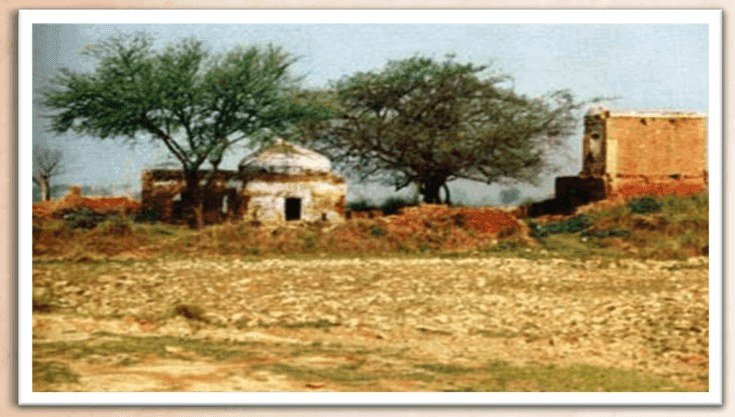
Then came Partition and the long decay that followed for hundreds of rural shrines. The building of the gurdwara fell into ruins. What survives, remarkably, is everything around the building: the well attached to it is still running and provides water, and the tall trees present a beautiful scene — the surveyors’ phrase, and an accurate one. The remnants of the building, they note with honest sadness, may survive only a few years more. Mahme Sar’s history is thus really two histories: the spiritual history of Baba Mahme Singh’s residence, and the modern history of a heritage site aging in public, waiting to be remembered.
Lalyani itself — officially Mustafa Abad — is worth knowing as the setting. It is a town in tehsil and district Kasur, on Ferozpur Road, about 15 kilometres north of Kasur city. The 2023 census counted 81,550 people here. The surrounding land is fertile — wheat and rice are the main crops — and the town has its own main market, a Punjab highway patrolling post, and easy road links to both Lahore and Kasur. This is the living Punjab around the shrine: agricultural, bustling, and very much awake, even as the old gurdwara sleeps under its trees.
Top Things to Do in Gurdwara Mahme Sar, Lalyani
Walk the Ruins Slowly
The ruined building is the heart of the visit. Walk around it slowly and read the masonry — you can still trace walls, arches and the bones of rooms. Because no restoration has smoothed it over, the ruin is an unusually honest document: this is what a village gurdwara of the old Punjab looked like, and what time does to buildings nobody maintains. Photographers: the winter morning light through the broken walls is superb.
Drink from the Old Well
The well attached to the gurdwara is still running and provides water — the living counterpart to the dead building. In the Punjab tradition, the well (khooh) of a shrine is never just plumbing; it is part of the sanctity. Ask the locals about it; wells like this one often have their own small histories of never running dry. It is a quiet, grounding moment in the visit.
Sit Under the Tall Trees
The tall trees around the shrine present what the surveyors called a beautiful scene, and they were not exaggerating. In the heat of a Kasur-district afternoon, this shade is the visit’s great mercy. Sit for a while. This is the closest you will come to the atmosphere of Baba Mahme Singh’s residence — the quiet, the birds, the sense of a place set slightly apart from the fields.
Explore Lalyani (Mustafa Abad) Town
The shrine is 1.5 km from town, so walk or drive in and see the living side of the story: the main market where locals buy groceries and daily necessities, the wheat and rice fields that made this land worth endowing to a shrine, and the Ferozpur Road itself — one of Punjab’s great historic arteries, once the road from Lahore to Ferozpur. A cup of tea at a town dhaba, with the shrine’s story fresh in your mind, is the right way to end the visit.
Famous Places In and Around Gurdwara Mahme Sar, Lalyani
Kasur city (15 km south): The city of Bulleh Shah, the great Punjabi Sufi poet, with his famous shrine, the old fort area, and Kasur’s renowned fish and methi cuisine.
Gurdwara Baba Ram Thaman Ji, Kalu Khara: Another Kasur-district shrine of a saintly figure, easily combined in the same circuit — see our Gurdwara Baba Ram Thaman, Kalu Khara travel guide.
Gurdwara Bhai Bahlol, Qadiwind: A further Kasur-district gurdwara for the dedicated heritage traveler — our Gurdwara Bhai Bahlol, Qadiwind travel guide has the details.
Lahore’s gurdwaras: For the grand counterparts to this humble ruin, browse the Explore Pakistan collection, or start with the beloved Hunza Valley and Malam Jabba features.
How to Reach Gurdwara Mahme Sar, Lalyani
Mahme Sar is one of the easiest heritage sites in Punjab to reach: it sits just off the Lahore–Ferozepur road, 1.5 km north-west of Lalyani town, with no off-road driving at all. This is a half-day trip from Lahore and a short hop from Kasur.
From Lahore: About 40–45 km southeast via Ferozepur Road, roughly 1 hour by car. Lalyani (Mustafa Abad) lies on this road about 15 km before Kasur city. Turn off toward the shrine 1.5 km north-west of the town — ask for “Mahme Sar gurdwara”; locals know it.
From Islamabad: About 380 km via the M2 to Lahore, then Ferozepur Road — 5 to 6 hours total. Overnight in Lahore and make this a morning trip.
From Karachi: About 1,200 km by road — fly to Lahore’s Allama Iqbal International Airport and drive. Plan two days minimum.
Nearest airport: Allama Iqbal International Airport, Lahore.
Transport options: Private car is ideal. The Lahore–Kasur corridor also has regular wagons and buses from Lahore’s General Bus Stand — get down at Lalyani (Mustafa Abad) and take a rickshaw the last 1.5 km. A hired car with driver from Lahore for the day is the comfortable middle option.
Road conditions: Ferozepur Road (the Lahore–Kasur road, 66 km, maintained by the Punjab Highway Department) is metalled and fine year-round. The shrine approach is a short village track — passable in all seasons except the heaviest monsoon days.
Route Details
Step 1: Leave Lahore on Ferozepur Road heading toward Kasur. Step 2: Drive about 40 km to Lalyani (Mustafa Abad) — you will pass Gajjumata and the peri-urban belt before the road opens into farmland. Step 3: 1.5 km north-west of the town, turn off toward the shrine (ask any shopkeeper for “Mahme Sar”). Step 4: Park at the site; the ruins, well and trees are all in one compact compound.
Where to Stay in Gurdwara Mahme Sar, Lalyani
Stay in Lahore or Kasur — there is no lodging at the shrine or in Lalyani town itself beyond the most basic local guest rooms, which are not set up for tourists. Lahore, an hour away, is the obvious base with its full range from five-star hotels to budget guesthouses in Gulberg, DHA and Model Town. If you want to be closer to the Kasur-district shrine belt, Kasur city has simple, clean mid-range hotels and guesthouses near the main bazaar — perfectly adequate for a night, and they put you 15–20 minutes from Mahme Sar in the morning. Either way, arrange an early start: the ruins photograph best before 10 a.m., and you will want the cool hours for walking the site.
Where to Eat: Local Foods of Gurdwara Mahme Sar, Lalyani
Eat in Lalyani town or Kasur city — the shrine itself has no food stalls. Lalyani’s main market and roadside dhabas serve the honest food of the Punjab countryside: daal fry with tandoori roti, chicken karahi, omelettes, and tall glasses of lassi, all at very budget-friendly prices. Kasur city, 15 km south, is the real food destination here: it is famous across Punjab for its fried fish and for Kasuri methi (fenugreek), the fragrant dried herb that flavors dishes all over Pakistan. If your trip falls in winter, look for saag and makki di roti — the seasonal soul food of this wheat-and-rice belt. Carry water for the shrine visit itself, and note that no langar is served at Mahme Sar.
Weather in Gurdwara Mahme Sar, Lalyani
Kasur district sits on the Punjab plains, so expect the classic plains climate: a cool, foggy-touched winter, a short perfect spring, a long fierce summer, and a humid monsoon. The visit is entirely outdoors among ruins and trees, so winter and spring are by far the best.
| Season | Temperature Range | Conditions |
|---|---|---|
| Winter (Nov–Feb) | ~7–22°C | Cool, often hazy mornings; excellent for ruins photography by mid-morning |
| Spring (Feb–Apr) | ~15–30°C | The best season — green wheat fields around the shrine, mild days |
| Summer (May–Jun) | ~30–45°C | Very hot; the trees give shade but go at dawn if visiting now |
| Monsoon/Autumn (Jul–Oct) | ~25–38°C | Humid monsoon July–August; autumn (Sep–Oct) dries and cools nicely |
Language and Culture of Gurdwara Mahme Sar, Lalyani
Punjabi is the mother tongue here, spoken in the earthy Kasuri accent; Urdu works everywhere, and the town’s shopkeepers will manage basic English. The culture is that of the Punjab agricultural belt — warm, direct, and hospitable to strangers. Because Baba Mahme Singh was a Sufi-minded saint, the shrine carries a double etiquette: the respect due to a gurdwara (cover your head, remove shoes, modest dress, no tobacco or alcohol on the premises) and the respect due to any saint’s resting place. If you meet older villagers, ask them about Baba Mahme Singh — oral memory in these towns often preserves details no survey ever recorded. And if your circuit includes Kasur city, remember you are in the city of Bulleh Shah: Sufi poetry is not a museum piece here, it is the local language of the heart.
Shopping in Gurdwara Mahme Sar, Lalyani
Buy in Lalyani’s main market or Kasur’s bazaars, not at the shrine. The most authentic souvenir of this district is Kasuri methi — dried fenugreek, the fragrant herb Kasur is famous for — sold in every spice shop and genuinely local. Kasur’s bazaars also offer khussas, everyday Punjabi textiles, and the district’s sweets. There are no shopping malls in Lalyani; for anything beyond the bazaars, Lahore’s markets (Ichhra, Anarkali) are an hour away. Do not expect souvenir stalls at the shrine — and honestly, that is part of its charm.
Local Events and Festivals
No annual fair is currently documented at Mahme Sar itself. The shrine’s calendar is quiet — another reason the visit feels contemplative rather than festive. For festival atmosphere, time your wider Punjab trip around the Sikh calendar: Vaisakhi in April, the great spring festival celebrated at gurdwaras across Punjab; Gurpurab in November, Guru Nanak’s birth anniversary, when Sikh yatris gather at Nankana Sahib and other major shrines; and Saka Nankana in February. In Kasur city, the urs of Bulleh Shah — the annual commemoration of the Sufi poet-saint — is one of Punjab’s great spiritual gatherings and pairs beautifully, thematically, with a visit to a Sufi-minded saint’s gurdwara.
Travel Tips for Gurdwara Mahme Sar, Lalyani
Packing Essentials
Head covering for the shrine; sturdy shoes (the ruin ground is uneven); sun protection; water; and a camera — this is a photographer’s ruin. A small torch helps for peering into the darker surviving rooms. In winter, layer up for the early drive; mornings on the plains can be genuinely cold.
Safety Tips
The area is settled farmland on a main road and safe for day visitors. Watch your step in the ruins — loose masonry and uneven ground are the real hazards, not people. Go in daylight, keep to the compound, and let your driver know your plan. Standard rural-Punjab sense applies: greet people, ask before photographing them, accept the tea if offered.
Money & Connectivity
Cash only — there are no ATMs at the shrine, and Lalyani’s small shops may not take cards. Kasur city has ATMs if you need them. Mobile coverage from Jazz, Telenor, Zong and Ufone is good along the Ferozepur Road corridor; data is usable at the site. Save the location offline before leaving Lahore.
Best Time to Visit Gurdwara Mahme Sar, Lalyani
Winter (November–February)
Cool, clear, and perfect for slow ruin-walking. Morning haze burns off by 10 a.m. into some of the year’s best light. The wheat is green in the surrounding fields from December onward.
Spring (February–April)
The finest season: mild days, flowering trees, and the countryside at its greenest. If you want the shrine at its most beautiful, come in March.
Summer (May–June)
Only for the determined — afternoons approach 45°C. The tall trees do shade the site, so a dawn visit is survivable, but this is the season to skip if you have a choice.
Monsoon and Autumn (July–October)
Humid monsoon in July–August; the approach track can get soft. September–October is lovely — washed clean, cooling down, and crowd-free.
Final Thoughts
Gurdwara Mahme Sar is not a place that shouts. It is a ruin with a working well and patient trees, the residence of a saint most Pakistanis have never heard of, sitting quietly 1.5 km off a busy road. But that is precisely why it belongs on your list: it is the Punjab that the guidebooks skip — syncretic, unpolished, and real. You will spend an hour here, maybe two, and you will think about it afterward, which is more than can be said for many grander stops.
Pair it with Kasur’s Sufi shrines, or fold it into a wider gurdwara circuit of the district, and this little ruin becomes the hinge of a genuinely deep day. That is the promise of this gurdwara mahme sar, lalyani travel guide: not a monument, but a memory — of a saint, a well that never stopped giving water, and trees that outlasted the walls. For more off-the-beaten-path Punjab, wander through our Explore Pakistan collection.
FAQs
Where is Gurdwara Mahme Sar, Lalyani?
1.5 km north-west of Lalyani town (also called Mustafa Abad) in Kasur district, Punjab, just off the Lahore–Ferozepur road.
What is the best time to visit?
November to March — cool, clear weather ideal for exploring the ruins. Spring (February–April) is the prettiest, with green fields all around.
How do I reach Mahme Sar from Lahore?
Drive about 40–45 km southeast on Ferozepur Road toward Kasur (roughly 1 hour), turn off at Lalyani, and follow local directions 1.5 km to the shrine.
Is the gurdwara building intact?
No — the building is in ruins, though the well still works and the tall trees survive. That is part of the visit’s poignancy; see it while the remnants stand.
Is it safe for families?
Yes. It is a short, easy stop on a main road. Keep children close in the ruins (uneven ground) and visit in daylight.
Where can I stay nearby?
Lahore (1 hour) has the full range of hotels; Kasur city (15–20 minutes) has simple mid-range hotels and guesthouses.
What food is the area known for?
Kasur is famous for its fried fish and Kasuri methi; roadside dhabas serve classic Punjabi fare at budget prices. No langar is served at the shrine.
Who was Baba Mahme Singh?
A well-known Sufi (mystic) of the Lalyani area whose residence this was; he built the gurdwara here, which took his name — a fine example of Punjab’s shared Sufi–Sikh spiritual heritage.