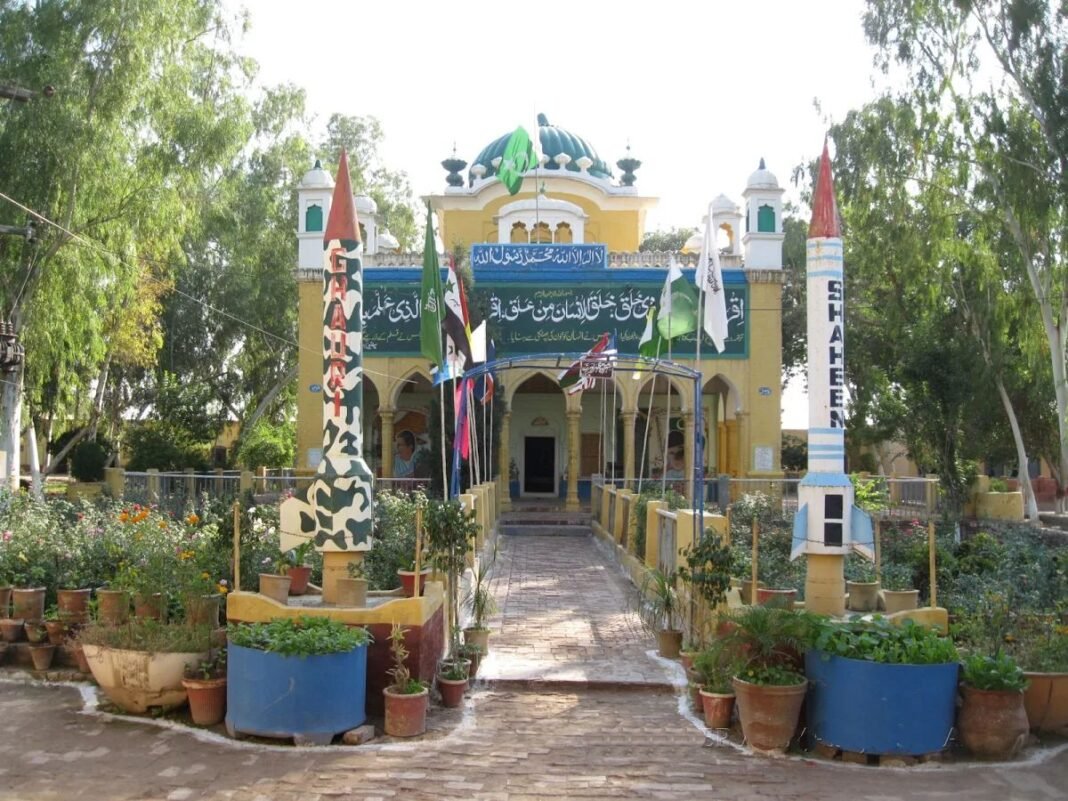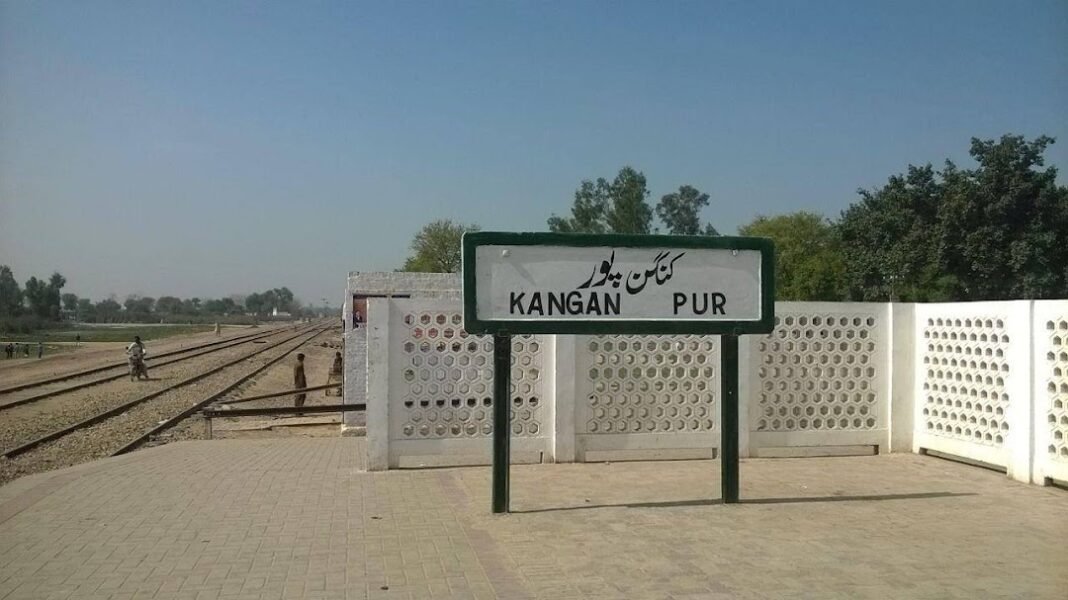
This Gurdwara Shaheed Bhai Dalip Singh, Chak 132 RB travel guide takes you to one of the quietest and most touching heritage sites in Punjab — a village gurdwara in Faisalabad district whose courtyard today holds the village’s Jamia Mosque, the two sharing a single entrance and a single history. If you care about the real, unpolished story of Punjab — the Sikh villages of the canal colonies, the upheaval of 1947, and the way old neighbours still look after each other’s holy places — this small shrine near Chak Jhumra deserves your visit. Inside this guide: why it matters, the best time to go, how to reach it from Lahore, Islamabad and Karachi, where to stay and eat, and how to visit respectfully.
Quick Facts
- Location: Chak 132 RB, Faisalabad District, Punjab — about 2 km along a paved path from the first railway crossing on the road from Chak Jhumra station toward Faisalabad
- Famous For: A gurdwara built in memory of Shaheed Bhai Dalip Singh, whose courtyard now holds the village Jamia Mosque — the two share one entrance
- Local Name: The mosque inside the gurdwara’s courtyard is affectionately known as the “gurdware wali maseet” (the mosque of the gurdwara)
- Building: Two halls with a verandah in front; the walls are described as strong, though the roof is collapsing and needs urgent repair
- Railway & Police: Chak Jhumra serves as both the railway station and the police station for the village
- Nearest City: Faisalabad (the historic Lyallpur), roughly 35 km away
- Accessibility: Paved road to Chak Jhumra, then a paved village path; reachable by car, van or motorcycle
- Best For: Heritage travellers, students of partition history, photographers of rural Punjab, and anyone interested in living interfaith heritage
Why Visit Gurdwara Shaheed Bhai Dalip Singh, Chak 132 RB
Some heritage sites impress you with grandeur. This one moves you with grace. In the village of Chak 132 RB, a gurdwara built in memory of Shaheed Bhai Dalip Singh stands with its walls still strong after all these decades — and inside its courtyard stands the village’s Jamia Mosque. The two places of worship share a single entrance. The mosque is not an intruder here; it is family. The villagers call it the “gurdware wali maseet,” the mosque of the gurdwara, and that one affectionate name tells you more about the real Punjab than a hundred history books. This is not a story of one faith erasing another. It is a story of a village that kept its old neighbour’s house of prayer standing and built its own place of worship beside it, under the same roof of respect.
That is the honest reason to come. The grand Sikh shrines of Punjab — Nankana Sahib, Kartarpur, Panja Sahib — draw thousands and deserve every visitor. But Chak 132 RB shows you the other half of the story: the village gurdwaras of the canal colonies, built by farming families who came to Lyallpur when the British turned this scrubland into the breadbasket of Punjab. These were not royal foundations; they were the spiritual centres of ordinary Sikh villages. After 1947, most of them fell silent. This one did not quite fall silent — it changed, gently, into something shared. Coming here is a way of paying respects to that whole vanished world of village Punjab, and to the Muslim neighbours who kept the building standing.
There is an urgency to the visit too. Heritage surveys have noted that while the gurdwara’s walls are strong, its roof is collapsing and needs immediate repair. Buildings like this do not wait forever. Every year that passes without conservation takes a little more of old Punjab with it. Visiting, photographing, and writing about these places is one small way of saying they matter — and for Sikh families whose grandparents prayed in village gurdwaras like this one, that recognition means a great deal.
And then there is the journey itself. The road from Chak Jhumra to the village runs through the green canal-irrigated countryside of Faisalabad district — wheat and sugarcane fields, eucalyptus-lined water channels, buffalo carts and brick kilns, the timeless tableau of central Punjab. For travellers tired of motorways and malls, this is the Punjab that still feeds the country, and the gurdwara sits at its heart like a quiet secret. Come for the story, stay for the countryside, and leave with a deeper understanding of what this land has carried.
History of Gurdwara Shaheed Bhai Dalip Singh, Chak 132 RB
The history of this shrine is the history of the canal colonies. The village of Chak 132 RB lies in what was once the Sandal Bar, the great scrub forest between the Ravi and the Chenab. In the 1890s the British laid out the Chenab Colony here — one of the largest planned agricultural settlements in the world — and founded the city of Lyallpur (today’s Faisalabad) in 1890 as its headquarters. Sikh farming families were among the colonists who took up land in the numbered “chaks” (the R.B. in Chak 132 R.B. stands for the Rakh Branch canal that waters it). They cleared the scrub, dug the watercourses, and built villages — and at the centre of each Sikh village, sooner or later, rose a gurdwara. The Gurdwara Shaheed Bhai Dalip Singh was built in memory of the martyr Bhai Dalip Singh, a sacred shrine of the village’s Sikh community in the years when the colony was flourishing.
What we know of the building itself comes from heritage surveys of Sikh shrines in Pakistan. The gurdwara is described as having two halls with a verandah in front — the classic modest form of a village gurdwara, built for daily prayer and congregation rather than for show. Its walls were found to be strong, a testament to the solid brick-and-lime construction of the canal-colony era, but its roof was found to be collapsing and in need of immediate repair. The most remarkable feature of the site is what happened after 1947: the village’s Jamia Mosque was built within the courtyard of the gurdwara, and the entrance serves both places of worship. Rather than demolishing the old shrine, the village kept it — and the mosque that grew up in its courtyard carries the gurdwara’s name in its nickname, the “gurdware wali maseet.”
The wider history of the region is worth knowing because it is the shrine’s history too. Lyallpur’s canal colonies were among the most religiously mixed settlements in Punjab — Muslim, Sikh and Hindu farmers worked neighbouring squares of land, traded in the same mandis, and sent their children to the same schools. The partition of 1947 tore this fabric apart: the Sikh and Hindu families of the chaks migrated east, and Muslim refugee families from East Punjab settled in their place. Thousands of village gurdwaras across the colony districts were abandoned, repurposed, or slowly dissolved into the landscape. That this gurdwara at Chak 132 RB survived — damaged, shared, but standing — makes it a rare witness to that whole chapter.
Chak Jhumra, the village’s railway station and police station, is itself an old settlement of the region, and the railway line that serves it is part of the colonial-era network that carried the colony’s wheat to the ports. Standing on the platform at Chak Jhumra today, you are standing in the infrastructure of the world that built this gurdwara. The shrine’s story is not really about one martyr whose full biography has been lost to time; it is about the thousands of ordinary Sikh families who made this land bloom, and the Muslim village that still keeps their house of prayer within its own.
Top Things to Do in Gurdwara Shaheed Bhai Dalip Singh, Chak 132 RB
Visit the gurdwara and the shared courtyard
The shrine is a working piece of living heritage. Enter through the common entrance, see the two halls and the verandah of the old gurdwara, and then the Jamia Mosque that stands in the same courtyard. The shared entrance is the detail to dwell on — two faiths, one doorway. Visit outside prayer times, dress modestly, and ask the villagers’ permission before entering or photographing. The community is proud of this arrangement and usually happy to show respectful visitors around.
Walk the village and the canal paths
Chak 132 RB is a classic canal-colony village: straight streets laid out on the colonial grid, brick houses, the watercourse running green beside the fields. A walk of an hour takes you through the whole rhythm of rural Faisalabad — wheat or sugarcane depending on the season, buffaloes at the water troughs, children cycling home from school. It is the setting the gurdwara was built to serve, and it has changed less than you might expect.
Ride the road from Chak Jhumra
The approach itself is part of the experience: about 2 km along a paved path from the first railway crossing on the road from Chak Jhumra station toward Faisalabad. Stop at the crossing, watch a train rattle through on the old colonial line, and then walk or ride into the village the way generations of its residents have.
Explore Chak Jhumra town
The old qasba of Chak Jhumra, with its railway station, bazaar and colonial-era buildings, repays an hour’s wandering. It is the administrative and market centre for the surrounding chaks, and its lanes still carry the mixed architectural memory of the colony era.
Photograph rural heritage
The gurdwara’s brickwork, the verandah arches, the contrast of the old halls with the village mosque, the canal landscapes around — this is rich material for photographers of heritage and rural life. Early morning light is best, and always ask before photographing people.
Famous Places In and Around Gurdwara Shaheed Bhai Dalip Singh, Chak 132 RB
- Chak Jhumra — the historic qasba with its railway station and bazaar, the gateway to the village.
- Faisalabad (Lyallpur) — the canal-colony city: the eight-bazaar Ghanta Ghar clock tower, Chenab Club, and the textile markets.
- Ghumti Fountain, Faisalabad — a colonial-era landmark of the old city.
- Nankana Sahib — the birthplace of Guru Nanak, the greatest Sikh pilgrimage centre in Pakistan, a few hours’ drive away.
- Toba Tek Singh — another canal-colony city with its own layered history, west of Faisalabad.
How to Reach Gurdwara Shaheed Bhai Dalip Singh, Chak 132 RB
The village lies near Chak Jhumra in Faisalabad district, about 35 km from Faisalabad city. The final approach is a paved village path of about 2 km from the first railway crossing on the road running from Chak Jhumra railway station toward Faisalabad. Faisalabad is well connected to the whole country by motorway, highway and rail, so the long part of the journey is easy; only the last stretch is rural.
Route Details
- From Lahore: Take the M-2/M-3 motorway corridor to Faisalabad — roughly 180 km, about 2.5 to 3 hours by car. From Faisalabad, take the Chak Jhumra Road northeast to Chak Jhumra (around 35 km), then the village path from the first railway crossing.
- From Islamabad: Take the M-2 south to the M-3 interchange and continue to Faisalabad — roughly 325 km, about 4 to 5 hours by car. Then proceed to Chak Jhumra as above.
- From Karachi: The long haul — roughly 1,200 km by the N-5/N-55 corridor via Hyderabad, Sukkur and Multan, or faster by air to Faisalabad International Airport and then by road. Trains from Karachi to Faisalabad run on the main line via Multan and Khanewal.
- From Faisalabad: Drive out on the Chak Jhumra Road; the town is about 35 km away, roughly 45 minutes. Local vans and wagons also ply the Faisalabad–Chak Jhumra route from the city’s bus stands.
- By rail: Chak Jhumra has its own railway station on the local line — a charming way to arrive, in keeping with the heritage theme. From the station, a rickshaw or a short walk covers the 2 km to the village.
Nearest airport: Faisalabad International Airport, about 45–50 km from the village, with domestic flights from Karachi and other cities; Lahore’s Allama Iqbal International Airport is the bigger gateway, about 3 hours away by road. Road conditions: Motorways and the Chak Jhumra Road are all-weather and paved; the final village path is paved but narrow — fine for cars, vans and motorcycles in all seasons. Transport options: Own or hired car is easiest; public vans connect Faisalabad with Chak Jhumra; the railway offers the most atmospheric arrival.
Where to Stay in Gurdwara Shaheed Bhai Dalip Singh, Chak 132 RB
This is a village visit, not an overnight destination — plan it as a day trip from Faisalabad, which has the full range of accommodation. The village itself has no hotels; the nearest simple lodges are in Chak Jhumra town.
Mid-range: Faisalabad’s hotels cluster around the Ghanta Ghar, the railway station and the main commercial roads — comfortable air-conditioned rooms at standard Punjab city prices. This is the sensible base: visit the village in the morning, return to the city for the night.
Budget: Simple guesthouses and lodges in Faisalabad and Chak Jhumra serve the budget traveller well. For a group visit, a day trip needs no overnight stay at all — leave Faisalabad after breakfast and be back by evening.
Luxury: Faisalabad has a small number of upper-end hotels for business travellers; luxury seekers should look to Lahore, about 3 hours away, and make this a long day trip.
Camping: Not appropriate here — the site is a village place of worship, and the flat farmland around offers no camping grounds. Stay in town.
Where to Eat: Local Foods of Gurdwara Shaheed Bhai Dalip Singh, Chak 132 RB
The food of the Faisalabad countryside is classic central-Punjabi: hearty, buttery, and unpretentious. Village dhabas serve daal, sabzi and desi chicken karahi with fresh tandoori roti; in winter, sarson ka saag with makki ki roti and a slab of white makhan is the dish of the season. Faisalabad city is famous across Punjab for its sweets and its lassi — the thick, creamy Punjabi lassi served in a tall glass with a swirl of malai is practically a meal on its own.
Eat in the village if a dhaba is open, or carry the experience into Faisalabad: the food streets around the Ghanta Ghar serve everything from barbecued kebabs to falooda, and the city’s sweet shops are worth a dedicated stop. Prices are among the friendliest in Punjab — a full village dhaba meal is genuinely budget-friendly, and even a generous city dinner stays modest. In summer, sugarcane juice and lassi from street vendors are essential; in winter, nothing beats doodh-jalebi in the morning.
Weather in Gurdwara Shaheed Bhai Dalip Singh, Chak 132 RB
Chak 132 RB shares Faisalabad’s hot-summer, cool-winter plains climate. The countryside is at its best in the cool months, when the wheat is green and the air is clear; summer turns the fields golden and the afternoons fierce.
| Season | Temperature Range | Conditions |
|---|---|---|
| Winter (Dec–Feb) | 4–19°C | Cool and pleasant; foggy mornings common in December–January. Ideal visiting season. |
| Spring (Mar–Apr) | 18–35°C | Wheat harvest season; golden fields, warm afternoons. Visit in the morning. |
| Summer (May–Jul) | 30–44°C | Hot and dry, with dust storms possible. Avoid midday travel. |
| Autumn (Sep–Nov) | 20–36°C | Cooling from October; November is comfortable and green after the rains. |
Language and Culture of Gurdwara Shaheed Bhai Dalip Singh, Chak 132 RB
The village speaks Punjabi — the Jhangvi-influenced dialect of the Sandal Bar — with Urdu as the second language of school and market. The culture is the warm, direct culture of the canal colonies: farming families, strong biradari ties, and a hospitality that treats a visitor as a guest of the whole village. The shared gurdwara-mosque courtyard is itself a cultural statement — ask the elders about it and you will hear the story told with evident pride.
For visitors: dress modestly, remove shoes before entering either place of worship, and keep your voice low inside. Time your visit outside the five daily prayer times so you do not disturb worshippers at the mosque. Women should carry a headscarf. Photography of the buildings is usually welcome if you ask first; photography of people, especially women, needs explicit permission. A few words of Punjabi — “Sat Sri Akal” at the gurdwara, “Assalam-o-Alaikum” in the village — open every door here.
Shopping in Gurdwara Shaheed Bhai Dalip Singh, Chak 132 RB
This is not a shopping destination, and that is part of its charm — but the region gives you two good reasons to open your wallet. First, Faisalabad is the textile capital of Pakistan: the city’s markets sell cloth, bedsheets, towels and garments at factory-town prices, and a detour through the bazaars around the Ghanta Ghar is rewarding. Second, the village economy runs on its fields — in season you can buy fresh sugarcane, seasonal fruit and desi ghee from village shops at honest rural prices. There are no malls or craft emporia in the village; for serious shopping, Faisalabad’s commercial districts are the place.
Travel Tips for Gurdwara Shaheed Bhai Dalip Singh, Chak 132 RB
Packing Essentials
A headscarf, comfortable walking shoes for the village paths, sunscreen, a water bottle, and a fully charged phone — the countryside is photogenic and you will want the camera. In winter bring a warm layer for foggy mornings; in summer a hat is non-negotiable.
Safety Tips
The village is peaceful and visitors are welcomed, but this is a small rural community: travel in daylight, let someone know your plan, and keep to the village paths. The gurdwara’s roof is in poor condition — admire the building from safe ground and do not enter any part that looks unstable. Respect prayer times at the mosque.
Money & Connectivity
Bring cash — the village runs on cash and the nearest ATMs are in Chak Jhumra and Faisalabad. Mobile coverage from all major networks is good in the area, with usable data for maps and messaging.
Best Time to Visit Gurdwara Shaheed Bhai Dalip Singh, Chak 132 RB
Winter (November to March) — the ideal season
Cool days, green wheat fields, clear light — this is when the village and its shrine show their best. Heritage surveys of the region also recommend these months, and visiting outside prayer times in the mild weather makes for an unhurried experience.
Spring (March to April) — harvest gold
The wheat harvest turns the countryside golden and the village is busy and alive. Mornings are the time to visit; afternoons warm up fast.
Summer (May to August) — avoid if you can
Central Punjab’s summer is punishing, and a village visit offers little shade. If you must come, arrive at dawn and leave before the heat peaks.
Autumn (September to October) — the shoulder season
The monsoon greens the fields and October brings relief from the heat. A quiet, pleasant time for the countryside, with soft light for photography.
Final Thoughts
The Gurdwara Shaheed Bhai Dalip Singh at Chak 132 RB will not appear on any list of Pakistan’s grand monuments, and that is exactly why it matters. In its shared courtyard — a gurdwara’s halls, a village mosque, one common entrance, one affectionate nickname — you can read the whole complicated, hopeful story of Punjab: the canal colonies that Sikh farmers helped build, the partition that scattered them, and the Muslim village that kept their shrine standing and gave it a place in its own daily life. It is heritage at its most human scale.
Come in winter, walk the 2 km path from the railway crossing, stand in the courtyard where two faiths share one doorway, and then drive back to Faisalabad for lassi and the bustle of the Ghanta Ghar. You will have seen a side of Punjab that the guidebooks usually miss — and you will understand this land a little better for it. For more of Punjab’s living heritage, browse our Explore Pakistan collection.
FAQs
Where is Chak 132 RB?
It is a village in Faisalabad District, Punjab, about 2 km along a paved path from the first railway crossing on the road from Chak Jhumra railway station toward Faisalabad — roughly 35 km from Faisalabad city.
What is special about this gurdwara?
It was built in memory of Shaheed Bhai Dalip Singh, and its courtyard now holds the village’s Jamia Mosque — the two share a single entrance, and the mosque is fondly called the “gurdware wali maseet.”
What is the best time to visit?
November to March, when the weather is cool and the fields are green. Visit outside the mosque’s prayer times.
How do I reach it from Lahore?
Take the M-2/M-3 motorway to Faisalabad (about 180 km / 2.5–3 hours), then the Chak Jhumra Road to Chak Jhumra (about 35 km), and the village path from the first railway crossing.
Is the building in good condition?
The walls are strong, but heritage surveys report the roof is collapsing and needs urgent repair — admire it respectfully and keep to safe ground.
Is it suitable for families?
Yes, as a gentle half-day heritage trip from Faisalabad. The village is peaceful and the visit is easy walking.
Where should I stay?
In Faisalabad, which has the full range of hotels — the village itself has no hotels, so plan a day trip.
What should I eat nearby?
Village dhaba food — daal, karahi, tandoori roti — and in Faisalabad the city’s famous lassi, sweets and Ghanta Ghar food streets, all very budget-friendly.
Can I combine it with other heritage sites?
Easily: Faisalabad’s Ghanta Ghar clock tower and old city are on the way, and Nankana Sahib is a few hours’ drive for a full Sikh-heritage day.