There is a Sikh shrine in the hills above the Indus that most Pakistanis have never heard of — and that is exactly why you should go. Gurdwara Siri Dayal Sar stands at Rakh Topi, in the Swabi district of Khyber Pakhtunkhwa, in what every survey calls a beautiful and fascinating setting. It was begun by Bhai Gurbakhsh Singh Nirankari and became a great center of the Nirankaris of the region — the reformist Sikh current that preached the formless divine. Today it anchors a journey most travelers never think to take: from the thundering spillways of Tarbela Dam, nine kilometers east, into the quiet green hills where a forgotten chapter of Sikh history waits. If you collect places that are beautiful, meaningful and gloriously uncrowded — or if you are tracing the Nirankari story from Rawalpindi to the frontier — this Gurdwara Siri Dayal Sar, Topi travel guide will show you why this corner of Swabi deserves your visit, when to go, and how to reach it.
Quick Facts
- Location: Rakh Topi, Topi Tehsil, Swabi District, Khyber Pakhtunkhwa, Pakistan
- Altitude: Around 335 meters (Topi town elevation)
- Famous For: A Nirankari gurdwara begun by Bhai Gurbakhsh Singh Nirankari; once a major center of the region’s Nirankaris; a beautiful hillside setting
- Nearest City: Swabi town (district headquarters); Islamabad roughly 110 km southeast
- Accessibility: Road via the M-1 motorway (Swabi/Ambar interchange) then local roads to Topi; nearest airport Islamabad International
- Known Landmarks: The gurdwara at Rakh Topi, Tarbela Dam (9 km east), Ghulam Ishaq Khan Institute (GIKI) near Topi
- Best For: Sikh heritage pilgrims, Nirankari history followers, off-beat KP explorers, Tarbela Dam day-trippers, photographers
- Visit Tip: Ask locally before approaching the shrine — it is in a quiet rural settlement, and a local introduction opens doors
Why Visit Gurdwara Siri Dayal Sar, Topi
The first reason is the story, and it is a remarkable one. The Nirankaris were Sikhism’s great 19th-century reformers: followers of Baba Dayal Singh (1783–1855) of Rawalpindi, who preached Dhan Nirankar — blessed is the Formless One — and called the community back to simple, idol-free worship. The movement’s birthplace gurdwara still stands in Rawalpindi’s Narankari Bazaar (see our Gurdwara Nirankari, Rawalpindi travel guide). But reform movements travel, and the Nirankari message traveled up the Grand Trunk Road to the frontier — to Rakh Topi, where Bhai Gurbakhsh Singh Nirankari began building this gurdwara. It became, in the words of every survey, a big center of the Nirankaris of the area. To visit is to complete the Nirankari story: from its birth in a Rawalpindi bazaar to its flowering in the hills of Swabi.
The second reason is the setting. The old accounts linger on this point: the place where the shrine was built is “a beautiful and fascinating place.” Rakh Topi sits in the rolling country between the Peshawar valley and the Indus — green fields, scattered hills, and the vast blue presence of the Tarbela reservoir just to the east. This is not the Punjab-plains gurdwara experience of grand city shrines; it is a hillside sanctuary, the kind of place where the architecture and the landscape preach the same sermon about the Formless. Come at golden hour and you will understand why Bhai Gurbakhsh Singh chose this ground.
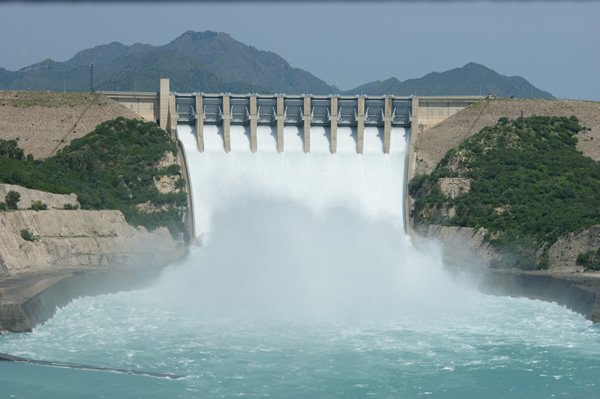
The third reason is the combination no one else is offering. Nine kilometers east of Topi stands the Tarbela Dam — the largest earth-filled dam in the world, a wonder of engineering on the Indus, with a reservoir nearly 100 km long. Travelers come to Swabi for the dam and never learn about the gurdwara; heritage travelers chase the gurdwara and miss the dam. Do both in one day and you get the full Topi experience: Pakistan’s engineering sublime in the morning, its spiritual heritage in the afternoon, and some of the best roadside fish and chapli kebab in Khyber Pakhtunkhwa in between. Few day trips in the country pack this much range into so few kilometers.
Finally, come for the discovery. Pakistan’s Sikh heritage trail is usually drawn through Punjab — Nankana Sahib, Kartarpur, Panja Sahib, Lahore. The Khyber Pakhtunkhwa shrines (Topi, Nowshera, Bannu, Dera Ismail Khan) are the trail’s forgotten northern chapter, visited by almost no one and documented by only a handful of historians. Travelers who go now — respectfully, curiously, with a local guide — see these places as the surveyors saw them: intact in setting, rich in story, and empty of crowds. If your Pakistan travels have a “roads less traveled” list, Rakh Topi belongs at the top of it.
History of Gurdwara Siri Dayal Sar, Topi
The history of Gurdwara Siri Dayal Sar is the history of an idea traveling north. In the early 19th century, in Rawalpindi’s bazaars, Baba Dayal Singh began preaching his reform: no idols, no empty ritual, devotion to the Formless One (Nirankar). His cry of Dhan Nirankar gave his followers their name — Nirankaris — and gave Rawalpindi’s Narankari Bazaar its name too. The movement spread through the Sikh communities of northern Punjab and into what is now Khyber Pakhtunkhwa, carried by preachers and by the Sikh soldiers, traders and administrators of Maharaja Ranjit Singh’s expanding frontier.
At Rakh Topi, in the Swabi district, the Nirankari message found one of its great regional champions: Bhai Gurbakhsh Singh Nirankari, who began the construction of the gurdwara that became Siri Dayal Sar. The name joins Siri (holy) with the memory of the reformist current — a shrine of the Formless in the hills. Under Bhai Gurbakhsh Singh’s founding impulse, the gurdwara grew into a major center of the Nirankaris of the area — the spiritual headquarters for the reformist Sikhs of the Swabi–Nowshera–Mardan belt, a place of congregation, preaching and community life.
The shrine’s setting shaped its character. Unlike the great urban gurdwaras of Rawalpindi and Peshawar, Siri Dayal Sar was a rural sanctuary — the accounts emphasize the beauty of its site, suggesting a place chosen as much for contemplation as for congregation. In the decades before 1947, it served a thriving local Sikh and Nirankari population; the Swabi region, on the historic route between Peshawar and the Punjab, had Sikh communities in its towns and villages, served by a network of gurdwaras and dharamsalas.
Partition in 1947 ended the shrine’s life as an active congregation, as it did for nearly all of KP’s Sikh shrines. The community migrated east, and the gurdwara at Rakh Topi fell quiet. What survives — the building, its setting, and its documented place in the Nirankari story — is preserved in the field record of historians like Iqbal Qaiser, whose surveys remain the essential guide to these frontier shrines. The gurdwara’s modern significance is as heritage: a beautiful, little-visited monument to the only Sikh reform movement born on what is now Pakistani soil, in the province where that movement’s northern chapter was written. Travelers today are advised to ask locally before approaching — the shrine sits in a quiet rural settlement, and arriving with a local introduction is both courteous and practical.
Top Things to Do in Gurdwara Siri Dayal Sar, Topi
Visit the Shrine at Rakh Topi
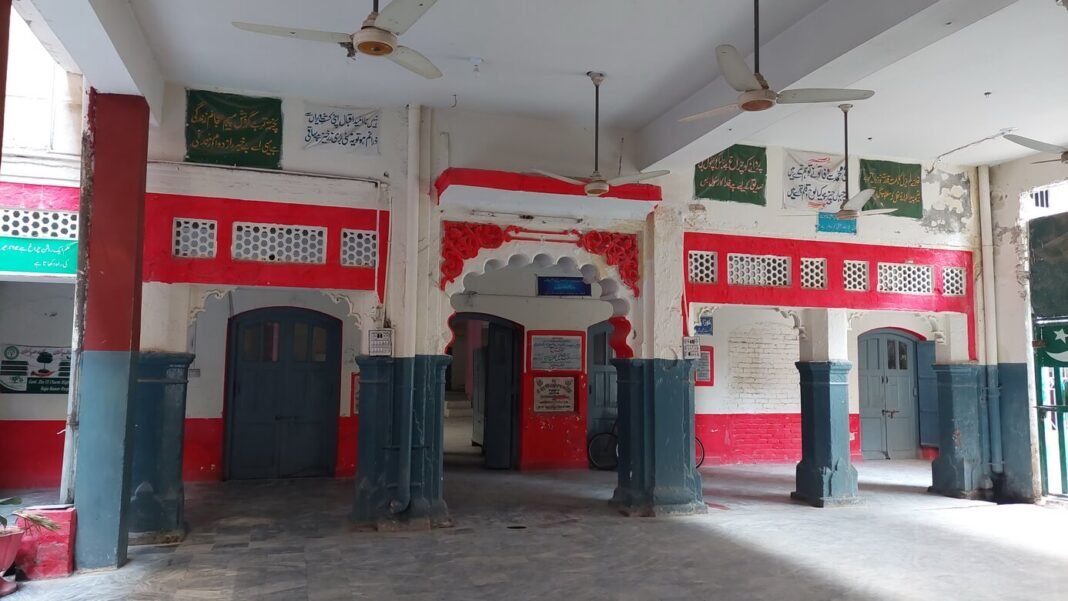
The gurdwara itself is the destination: the Nirankari shrine begun by Bhai Gurbakhsh Singh, once the regional center of the movement. Walk the compound slowly and take in what the old surveys praised — the beautiful setting, the hillside air, the sense of a sanctuary deliberately placed apart from the world’s noise. Observe full gurdwara etiquette: cover your head, remove your shoes before entering the prayer hall, keep your voice low, and do not photograph worshippers or the scriptures without permission. Because this is a quiet rural site, arrive with a local contact or guide, introduce yourself to whoever is nearby, and accept the tea that will almost certainly be offered.
Trace the Nirankari Story: Rawalpindi to Topi
For the historically minded, Siri Dayal Sar is chapter two of a two-chapter story. Chapter one is the Gurdwara Nirankari in Rawalpindi — Baba Dayal Singh’s birthplace-shrine, the first Sikh-rites marriage, the white-marble halls. Chapter two is here at Rakh Topi, where Bhai Gurbakhsh Singh carried the reform to the frontier. Visit both (they pair naturally on a Rawalpindi–Swabi itinerary) and you will have traced one of Sikhism’s most important reform movements from its source to its frontier flowering — a journey no guidebook currently offers.
Marvel at Tarbela Dam, 9 km East
No visit to Topi is complete without the Tarbela Dam, the largest earth-filled dam in the world, on the Indus River in Topi Tehsil itself. The powerhouse lies in this very tehsil; the reservoir stretches nearly 100 km. Note that the dam is a sensitive installation — prior permission is required to visit inside, and casual access to the structure is restricted. The permitted viewpoints, the lake vistas and the boating points downstream still make a spectacular half-day. The best months for the dam’s spillway views are August–September, when the spillways run. Combine the dam in the morning with the gurdwara in the afternoon for the perfect Topi day.
Explore Topi Town and the GIKI Campus
Topi itself (population around 75,000) is a pleasant district town at 335 meters elevation, with a classic KP bazaar. Nearby stands the Ghulam Ishaq Khan Institute of Engineering Sciences and Technology (GIKI) — one of Pakistan’s most prestigious engineering universities, whose campus sits in the hills near Topi and is an attraction in its own right for its architecture and setting. The town bazaar is the place for chapli kebab, fresh lassi and the region’s famous hospitality.
Walk the Countryside Around Rakh Topi
The country around the shrine — fields, orchards, hill tracks — is made for walking in the cool months. The light in late afternoon, with the hills going gold and the Indus valley haze in the distance, is superb for photography. Keep to paths, respect farmland, and take a local companion; the hills are safe but unfamiliar ground is always better walked with someone who knows it.
Famous Places In and Around Gurdwara Siri Dayal Sar, Topi
- Tarbela Dam and Lake — the world’s largest earth-filled dam, 9 km east; boating points and lake viewpoints
- GIKI (Ghulam Ishaq Khan Institute) — Pakistan’s premier engineering university campus near Topi
- Gurdwara Nihang Singh Chhaoni, Nowshera — another historic KP gurdwara, a short drive south
- Topi Bazaar — the district town’s market for food, shawls and everyday KP life
- Swabi town — district headquarters with its own bazaars and the famous Swabi hospitality
- Khanpur Dam — a further day-trip option toward Taxila/Haripur for lake and watersports lovers
How to Reach Gurdwara Siri Dayal Sar, Topi
Topi sits in eastern Swabi district, well connected to the motorway network. From Islamabad (about 110 km), take the M-1 motorway west toward Peshawar and exit at the Swabi/Ambar interchange; from there local roads run north to Topi town (30–40 minutes from the interchange). The total drive is roughly 2–2.5 hours. At Topi, ask for Rakh Topi — the shrine’s locality — and take a local guide for the last stretch; the gurdwara is in a rural settlement, not on a signposted tourist road.
From Peshawar (about 130 km), take the M-1 east to the same Swabi interchange (roughly 2.5 hours). From Lahore (about 500 km), it is M-2 to Islamabad then M-1 west — a full day’s drive of 6–7 hours, best broken with an overnight in Islamabad. From Karachi (about 1,500 km), fly to Islamabad International Airport and drive; the shrine is a comfortable day trip from the capital. The nearest airport is Islamabad International; the nearest railway stations are at Nowshera and Attock on the main line.
Transport options: a private car or hired car with driver is strongly recommended — public transport will get you to Topi town (wagons and coasters from Swabi, Mardan and Rawalpindi), but the shrine at Rakh Topi needs a local vehicle and, ideally, a local introducer. Hire a guide in Topi bazaar; the town’s elders know the shrine and its story. Tour operators in Islamabad can arrange Swabi–Tarbela–Topi day trips that include the gurdwara for heritage-minded clients — ask specifically, since it is not on standard itineraries.
Route Details
Islamabad → Topi → Rakh Topi (the classic day trip): M-1 motorway west from Islamabad, exit at Swabi/Ambar interchange, local road north to Topi (about 110 km total, 2–2.5 hours). In Topi, engage a local guide, drive to Rakh Topi and visit the shrine (1–2 hours). Continue 9 km east to the Tarbela Dam viewpoints, then return via the same route. Start by 8 a.m. to fit both comfortably.
Peshawar → Topi: M-1 east to Swabi interchange, then north to Topi. About 130 km, 2.5 hours. Combinable with the Nowshera gurdwara en route for a KP Sikh-heritage day.
Lahore → Topi: M-2 to Islamabad, M-1 to Swabi interchange, north to Topi. About 500 km, 6–7 hours — an overnight trip, or part of a longer KP circuit.
Road conditions: The M-1 is an excellent motorway year-round. The interchange-to-Topi road is paved but narrower — fine for cars in all seasons. The final track to Rakh Topi is rural; passable for cars in dry weather, slower after monsoon rains. Winter mornings can be foggy in the valley — drive after 9–10 a.m. in December–January.
Where to Stay in Gurdwara Siri Dayal Sar, Topi
Topi is a district town, not a tourist resort — which means your lodging strategy is honest and simple. For a day trip, base in Islamabad (2–2.5 hours away), which offers the full range from luxury to budget, and do Topi as a long day out. For a slower trip, stay in Swabi town, the district headquarters, which has mid-range hotels and guesthouses used by business travelers — clean, inexpensive and well located for both Topi and the Tarbela side.
In Topi town itself, expect only basic local guesthouses (musafir khanas) — functional for the hardy, but book nothing without a local recommendation. There are no hotels at Rakh Topi or at the shrine, and camping at the religious site would be inappropriate. If your itinerary includes the full KP gurdwara circuit (Topi, Nowshera, and south toward Dera Ismail Khan), plan town-to-town with nights in Swabi/Mardan and D.I. Khan. Our Islamabad guide covers capital lodging in depth for the base-camp option.
Where to Eat: Local Foods of Gurdwara Siri Dayal Sar, Topi
Eating in Swabi district is one of the trip’s great pleasures. The region’s signature is the chapli kebab — the flat, tomato-and-pomegranate-seed-flecked minced-meat patty that Peshawar made famous and Swabi does superbly; Topi’s bazaar shops serve it hot off the griddle with naan. Seekh kebabs, chicken karahi and daal-and-rice plates anchor the dhaba menus. Near Tarbela, fresh river fish — fried or grilled Indus fish at the lakeside stalls — is the must-try; ask for the catch of the day.
For drinks: kehwa (green tea, the KP default), salty or sweet lassi, and fresh sugarcane juice in season. A dhaba meal in Topi is deeply budget-friendly — a full kebab-and-naan dinner for one costs only a few hundred rupees. Carry water and snacks for the shrine visit itself; there are no eateries at Rakh Topi. And observe the local custom: if villagers invite you to share a meal, accept — Pukhtun hospitality (melmastia) is not a performance for tourists, it is a point of honor, and refusing without grace offends.
Weather in Gurdwara Siri Dayal Sar, Topi
Topi sits low — about 335 meters — at the edge of the Peshawar valley system, which means hot summers, mild winters, and the monsoon’s full attention. The shrine visit is outdoors and on foot, so plan around the heat.
| Season | Temperature Range | Conditions |
|---|---|---|
| Winter (Dec–Feb) | 4–20°C | Cool, often sunny days; chilly mornings — excellent walking weather; occasional valley fog |
| Spring (Mar–Apr) | 15–32°C | Beautiful — green fields, clear air; the best season for the shrine and the countryside |
| Summer (May–Jun) | 25–42°C | Very hot; visit only at dawn or dusk; carry abundant water |
| Monsoon (Jul–Sep) | 26–36°C | Humid with heavy showers; rural tracks get muddy; the Tarbela spillways run (Aug–Sep) |
| Autumn (Oct–Nov) | 16–32°C | Dry and comfortable — the second-best window; harvest season in the fields |
Language and Culture of Gurdwara Siri Dayal Sar, Topi
Swabi is Pukhtun country: the language is Pashto (the Yusufzai dialect), and the culture is the Pukhtun code — hospitality (melmastia), honor, and a deep respect for guests. Urdu is widely understood in Topi town and by younger people; English is limited to the educated. Learn a greeting or two — Assalam-o-Alaikum is universal, and dera manana (thank you very much) earns genuine smiles.
Cultural notes for the shrine visit: this is a conservative rural area. Dress modestly — long trousers and covered shoulders for men; for women, a headscarf/dupatta, long sleeves and loose trousers or a long skirt. At the gurdwara, observe full Sikh etiquette (covered head, bare feet in the prayer hall, quiet reverence). Ask before photographing people — many will agree warmly, but asking is the custom. Travel with a local guide not just for directions but for introductions: in Pukhtun culture, a guest who arrives through a known person is a guest of honor. Women travelers will find the area welcoming but should travel with a companion or guide, as everywhere in rural KP.
Shopping in Gurdwara Siri Dayal Sar, Topi
Topi’s bazaar is a working district-town market, not a tourist souk — which is precisely its charm. Shop for Pukhtun shawls and woolen chaddars (excellent quality, honest prices), dry fruits (walnuts, almonds, dried apricots from the northern trade), honey, and desi ghee. Swabi district is famous for its tobacco as a crop, and the bazaar sells the region’s agricultural produce in season. There are no souvenir shops at the shrine and no shopping malls in Topi — for malls and branded shopping, Islamabad (2+ hours) is the answer. The best “souvenir” from Rakh Topi is intangible anyway: the story, and the photographs of that beautiful hillside setting.
Travel Tips for Gurdwara Siri Dayal Sar, Topi
Packing Essentials
Sun protection (cap, sunscreen, sunglasses) — the hillside site is exposed. Sturdy walking shoes for uneven ground. A headscarf/dupatta for the gurdwara and for cultural comfort. Water and snacks — nothing is sold at Rakh Topi. A power bank; a camera with zoom for the Tarbela vistas. In winter, a warm jacket for chilly mornings; in summer, light breathable layers and extra water.
Safety Tips
Swabi district is settled, agricultural and generally peaceful; the standard KP travel guidance applies. Travel in daylight, use a local guide, and keep your hotel informed of your day plan. Do not approach the Tarbela Dam’s restricted zones — respect all WAPDA/security signage and barriers; permission is required for inside visits. Keep to paths around the shrine and farmland. Foreign visitors should carry passports and check current travel advisories for KP before the trip.
Money & Connectivity
Carry cash — Topi town has bank branches and ATMs, but Rakh Topi has neither, and small vendors are cash-only. Jazz, Telenor, Zong and Ufone all cover the Swabi–Topi corridor with 4G; signals thin out in the hills around the shrine. Download offline maps before leaving the motorway. There is no public Wi-Fi at the site.
Best Time to Visit Gurdwara Siri Dayal Sar, Topi
Autumn to Spring (October–March): The Ideal Season
Cool, dry, clear — this is the window the field surveys themselves recommend (October to March). Walking weather is perfect, the hillside setting shows at its best, and the Tarbela reservoir sits blue and photogenic. Winter mornings can be foggy in the valley; start after 9–10 a.m.
Spring (March–April): The Most Beautiful Weeks
If you must pick one month, pick March: green fields, flowering orchards, mild air, and the whole countryside awake. This is also the season of Vaisakhi (mid-April) — while no fair is documented at Siri Dayal Sar itself, the festival is the heartbeat of the Sikh calendar and gives a heritage pilgrimage its living context.
Summer (May–June): Only for the Hardy
Valley heat reaches 40°C-plus. If you travel then, do the shrine at dawn, the dam viewpoints at dusk, and rest through midday. Carry far more water than you think you need.
Monsoon (July–September): Dramatic but Difficult
Heavy rain, muddy tracks, humid air — but also the Tarbela spillways in full flow (August–September), a sight worth the trouble for dam enthusiasts. If the spillways are your goal, this is your season; if the shrine is the goal, wait for October.
Final Thoughts
Gurdwara Siri Dayal Sar is not the easiest shrine to reach, and that is its gift. While the tour buses queue at the famous gurdwaras of Punjab, you will stand almost alone in a beautiful hillside sanctuary where a reform movement once flowered — the frontier chapter of the Nirankari story, begun by Bhai Gurbakhsh Singh, kept in the memory of the hills. Pair it with the thunder of Tarbela, nine kilometers east, and a plate of chapli kebab in Topi bazaar, and you have a day that no standard Pakistan itinerary can match.
Go between October and March, when the air is clear and the walking is kind. Bring a local guide, bring curiosity, and bring respect for a community’s sacred ground. The shrines of the frontier do not advertise themselves; they reward the traveler who seeks them out. For Sikh-heritage pilgrims, for students of reform and pluralism, and for anyone who believes the best destinations are the ones you have to work a little to find — Rakh Topi is waiting. Discover more hidden chapters in our Explore Pakistan series.
FAQs
Where is Gurdwara Siri Dayal Sar, Topi?
At Rakh Topi, in Topi Tehsil of Swabi District, Khyber Pakhtunkhwa — reached via the M-1 motorway (Swabi/Ambar interchange), then local roads north to Topi town and on to Rakh Topi with a local guide.
What is the best time to visit Gurdwara Siri Dayal Sar?
October to March, when the weather is cool and dry. March–April is the most beautiful; avoid the May–June heat and be cautious on rural tracks during the July–September monsoon.
How do I reach the gurdwara from Islamabad?
Drive about 110 km via the M-1 motorway west to the Swabi/Ambar interchange, then north to Topi (2–2.5 hours total). From Topi town, hire a local guide for the last stretch to Rakh Topi.
Who was Bhai Gurbakhsh Singh Nirankari?
The Nirankari reformer who began the construction of this gurdwara at Rakh Topi. Under his founding impulse it became a major center of the Nirankaris — followers of Baba Dayal Singh’s 19th-century reform movement — in the Swabi region.
Is Gurdwara Siri Dayal Sar safe for tourists?
Swabi is settled and generally peaceful; travel in daylight with a local guide, respect the conservative rural culture, and check current KP travel advisories if you are a foreign visitor.
Can I combine it with Tarbela Dam?
Yes — the dam is only 9 km east of Topi and makes a perfect same-day pairing. Note that prior permission is required to visit inside the dam; the viewpoints and lake are the standard visit. Spillway flows are best in August–September.
Where can I stay near Topi?
Day-trip from Islamabad (2–2.5 hours), or overnight in Swabi town’s mid-range hotels. Topi town has only basic local guesthouses; there is no lodging at the shrine.
What food should I try in Topi?
Chapli kebab in the town bazaar, seekh kebabs and karahi at the dhabas, fresh Indus river fish near Tarbela, kehwa and lassi — all at very budget-friendly prices.