Quick Facts
- Location: Haveli District, Azad Jammu and Kashmir, Pakistan — Forward Kahuta is the district headquarters
- Altitude: Around 8,000 feet above sea level; Bedori Top, the district’s highest peak, reaches 12,228 feet
- Famous For: Untouched Pir Panjal valleys, the Haji Pir Pass, Neel Fari lake, Hillan waterfall, and some of AJK’s least-visited mountain country
- Nearest City: Rawalakot (Poonch Division); Muzaffarabad is about 162 km away
- Accessibility: By mountain road — Islamabad/Rawalpindi via Kahuta, Azad Pattan and Rawalakot; the district sits in sensitive border country, so check access locally and carry ID
- Known Landmarks: Haji Pir Pass, Bedori Top, Neel Fari, Hillan Waterfall, Lasdana, Mehmood Gali
- Best For: Adventurers, trekkers, solitude seekers, and travelers who want Kashmir far from the crowds
Why Visit Haveli & Forward Kahuta
Everyone knows Neelum Valley and everyone has heard of Banjosa — but almost nobody you meet will have been to Haveli. That is the entire pitch. Tucked into the Pir Panjal range along the Line of Control, Haveli District is the Azad Kashmir that tourism forgot: forested valleys, high meadows, waterfall after waterfall. The great wall of the Bedori massif, all of it visited by a fraction of the travelers who crowd the famous valleys. If you have ever stood at a packed viewpoint in Murree and wished for the same mountains without the noise, Forward Kahuta is your answer.
Bedori Top: The District’s Highest Peak
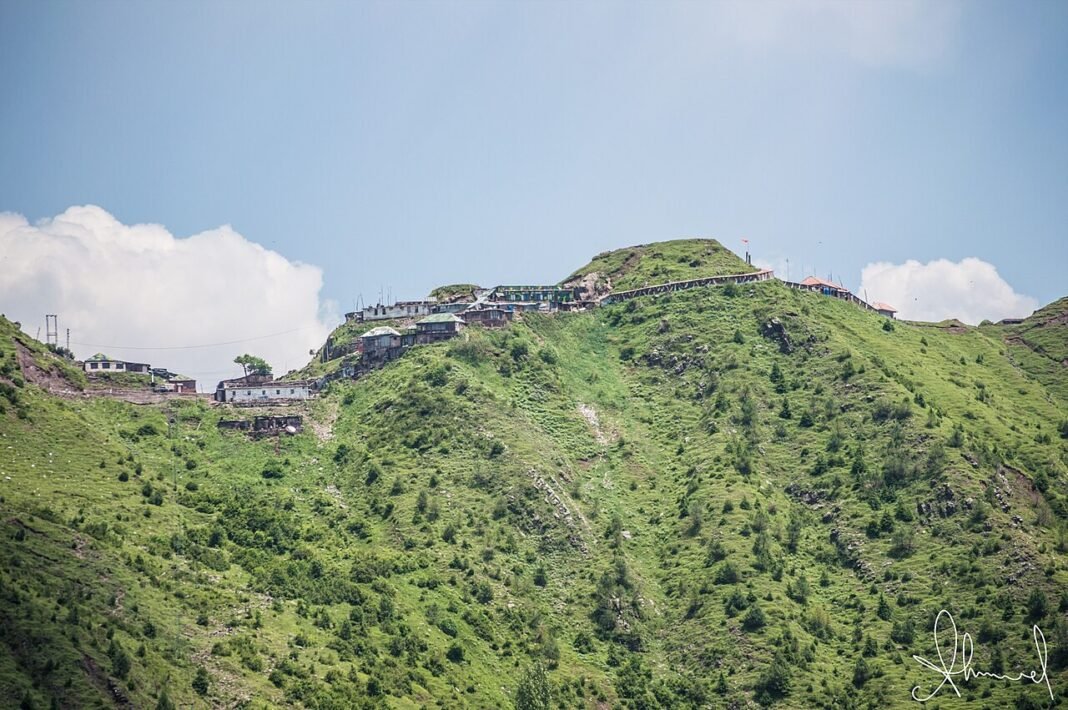
Forward Kahuta itself is a working mountain town, not a resort. And that is exactly why it works as a base. For example, from here the district fans out into places with names that sound like poetry: Neel Fari, the high lake you reach by an hour’s drive and a two-to-three-hour hike through country most Pakistanis have never seen. In fact, the Hillan waterfall, a two-hour ride from town through raw, beautiful terrain. The historic Haji Pir Pass, a name every student of 1947s history knows. And above them all, Bedori Top at 12,228 feet, the highest peak in the district and a serious trek for serious walkers.
This is also the Kashmir of honey and walnuts. The district is famous across AJK for its natural honey, its walnut groves and its orchards. The kind of place where the souvenir you take home is a jar of something made within sight of where you are standing. The people, mostly farming families with deep traditions of teaching and military service, are known for a patriotism and hospitality that visitors remember longer than the scenery.
A word of honest framing: Haveli sits in sensitive border country. That means you travel with more flexibility than you would to a conventional resort — you check access locally, you carry your original ID, you respect photography restrictions. You let the journey take the time it takes. Travelers who accept those terms are rewarded with one of the last genuinely undiscovered corners of Pakistani Kashmir. If that trade sounds fair to you, keep reading. This Haveli & Forward Kahuta travel guide will show you how to do it right.
History of Haveli & Forward Kahuta
Haveli’s history is the history of the Poonch region. It is older and harder than the district’s quiet valleys suggest. In Mughal times this country served as a safe route between Poonch and Srinagar, a mountain corridor that armies, traders and pilgrims all depended on. The modern district’s story begins in earnest in 1819. The Poonch region became part of the Sikh Empire despite fierce resistance from the local mountain tribes. Maharaja Ranjit Singh granted Poonch as a jagir to Raja Dhyan Singh, his Dogra wazir, whose family administered it until Partition in 1947.
After 1846 the maharajas of Jammu and Kashmir became the suzerains of the jagir and tightened their grip as the decades passed.
The Raja’s Road to Haji Pir
The most tangible relic of that era still shapes travel here: Raja Baldev Singh built a road from Poonch to the Haji Pir Pass via Kahuta, complete with a suspension bridge over the Betar Nala near the town — later upgraded to wood. That bridge was burnt down by Jammu and Kashmir State Forces during the 1947 war, in the confusion of a column mistaken for an enemy attack, and in the aftermath the Azad Kashmir Regular Force captured this district and brought it into Pakistan as part of Azad Kashmir.
The Haji Pir Pass itself would go on to become one of the most famous names of the 1965 war.
Administratively, Haveli spent most of the 20th century as a subdivision before becoming a full district of Azad Kashmir, with Forward Kahuta as its headquarters and municipal corporation. Also, the district today is divided into three tehsils — Haveli, Khurshidabad and Mumtazabad — with twelve union councils and some 95 villages. It remains what it has always been: high, remote, self-reliant country, now slowly opening to the travelers willing to make the journey.
Top Things to Do in Haveli & Forward Kahuta
Hike to Neel Fari Lake
If you do one thing in Haveli, make it Neel Fari. The journey is the classic Haveli experience: about an hour’s drive from Forward Kahuta toward Bashan, then a two-to-three-hour hike into high, lonely country to reach the lake itself. Travel writers who have covered the district call Neel Fari the most-visited spot in this part of Kashmir — which, in Haveli, still means you may have it to yourself. The lake sits in a bowl of green and stone that photographs beautifully and feels genuinely remote. Go with a local guide, start early, and carry everything you need.
Stand at the Haji Pir Pass
The Haji Pir Pass is history you can stand on. This is the pass the old Poonch–Kahuta road climbed, the corridor of the Mughal route and the 1947 campaign, and one of the great names of the region’s military history. The pass country around it — Darra Haji Peer and the surrounding ridges — is also simply beautiful: high meadows, pine forest and long views. Because this is border-adjacent ground, check locally about access and photography rules before you go, and respect them completely.
Chase the Hillan Waterfall
The Hillan waterfall, in the Hillan valley, is the district’s most accessible piece of drama — roughly a two-hour ride from Forward Kahuta through rugged, gorgeous terrain. Meanwhile, after the monsoon and in spring the falls run full and loud, throwing mist across the rocks. In fact, it is the perfect half-day expedition from town and a reminder that Haveli’s water is everywhere: the Betar Nala runs through the center of the district, feeding valleys that stay green deep into summer.
Trek Toward Bedori Top
At 12,228 feet, Bedori Top is the highest peak in Haveli District and the crown of the Bedori massif. Also, a serious, multi-day objective for experienced trekkers. (Older local accounts sometimes quote far higher figures. In fact, the surveyed figure is the one to trust.) The approach passes through the high pastures and forest ridges that make Haveli special. In addition, the summit views take in the whole Pir Panjal wall. This is expedition trekking: go with experienced local guides, proper gear and flexible days. Read our Bedori Peak travel guide for more on the mountain itself.
Explore Lasdana, Mehmood Gali and the Valley Villages
Lasdana, Mehmood Gali, Aliabad, Kalamula, Jabbi Syedan, Hallan and Sheroo Dahara are the names that fill a Haveli itinerary — a string of valleys, viewpoints and villages, each with its own character. Also, Mehmood Gali is the gateway most travelers pass through. In fact, Lasdana offers classic high-valley scenery. In addition, and the Bring Bun viewpoint near Forward Kahuta gives you the district in one sweeping look. None of these places is a “resort” — all of them are better for it. Wander, drink the tea you are offered, and let the villages set the pace.
Taste the Honey and Walnuts at Source
Haveli is famous across Azad Kashmir as the home of natural honey and walnuts, and buying them here — from the villages around Qaim Abad and the valley bazaars — is one of the trip’s genuine pleasures. The district’s orchards also produce seasonal fruits and dry fruits. Also, come in the right season and you will eat fruit picked that morning and honey harvested within sight of the shop.
Famous Places In and Around Haveli & Forward Kahuta
- Neel Fari (Neel Kunth): The high lake — the district’s signature hike.
- Haji Pir Pass: The historic pass of the old Poonch road and 1947/1965 history.
- Hillan Waterfall: The accessible cascade, about two hours from Forward Kahuta.
- Bedori Top (12,228 ft): The district’s highest peak; serious trekking.
- Lasdana & Mehmood Gali: Gateway valleys and viewpoints on the approach roads.
- Bring Bun: Scenic viewpoint just outside Forward Kahuta town.
- Rawalakot: The Pearl Valley city to the west — the natural pairing for a longer AJK trip.
- Toli Pir: The famous high meadow beyond Rawalakot, combinable on a longer circuit.
How to Reach Haveli & Forward Kahuta
The journey to Haveli is part of the adventure. You should budget a full travel day from the capital region. From Islamabad, the standard route runs Islamabad to Kahuta, onward to Azad Pattan at the AJK boundary, then up to Rawalakot and east through the Bagh–Haveli corridor via Mehmood Gali to Forward Kahuta — roughly 250 km from Rawalpindi. A drive of seven to nine hours depending on road works and weather. From Lahore, join the same corridor via Islamabad/Rawalpindi. There is no shortcut, so plan it as a two-day journey with a night halt, ideally in Rawalakot.
From Karachi, fly to Islamabad first — the overland journey from Karachi to Haveli is not a realistic single trip — then follow the Islamabad route.
The nearest airport is Islamabad International Airport. Also, from there, your realistic options are a private car or 4×4 (strongly recommended for the final mountain stretches), a hired tour van, or public transport as far as Rawalakot with local arrangements onward. Note that the Rawalpindi–Kahuta road has been under a long-delayed dualization project, with the Sihala railway crossing a notorious bottleneck — check current conditions before you travel, and add buffer time rather than a tight schedule.
Road conditions are the honest caveat of this entire guide. The mountain roads beyond Rawalakot are narrow, winding and vulnerable to landslides in the monsoon and snow in winter. Travel in daylight, never rush the descents, and in winter confirm the route is open before leaving Rawalakot. Because Haveli includes LoC-adjacent areas, confirm current travel permissions before departure, carry your original CNIC, and follow security instructions — including photography restrictions — wherever they apply.
Route Details
- Islamabad/Rawalpindi to Kahuta: Head out via the Kahuta road corridor (allow extra time for the Sihala bottleneck and ongoing road works).
- Kahuta to Azad Pattan: Cross into Azad Kashmir at Azad Pattan on the Jhelum river.
- Azad Pattan to Rawalakot: Climb to the Pearl Valley city — about 3.5 hours from Islamabad on the improved road; a natural night halt.
- Rawalakot to Forward Kahuta: East through the Bagh–Haveli corridor via Mehmood Gali — mountain road, several hours, spectacular throughout.
- Forward Kahuta as base: Arrange local transport and guides in town for Neel Fari, Hillan, Haji Pir and the valley villages.
Where to Stay in Haveli & Forward Kahuta
Set expectations honestly: Haveli is not a hotel destination. Also, Forward Kahuta has small, basic hotels and guesthouses clustered around the town and bazaar — clean, affordable, and perfectly adequate as trekking bases. For example, travel sites covering the district have pointed to options like the Royal Park Hotel and VJs Hotel in the area, which gives you a sense of the tier: simple rooms, local food, and hosts who can arrange guides and transport. Book by phone where possible, and do not expect online booking engines to cover this district.
For more comfort, Rawalakot — the divisional hub to the west — has a wider range of hotels and rest houses and makes a good first-night halt on the way in. Also, at the top end of the experience scale, camping is the Haveli purist’s choice: the high meadows around Neel Fari and the Bedori approaches are made for it, provided you carry full gear and go with local guides who know the grazing routes and water sources. Whatever tier you choose, confirm your stay before the last leg of the journey — rooms are limited and Haveli rewards the planner.
Where to Eat: Local Foods of Haveli & Forward Kahuta
Haveli’s food is mountain Kashmiri food: honest, filling and built for altitude. Also, the experiences to seek out are the district’s famous natural honey — eaten with fresh walnuts or drizzled over local bread at breakfast — and the walnuts, almonds and seasonal fruits (apples, apricots, plums in season) sold in the valley bazaars. A glass of Kashmiri chai, the pink salt tea of the region, is the correct response to any cold evening. In fact, you will be offered it constantly.
In Forward Kahuta’s bazaar, the small hotels and dhabas serve the standard traveler menu done well: chicken karahi, daal, fresh tandoori roti, and rice dishes, at budget-friendly prices. This is not a fine-dining district, and that is fine — the produce is the luxury. If you are invited to eat with a local family, accept: home-cooked Pahari food, served with the hospitality Haveli is known for, is the best meal of the trip. Carry trail snacks and water for hiking days; beyond the town, there is nothing to buy.
Weather in Haveli & Forward Kahuta
At around 8,000 feet, Forward Kahuta runs cool year-round, and the high country above it is genuinely alpine. Winters bring regular heavy snowfall — the district is snowbound at altitude from December through February — while summers are mild and green, the classic Kashmir highland summer that draws visitors up from the plains. Spring arrives late and all at once, with orchards in blossom; autumn is crisp and golden. Rain falls mostly in the monsoon and the winter western disturbances. The table below gives approximate seasonal ranges.
| Season | Temperature Range | Conditions |
|---|---|---|
| Winter (Dec–Feb) | -8°C to 8°C | Heavy snowfall at altitude; Forward Kahuta cold and often snow-covered; high routes closed; for winter-lovers only |
| Spring (Mar–May) | 5°C to 20°C | Blossom season in the valleys; tracks reopen progressively; fresh, green and crowd-free |
| Summer (Jun–Aug) | 12°C to 25°C | Mild, lush and perfect — the prime season; occasional monsoon showers; all routes normally open |
| Autumn (Sep–Nov) | 2°C to 18°C | Clear, crisp and golden; excellent trekking before the snows return in December |
Language and Culture of Haveli & Forward Kahuta
The everyday language of Haveli is Pahari (the Pothwari-family dialects of the region), with Gojri spoken in Gujar communities and Urdu understood in the towns and by anyone involved in tourism or transport. Also, a few Pahari greetings will earn you enormous goodwill; your guide handles the rest.
The culture is mountain Kashmiri: farming families working terraced fields and orchards, a deep tradition of teaching and military service. A hospitality that is direct and warm rather than formal. The district’s own descriptions emphasize a brave, hardworking and patriotic people, and visitors consistently report being looked after. Dress modestly, ask before photographing people (especially women), accept offered tea and food graciously, and remember you are a guest in border country — discretion about photography near any security installation is not optional, it is the law and simple respect.
Shopping in Haveli & Forward Kahuta
Shopping in Haveli means buying what the district actually produces. Natural honey is the number-one purchase — buy it from village sellers or the Forward Kahuta bazaar, where you can taste before you commit. Walnuts, almonds and dried apricots come next, along with seasonal fresh fruit when the orchards are producing. You will also find simple woolen shawls and caps suited to the altitude, and basic handicrafts in the bazaar.
There are no shopping malls in Haveli — do not expect any — and that is part of the district’s integrity. Also, Bring cash, bargain gently and with a smile, and take home the honey. For anything beyond local produce, Rawalakot’s larger bazaars are the place to look on your way in or out.
Travel Tips for Haveli & Forward Kahuta
Packing Essentials
Pack for mountain weather even in summer: a warm fleece or jacket, rain shell, sturdy walking shoes or light trekking boots, sun protection, and a headlamp. Also, For Neel Fari or any high hike, add proper trekking boots, extra socks, a daypack with water and food. A basic first-aid kit. A power bank is essential; so is patience — Haveli runs on mountain time.
Safety Tips
Haveli’s safety picture is about remoteness and borders, not crime. Check current access and permissions locally before departure — the district includes LoC-adjacent areas and conditions can change. Also, carry your original CNIC at all times. Hire local guides for all hikes; never trek alone. Respect all photography restrictions near security areas. Travel the mountain roads in daylight, and build buffer days into your plan rather than a rigid schedule.
Money & Connectivity
Carry sufficient cash in Pakistani rupees. ATMs are scarce beyond Rawalakot and card payments are effectively nonexistent in the district. Mobile coverage reaches Forward Kahuta town on the main networks but fades in the valleys and vanishes on the high routes. Download offline maps before you leave Rawalakot. Treat limited connectivity as a feature: Haveli is a very good place to be unreachable for a few days.
Best Time to Visit Haveli & Forward Kahuta
Summer (May to October) — The Prime Season
Local and travel sources agree: May to October is the best time to visit Haveli & Forward Kahuta. The high routes are open, the valleys are green, Neel Fari is accessible. Forward Kahuta’s altitude keeps the weather mild while the plains swelter. July and August bring monsoon showers — dramatic and beautiful, but allow for landslide delays on the mountain roads.
Spring (March to April) — Blossom and Quiet
Spring arrives late at 8,000 feet but beautifully: orchards in blossom, fresh green valleys, and almost no other travelers. Some high tracks may still be clearing, so confirm access for the upper hikes — but for valley exploration and the town itself, spring is lovely.
Autumn (October to November) — Golden and Clear
The tail of the prime season: crisp air, golden hillsides, and superb visibility for the big mountain views. A fine time for trekking if you go early in the window, before the first heavy snows.
Winter (December to February) — Only for the Hardy
Heavy snowfall is regular and the high country closes. Also, Forward Kahuta in snow has its own stark beauty. In fact, this is a specialist season: go only with local guidance, winter gear, and fully flexible plans.
Final Thoughts
Haveli & Forward Kahuta are not trying to be the next big thing in Pakistani tourism. That may be exactly why you should go now. The Neel Fari trail, the Hillan waterfall, the old stones of the Haji Pir road, the honey sellers of the valley bazaars — all of it is still operating at the human scale, on mountain time, for travelers rather than crowds. The Bedori massif does not care whether you have heard of it. This is precisely the kind of honesty exhausted travelers are looking for.
Go prepared, go respectfully, and go before everyone else figures it out. Also, check access, hire local guides, buy the honey, and give Haveli the unhurried days it deserves. For more journeys into Pakistan’s quieter corners, browse our Explore Pakistan guides — from the high valleys of Hunza to the slopes of Malam Jabba.
FAQs
Where is Haveli & Forward Kahuta?
Haveli is a district of Azad Jammu and Kashmir in the Pir Panjal range. Also, Forward Kahuta is its headquarters town and municipal corporation, sitting at around 8,000 feet above sea level.
What is the best time to visit Haveli & Forward Kahuta?
May to October is the prime season, when all routes are open and the weather is mild. Spring offers blossoms and quiet; winter brings heavy snow and is only for well-prepared travelers.
How do I reach Forward Kahuta?
From Islamabad/Rawalpindi, drive via Kahuta, Azad Pattan and Rawalakot, then east through the Bagh–Haveli corridor via Mehmood Gali — roughly 250 km and a full day’s journey. The nearest airport is Islamabad.
Is Haveli safe for tourists?
Yes, with the right precautions. The district is in sensitive border country, so check current access locally, carry your original CNIC, hire local guides, respect photography restrictions, and travel mountain roads in daylight.
Is Haveli suitable for families?
Forward Kahuta town, the valley villages, Hillan waterfall and the viewpoints suit families well. Also, the Neel Fari hike and Bedori treks are for fit, experienced walkers — plan easier valley days for children and elders.
Where can I stay in Forward Kahuta?
Small, basic hotels and guesthouses in Forward Kahuta town serve as trekking bases. Meanwhile, Rawalakot offers a wider range for a first-night halt. In fact, camping with local guides is the adventurous option in the high valleys.
What food is Haveli famous for?
Natural honey, walnuts, almonds and orchard fruits are the district’s signatures. Also, In town you will find Kashmiri chai, karahi, daal and fresh tandoori roti at budget-friendly dhabas and small hotels.
What is Neel Fari and how do I get there?
Neel Fari (also called Neel Kunth) is Haveli’s signature high lake. Reach it by about an hour’s drive from Forward Kahuta toward Bashan, followed by a two-to-three-hour hike — go with a local guide and start early.