Quick Facts
- Location: Kasera (Kasayra) Bazaar, old city of Gujranwala, Punjab, Pakistan
- Famous For: The birthplace (janamasthan) of Sardar Hari Singh Nalwa, the most celebrated general of the Sikh Empire
- Nearest City: Gujranwala city centre; about 80 km north of Lahore
- Accessibility: Easy road access — the haveli stands in a busy old-city bazaar, best explored on foot
- Known Landmarks: Four-storey ancestral mansion with carved wooden verandas and a dargah inside; its finest carved doors and windows are preserved in the Lahore Museum
- Best For: History lovers, Sikh heritage travellers, architecture admirers, and anyone building a Gujranwala heritage day trip
Why Visit Haveli of Hari Singh Nalwa, Gujranwala
Some places are famous for what they look like. Also, this one is famous for who was born inside it. The Haveli of Hari Singh Nalwa in Gujranwala’s Kasera Bazaar is the birthplace of Sardar Hari Singh Nalwa. The commander-in-chief of Maharaja Ranjit Singh’s Khalsa Army, the general who pushed the Sikh Empire’s frontier all the way to the Khyber Pass. A figure whose name is still spoken with awe on both sides of the Pakistan-India border. If you care about the stories that shaped Punjab, standing at the doorway of the house where such a life began is a genuinely moving experience.
What makes this stop special is how alive it still is. Unlike grand monuments frozen behind ticket counters, this haveli is a living home. A family has lived here since 1947, a seminary runs on its upper floor. The carved wooden arches and old doors have survived two centuries of change. You are not just looking at history — you are walking through a house where history still breathes. For Sikh visitors, especially those from across the border, it is a janamasthan, a birthplace worthy of reverence.
For Pakistani history lovers, it is a reminder that Gujranwala’s old city holds some of the deepest roots of Punjab’s Sikh era.
A Heritage Trail with Tikka
The haveli is also perfect for anyone putting together a heritage trail. A short distance away stands the ancestral haveli of Maharaja Ranjit Singh himself, where the Lion of Punjab was born in 1780. Pair the two, add Gujranwala’s legendary food scene — the city is famous across Pakistan for its tikka, karahi and wrestler-sized appetites — and you have a full, satisfying day trip from Lahore that mixes history, architecture and some of the best eating in Punjab. If you are building a longer Explore Pakistan journey through the region, Gujranwala’s old-city havelis are the kind of hidden depth that turns a casual trip into a memorable one.
Visit in the cooler months, come with a local guide, and ask politely before entering. Also, the family that lives here is known to be welcoming to respectful visitors. This is not a five-star attraction with a gift shop. It is something rarer: a real place, with real people, holding two hundred years of Punjab’s story in its walls.
History of Haveli of Hari Singh Nalwa, Gujranwala
Hari Singh Nalwa was born in this haveli in 1791, in Gujranwala, into an Uppal family of the Sukerchakia Misl. Also, his father was Sardar Gurdial Singh and his mother was Dharm Kaur. When Hari Singh was only seven, his father died, and his mother raised him with the help of her brothers. As a boy he learned Punjabi and Persian and trained in riding, swordsmanship and musketry — the education of a future soldier.
The name by which history remembers him came from a famous incident in his youth. While hunting, a tiger attacked him, and Hari Singh reportedly killed the animal with his sword, holding its jaws apart. For example, a feat that earned him the title “Baaghmaar,” the tiger-killer, and “Nalwa,” meaning one with claws like a tiger. In fact, in 1805 he joined Maharaja Ranjit Singh’s service and rose with extraordinary speed, becoming one of the Maharaja’s most trusted commanders. He went on to serve as Governor of Kashmir (1820–1821), Governor of Hazara (1822–1837). Governor of Peshawar (1834–1837), commanding the Khalsa Army along the Afghan frontier.
Historians credit him with securing Peshawar and the northwest frontier for the Sikh Empire. The very borderlands that might otherwise have been lost to Afghan incursions toward Punjab and Delhi. He died a soldier’s death on 30 April 1837 at the Battle of Jamrud, near the Khyber Pass.
The Four-Storey Ancestral Mansion
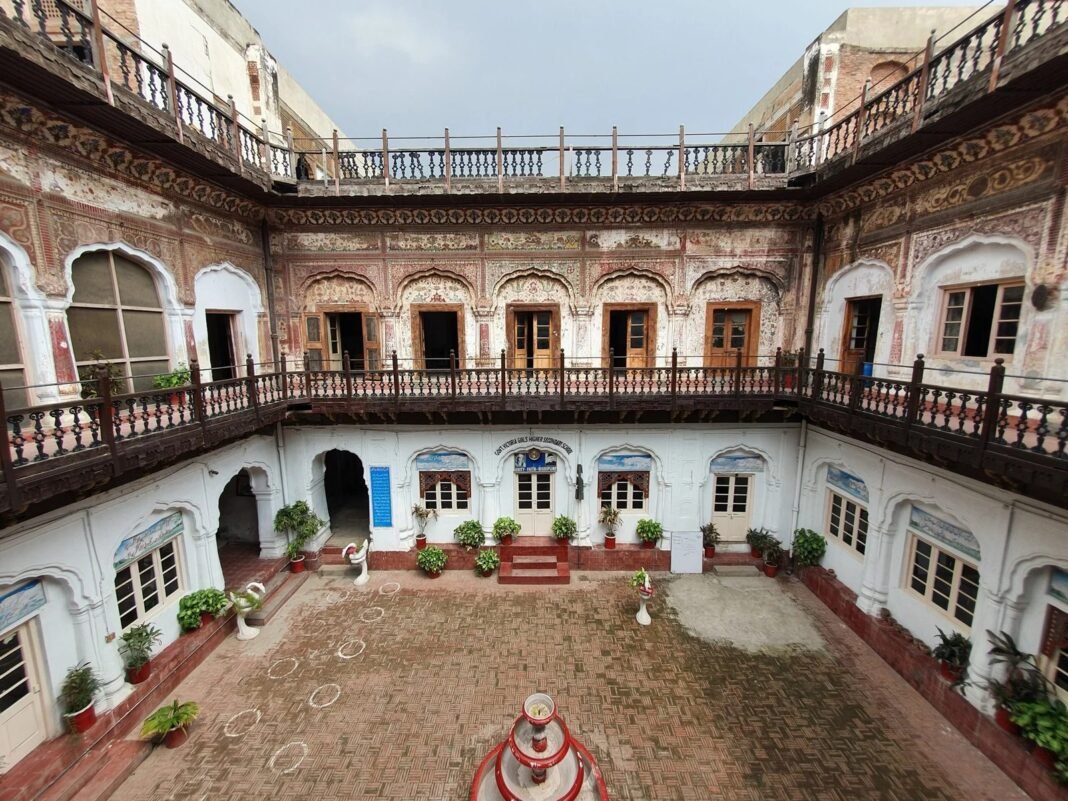
The mansion in Kasera Bazaar was his family’s ancestral home. Also, it is a four-storey structure with verandas on all four sides, supported by beautifully carved wooden arches. In fact, it once had a large garden around it. Baron Charles von Hügel, the Austrian naturalist who visited in the 1830s, wrote admiringly of Nalwa’s garden at Gujranwala in his 1845 travel account, describing orange trees, plane trees brought from Kashmir, cypresses, vines and beds of jonquils — “the most beautiful and best kept” garden he had seen in India.
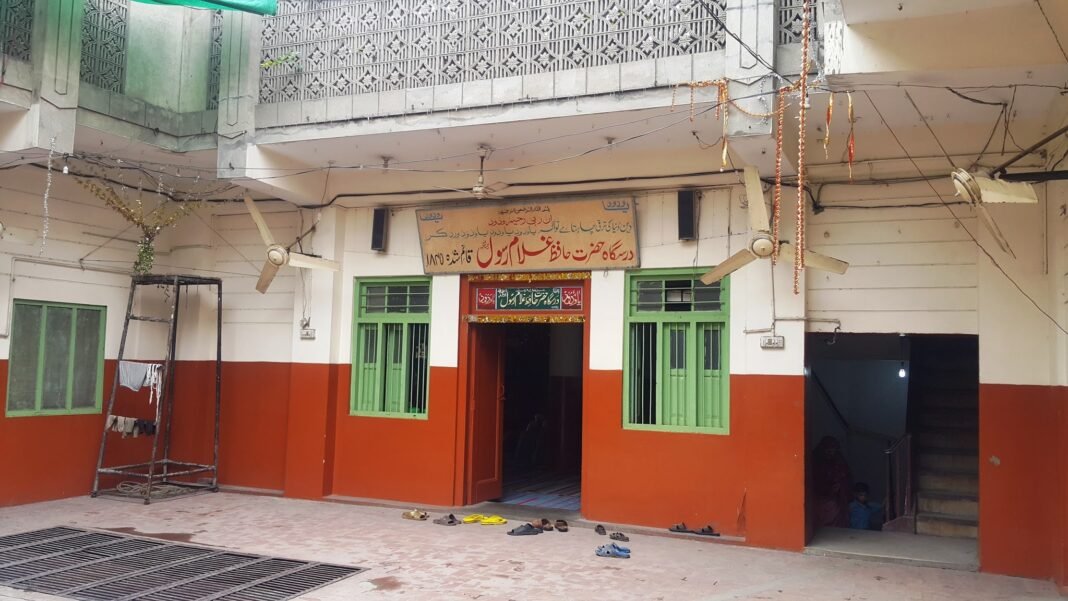
After the Partition of 1947, the haveli passed into new hands. Also, Hafiz Ghulam Rasool, a renowned hakeem (traditional physician) uprooted from Ludhiana, settled in the mansion with his family. In fact, the haveli had been allotted to Maulvi Mahmood Yaseen, and his dargah (shrine) is inside the premises. In addition, his descendants live here to this day. The second floor of the building serves as a seminary where the family receives guests and disciples. Some of the haveli’s finest carved doors and windows were long ago moved to the Lahore Museum, where they can still be seen as exhibits.
Visitors should understand that this is a private, lived-in home. Its survival through Partition, encroachment and two centuries of change is itself part of the story.
Top Things to Do in Haveli of Hari Singh Nalwa, Gujranwala
Stand at the Janamasthan
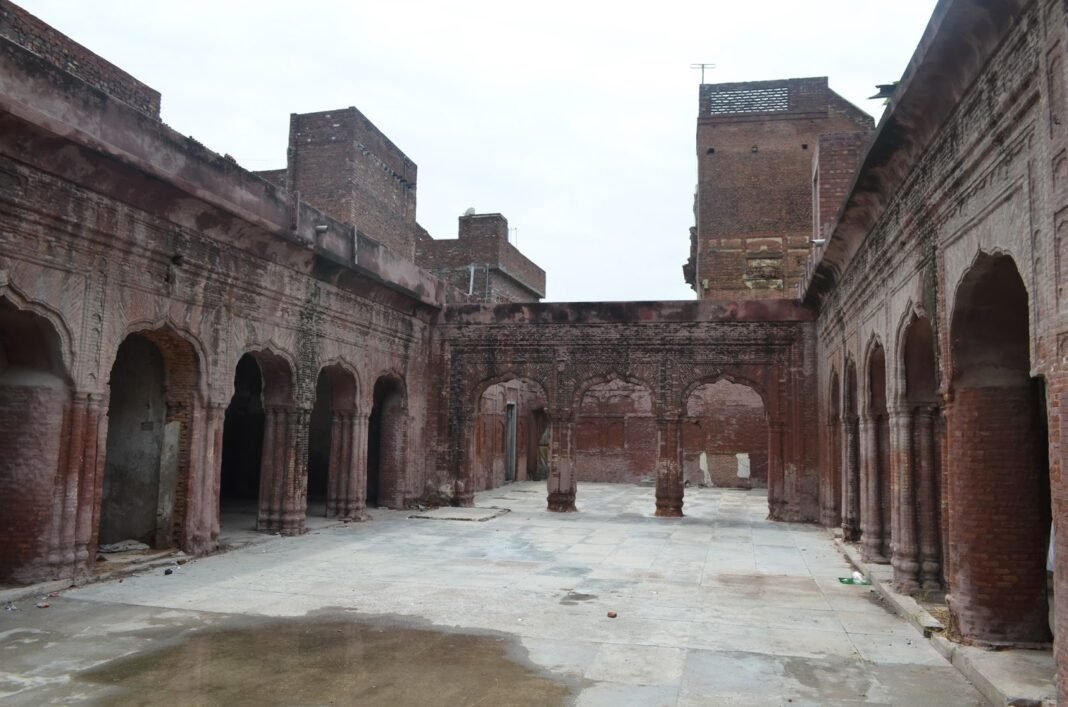
The heart of the visit is the birthplace itself. Also, ask to see the old courtyard and the four-sided verandas with their carved wooden arches. These are the original architectural features that have survived since the Nalwa family’s time. In fact, the house is a four-storey structure. The upper floors show how a Punjabi haveli of the late 18th century was organised: open halls that served as living rooms, verandas catching the breeze, and thick walls that keep the interior cool. Take your time here; every old door and carved panel has outlived empires.
Admire the Carved Woodwork
The haveli’s wooden arches and doors are its greatest surviving art. The second floor still has old, well-preserved wooden doors, and the veranda arches show the fine carving of Sikh-era Punjab. Also, for context, plan a follow-up visit to the Lahore Museum, where the mansion’s finest doors and windows are now displayed — seeing the two halves of the same story, one in situ and one in a museum, is a rich experience for architecture lovers.
Pay Respects at the Dargah
Inside the premises is the dargah of the family that has cared for this house since 1947. Also, the layered history — a Sikh general’s birthplace that became the home and resting place of a Muslim hakeem’s family — tells the story of Punjab’s Partition in a single building. Visitors of all backgrounds are welcome to pay quiet respects.
Walk Kasera Bazaar
The haveli stands in Kasera Bazaar, a working old-city market. Also, the lanes around it are full of metalworkers, small shops and the everyday bustle of Gujranwala. A slow walk through the bazaar before or after your visit gives you the old-city atmosphere that surrounded the Nalwa family two centuries ago.
Famous Places In and Around Haveli of Hari Singh Nalwa, Gujranwala
- Haveli of Maharaja Ranjit Singh: The birthplace of Maharaja Ranjit Singh (born 13 November 1780), a short distance away in Gujranwala’s old city — the essential paired visit.
- Sheranwalan Bagh: The old garden quarter associated with Mahan Singh, Ranjit Singh’s father, whose tomb and baradari stand nearby.
- Gurdwara Damdama Sahib, Gujranwala: A historic gurdwara in the city — read our full Gurdwara Damdama Sahib travel guide for the Sikh heritage trail.
- Eminabad: A short drive east of Gujranwala, home to historic gurdwaras including Gurdwara Rori Sahib, associated with Guru Nanak’s time in the town.
- Lahore Museum: Where the haveli’s finest carved doors and windows are preserved — the perfect companion visit to this trip.
How to Reach Haveli of Hari Singh Nalwa, Gujranwala
Gujranwala sits on the historic Grand Trunk Road between Lahore and Islamabad. Also, this makes it one of the easiest heritage destinations in Punjab to reach. The bazaar lanes are narrow and lively.. As a result, the haveli itself is inside Kasera Bazaar in the old city — once you reach Gujranwala, park near the old city and continue on foot,
- From Lahore: About 80 km north of Lahore, roughly 1.5 to 2 hours by car via the Grand Trunk Road (N-5). The drive is straightforward and the road is in good condition year-round.
- From Islamabad: About 250 km, roughly 4 hours via the M-2 motorway, exiting toward Gujranwala. The motorway is well maintained in all seasons.
- From Karachi: Around 1,350 km by road — the practical choice is to fly to Lahore or take the train, then drive to Gujranwala. Gujranwala Railway Station connects with Lahore and the wider Pakistan Railways network.
- Nearest airport: Allama Iqbal International Airport, Lahore (about 80–90 km), with Sialkot International Airport also within reach. From either, hire a car or take a bus/van to Gujranwala.
- Transport options: Private car is the most comfortable; ride-hailing and intercity vans run constantly between Lahore and Gujranwala. Inside the old city, walking is the only real option — and the best one.
Route Details
Lahore to the haveli: Start from Lahore on the Grand Trunk Road (N-5) heading north toward Gujranwala. Meanwhile, after entering the city, follow signs for the old city / Kasera Bazaar. Park your vehicle in a secure spot near the bazaar — the inner lanes are too narrow for cars. From the bazaar entrance, walk in and ask any shopkeeper for the “Hari Singh Nalwa wali haveli” — it is a well-known landmark, and locals will point you to it. Remember this is a private home: knock, greet the family, and ask permission before entering or taking photographs.
Visiting with a local guide or a respectful introduction goes a long way.
Where to Stay in Haveli of Hari Singh Nalwa, Gujranwala
Most visitors see the haveli as a day trip from Lahore, but if you want to stay, Gujranwala has solid options across budgets. For example, mid-range hotels cluster along the Grand Trunk Road and near Rahwali Cantt — Wikivoyage’s city guide notes properties like Hotel Global Village near Rahwali Cantt opposite DC Colony, in a well-known modern housing area on G T Road. These are clean, comfortable and convenient for the old city.
Budget travellers will find plenty of guesthouses and small hotels in Saddar and near the railway station — simple rooms at modest rates. If you prefer more comfort, Citi Housing and DC Colony areas have newer developments with better-appointed hotels. There is no need to book luxury in Gujranwala unless you want it. Most people combine the city with an overnight in Lahore, where five-star options are abundant, and drive up for the day. Whatever you choose, stay within the city rather than on the outskirts. The old city, its food and its bazaars are best enjoyed without a long commute.
Where to Eat: Local Foods of Gujranwala
Gujranwala is famous across Pakistan as a food city. Also, this is the “City of Wrestlers,” and the local cuisine is built for big appetites. In fact, your heritage walk pairs perfectly with a food tour.
Must-try dishes: Start with the city’s legendary tikka and seekh kebabs, then move to a bubbling plate of chicken or mutton karahi. Also, Allah Rakha at Sialkoti Darwaza is famous for its chicken karahi, seekh kebab, grilled goat chops and dal fry. Ghanni kay Pai is the once-in-a-lifetime paye (trotter) experience that draws families from across Pakistan. Adventurous eaters should try chiray (sparrow) and batair (quail), the small game birds that are a Gujranwala specialty. Shahbaz Tikka is a well-known spot for these.
Drinks and sweets: Cool down with the iconic Pehalwani Badami Sharbat, a wrestler’s almond drink loved by locals for generations. Also, a tall glass of falooda. In fact, Punjabi sweets and thick lassi are everywhere in the old bazaars.
Food streets and bazaars: The areas around the old city and Ghalla Mandi come alive in the evening with sizzling kebab stalls, biryani vendors and tandoori chicken. Also, a full meal at a local dhaba or mid-range restaurant is budget-friendly — expect to eat very well without spending much. For example, Gujranwala’s food is honest, generous and unpretentious, exactly like the city itself.
Weather in Haveli of Hari Singh Nalwa, Gujranwala
Gujranwala has a classic Punjab plains climate: short, pleasant winters and long, hot summers. The haveli visit is mostly outdoors and on foot, so plan around the heat.
| Season | Temperature Range | Conditions |
|---|---|---|
| Winter (Dec–Feb) | 5–20°C | Cool and pleasant; foggy mornings in December–January. Ideal for walking the old city. |
| Spring (Mar–Apr) | 15–30°C | Mild and comfortable; good sightseeing weather before the heat arrives. |
| Summer (May–Aug) | 28–42°C | Extremely hot, often exceeding 40°C. Avoid midday; visit early morning or late afternoon. |
| Autumn (Sep–Nov) | 15–32°C | Cooling down; October and November are lovely for heritage walks. |
Note: ranges are approximate, based on Gujranwala’s plains climate. Also, the monsoon (July–September) brings humid weather and heavy rain spells.
Language and Culture of Haveli of Hari Singh Nalwa, Gujranwala
The language of the streets here is Punjabi — the Majhi dialect — with Urdu widely understood and spoken. Also, english is understood in hotels and by educated guides. Learning a few Punjabi greetings (“Sat Sri Akal” for Sikh hosts, “Assalam-o-Alaikum” generally) earns warm smiles.
Gujranwala is known as the City of Wrestlers. Also, its culture is proudly Punjabi: generous hospitality, loud wedding celebrations with bhangra and giddha, and a deep love of food. The old city around the haveli is conservative in dress — visitors, especially women, should dress modestly, covering shoulders and knees. When visiting the haveli, remember you are entering someone’s home: remove shoes if asked, ask before photographing people, and keep your voice low near the dargah. Sikh visitors will find the atmosphere respectful of the site’s significance. The family is accustomed to heritage visitors and appreciates courtesy in return.
Shopping in Haveli of Hari Singh Nalwa, Gujranwala
Gujranwala’s bazaars are worth an hour of browsing after your haveli visit. Also, Saddar Bazaar is the city’s main commercial market — clothing, electronics and everyday goods at local prices. Model Town Market has upscale boutiques and branded stores, while Gulshan Market is known for electronics and home goods.
What makes Gujranwala shopping distinctive is its industry: the city is a manufacturing powerhouse for ceramics, sanitary ware and metal goods. Also, you will find quality steel utensils, kitchenware and hardware at excellent prices. Kasera Bazaar itself — where the haveli stands — is traditionally the metalworkers’ market, so look out for handcrafted brass and copper items. There is no destination shopping mall at the haveli itself; the charm here is in the old, working bazaars.
Travel Tips for Haveli of Hari Singh Nalwa, Gujranwala
Packing Essentials
Bring comfortable walking shoes — the old-city lanes are uneven and you will be on foot. Carry a water bottle, sunscreen and a hat, especially from March to October. A light shawl or scarf is useful for women visiting the dargah and for the modesty norms of the old city. Keep a power bank handy; you will take more photos than you expect.
Safety Tips
Gujranwala’s old city is generally safe for daytime visitors, and the bazaar is busy and well-populated. Go with a companion or a guide rather than alone, keep valuables out of sight in crowded lanes, and hire a local guide through your hotel for the smoothest experience — they know the family and the protocols. Do not enter the haveli uninvited; it is a private residence. Traffic around the old city is chaotic, so park outside and walk.
Money & Connectivity
ATMs are plentiful in Gujranwala’s commercial areas (Saddar, GT Road), but carry cash for the bazaar — small shops rarely take cards. Mobile signals are strong across the city on all major networks (Jazz, Telenor, Zong, Ufone), and 4G coverage is good even in the old city.
Best Time to Visit Haveli of Hari Singh Nalwa, Gujranwala
Winter (November–March): The Best Season
This is the ideal window. Also, Cool, dry days make walking the bazaar lanes and exploring the haveli’s courtyards genuinely pleasant. The famous Gujranwala food — hot karahi, paye, kebabs — tastes best in cold weather. This is also when heritage travellers and Sikh pilgrim groups most often visit.
Spring (March–April): Lovely but Brief
Mild temperatures and clear skies make spring a fine second choice. The lanes are less foggy than winter mornings, and the light is beautiful for photography of the old wooden facades.
Summer (May–August): Visit with Caution
Gujranwala’s summers are punishing, often crossing 40°C. If you must come, plan the haveli visit for early morning, hydrate constantly, and spend midday indoors. The monsoon rains of July–August make lanes slippery.
Autumn (September–October): A Good Shoulder Season
The heat breaks in late September. October brings comfortable weather again — a smart time to visit before the winter fog sets in.
Final Thoughts
The Haveli of Hari Singh Nalwa is not the grandest building you will ever see. That is precisely its power. Also, it is a house — a family’s home across two centuries and two nations’ worth of history — and it happens to be the place where one of Punjab’s greatest soldiers was born. The carved arches, the old doors, the courtyard that once rang with the Nalwa household: these are the details that make history feel human.
Pair it with the Haveli of Maharaja Ranjit Singh, eat your way through Gujranwala’s legendary food streets. You will leave understanding why this old city matters far more than its industrial reputation suggests. For more journeys like this, keep exploring our Explore Pakistan guides — and if the mountains call next, our Malam Jabba guide is waiting.
FAQs
Where is the Haveli of Hari Singh Nalwa located?
It stands in Kasera (Kasayra) Bazaar in the old city of Gujranwala, Punjab, Pakistan — about 80 km north of Lahore on the Grand Trunk Road.
Who was Hari Singh Nalwa?
Sardar Hari Singh Nalwa (1791–1837) was the commander-in-chief of Maharaja Ranjit Singh’s Khalsa Army and governor of Kashmir, Hazara and Peshawar. Also, known as “Baaghmaar” (tiger-killer), he secured the Sikh Empire’s northwest frontier and died at the Battle of Jamrud in 1837.
Can tourists enter the haveli?
It is a private, lived-in home, not a ticketed monument. Also, respectful visitors can usually visit by knocking and asking the resident family for permission. A local guide helps, and always ask before taking photographs.
What is the best time to visit?
November to March, when Gujranwala’s weather is cool and pleasant for walking the old-city lanes. Avoid the extreme heat of May–August.
How do I reach Gujranwala from Lahore?
Drive north on the Grand Trunk Road (N-5) — about 80 km, 1.5 to 2 hours. Intercity vans and buses also run constantly. Gujranwala Railway Station connects with Lahore.
Is the haveli safe to visit for families?
Yes, for a daytime visit. Also, the bazaar is busy and populated. In fact, go with a companion or guide, dress modestly, and respect that it is someone’s home.
Where should I stay when visiting?
Most people day-trip from Lahore. If staying over, mid-range hotels along GT Road and near Rahwali Cantt are comfortable; budget guesthouses cluster in Saddar.
What food is Gujranwala famous for?
Tikka, seekh kebabs, chicken and mutton karahi, paye (Ghanni kay Pai), chiray and batair game birds, falooda, Pehalwani Badami Sharbat and thick Punjabi lassi.