Quick Facts
- Location: Arabian Sea coast, about 20 km southwest of Karachi, Sindh, Pakistan (24.8602°N, 66.8637°E)
- Famous For: Karachi’s classic beach-hut getaway — swimming, camel and horse rides, family picnics, and a nesting ground for endangered green and olive ridley sea turtles
- Nearest City: Karachi (30–40 minutes by road)
- Accessibility: Easy road access via Mauripur Road; best reached by private car or taxi
- Known Landmarks: The long sandy shoreline, rows of private beach huts, and the WWF wetland centre monitoring turtle nesting
- Best For: Families, beach picnics, swimmers (in season, with caution), photographers, and anyone wanting Karachi’s best day at the sea
Why Visit Hawke’s Bay Beach
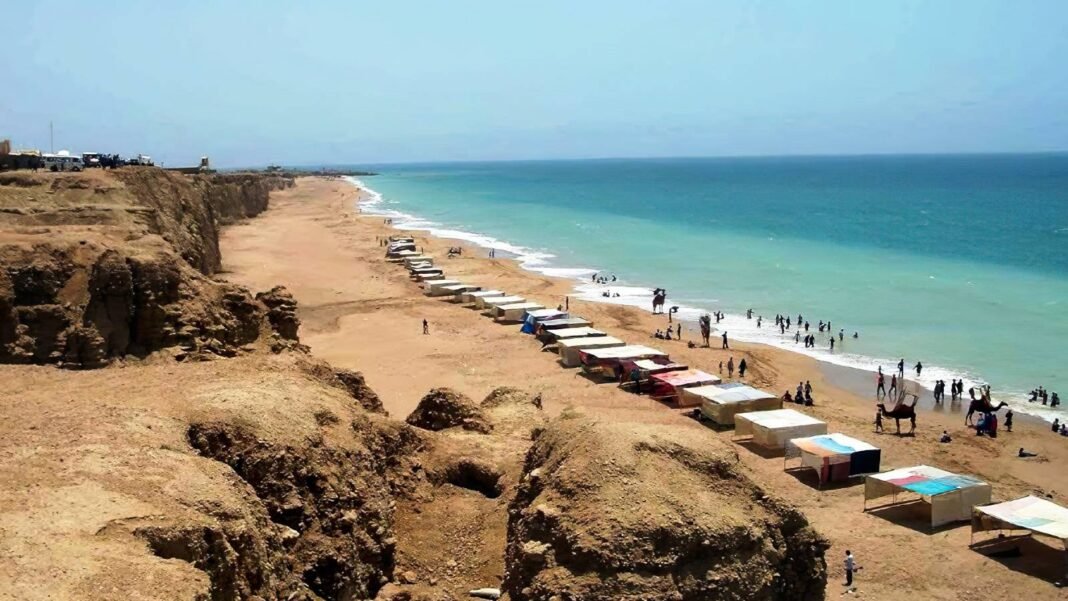
Every coastal city has a beach, but few have one like Hawke’s Bay. Twenty kilometres from the chaos of Karachi, the city exhales — and this is where it comes to breathe. Hawke’s Bay is Karachi’s beloved seaside escape: a long, golden sweep of sand on the Arabian Sea where hundreds of families arrive every day for swimming, camel rides at sunset, and picnics that stretch from noon to dusk. If Clifton Beach is Karachi’s evening carnival, Hawke’s Bay is its proper beach day — cleaner water, real swimming, and enough shoreline to find your own quiet corner even on a busy weekend.
The Beach-Hut Culture, a Karachi Institution
What sets it apart is the beach-hut culture. Also, rows of private huts line the shore, rented by families and groups for the day — your own shaded base with space to cook, rest and watch the waves. In fact, it is a Karachi institution: the hut day-trip, with coolers of food, cricket on the sand, and children shrieking in the surf. For visitors from elsewhere in Pakistan, it is the most authentic possible introduction to how this city does the sea.
Then there is the wild side. Also, Hawke’s Bay is a nesting ground for endangered green sea turtles and olive ridley turtles, which come ashore in the winter months — and the World Wide Fund for Nature runs a wetland centre right on the beach to monitor and protect them. Where else can you combine a family picnic with a conservation story? Add jet skis and boat rides for the adventurous, spectacular Arabian Sea sunsets for the romantics, and seafood from the beachside vendors. You have a destination that genuinely earns its place on your Karachi itinerary.
Come between October and March, when the sea is calmer and the weather is kind. Also, book a hut, bring the family, and discover why generations of Karachiites have measured their weekends by the drive to Hawke’s Bay. For more coastal journeys, our Clifton Beach guide covers the city’s other great shoreline — and our Explore Pakistan collection has the whole country waiting.
History of Hawke’s Bay Beach
Hawke’s Bay takes its name from Bladen Wilmer Hawke, who owned a house on the beach in the 1930s — in the days when this stretch of coast was a quiet colonial retreat, far from the growing port city. Also, early in the 20th century it was a leisure spot for British officials seeking sea air. The beach’s transformation into a public destination began after 1947, as Karachi grew into Pakistan’s great metropolis and its people sought escape from the city’s heat and crowds.
How the Hut Culture Was Born
The beach-hut culture that defines Hawke’s Bay today blossomed in the 1960s and 1970s. Meanwhile, the first proper huts and small resorts appeared along the shore. In fact, what began as simple shelters evolved into the institution Karachi knows now: hundreds of private huts, rented by the day, each a family’s private kingdom of shade, barbecue smoke and sea breeze. Over the decades Hawke’s Bay became woven into the city’s identity. The default answer to “where shall we go this weekend?”
Parallel to the recreation story runs a conservation one. The beach’s role as a nesting ground for green sea turtles and olive ridley turtles — which come ashore during the winter months — led the World Wide Fund for Nature to establish a wetland centre on the beach, dedicated to monitoring and protecting these endangered species. It is a reminder that this shoreline is not just Karachi’s playground but a living ecosystem.
Safety has shaped the beach’s modern history too. The Arabian Sea here can turn dangerous quickly, especially during the monsoon, and drowning incidents over the years have led the Karachi administration to periodically restrict swimming — including Section 144 bans during rough-sea periods — while the Pakistan Life Saving (PALS) foundation, created in 2004, patrols with lifeguards. Also, the lesson of Hawke’s Bay’s history is simple: respect the sea. It will give you one of the finest beach days in Pakistan.
Top Things to Do in Hawke’s Bay Beach
Rent a Beach Hut for the Day
This is the quintessential Hawke’s Bay experience. Also, private beach huts line the shore and are rented through operators for day use — your shaded base for cooking, resting and regrouping between swims. Prices vary by hut size, facilities and season, so confirm the rate, timing and what’s included directly with the operator before you book. Arrive early on weekends and public holidays: the best huts go first, and the Mauripur Road gets very busy.
Swim — Carefully and in Season
Hawke’s Bay offers some of Karachi’s cleanest swimming water, and from October to March the sea is at its calmest. But this is the open Arabian Sea: never swim during an announced ban, in rough water, or when lifeguards warn you out. Also, Keep children within arm’s reach even in shallow water — currents can pull people off their feet. Swim near the lifeguard-patrolled stretches, never alone, and never after dark.
Camel and Horse Rides
The decorated camels of Hawke’s Bay are icons of the Karachi beach experience. Also, a slow camel ride along the waterline at sunset, with the Arabian Sea turning gold, is one of the great simple pleasures of the city. And the horse rides are popular with children. Agree the price before you mount.
Jet Skis, Boats and Watersports
Operators along the beach offer jet ski rides, speedboat trips and towable rides. These are thrilling but demand caution: check that life jackets are provided and in good condition before you board, confirm the price and duration in advance, and follow the operator’s instructions. Also, avoid damaged-looking boats — accidents from poor equipment have occurred.
Turtle Nesting and the WWF Wetland Centre
From roughly August to January, green turtles — and olive ridley turtles — nest on this coast, mostly at night. The WWF wetland centre on the beach works to monitor and protect them. If you visit in nesting season, ask at the centre about their conservation work. Treat any fixed “turtle watching schedule” with caution unless it comes from the wildlife department or WWF itself, since nesting varies year to year. Never disturb a nesting turtle or its eggs.
Photography and Sunset Walks
The long, open shoreline is superb for photography — fishing boats, camel silhouettes, wheeling seabirds (gulls, terns and herons are common), and sunsets that set the whole Arabian Sea alight. Also, early morning brings the softest light and the fewest crowds.
Famous Places In and Around Hawke’s Bay Beach
- Sandspit Beach: The neighbouring beach to the east, famous for its shallow waters and unusual rocky formations.
- Turtle Beach: Adjacent nesting beach, also with hut facilities and watersports operators.
- Manora: The historic island point with its lighthouse, a short drive away.
- Mubarak Village (Mubarak Goth): A fishing village further west along the coast, gateway to wilder shoreline.
- Paradise Point: The rocky headland with its natural arch, on the coastal road toward Hawke’s Bay.
- Clifton Beach (Sea View): Karachi’s famous city beach — see our full guide for the complete Karachi coast picture.
How to Reach Hawke’s Bay Beach
Hawke’s Bay sits on Karachi’s western edge, about 20 km southwest of the city centre — close enough for a spontaneous day trip, far enough to feel like an escape. Also, the usual routes run via Mauripur Road or from the Mubarak Goth side. In fact, the drive typically takes 30 to 40 minutes depending on traffic and your starting point.
- From Karachi city (Clifton/DHA): 30–40 minutes by car via Mauripur Road. Leave early on weekends, Eid and public holidays — the road gets very busy.
- From Saddar/Gulshan: Similar timing via the western arteries; allow extra time in evening traffic.
- From Islamabad: Fly to Karachi (about 2 hours) — road distance is roughly 1,400 km, so flying is the only sensible option. From Jinnah International Airport, Hawke’s Bay is roughly a 60–90 minute drive depending on traffic.
- From Lahore: Fly to Karachi (about 1 hour 45 minutes); road distance is roughly 1,200 km. Drive or take a connecting flight.
- Nearest airport: Jinnah International Airport, Karachi.
- Transport options: Private car or taxi is the most comfortable for families and groups. Ride-hailing apps will get you there — but arrange your return trip in advance, because signal and car availability can be patchy near the beach. If you travel with an organised tour, confirm pick-up and drop-off times in writing.
- Road conditions: The main roads are paved and fine year-round. Avoid isolated side roads and dirt tracks to the sea where there are no lifeguards. Fill up fuel before leaving the main road and carry cash — card payments are not always accepted at the beach.
Route Details
Clifton to Hawke’s Bay: Head west from Clifton/Sea View toward Mauripur Road, following signs for Hawke’s Bay / Sandspit. Continue past Sandspit and Turtle Beach; Hawke’s Bay’s hut-lined shoreline begins shortly after. The whole route is signposted. The final stretches have multiple hut operators’ turnoffs — know your hut’s name or number in advance. Aim to arrive before 10 am on weekends for the best choice of huts and calmer morning seas.
Where to Stay in Hawke’s Bay Beach
Hawke’s Bay is a day-trip destination — almost nobody sleeps on the sand. Also, the beach huts are day rentals, not overnight accommodation (confirm timing with your operator; most huts are strictly daytime). In fact, For overnight stays, base yourself in Karachi.
In Karachi: Clifton and DHA (Defence) put you 30–40 minutes from the beach and have the city’s best range of hotels, from luxury five-stars along the coast road to comfortable mid-range options. Also, Saddar and PECHS offer budget-friendly hotels with easy city access. Book ahead on winter weekends, when Karachi’s hotels fill with wedding-season and holiday visitors.
Near the beach: There are no proper hotels at Hawke’s Bay itself. If you want to maximise beach time, some operators can arrange extended hut hours — but for a real bed, head back to the city. For example, the drive is short enough that a Karachi base never feels like a compromise.
Where to Eat: Local Foods of Hawke’s Bay Beach
Beach food is half the fun at Hawke’s Bay. Also, vendors along the shore sell the classics: fresh fried fish, roasted corn (bhutta), kulfi, gola ganda (shaved ice) and cold drinks. In fact, most families bring their own picnic — and the serious ones bring barbecue gear. A hut day with a grill, marinated chicken and the sea breeze is the Karachi dream.
What to eat: If you’re buying at the beach, the fried fish is the star — fresh from the Arabian Sea, spiced and crisp. Pair it with corn and a cold drink. If you’re self-catering, stock up in Karachi before you leave: DHA and Clifton have excellent supermarkets and BBQ shops for marinated meats, and no hut day is complete without a cooler of drinks and ice.
In Karachi before/after: The city is Pakistan’s food capital — biryani, bun kebabs, BBQ and seafood restaurants are everywhere. Meanwhile, Burns Road and Boat Basin are legendary food streets for an evening meal after the beach. Eating at the beach is budget-friendly; a full family picnic costs little beyond the hut rental and your supplies.
Weather in Hawke’s Bay Beach
Karachi’s coastal climate is mild by Pakistani standards — but the sea has moods. The beach is best from October to March, when the weather is pleasant and the water calmer. The summer monsoon brings rough seas and swimming bans.
| Season | Temperature Range | Conditions |
|---|---|---|
| Winter (Dec–Feb) | 10–25°C | Mild and pleasant; calm seas. Peak beach season. Turtle nesting continues. |
| Spring (Mar–Apr) | 20–32°C | Warm and lovely; still good swimming before the heat builds. |
| Summer (May–Jun) | 30–38°C | Hot and humid; sea starts getting rough. Swim with extra caution. |
| Monsoon (Jul–Sep) | 30–35°C | Very humid; high tides and dangerous currents. Swimming bans are common — check before visiting. |
| Autumn (Oct–Nov) | 22–32°C | The sweet spot: warm days, calmer seas, ideal beach weather. |
Note: ranges are approximate for coastal Karachi. Always check current sea conditions and any commissioner-issued swimming restrictions before a monsoon-season visit.
Language and Culture of Hawke’s Bay Beach
Karachi is Pakistan’s great melting pot, and its beaches reflect that. Also, urdu is the common language, with Sindhi, Punjabi, Pashto and English all widely heard. In fact, the beach culture is family-centred and festive — multi-generational picnics, cricket matches on the sand, music from hut verandas.
Dress norms are relaxed by Pakistani standards but still modest: swimwear is fine in the water for those comfortable with it, but most local families swim in regular clothes, and women should be prepared for a conservative environment outside the water. Keep a cover-up handy. The beach is a shared public space — keep music at reasonable volume, take your litter home, and respect other families’ privacy. During turtle nesting season (roughly August–January), keep lights low on the beach at night and never disturb wildlife.
Shopping in Hawke’s Bay Beach
Shopping at Hawke’s Bay means beach vendors: seashell crafts, snacks, cold drinks and camel-ride touts rather than malls. Also, For real shopping, head back into Karachi — which has some of Pakistan’s best. Empress Market in Saddar is the historic bazaar for spices, dry fruits and everyday goods. Zamzama and DHA’s Khadda Market have boutiques and branded stores; Tariq Road is the city’s mainstream shopping artery. Pick up Sindhi handicrafts — ajrak shawls, ralli quilts and camel-skin lamps — as souvenirs of the coast. No mall exists at the beach itself, and none is needed.
Travel Tips for Hawke’s Bay Beach
Packing Essentials
Sunscreen, hat and sunglasses are essential — the Arabian Sea sun is fierce even in winter. Also, bring swimwear or quick-dry clothes, a change of dry clothes, towels, and a waterproof pouch for your phone. Pack drinking water, snacks and a basic first-aid kit. If you’re renting a hut for a barbecue, bring charcoal, matches and your marinated food from the city — supplies at the beach are limited and pricey.
Safety Tips
Take the sea seriously. Never swim during an announced ban or in rough water; obey lifeguards and red flags without argument. Also, Keep children within arm’s reach at all times — even in shallow water. Meanwhile, do not swim alone or after dark. Check life jackets before any boat or jet ski ride and agree on prices first. Watch for bluebottle (Portuguese man o’ war) strandings around the monsoon onset — their sting is painful. Don’t touch them. Keep valuables locked in your hut or car, and travel in a group. The PALS lifeguard helpline is 0300 356 2000.
Money & Connectivity
Carry cash — beach vendors and hut operators rarely accept cards, and there are no ATMs on the sand. Withdraw in Karachi before you leave. Mobile signals from all major networks work at the beach but can be patchy in spots. Download your route offline and arrange your return transport before you settle in.
Best Time to Visit Hawke’s Bay Beach
Winter (October–March): The Best Season
Mild weather, calmer seas, clear water. Also, this is Hawke’s Bay at its finest. The water is cleanest from January to March. In fact, the turtle nesting season (roughly August–January) overlaps the start of winter. Weekends are lively; weekdays are blissfully quiet.
Spring (March–April): Still Excellent
Warm days and pleasant seas before the summer heat arrives. A great shoulder season with fewer crowds than mid-winter.
Summer and Monsoon (May–September): High Caution
Hot, humid, and dangerous. Also, the monsoon brings rough seas, rip currents and periodic swimming bans under Section 144. If you visit, treat it as a sightseeing trip — walk the sand, watch the waves, eat the fish — but stay out of the water unless lifeguards confirm it is safe.
Final Thoughts
Hawke’s Bay is Karachi the way Karachiites love it: unpretentious, joyful and a little wild. Also, the hut day-trip is one of Pakistan’s great democratic pleasures — rich and poor, young and old, all sharing the same sand and the same sunset. In fact, come in winter, swim in the morning calm, ride a camel into the golden evening, and fall asleep that night smelling faintly of salt and barbecue smoke.
Respect the sea — check the bans, mind the lifeguards, keep the beach clean — and Hawke’s Bay will give you the best beach day on Pakistan’s coast. For the full Karachi shoreline story, read our Clifton Beach guide, and for the mountains that balance this coast, our Malam Jabba guide is the perfect contrast. Keep exploring Explore Pakistan — the country is wider than you think.
FAQs
Where is Hawke’s Bay Beach?
On the Arabian Sea coast about 20 km southwest of Karachi, Sindh — roughly a 30 to 40 minute drive from the city via Mauripur Road.
Why is it called Hawke’s Bay?
The beach is named after Bladen Wilmer Hawke, who owned a house on the beach in the 1930s. Also, it was a quiet colonial-era retreat.
What is the best time to visit?
October to March: mild weather, calmer seas and the cleanest water. Avoid swimming during the summer monsoon, when rough seas and official bans are common.
How do beach huts work?
Private huts line the shore and are rented by the day through operators — your shaded base for picnics and rest. Prices vary, so confirm the rate, timing and facilities directly before booking, and arrive early on weekends.
Is swimming safe at Hawke’s Bay?
In season and with caution, yes — but this is the open Arabian Sea. Never swim during bans or rough water, stay near lifeguard-patrolled areas, keep children close, and never swim alone or after dark.
Can I see sea turtles there?
Green and olive ridley turtles nest on the beach roughly from August to January. Also, WWF runs a wetland centre on the beach. In fact, nesting happens at night and varies yearly — never disturb turtles or nests.
How do I get there from Karachi airport?
Jinnah International Airport to Hawke’s Bay is roughly a 60–90 minute drive depending on traffic. Also, a private car or pre-arranged taxi is the most comfortable option.
What should I bring for a hut day?
Sunscreen, swimwear, towels, drinking water, cash, and — if barbecuing — charcoal and marinated food from the city. Pack out all your litter.