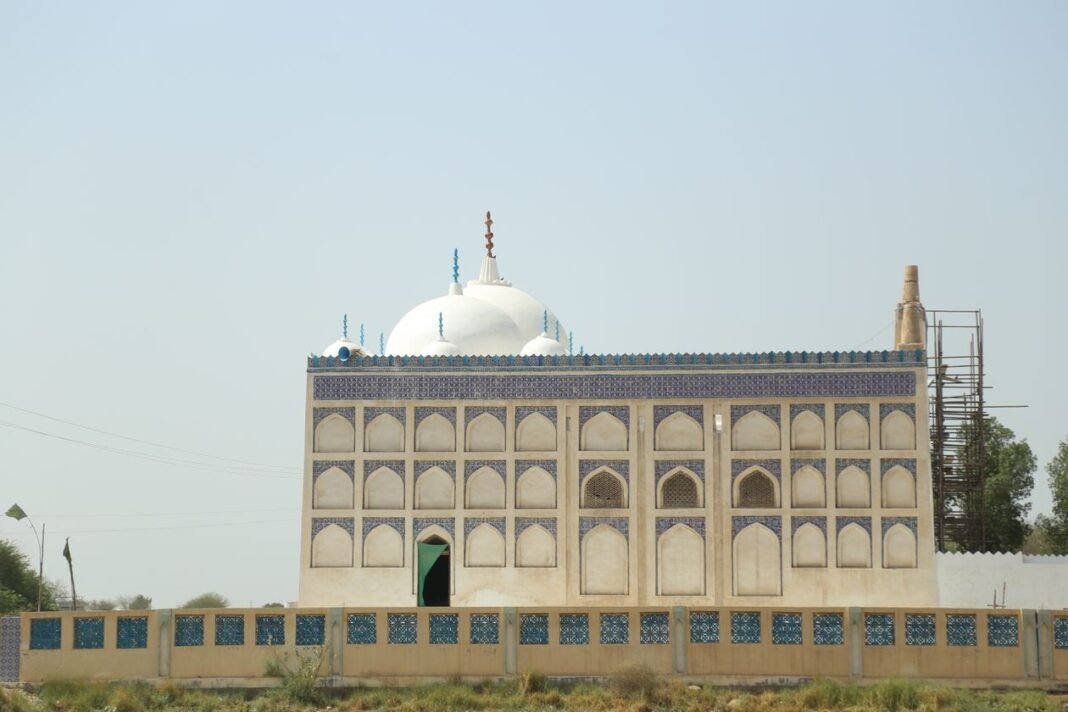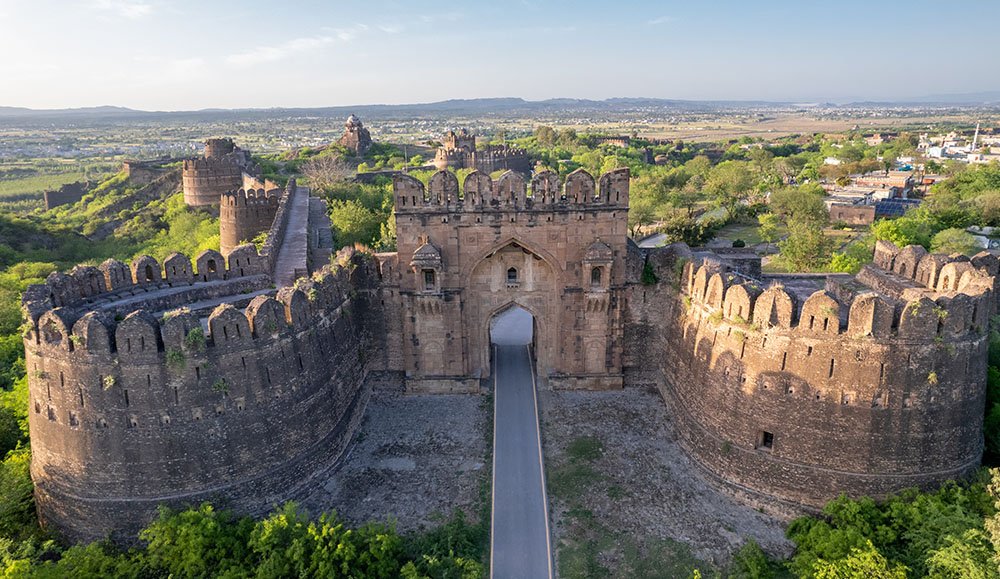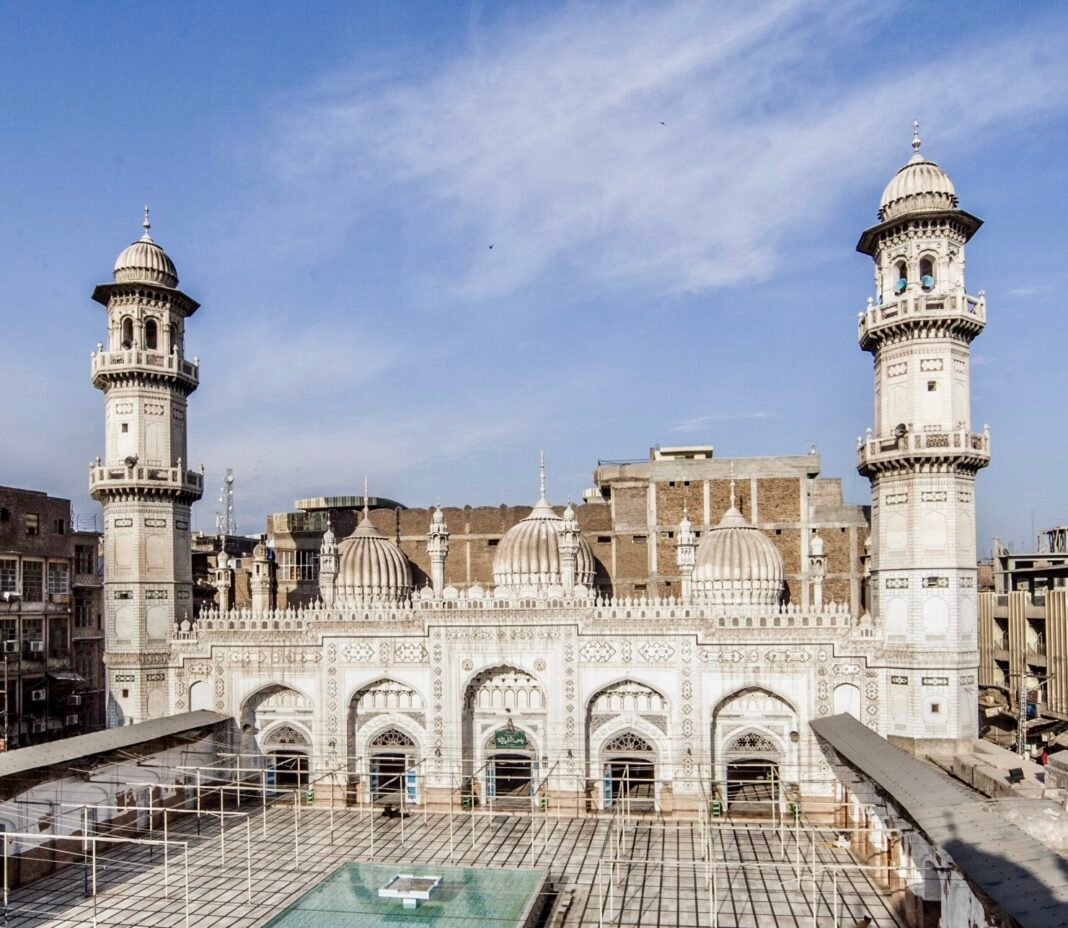
Every great old city has streets where history hides in plain sight — and Karachi is no exception. In the dense heritage quarters of Saddar, between the Karachi Zoo, Numaish Chowrangi and the old Eidgah, stands a mosque that generations of Karachiites have known simply as Jamia Masjid Qasaban. It is not a monument with a ticket counter and a tour bus queue; it is a working, protected heritage mosque of the old city, woven into the streets where Karachi’s oldest neighbourhoods grew up. This Jamia Masjid Qasaban, Karachi travel guide tells you why this quiet landmark deserves a place in your old-Karachi itinerary, when to go, and how to reach it from anywhere in Pakistan.
Quick Facts
- Location: Saddar / Garden East area, near Soldier Bazaar Road, Karachi, Sindh — close to Karachi Zoo, Numaish Chowrangi and the old Eidgah
- Famous For: A historic old-city mosque listed among Karachi’s protected heritage buildings; the mosque of the Qasaban (butchers’ community) quarter
- Nearest City: It is in the heart of Karachi itself, minutes from Saddar’s Empress Market
- Accessibility: Easily reached by road from anywhere in Karachi — ride-hailing, rickshaws, taxis and local buses all serve the Saddar/Garden East area
- Known Landmarks: Karachi Zoo (a short walk), Numaish Chowrangi, the National Museum of Pakistan, the Shrine of Syed Alam Shah Bukhari
- Best For: Heritage walks, mosque architecture, photographers, and travellers exploring old Karachi beyond the usual stops
Why Visit Jamia Masjid Qasaban, Karachi
Karachi’s famous sights are well documented — the Quaid’s mausoleum, Clifton beach, Frere Hall — but the city’s soul lives in its old quarters, and old Karachi is a maze of heritage that rewards the curious. Jamia Masjid Qasaban sits right in that maze. Visiting it means walking the streets of Saddar and Garden East where the city’s merchant communities, Memons, Gujaratis, Parsis and Sindhis, built their Karachi over a century ago. The mosque anchors a neighbourhood, not a tourist brochure, and that is precisely the point.
The name itself tells a story. “Qasaban” is the plural of qasab — butcher — and this is the mosque of the old qasab quarters, where the meat trade of the city once centred. In a metropolis that reinvents itself every decade, a community mosque carrying the name of a trade guild is a direct link to the working Karachi of generations past. Few visitors ever seek it out, which makes it one of the city’s most genuine heritage stops.
The mosque is also officially recognised as part of Karachi’s protected heritage fabric — it appears in the province’s listed heritage buildings for the city. That status matters: it means the building is acknowledged as a piece of the city’s documented past, standing alongside landmarks like the Empress Market building, the Edulji Dinshaw Dispensary and the Katchi Memon Masjid in the official heritage record. For architecture lovers, it offers the vernacular mosque design of old Karachi — built for a neighbourhood congregation, not for show.
And the location is a gift for itinerary planners. Within a kilometre or two you have the Karachi Zoo (the country’s oldest zoo, established in 1899), Numaish Chowrangi, the National Museum of Pakistan, the historic Eidgah and the shrine of Syed Alam Shah Bukhari. A single afternoon can combine prayer, heritage and one of the city’s oldest green spaces. If your idea of travel includes meeting a city on its own terms rather than through its postcards, Jamia Masjid Qasaban is exactly the kind of stop to build a day around.
History of Jamia Masjid Qasaban, Karachi
The honest history of Jamia Masjid Qasaban is the history of old Karachi itself, and it has to be told without invented dates — no reliable published source records the mosque’s exact year of construction. What is documented is its standing: the mosque is listed among Karachi’s protected heritage buildings under the province’s heritage protection framework, which places it firmly among the old city’s historic structures rather than among its modern constructions. Its name, location and fabric all point to the era when Saddar, Garden East and the quarters around the old Eidgah were the beating heart of the city.
The quarters around the mosque — Soldier Bazaar, Garden East, Numaish, the lanes near Holy Family Hospital and Parsi Colony — grew up in the late 19th and early 20th centuries as Karachi expanded from a fishing village into British India’s great port city. Community mosques like this one were built by and for the working neighbourhoods: the butchers’ trade that gives the mosque its name, the merchants of nearby bazaars, the families of the old city’s mixed communities. Dawn’s old Eid-prayer listings name “Jamia Masjid Qasaban Saddar” as one of the city’s Eid venues, a small but telling mark of its standing in the religious life of central Karachi.
The surrounding heritage tells the rest of the story. Aram Bagh (once Ram Bagh), a short distance away, is Karachi’s historic centre, built around a park and ringed by listed colonial-era buildings. The Karachi Zoo in Garden East dates to 1899. The Empress Market building, the KMC headquarters and the old Eidgah ground all belong to the same era of the city’s growth. Jamia Masjid Qasaban belongs to this fabric — not as a royal monument, but as the kind of community institution that made the old city function. Visitors should come with that understanding: this is living heritage, still in daily use, still called to prayer five times a day.
Top Things to Do in Jamia Masjid Qasaban, Karachi
Admire the Mosque’s Heritage Architecture
Take time to study the building itself — its facade, its minarets, the prayer hall and courtyard as a piece of old-Karachi mosque architecture. Unlike the grand state mosques built in recent decades, this is a neighbourhood-scale building, designed for the congregation that surrounds it. Visit outside prayer times, dress modestly, and ask the caretaker or a worshipper before taking photographs inside.
Walk the Old Quarters
The streets around the mosque — Soldier Bazaar Road, the lanes toward Garden East and Numaish — are a heritage walk in themselves. You will pass colonial-era apartment blocks, old community halls, Parsi Colony’s distinctive streetscape and the bustle of working bazaars. This is one of the best areas in Karachi for street photography of the old city’s layered architecture.
Visit the Karachi Zoo
About 700 metres from the mosque, the Karachi Zoo (established 1899, the country’s oldest zoo) makes a natural pairing for a half-day trip. Its old gardens and historic structures are worth seeing even for travellers who are lukewarm about zoos — the grounds themselves are part of old Karachi’s story.
See the National Museum of Pakistan
Roughly two and a half kilometres away, the National Museum holds the country’s great archaeological collections — Gandhara sculpture, Indus Valley artefacts, Islamic art. It is the perfect deep-history companion to a heritage-mosque visit.
Pay Respects at the Shrine of Syed Alam Shah Bukhari
Near the mosque and the old Eidgah lies the shrine (dargah) of Syed Alam Shah Bukhari, one of the old city’s Sufi landmarks. The contrast between the congregational mosque and the shrine’s devotional atmosphere captures the range of Karachi’s religious life in a single neighbourhood.
Famous Places In and Around Jamia Masjid Qasaban, Karachi
- Karachi Zoo — Pakistan’s oldest zoo (1899), about a 10-minute walk, in historic Garden East.
- Empress Market — the landmark 1889 market building in Saddar, a few minutes by rickshaw.
- National Museum of Pakistan — the country’s premier archaeology and art museum, ~2.6 km away.
- Numaish Chowrangi — the historic exhibition-ground roundabout at the edge of the old quarters.
- Aram Bagh — the historic Ram Bagh park and its ring of protected heritage buildings.
- Mazar-e-Quaid — the mausoleum of Muhammad Ali Jinnah, a short drive away.
How to Reach Jamia Masjid Qasaban, Karachi
The mosque is in central Karachi, in the Saddar/Garden East area near Soldier Bazaar Road — one of the easiest heritage sites in the city to reach.
- From within Karachi: Any ride-hailing app, taxi or auto-rickshaw can take you to the mosque; ask for “Masjid Qasaban, Saddar” near Soldier Bazaar Road / Garden East. From Empress Market it is a few minutes by rickshaw; from Clifton/Defence, 20–35 minutes depending on traffic.
- From Islamabad: Fly to Jinnah International Airport (about 2 hours) — the airport is roughly 10–15 km from Saddar — or take the motorway drive south (around 1,400 km, 16+ hours). Continue into the city by taxi or ride-hailing.
- From Lahore: Fly to Karachi (about 1 hour 45 minutes) or drive the motorway route (around 1,230 km, 14+ hours). From the airport, Saddar is a 20–30 minute drive.
- Nearest airport: Jinnah International Airport, Karachi — 10–15 km from the Saddar area.
- By train: Karachi Cantt station (Saddar side) is minutes away; the area is well connected by local trains and buses.
- Local tip: Visit in the morning or late afternoon; midday traffic in central Karachi is heavy, and the mosque is best seen in soft light.
Route Details
- From Jinnah International Airport, take Shahrah-e-Faisal west toward Saddar (20–30 minutes).
- Continue to the Garden East / Soldier Bazaar Road area, near Holy Family Hospital and Parsi Colony.
- Ask locally for “Masjid Qasaban” — it is a well-known neighbourhood landmark, and shopkeepers will direct you.
- Park on the main road and walk the last stretch; the lanes are narrow and busy.
Where to Stay in Jamia Masjid Qasaban, Karachi
Karachi offers every tier of accommodation, and the mosque’s central location keeps all of them within reach. Luxury hotels cluster in Clifton and Defence, 20–40 minutes away depending on traffic. Mid-range hotels line Shahrah-e-Faisal, Saddar and PECHS — the most convenient base for a heritage trip, keeping you close to the old city. Budget guesthouses and small hotels are plentiful in Saddar and around Karachi Cantt station, many within walking distance of the old quarters. For a heritage-focused stay, base yourself in Saddar or PECHS: you will be minutes from the mosque, Empress Market and the National Museum, with easy ride-hailing access to the rest of the city.
Where to Eat: Local Foods of Jamia Masjid Qasaban, Karachi
You are in the middle of one of the great food cities of South Asia, so eat well. Karachi’s signature dishes are all within reach: biryani (the city’s most argued-about food), bun kabab from street carts, seekh kebab and malai boti from barbecue houses, and seafood — fried fish, prawns and pomfret — from the restaurants near the coast. Burns Road, the city’s famous food street, is a short drive away and serves everything from dahi bhalla and rabri to falooda and qulfi. Around Saddar and Empress Market you will find old Irani-style cafes, fresh juice stalls and sweet shops. Street food here is delicious and budget-friendly — a filling meal from a roadside vendor costs very little, while a comfortable sit-down dinner runs higher. Drink bottled water, and save room for dessert: Karachi does sweets seriously.
Weather in Jamia Masjid Qasaban, Karachi
Karachi has a hot coastal climate, moderated by the sea breeze but humid for much of the year. Winters are the sweet spot — mild, dry and made for walking the old city. Summers are hot and sticky, and the monsoon (July–September) brings humidity and occasional heavy rain.
| Season | Temperature Range | Conditions |
|---|---|---|
| Winter (Nov–Feb) | 15°C – 25°C | Mild, dry and sunny; the best season for heritage walks |
| Spring (Mar–Apr) | 25°C – 34°C | Warming up; mornings and evenings still pleasant |
| Summer (May–Jul) | 30°C – 40°C | Hot and humid; plan outdoor visits early or late in the day |
| Autumn (Aug–Oct) | 28°C – 36°C | Monsoon humidity fading; sea breeze returns |
Language and Culture of Jamia Masjid Qasaban, Karachi
Urdu is the city’s lingua franca and is spoken everywhere around the mosque; you will also hear Sindhi, Gujarati and Memoni (the old merchant communities of Saddar), Balochi, Pashto and Punjabi in the surrounding bazaars. Karachi is overwhelmingly Muslim and the mosque is an active place of worship: dress modestly (covered shoulders and legs for everyone; women should carry a scarf), remove shoes before entering the prayer areas, and avoid visiting during the five daily prayer times unless you are joining the congregation. Non-Muslim visitors are welcome to view the building respectfully from the courtyard and exterior — ask the caretaker first. Keep voices low, and always ask before photographing people.
Shopping in Jamia Masjid Qasaban, Karachi
Saddar is one of Karachi’s great shopping districts, and it is all around the mosque. Empress Market sells everything from spices and dry fruits to pets and household goods in a magnificent 1889 building. Zainab Market and the Saddar bazaars are famous for fabrics, ready-made garments, shoes and handicrafts at bargain prices — haggle politely. Bolton Market, a short drive away, is the wholesale heart of old Karachi. For a modern mall experience, the Atrium Mall sits right in Saddar. Look for Ajrak and Sindhi embroidery, dry fruits, spices and leather goods as souvenirs.
Travel Tips for Jamia Masjid Qasaban, Karachi
Packing Essentials
Light, modest clothing; a scarf for mosque visits; comfortable walking shoes for the old-city lanes; sunscreen and a water bottle; and cash in small denominations for bazaars and rickshaws.
Safety Tips
Central Karachi is busy rather than dangerous, but stay alert in crowded bazaars: keep phones and wallets secure, avoid flashing expensive gear, and use ride-hailing apps rather than hailing unknown taxis at night. Visit the mosque and surrounding lanes in daylight.
Money & Connectivity
ATMs are everywhere in Saddar; carry cash for small vendors. All mobile networks have strong coverage in central Karachi, and 4G data works well for navigation and ride-hailing.
Best Time to Visit Jamia Masjid Qasaban, Karachi
November to February — the ideal season
Karachi’s winter is made for walking: mild days, cool evenings and clear skies. This is when heritage walks, bazaar browsing and photography are at their best, and the mosque’s courtyard is pleasant at any hour.
March to October — the warm season
The city is hot and humid, so schedule the mosque and old-city walking for early morning or late afternoon, and spend midday in air-conditioned museums and malls. Ramadan evenings bring a special atmosphere to the old quarters if your visit coincides with the holy month.
Final Thoughts
Jamia Masjid Qasaban will never be the most photographed mosque in Pakistan, and that is exactly why it matters. It is a protected piece of old Karachi’s working history — the mosque of the butchers’ quarter, still serving its neighbourhood, still holding its place in the heritage record while the megacity roars around it. Travellers who take the time to find it are rewarded with something no grand monument can offer: the feeling of meeting Karachi as it actually is.
Pair the visit with the Karachi Zoo, the National Museum and a walk through Saddar’s bazaars, and you will have spent a day inside the real old city — the one the guidebooks skim past. Come in winter, come in the morning, and come ready to walk. Old Karachi does not reveal itself to anyone in a hurry.
FAQs
Where is Jamia Masjid Qasaban located?
In the Saddar/Garden East area of Karachi, near Soldier Bazaar Road — close to Karachi Zoo, Numaish Chowrangi and the old Eidgah, in the heart of the old city.
What is the best time to visit Jamia Masjid Qasaban?
November to February, when Karachi’s weather is mild and dry — ideal for walking the old-city lanes and visiting the mosque courtyard.
How do I reach the mosque from Karachi airport?
Jinnah International Airport is 10–15 km away; take a taxi or ride-hailing car along Shahrah-e-Faisal toward Saddar (20–30 minutes), then ask locally for Masjid Qasaban near Soldier Bazaar Road.
Is the mosque open to non-Muslim visitors?
The courtyard and exterior can be viewed respectfully by all visitors; ask the caretaker before entering prayer areas, dress modestly, and avoid prayer times unless joining the congregation.
Why is it called “Qasaban”?
Qasaban is the plural of qasab (butcher) — the mosque takes its name from the old butchers’ quarter of Karachi, the working-class neighbourhood it has served for generations.
Where should I stay near the mosque?
Saddar and PECHS have convenient mid-range hotels and budget guesthouses; Clifton and Defence offer luxury options 20–40 minutes away. Saddar is the best base for a heritage trip.
What food should I try nearby?
Karachi biryani, bun kabab, seekh kebab, fresh seafood and the desserts of Burns Road food street — falooda, rabri and qulfi — all within a short drive.
What else can I see nearby?
The Karachi Zoo (10-minute walk), Empress Market, the National Museum of Pakistan, Numaish Chowrangi, Aram Bagh’s heritage precinct and the shrine of Syed Alam Shah Bukhari are all close by.
Keep exploring the city’s sacred heritage with the Grand Jamia Mosque, Karachi travel guide and the Baitul Mukarram Mosque, Karachi travel guide, plus the Guru Nanak Darbar, Karachi travel guide — and browse the full Explore Pakistan collection.