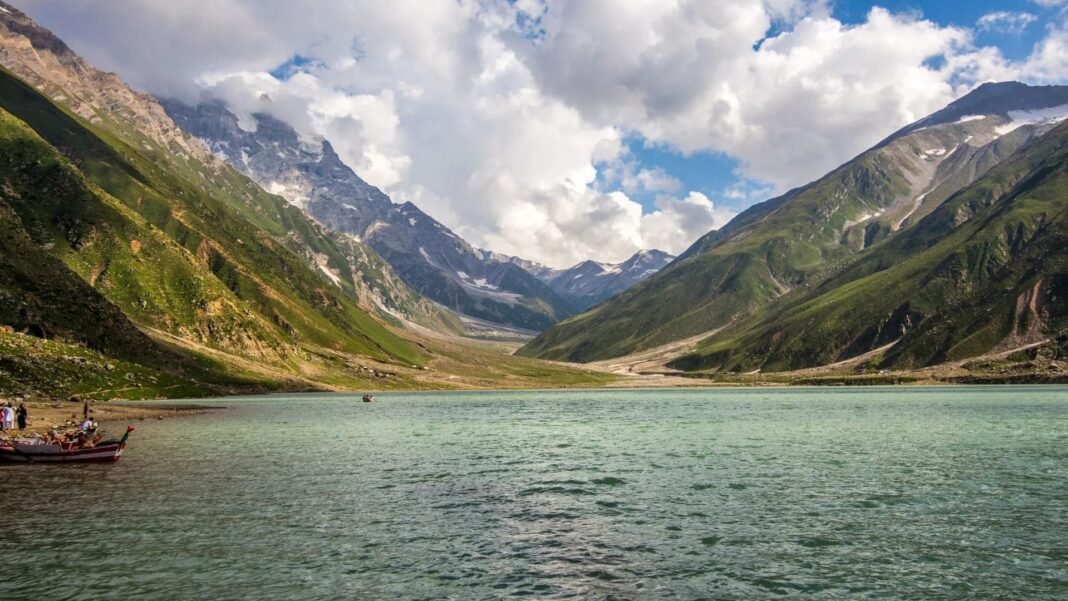
There is a reason the Kaghan Valley is the first northern destination most Pakistanis ever visit — and the one they keep returning to. It has the complete Himalayan promise in a single, drivable valley: pine forests and the rushing Kunhar river at Balakot, the green plateaus of Shogran and Siri Paye, the fairy-tale Lake Saif-ul-Mulook above Naran, the mirror of Lulusar Lake, and finally the 4,173-metre Babusar Top, where the road crests the pass and drops toward Gilgit-Baltistan. Also, no other valley in Pakistan packs this much variety into one summer road.
This Kaghan Valley travel guide is your complete planning companion: why the valley deserves your trip, its real history, the top things to do from Shogran to Babusar, detailed routes from Islamabad, Lahore and Karachi, where to stay and eat, weather by season, and honest advice on road conditions and altitude. Also, for more northern valleys, see our Hunza Valley guide, the Ansoo Lake trek guide and the Explore Pakistan collection.
Quick Facts
- Location: Mansehra District, Khyber Pakhtunkhwa — the valley of the Kunhar River, from Balakot to Babusar Top
- Altitude: Around 2,000 m at Balakot rising to 4,173 m at Babusar Top; Naran sits at about 2,400 m
- Famous For: Lake Saif-ul-Mulook, Babusar Top, Lulusar and Dudipatsar lakes, Shogran meadows, the Kunhar river
- Nearest City: Mansehra (gateway town); Naran is the valley’s tourist hub
- Accessibility: Good paved road (N-15) from Mansehra to Naran in summer; jeep tracks to the lakes and Babusar; no railway in the valley
- Known Landmarks: Lake Saif-ul-Mulook, Babusar Top, Lulusar Lake, Shogran, Siri Paye, Ansoo Lake
- Best For: Families, first-time northern-Pakistan travellers, photographers, trekkers, anglers and road-trip lovers
Why Visit Kaghan Valley
Kaghan is the great all-rounder of Pakistani tourism, and that is its superpower. Families who would never attempt a serious trek can still stand on the shore of Lake Saif-ul-Mulook, feel the cold wind at Babusar Top, and walk the flower meadows of Siri Paye — all on paved roads and jeep tracks, all in a single long weekend from Islamabad. Few mountain destinations anywhere in the world offer this density of spectacle with this level of accessibility.
For the more adventurous, the valley goes as deep as you want it to. Also, beyond the roadside viewpoints lie some of Pakistan’s classic wilderness treks: the demanding trail to Ansoo Lake, the teardrop-shaped lake hidden near Malika Parbat. In fact, the multi-day trek to Dudipatsar, the valley’s most beautiful high lake; and the base-camp routes beneath the great peaks. Anglers come for the Kunhar’s trout, photographers for the dawn light on Saif-ul-Mulook, and road-trippers for the pure joy of the Naran–Babusar highway — one of the great mountain drives of Asia.
Then there is the valley’s emotional pull. Kaghan was devastated by the October 2005 earthquake — Balakot was largely destroyed — and its rebuilding is one of Pakistan’s great recovery stories. Visiting today means seeing a valley that has rebuilt itself into the country’s most beloved summer escape, busier and more vibrant than ever. The bazaars of Naran in July, full of families from every corner of Pakistan, are a celebration of the country’s love affair with its own mountains. Come and join it.
History of Kaghan Valley
The Kaghan Valley’s human history is the story of mountain communities living along a river corridor. Also, for centuries the valley was home to Hindko-speaking farming communities and Gujjar herders, who grazed their animals in the high summer pastures — Siri, Paye, Lalazar — and wintered in the lower villages. The valley sat on the fringes of the old princely politics of Hazara, a rugged backcountry known to traders and shepherds long before it was known to tourists.
The British era opened the valley to the outside world. Also, colonial administrators and surveyors mapped the Hazara hills, the road up the Kunhar was gradually improved. Naran began its slow transformation from a remote settlement into a hill station of sorts. But Kaghan’s real birth as a tourist destination came after Partition, and especially from the 1980s onward, as Pakistan’s growing middle class discovered the northern areas and Naran’s bazaar filled with hotels, restaurants and jeep operators.
Fairies, Legends and the 2005 Earthquake
The valley’s folklore runs deeper than its tourism. Lake Saif-ul-Mulook carries one of Pakistan’s most beloved legends: that a prince named Saif-ul-Mulook fell in love with a fairy princess at this lake. Also, a tale immortalised in Punjabi Sufi poetry and retold to every visitor who makes the jeep ride up from Naran. The lake’s name, the fairies, the towering Malika Parbat (“Queen of the Mountains”) above it: Kaghan has always been a valley of stories. The stories are part of why people come.
The earthquake of 8 October 2005 is the defining event of modern Kaghan. Also, Balakot, the valley’s gateway town, was almost completely destroyed, with enormous loss of life. In fact, villages up and down the Kunhar suffered terribly. The rebuilding took years — new Balakot, new roads, new hotels — and the valley that emerged is the one visitors see today: more developed, better connected. It thronged every summer by Pakistanis who have made Kaghan the country’s quintessential mountain holiday.
Top Things to Do in Kaghan Valley
Lake Saif-ul-Mulook
The centrepiece. Also, take a 4×4 jeep from Naran up the steep track (9–10 km, 45–60 minutes) to the lake at about 3,224 m, and walk its shoreline with Malika Parbat reflected in the water. Go early in the morning, before the crowds and the afternoon cloud build up. Boating, pony rides and tea stalls cluster at the shore. The far side of the lake is quieter and better for photographs.
Babusar Top
At 4,173 m, the highest point of the valley and one of Pakistan’s great roadside viewpoints. Also, the drive from Naran climbs past Lulusar Lake and the high pastures to the pass, where prayer flags snap in the wind and the panorama stretches across the Himalaya toward the Karakoram. The pass is typically open from late June to September only — check locally before setting out. From the top, the road descends to Chilas and the Karakoram Highway, making Kaghan an overland gateway to Gilgit-Baltistan.
Shogran and Siri Paye
The classic meadow excursion: drive or jeep 34 km from Balakot up to the green plateau of Shogran (around 2,362 m), then continue by jeep or on foot to Siri and Paye, the high meadows famous for their wildflowers, grazing horses and views of Makra Peak. It is the valley’s gentlest great view — perfect for families and for anyone who wants alpine beauty without a hard trek.
Lulusar Lake
The long, still lake on the Naran–Babusar road, and the principal source of the Kunhar River. Ringed by wildflowers in summer, it is quieter than Saif-ul-Mulook and superb for reflection photography. Most Babusar-bound travellers stop here; give it at least half an hour.
Trek to Dudipatsar Lake
For serious trekkers: the multi-day trek from Besal to Dudipatsar, one of the most beautiful high lakes in the Himalaya. Also, the trail is long (around 17 km from Besal, usually done over two days with a camp) and the weather is unforgiving. But the lake, ringed by snow peaks, is the finest reward in the valley. Go with a guide and proper gear.
Trek to Ansoo Lake
The teardrop-shaped lake above Saif-ul-Mulook, discovered by PAF pilots in 1993. Also, a demanding 7–9 hour round-trip trek for fit, acclimatised walkers only, in a narrow window around mid-July to mid-August. See our dedicated Ansoo Lake guide for the full details.
Rafting and trout fishing on the Kunhar
The Kunhar river offers white-water rafting stretches in summer (run by operators in Naran) and is famous for its brown trout — anglers work the river’s pools from spring through autumn. Even if you don’t fish, eating fresh Kunhar trout in a Naran restaurant is a valley ritual.
Lalazar and Batakundi
The high meadows of Lalazar, reached by jeep from Naran, burst into wildflower colour in July. Also, a photographer’s meadow to rival Siri Paye, with far fewer visitors. Batakundi, the village beyond Naran toward Babusar, is a quieter base with guesthouses and lovely riverside walks.
Famous Places In and Around Kaghan Valley
- Lake Saif-ul-Mulook — the legendary fairy-tale lake above Naran
- Babusar Top (4,173 m) — the great pass at the head of the valley
- Lulusar Lake — the mirror lake and source of the Kunhar
- Shogran & Siri Paye — the classic green meadows
- Ansoo Lake — the hidden teardrop lake for serious trekkers
- Dudipatsar Lake — the wilderness lake beyond Besal
- Balakot — the rebuilt gateway town at the valley’s mouth
- Mansehra — the district gateway city on the Karakoram Highway
How to Reach Kaghan Valley
The valley runs along a single road — the N-15 (Mansehra–Naran–Jalkhad road) — so navigation is simple: get to Mansehra, then follow the Kunhar upstream through Balakot and Kaghan town to Naran. Also, the road is paved all the way to Naran. Beyond Naran toward Babusar it is a mountain road, open in summer only.
From Islamabad: Drive via Abbottabad, Mansehra and Balakot to Naran — about 240–285 km, 6–8 hours depending on traffic and stops. Also, the route is: Islamabad → Abbottabad → Mansehra → Balakot → Kaghan → Naran. In fact, coasters, vans and coaches run from Islamabad/Rawalpindi (Pirwadhai) to Mansehra and Naran in season.
From Lahore: Drive the M-2/M-1 to Islamabad and onward to Naran — about 540–560 km total, 10–12 hours. Most travellers overnight in Islamabad or drive through in one long summer day. Also, daewoo and other coach services connect Lahore to Mansehra; continue by van to Naran.
From Karachi: Fly to Islamabad (about 2 hours) and continue by road — the only sensible option. Also, the full road journey from Karachi to Naran is around 1,600 km and takes two to three days. Meanwhile, the practical plan is to fly to Islamabad, overnight there, and drive up the next morning.
Nearest airport: Islamabad International Airport, 6–8 hours’ drive from Naran. Also, there is no railway in the Kaghan Valley. The nearest railheads are Rawalpindi and Peshawar. Road conditions: The N-15 is paved but mountainous — landslides can block it during monsoon rains (July–August), so check conditions before departing. The Saif-ul-Mulook and Babusar tracks are 4×4-only. Transport options: Private car, hired car with driver, coasters/vans, and — within the valley — rented 4×4 jeeps. These are essential for the lakes and Babusar.
Route Details
- Islamabad → Abbottabad → Mansehra (motorway and N-35; 2.5–3 hours).
- Mansehra → Balakot → Kaghan town → Naran (N-15 along the Kunhar; 3.5–4.5 hours).
- Naran → Lake Saif-ul-Mulook (jeep track; 45–60 minutes) — or Naran → Lulusar → Babusar Top (2–3 hours by jeep).
- For Shogran: turn off at Kiwai (before Naran) and climb to Shogran, then Siri Paye.
- Check Babusar’s open/closed status locally — it typically opens in late June and closes by early October.
Where to Stay in Kaghan Valley
Naran is the valley’s hotel capital, with hundreds of options along the bazaar road and the riverbank — from budget guesthouses to large, well-appointed hotels with river views. Also, in peak summer (July–August), Naran fills completely: book ahead, and expect higher rates on weekends. In fact, the bazaar area is livelier and noisier; the riverside properties a short walk away are quieter.
Shogran has its own cluster of hotels and resorts on the plateau. Also, a cooler, greener alternative to Naran, ideal for families who want meadows at their doorstep. Batakundi, beyond Naran, offers quieter guesthouses at slightly lower prices. Balakot and Kaghan town have simpler, cheaper lodging for travellers breaking the journey.
For trekkers heading to Dudipatsar or Ansoo, the plan is camping: carry your own tent and sleeping bag or arrange a supported trek through a Naran operator. Also, whatever your tier, confirm hot water and heating for spring/autumn visits — Naran nights are cold even in June.
Where to Eat: Local Foods of Kaghan Valley
Naran’s bazaar is a full food street in summer: barbecue platters, chicken karahi, daal, fresh naan from clay tandoors, and — the valley’s signature — fried Kunhar trout, served riverside in dozens of restaurants. Also, trout here is genuinely local, pulled from the river’s cold pools. In fact, a plate of fried trout with chips and salad is the essential Kaghan meal.
The mountain staples are hearty: chapli kebabs, lamb karahi, saag and makki di roti in the colder months, and endless doodh patti (milky tea) at every dhaba. Also, Shogran’s hotels serve set Pakistani-Chinese menus. In fact, the dhabas along the N-15 serve the classic truck-stop trinity of daal, sabzi and tandoori roti at very low prices. For breakfast, try the halwa puri shops in Naran bazaar. A generous dinner for two at a mid-range Naran restaurant is moderately priced. Dhaba meals are budget-friendly, and fine dining — such as it is — costs more in the larger hotels.
Weather in Kaghan Valley
Kaghan’s climate is pure mountain: cool even in midsummer at Naran’s 2,400 m, freezing in winter when the valley largely closes. Also, the tourist season runs roughly May to September; the high lakes and Babusar are accessible only from late June. Figures below are approximate for Naran.
| Season | Temperature Range | Conditions |
|---|---|---|
| Winter (Dec–Feb) | Around −10 to 5°C | Heavy snow; most of the valley closed; for winter adventurers only |
| Spring (Mar–May) | Around 5–15°C | Snow melting; valley reopens; blossoms in the lower villages |
| Summer (Jun–Aug) | Around 10–25°C | Peak season; all areas accessible; cool and pleasant, occasional rain |
| Autumn (Sep–Nov) | Around 5–18°C | Beautiful fall colours; fewer crowds; valley closes as snow returns |
Language and Culture of Kaghan Valley
Hindko is the valley’s main language, spoken in the towns and villages along the Kunhar. Also, Gojri is spoken by the Gujjar herding communities of the high pastures. Urdu is understood everywhere in the tourist areas. In fact, English works in the larger hotels. The valley’s culture is mountain-conservative and famously hospitable: the summer economy depends on visitors, and locals — hotel owners, jeep drivers, dhaba cooks — are practiced, warm hosts.
Visitors should still observe mountain etiquette: dress modestly (the valley is conservative outside the main bazaar), ask before photographing people — especially women — and respect prayer times. Bargaining is normal with jeep operators and souvenir sellers but keep it good-natured. Perhaps most importantly: keep the valley clean. Kaghan’s summer crowds strain its waste systems badly. Carry a bag for your litter, refuse single-use plastics where you can, and leave the meadows as you found them.
Shopping in Kaghan Valley
Naran bazaar is the valley’s shopping centre: rows of shops selling dry fruits (walnuts, apricots, almonds — the valley’s own produce and imports from Gilgit-Baltistan), woollen shawls, caps and sweaters, pashmina-style wraps, and Himalayan handicrafts. Prices are tourist prices — bargain politely, and compare a few shops before buying.
For something more authentic, buy dried fruit and walnuts from the villages along the road rather than the bazaar when you can, and look for hand-knitted woollens from local women sold at small stalls. There are no shopping malls in the valley — and that is part of its charm. Stock up on snacks, batteries and any trekking supplies in Mansehra or Naran bazaar before heading to the high lakes.
Travel Tips for Kaghan Valley
Packing Essentials
Warm layers even in summer (a fleece and a windproof jacket. Also, Babusar is cold year-round), sturdy walking shoes, sun protection (mountain UV is strong), rain gear for July–August, a power bank, basic medicines for altitude headaches and stomach upsets, and cash.
Safety Tips
The N-15 is safe but demanding: drive in daylight, never overtake blindly on the mountain stretches, and check for landslide warnings in monsoon season. Also, For Babusar and the lake tracks, use local 4×4 drivers. The tracks are not for city cars or the inexperienced. At Babusar Top (4,173 m), take it easy for the first hour; mild altitude symptoms are common. Keep children close at unfenced viewpoints and riverbanks.
Money & Connectivity
ATMs exist in Naran but run dry in peak season — carry enough cash from Mansehra or Islamabad. Cards are accepted at larger hotels only. Mobile coverage is decent in Naran town (Jazz and Telenor work best. Zong also reaches) but disappears on the high tracks and at Babusar. Download offline maps before leaving Mansehra.
Best Time to Visit Kaghan Valley
Summer (June–August) — the best season
Everything is open: Saif-ul-Mulook, Babusar, Lulusar, the meadows and the treks. Also, days are cool and pleasant (10–25°C at Naran), the wildflowers are out in July. The valley is at its most alive. It is also the busiest season — book ahead.
Spring (April–May) — the quiet season
The lower valley greens up and the crowds are thin, but the high lakes and Babusar are still snowbound. Good for Shogran and the lower valley at bargain prices.
Autumn (September–October) — the photographer’s season
Golden larches and poplars, clear skies, empty roads — and the last weeks before the snows close the high valley. September is superb; by late October much is shutting down.
Winter (November–March) — closed
Heavy snow closes the valley beyond Balakot. Also, only the hardiest winter travellers venture up, and most hotels are shut.
Final Thoughts
Kaghan Valley is Pakistan’s great introduction to the mountains — and for many travellers, it never stops being the favourite. Also, it has the rare quality of rewarding every kind of visitor: the family gets its lakes and meadows, the trekker gets Ansoo and Dudipatsar, the driver gets Babusar, and everyone gets the Kunhar river running cold and clear through the middle of it all.
Go in summer, give it at least three or four days, and don’t rush the valley in a single Naran overnight. Also, walk a meadow, eat the trout, stand on Babusar Top in the wind — and you’ll understand why, of all Pakistan’s valleys, this is the one the whole country calls its own. For your next northern journey, explore our Hunza Valley guide and the Explore Pakistan collection.
FAQs
Where is Kaghan Valley located?
In Mansehra District, Khyber Pakhtunkhwa — the valley of the Kunhar River, running from Balakot up to Babusar Top at 4,173 m.
What is the best time to visit Kaghan Valley?
Mid-June to September. All areas including Babusar Top and the high lakes are accessible. Also, September offers autumn colours with fewer crowds.
How do I reach Kaghan Valley from Islamabad?
Drive via Abbottabad, Mansehra and Balakot to Naran on the N-15 — about 240–285 km, 6–8 hours. Coaches and vans also run from Islamabad/Rawalpindi.
How many days are enough for Kaghan Valley?
Three to four days covers Naran, Saif-ul-Mulook, Shogran/Siri Paye, Lulusar and Babusar Top comfortably. Also, add days for the Dudipatsar or Ansoo treks.
Is Kaghan Valley safe for families?
Yes. Also, it is one of Pakistan’s most family-friendly mountain destinations, with paved roads to Naran and jeep tracks to the main sights. In fact, use local drivers for the mountain tracks.
Where should I stay in Kaghan Valley?
Naran has the widest choice, from budget guesthouses to large hotels. Also, Shogran is greener and cooler; Batakundi is quieter. In fact, book ahead in July–August.
What food is Kaghan famous for?
Fresh Kunhar river trout, barbecue, chapli kebabs, and hearty mountain staples like daal, lamb karahi and doodh patti. Also, Naran bazaar has restaurants for every budget.
Can I go from Kaghan to Gilgit-Baltistan by road?
Yes — in summer, the Babusar Top road continues down to Chilas and the Karakoram Highway, linking Kaghan to Gilgit-Baltistan. Also, the pass is open roughly late June to September.