In the old Shahi Bazaar of Kalat, beneath the walls of the ancient citadel, stands one of the oldest Hindu temples in Pakistan. The Kali Mandir of Kalat — dedicated to Goddess Kali and believed to be more than 1,500 years old — predates Islam in South Asia, survived looting and vandalism across the centuries, and still draws devotees from across Pakistan and India. Inside, believers say, stands the second biggest Kali statue in Asia. This Kali Mandir Kalat travel guide will help you plan a respectful visit to a shrine that is at once a religious pilgrimage, a history lesson. A window into Balochistan’s layered past.
Kalat itself is worth the journey: a hilltop city at about 2,000 meters, once the capital of the Kalat princely state, wrapped in bazaars, Balochi embroidery, and mountain air. Also, the temple sits at the foot of the old fort in the heart of the historic town — a living monument in a living city, not a fenced-off relic. In fact, come with curiosity and respect, and you will leave with a deeper understanding of Pakistan’s religious diversity.
Quick Facts
- Location: Shahi Bazaar, below the ancient citadel, Kalat city, Kalat District, Balochistan, Pakistan
- Altitude: Kalat city sits at around 2,007 meters above sea level — one of the highest historic cities in the region
- Famous For: One of the oldest Hindu temples in Pakistan (pre-Islamic, attributed to the Sewa dynasty); the second biggest Kali statue in Asia, according to devotees; the annual three-day Kali festival
- Nearest City: Quetta, approximately 140 kilometers north via the RCD Highway (N-25)
- Accessibility: About an 8-hour drive from Karachi (roughly 560 km); reachable by road from Quetta in a few hours; check current travel conditions for Balochistan before planning
- Known Landmarks: The temple sanctum with the Kali idol, the Kalat citadel above it, the old Shahi Bazaar
- Best For: Religious pilgrims, heritage travelers, photographers of historic architecture, and anyone exploring Balochistan’s history
Why Visit Kali Mandir, Kalat
You should visit the Kali Mandir because it collapses fifteen centuries into a single room. Built by the Sewa dynasty before the arrival of Islam in South Asia, the temple has stood through the rise and fall of the Kalat state, through a looting in 1909–10 that broke the idol (later mended and reconsecrated), and through every pressure of the modern age. Standing before the goddess — depicted in her classic form, garlanded and powerful — you are looking at one of the oldest continuous places of Hindu worship in the country.
A Goddess Who Called Kalat Home
The temple’s legends add to its gravity. Also, devotees believe Goddess Kali herself spent a significant part of her time in Kalat. In fact, she is worshipped here as Kalat Kalimata. Kalateshwari Maa Kali — and stories tell of would-be vandals thwarted by divine power after glimpsing the idol. The town around it carries the same deep history: Kalat was known in earlier times as Kalat-i-Seba, after the legendary Hindu king Sewa, and as Kalat-i-Nichari, after the Brahui-speaking Nichari tribe, among the oldest branches of the indigenous Brahuis. The town is said to have been founded as Qalat-e Sewa — Sewa’s Fort — by that same legendary figure.
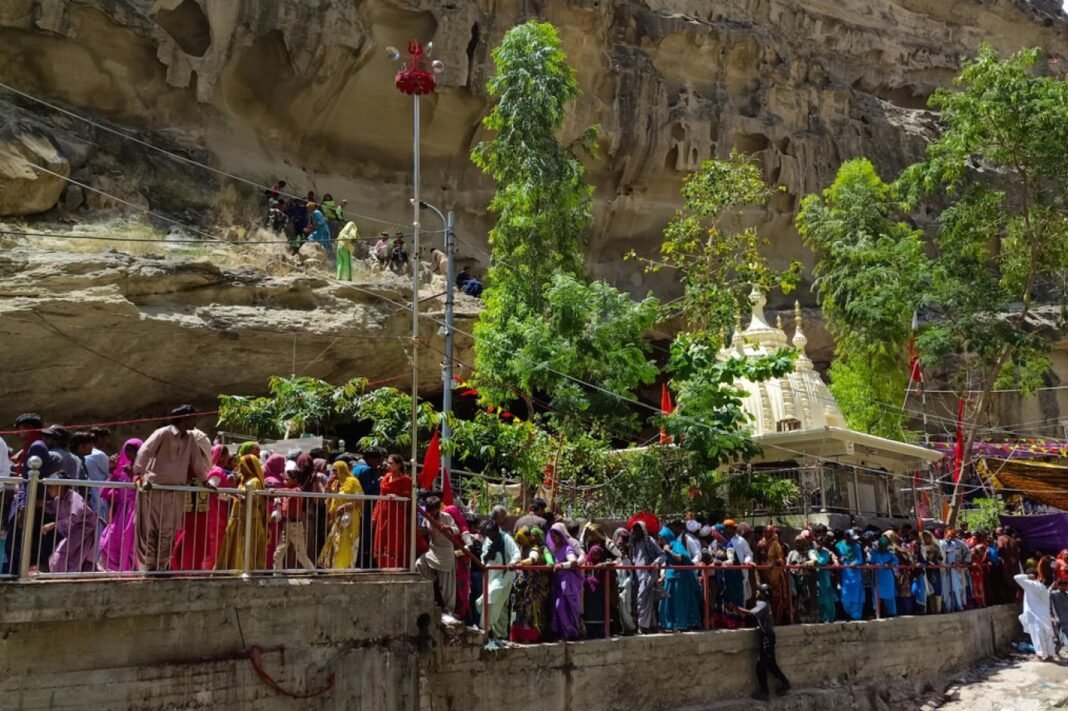
Then there is the festival. Also, every year, the three-day Kali festival fills the temple and bazaar with pilgrims from across Pakistan — and, in better times, from India — for special prayers, food stalls, and communal celebration, held even in the freezing winter. Witnessing it is witnessing a community’s devotion in its most joyful form. And the setting completes the picture: the temple at the foot of the citadel, the bazaar’s narrow lanes, the mountain air at 2,000 meters. Kalat is a destination, not just a dot on the map.
This destination is perfect for Hindu pilgrims, heritage and archaeology enthusiasts, photographers drawn to living history, and travelers exploring Balochistan beyond Quetta. It suits respectful cultural travelers of all faiths — but note the practical reality: Balochistan’s security situation requires planning, current information, and usually local contacts. Also, this is a journey for the prepared, and it rewards them richly.
History of Kali Mandir, Kalat
The Kali temple’s origins lie in the pre-Islamic centuries of the region. According to the Archaeological Department of Pakistan and local historical accounts, the temple was built by the Sewa dynasty — the Hindu rulers associated with the legendary king Sewa — well before Islam reached South Asia, making it more than 1,500 years old. Also, the Kalat region, along with neighboring Mastung and Bagh, was noted as a region of Shakta followers — devotees of the goddess in her powerful forms — with the Kalat Kali temple the oldest in the region.
Kalat’s own history is inseparable from the temple’s. The town grew around the fortified citadel as Qalat-e Sewa, the fort of Sewa, and later became the capital of the Kalat princely state under the Khans of Kalat. They ruled a vast Baloch confederacy until 1948. Through these centuries the temple endured at the foot of the citadel, serving the Hindu merchant communities — including Hindkowan traders — who were central to Kalat’s commercial life. The Census of India records and later Pakistani censuses both show a continuous Hindu presence in Kalat city (about 3.35 percent of the city’s population in 2017).
The temple’s most dramatic modern episode came in 1909–10. Also, it was looted and the idol of the goddess broken. The idol was recovered, mended, and consecrated again. A restoration the community still remembers. In recent years the temple has hosted its annual festival with elaborate security arrangements by Kalat police and Levies. It is administered under the Pakistan Hindu Panchayat. Despite the pressures faced by minority heritage across the region, the Kalateshwari temple stands — resilient, active, and revered.
Top Things to Do in Kali Mandir, Kalat
Pay Respects at the Sanctum
The heart of the visit is the sanctum itself, where the great idol of Goddess Kali — described by devotees as the second biggest Kali statue in Asia — is kept within a glass structure. Also, the goddess is depicted in her formidable aspect, wearing a garland of skulls and standing upon Lord Shiva, embodying divine power over darkness. In fact, non-Hindu visitors are welcome to observe respectfully. Remove shoes, dress modestly, keep silence in the sanctum, and follow the guidance of the temple caretakers. Photography inside the sanctum may be restricted — always ask first.
Explore the Shahi Bazaar
The temple stands in the old Shahi Bazaar, Kalat’s historic market quarter, where narrow lanes hold shops selling Balochi embroidery, traditional caps, dried fruits, and everyday goods. Also, morning is the best time: the bazaar wakes early, the light is golden. You can watch the town’s commercial life — the same trade rhythms that sustained Kalat for centuries — before the midday quiet.
Walk Up to the Citadel
Above the temple rises the ancient citadel of the Kalat state, the fortified heart of the old princely capital. Also, the climb rewards you with commanding views over the town and the surrounding valleys at 2,000 meters. The Sardar Palace and the old fortifications speak of the Khans who ruled from here. In fact, go with a local guide who can explain what you are seeing.
Attend the Annual Kali Festival
If your visit coincides with the three-day Kali festival (held in the winter, typically January), you will experience the temple at its most alive: special prayers for the country’s development and security, processions of devotees, food stalls, and distributed meals. Thousands gather despite the freezing weather, and the atmosphere of shared devotion is unforgettable. Security is tight, with checks at entry and exit points — cooperate cheerfully.
Meet Kalat’s Communities
Kalat’s population is a blend of Brahui, Balochi, and other communities, with a historic Hindu merchant presence. Also, tea in the bazaar, conversation with shopkeepers. A respectful interest in local life open doors. The town’s craftspeople — especially embroiderers — are rightly proud of their work.
Famous Places In and Around Kali Mandir, Kalat
- Kalat Citadel and Sardar Palace — the fortified old city above the temple, with panoramic views
- Shahi Bazaar — the historic market quarter surrounding the temple
- Guru Nanak Darbar, Kalat — another historic minority shrine in the town — see our Guru Nanak Darbar Kalat guide
- Quetta — the provincial capital, about 140 km north, with its bazaars, Hanna Lake, and museums — Balochistan museum guide
- Mastung — historic town on the Quetta–Kalat road with its own layered past
- Hinglaj Mata Temple — Balochistan’s great Shakti Peetha on the Makran coast, reachable via the coastal highway from Karachi
How to Reach Kali Mandir, Kalat
Kalat sits on the RCD Highway (N-25), the historic road linking Karachi to Quetta. Also, From Karachi it is roughly 560 kilometers — about an 8-hour drive — northwest into the mountains. In fact, From Quetta, it is approximately 140 kilometers south, a few hours’ drive through dramatic Balochistan highlands. There is no airport in Kalat; the nearest airports are Quetta International (UET) and Karachi (KHI). Given the security environment in parts of Balochistan, this is a trip to plan with current, on-the-ground information: travel with local contacts or a reputable operator, check the latest travel advisories, and keep your itinerary flexible.
Route Details
- From Karachi: Karachi → RCD Highway (N-25) → Hub → Uthal → Bela → Khuzdar → Kalat (roughly 560 km, about 8 hours). A long, scenic, highland drive — start early.
- From Quetta: Quetta → N-25 south → Mastung → Kalat (approximately 140 km, a few hours). The most common approach for Balochistan-based travelers.
- From Lahore/Islamabad: Fly to Quetta or Karachi, then drive. There are no direct road routes worth attempting from Punjab without the Quetta/Karachi staging.
- Nearest airport: Quetta International Airport (UET), about 140 km north; Karachi’s Jinnah International (KHI) for international arrivals.
- Road conditions: The N-25 is a major highway but remote in stretches, with limited services — fuel up, carry water, and travel in daylight.
- Transport options: Private car with a driver who knows the route is strongly recommended; intercity coaches run Karachi–Quetta via Kalat. Foreign visitors should coordinate with local contacts or tour operators familiar with current conditions.
Where to Stay in Kali Mandir, Kalat
Kalat is a small highland city, and accommodation is modest: expect simple local hotels and guesthouses serving traders and travelers on the N-25. They are functional rather than luxurious — clean rooms, basic meals, and famously warm Baloch hospitality. For greater comfort and choice, most visitors base themselves in Quetta (about 140 km north), which offers a full range of hotels from budget to high-end, and visit Kalat as a long day trip or overnight excursion. If you attend the January festival, book ahead — the town fills with pilgrims. Wherever you stay, confirm heating in winter: nights at 2,007 meters drop below freezing.
Where to Eat: Local Foods of Kali Mandir, Kalat
Kalat’s food is Baloch highland food — built for cold nights. Also, the signature is sajji: whole lamb or chicken roasted slowly over coals, served with naan. In fact, a dish Balochistan is famous for across Pakistan. In addition, expect hearty mutton curries, lentils, fresh tandoori breads, and kehwa (green tea) served constantly against the mountain chill. Kalat’s elevation and orchards mean good dried fruits and nuts in the bazaar. During the Kali festival, special food stalls appear around the temple and free meals are distributed to devotees. Restaurant food in Kalat is simple and budget-friendly.
Quetta, on the way, offers the province’s best-known food streets and bakeries. Carry snacks for the long N-25 drives.
Weather in Kali Mandir, Kalat
At around 2,007 meters, Kalat has a semi-arid highland climate: warm but bearable summers and genuinely cold winters with snowfall. It is noticeably cooler than the Balochistan lowlands year-round. The Kali festival’s January timing means pilgrims brave freezing nights — daytime temperatures of 5–15°C with nights below zero. For comfortable sightseeing, the milder months are kindest.
| Season | Temperature Range | Conditions |
|---|---|---|
| Spring (Mar–Apr) | 10°C to 25°C | Pleasant and fresh; the most comfortable season for exploring the citadel and bazaar. |
| Summer (May–Sep) | 25°C to 35°C | Warm days, cool nights; a pleasant highland escape from lowland heat. July averages around 31°C. |
| Autumn (Oct–Nov) | 5°C to 20°C | Crisp and clear; mild days, cold nights. Good sightseeing weather. |
| Winter (Dec–Feb) | -5°C to 15°C | Cold with nights below freezing and occasional snow; January averages near 0°C at night. The Kali festival is held in this season — bring heavy winter clothing. |
Language and Culture of Kali Mandir, Kalat
Kalat District’s majority language is Brahui — one of the world’s most fascinating linguistic islands, a Dravidian language spoken in the heart of Balochistan — followed by Balochi. Also, urdu is widely understood in the town and bazaar. The culture is Baloch highland culture: renowned hospitality, tribal codes of honor and guest-protection, traditional music. The celebrated Balochi embroidery whose intricate patterns you will see in the bazaar. For temple visitors, the etiquette is universal to Hindu shrines: remove shoes before entering, dress modestly (cover shoulders and knees), avoid leather items inside if asked, do not touch the idol or offerings, and keep voices low in the sanctum.
Ask before photographing worshippers or the inner shrine. As a guest in Balochistan, accept offered tea — refusal can offend — and dress conservatively throughout your stay.
Shopping in Kali Mandir, Kalat
The Shahi Bazaar is the place to shop: Balochi embroidery — shawls, dress panels, and caps with intricate mirror and thread work — is the signature craft and genuinely world-class. Also look for traditional Balochi caps, dried fruits and nuts from the highland orchards, and local handicrafts. Buy directly from artisans and small shops; bargaining is expected but keep it friendly. There are no shopping malls in Kalat — the bazaar is the authentic experience. For a wider selection of Baloch crafts, Quetta’s bazaars (Liaquat Bazaar and the handicraft markets) are worth a stop on your route.
Local Events and Festivals
The annual Kali festival is the temple’s great event: a three-day celebration held in the winter (typically January. The 2023 festival concluded on January 27) that draws Hindus from across Pakistan, and in the past from India, for special prayers, devotions to Kalat Kalimata, food stalls, and distributed meals. Devotees pray for the country’s development and security. The Kalat police and Levies make elaborate security arrangements with checks at all entry and exit points. Despite the freezing weather, attendance is large and the atmosphere deeply devotional. If you plan to attend, arrive early, book accommodation ahead, dress for sub-zero nights, and cooperate with security procedures.
Beyond the temple, Kalat’s cultural calendar includes Baloch Culture Day celebrations of traditional music, dance, and attire — check local dates if your visit coincides.
Travel Tips for Kali Mandir, Kalat
Packing Essentials
Warm clothing is essential for most of the year — and heavy winter gear for a January festival visit. Also, nights drop below freezing. Sturdy shoes for the citadel climb and bazaar lanes, sun protection for the high-altitude sun, a basic first-aid kit, and modest clothing for the temple. Carry a shawl or scarf regardless of season.
Safety Tips
Be realistic: parts of Balochistan face security challenges, and Kalat requires more planning than most Pakistani destinations. Check current travel advisories, travel with reputable local contacts or an experienced operator, keep family or your hotel informed of your movements, travel the N-25 in daylight, and keep copies of your CNIC or passport. At the temple during the festival, follow police and Levies instructions at checkpoints. With proper planning, pilgrims visit every year without incident.
Money & Connectivity
Withdraw cash in Quetta or Karachi before heading to Kalat. ATMs in the town are unreliable and card payments rare. Mobile signals from major networks generally work in Kalat town but can be patchy on the highway stretches. Download offline maps before the N-25 drive.
Best Time to Visit Kali Mandir, Kalat
January — The Kali Festival
The most meaningful time for devotees: the three-day annual festival fills the temple with pilgrims, prayers, and celebration. Also, expect freezing nights — this is a pilgrimage for the prepared, with heavy winter clothing essential.
March to April — Spring Comfort
The best weather for general sightseeing: mild days, fresh air, and the citadel and bazaar at their most pleasant. Also, ideal for heritage travelers combining Kalat with Quetta.
May to September — Summer Escape
Warm but comfortable highland summer (25–35°C days, cool nights) — Kalat is a genuine escape from lowland heat. Long daylight hours suit unhurried exploration.
October to November — Autumn Clarity
Crisp, clear days and cold nights. Also, excellent for photography and walking, with fewer travelers on the road.
Final Thoughts
The Kali Mandir of Kalat is a reminder of how deep Pakistan’s history runs — and how much of it is still alive. A temple built by the Sewa dynasty before Islam arrived in South Asia, still lit by lamps, still fed by pilgrims, still standing beneath the citadel after fifteen centuries: that is not a ruin, it is continuity. Visit with reverence, explore the old town around it, and let Kalat’s mountain air and layered past work on you.
Plan carefully, travel respectfully, and time your visit for the January festival if devotion is your purpose — or for spring if sightseeing is. Either way, you will have stood in one of the oldest sacred spaces in the country. Continue exploring the region with our Explore Pakistan collection and the Guru Nanak Darbar Kalat guide.
FAQs
Where is the Kali Mandir of Kalat located?
In the Shahi Bazaar, at the foot of the ancient citadel in Kalat city, Kalat District, Balochistan — about 140 km south of Quetta on the RCD Highway (N-25).
How old is the Kali Mandir, Kalat?
It is believed to be more than 1,500 years old, built by the Sewa dynasty before the arrival of Islam in South Asia — one of the oldest Hindu temples in Pakistan.
When is the annual Kali festival in Kalat?
A three-day festival held in winter, typically in January (the 2023 festival concluded on January 27), drawing devotees from across Pakistan for prayers, food stalls, and celebration.
How do I reach Kalat?
By road: about 8 hours (560 km) from Karachi via the N-25. Also, a few hours (140 km) south of Quetta. The nearest airports are Quetta and Karachi. Check current travel conditions for Balochistan before going.
Staying Safe in Balochistan
Is it safe to visit Kalat?
Kalat requires more planning than most destinations due to Balochistan’s security environment. Travel with local contacts or a reputable operator, check current advisories, travel in daylight, and follow police guidance — pilgrims visit every year with proper planning.
Can non-Hindus visit the Kali Mandir?
Yes — respectful visitors of all faiths are welcome to observe. Remove shoes, dress modestly, keep silence in the sanctum, do not touch the idol, and ask before photographing.
Where should I stay when visiting Kalat?
Kalat has simple local hotels and guesthouses. Also, for more comfort, base yourself in Quetta (140 km north) and visit Kalat as a day trip or overnight excursion. Book ahead for the January festival.
What is special about the Kali idol in Kalat?
Devotees describe it as the second biggest Kali statue in Asia, kept within a glass structure in the sanctum. Also, the goddess is worshipped here as Kalat Kalimata (Kalateshwari Maa Kali), believed to have spent much of her time in Kalat.