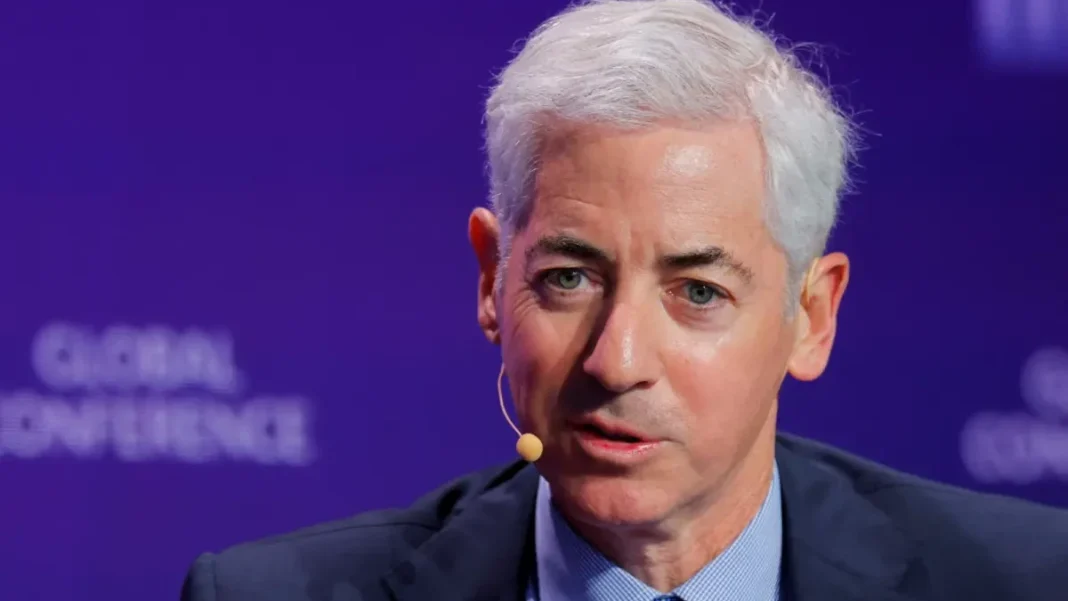
Billionaire investor Bill Ackman has said that far-right Israeli ministers Itamar Ben-Gvir and Bezalel Smotrich should not serve in Israel’s next government. The Ackman Ben-Gvir Smotrich intervention came on Sunday, two days before Israel’s general election, and it put a prominent supporter of United States President Donald Trump at odds with two ministers in Prime Minister Benjamin Netanyahu’s coalition.
Ackman wrote on X that, from the perspective of someone who understood how Israel was perceived in the United States, the two ministers had caused Israel enormous reputational damage with their statements and actions. He said a government without Ben-Gvir and Smotrich would send a message that Israel was turning a new page.
“This will allow Israel to rebuild lost credibility, increase the opportunity for an expansion of the Abraham Accords, and enjoy a better relationship with Democrats and Republicans and Americans at large,” he said.
Ackman Ben-Gvir Smotrich statement and the election
Ackman is the founder of Pershing Square Capital Management. He supported Trump’s candidacy for president in 2024, and he praised Netanyahu last week. Trump also endorsed Netanyahu for prime minister last week, which makes the timing of Ackman’s statement hard to ignore.
Speaking at a Tel Aviv conference on Thursday, Ackman had praised Netanyahu for the way he had protected and defended Israel since the Hamas attack of October 7, 2023. That praise makes his call to drop Ben-Gvir and Smotrich a split with part of Netanyahu’s coalition, rather than a break with Netanyahu himself.
The election takes place on Tuesday, and polls point to a tight race between Netanyahu’s coalition and the opposition. Representatives for Ben-Gvir and Smotrich did not immediately respond to requests for comment on Ackman’s statement.
Who Ben-Gvir and Smotrich are
Ben-Gvir leads the Jewish Power party, and Smotrich leads Religious Zionism. Both men serve as ministers in Netanyahu’s religious-nationalist coalition. In that role, they have overseen policies widely perceived as discriminatory against Israel’s minority Arab population and Palestinians living in the occupied West Bank.
Several countries, including Britain, Canada and Australia, have imposed sanctions on the two ministers over accusations that they incited violence against Palestinians in the West Bank. That record is central to Ackman’s argument. He is not objecting to the two men as minor figures. He is arguing that their presence in government now carries a cost for Israel abroad, and that the cost falls hardest on Israel’s standing in the United States.
Poll projections underline why the two ministers still matter. Ben-Gvir’s Jewish Power party is projected to win around 10 parliamentary seats at Tuesday’s election, up from six. Smotrich’s Religious Zionism is projected to win eight seats, up from seven.
Why the statement matters beyond the two ministers
Nimrod Goren, president of the Israeli think tank Mitvim, said Ackman’s statement appeared to reflect a desire among Trump’s circles for Netanyahu to drop his far-right allies after the vote and form a unity government with opposition parties.
There is a clear obstacle to that outcome. Gadi Eisenkot, the leading challenger to Netanyahu, and other opposition party leaders have ruled out forming a government with Israel’s longest-serving prime minister. Our earlier report on Eisenkot’s challenge sets out that position, and our report on the Arab-Israeli bloc’s aim to oust Netanyahu shows how wide that opposition runs.
The Abraham Accords are the other half of his argument. The 2020 agreement, mediated by Trump’s first administration, saw Israel establish relations with the United Arab Emirates and Bahrain, and later re-established ties with Morocco. Ackman’s case is that a government without the two ministers would have a better chance of expanding that circle.
The backdrop to the election remains the war in Gaza and its aftermath. Thousands of Israelis rallied in Tel Aviv on Saturday, calling for an independent inquiry into the Hamas attack that killed around 1,200 people. That scrutiny is part of the reputational question Ackman raised, as covered in our report on the Gaza university strike.
What happens next
The first test comes on Tuesday, when voters decide the size of each party’s bloc. The second test comes after the count, when Netanyahu, or whoever leads coalition talks, must choose between keeping his far-right allies and trying to build a broader government.