Bangladesh Garment Wage Board Set as Factories Shut
The Bangladesh garment wage board will review pay for garment workers after protests forced more than 500 factories to close. Bangladesh announced the board on Sunday and urged workers to return to work, as demonstrations continued in Dhaka and Gazipur.
Workers demand a minimum monthly wage of 30,000 taka, about $245. That figure is more than double the current minimum of 12,500 taka. Workers say rising costs for food, housing, transport and health care have sharply eroded their purchasing power.
“The cost of living has increased far beyond our incomes,” worker Mahin Hossain said. “After paying rent, there is very little left for food, our children’s education and other essential expenses. Many are finding it almost impossible to support their families.”
Bangladesh garment wage board: who sits on it
Labour and Employment Minister Ariful Haque Choudhury said the wage board was formed after discussions with workers’ representatives and industry leaders. He urged workers to resume work while the board carries out its review.
The six-member board comprises two representatives each from workers and employers, along with a government representative and a neutral member. The body will review wages in the garment sector and recommend revised pay rates. No deadline for its recommendations was reported in the announcement.
The unrest began in Ashulia, a major garment manufacturing hub on the outskirts of Dhaka. Dozens of factories suspended operations on Saturday after workers staged protests demanding higher pay. The protests then spread to key industrial areas in Dhaka and Gazipur, where thousands blocked roads and disrupted transport on Sunday.
Protests, tear gas and factory closures
Police used tear gas and water cannon to disperse protesters after demonstrators threw bricks at officers. A police vehicle and a police box were set on fire in separate incidents. Authorities deployed Border Guard Bangladesh personnel to maintain order.
In all, the unrest has forced 529 garment factories to shut down. It has left 987,190 workers out of work across the country’s main industrial hubs, according to the Bangladesh Garment Manufacturers and Exporters Association. That scale explains why the government moved to set up a wage board, even as protests continued on the streets.
Choudhury warned that prolonged disruption could delay export shipments and payments from international buyers. Delays would create further difficulties for manufacturers and workers alike, as orders shift or payments slip.
Why the dispute matters beyond Bangladesh
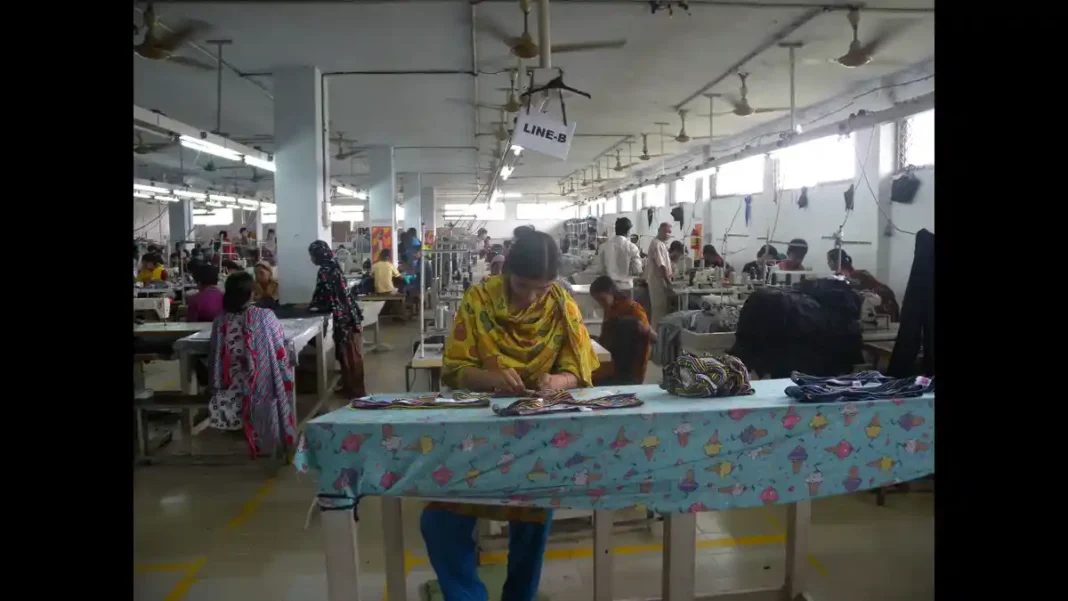
Bangladesh’s ready-made garment industry employs about four million workers. It generates more than 80 percent of the country’s export earnings and supplies clothing to many leading Western brands. The industry, the world’s largest after China, contributes about 10 percent of gross domestic product and forms the backbone of the economy.
Manufacturers say the sector faces mounting challenges. Rising production costs, periodic gas and electricity shortages, and uncertainty in energy markets linked to tensions in the Middle East all squeeze margins. A sharp wage rise would add to those costs, while a refusal to raise pay risks longer strikes and lost orders.
For Pakistan, the dispute is worth watching closely. Pakistan’s own garment sector competes for many of the same buyers, and Pakistan garment exports form a key part of its value-added textile trade. The wider picture includes Pakistan textile exports as the $13.5 billion backbone of the economy. A prolonged shutdown in Bangladesh could shift some orders in the short term, but it also shows buyers how quickly wage disputes can disrupt supply chains across South Asia.
What wage are Bangladesh garment workers demanding?
Workers demand a minimum monthly wage of 30,000 taka, about $245, more than double the current 12,500 taka.
How many factories have shut down?
The unrest has forced 529 garment factories to shut down, leaving 987,190 workers out of work, according to the garment manufacturers’ association.
Who sits on the new wage board?
The six-member board has two worker representatives, two employer representatives, one government representative and one neutral member.
Why did protests continue after the board was announced?
Thousands of workers staged demonstrations on Sunday in Dhaka and Gazipur, blocking roads, even after the wage board announcement.
Why does the garment industry matter so much to Bangladesh?
The industry employs about four million workers, generates over 80 percent of export earnings and contributes about 10 percent of gross domestic product.